Riding to an Idaho Elk Camp
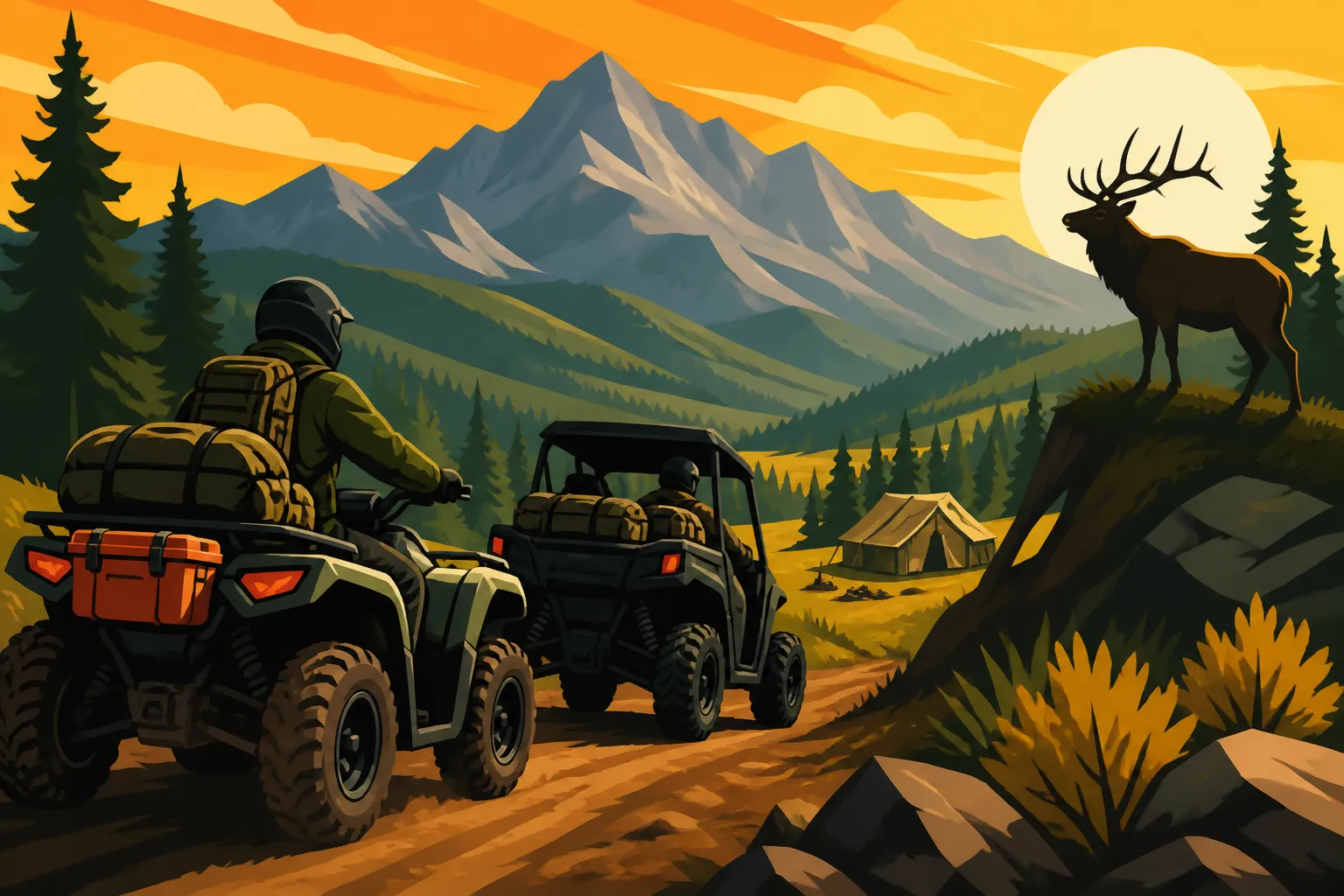
Reaching an Idaho elk camp by ATV or UTV can save a long walk, but a sticker alone does not make every route legal. You need to check the machine’s registration or permit status, local road rules, land access and hunting-season restrictions. This guide explains how to sort those questions out before you load gear and head for camp.
Check the machine, permit and road rules
Start by identifying where you will ride: public land, private land, a county road, or a mix. The requirements can change along the route. A trail that is open to motorized use may connect to a road where the machine needs additional equipment or a different plate. A hunting license or tag does not authorize motorized travel on a closed route.
For many riders, there are two separate questions: whether the machine has the required Idaho OHV sticker and whether it is allowed on the specific road or trail. Idaho residents and visitors may have different sticker requirements. If you are visiting with a machine registered in another state, do not assume your home-state registration or sticker is accepted in Idaho. Review Idaho’s Non-Resident OHV Sticker and confirm current rules with Idaho Parks and Recreation before your trip.
Keep in mind what a sticker does and does not do. It may satisfy a registration or permit requirement, but it does not grant permission to use private property, open a closed route, or make a non-street-legal ATV or UTV legal on every public road. Road use depends on the route and the machine’s status. See Idaho’s Restricted Vehicle Plate and Road Use and What Idaho Requires Before You Ride a County Road before planning a route that includes pavement or a county road.
| Part of the trip | What to confirm | Why it matters |
|---|---|---|
| OHV sticker or permit | Whether the machine needs an Idaho resident or nonresident sticker | Home-state paperwork may not meet Idaho’s requirements |
| Trail or forest road | Whether motorized travel is allowed on that exact route | Routes can be limited by land manager, season or vehicle type |
| County road | Whether local rules allow your machine and what equipment or plate is required | An OHV sticker does not automatically authorize road use |
| Private access | Whether you have permission from the landowner | A route shown on a map may cross private property |
| Hunting access | Whether the hunt-area rules limit motorized travel | Hunting regulations and road access rules are separate |
| Camp parking | Whether the site permits vehicles and overnight use | A legal route does not necessarily make the destination a legal campsite |
If the route uses U.S. Forest Service or Bureau of Land Management roads, check the applicable land manager’s rules and maps, not just a general trail map. Start with Idaho Rules on Forest Service Roads or Idaho Rules on BLM Roads, then verify the route’s current designation and any seasonal or vehicle-width limits.
A route can also change status at a boundary. County ordinances, land-management orders and private gates may affect access even when a nearby trail is open. If your route crosses a county line, check both counties rather than relying on a single map or a report from a previous season.
Confirm hunting access and elk-season restrictions
Treat hunting permission and motorized access as related but separate issues. Your elk tag may allow you to hunt in a specific unit, but it does not necessarily allow you to drive an ATV or UTV wherever you want within that unit. Motorized travel may be limited to designated routes, and the restrictions can apply during particular seasons or to certain types of vehicles.
Before leaving, check the rules for the hunt area and the specific dates you plan to travel. Look for route closures, limits on off-road travel and any restrictions on using a machine to reach or occupy a hunting location. Rules may differ between a public road, a designated route and ground off the route. If your access depends on a road that crosses public and private land, confirm each part of the route.
For general hunting-season considerations, see Idaho Rules During Hunting Season. If a guide or outfitter is arranging your trip, ask what permits and access arrangements apply; [Idaho Permits for a Guided Hunting Trip] covers that separate issue.
Do not assume that a track on an online map is an open motorized route. Mapping apps can show roads that are closed to the public, restricted to other vehicles, or no longer passable. A line on a map is useful for planning, but the land manager’s current travel map, orders and signs control access. If a sign or gate conflicts with the route you planned, stop and confirm before proceeding.
It is also worth checking whether the camp itself is on land where overnight use is allowed. A site beside a road may still have camping limits, private ownership or a seasonal restriction. Ask the land manager about the proposed location and whether you may leave the machine there while hunting. A legal route to a location is not proof that the location is available for camping.
For private land, get clear permission before crossing, parking or camping. Permission to hunt does not automatically include permission to drive across a property or leave a machine there. Confirm the route, dates, parking location and any limits with the landowner. If access is through a lease or another arrangement, make sure the person granting permission has authority to do so.
Plan a route that matches your machine
A route that works for a dirt bike or narrow ATV may not be suitable for a full-size side-by-side. Check vehicle-width limits, trail designations, gates and any restrictions on particular classes of machines. A route may also include steep grades, narrow shelves, loose rock, water crossings or conditions that change after rain or snowmelt. Choose a route your machine and group can handle, not just one that appears to reach camp quickly.
Build the route from reliable, current information. Compare the land manager’s motor vehicle map with local road rules and any posted closures. Mark where you enter public land, where the route crosses a county road, and where private property or a management boundary may affect access. Keep an offline copy or paper map for areas with limited cell service, and do not rely on a phone signal to resolve a route question in the field.
A practical pre-trip sequence is:
- Identify the exact elk unit, camp location and dates.
- Trace the full route, including every road connection and property boundary.
- Check the machine’s Idaho sticker or permit requirements, especially if it is registered outside Idaho.
- Verify that the route is open to your machine and that any county-road sections are legal for it.
- Confirm access and camping permission for private land or a specific camp location.
- Check current closures and conditions shortly before departure.
- Share the route and expected return time with someone who is not traveling with you.
Allow time for a slower return than the outbound trip. A loaded UTV may handle differently, and carrying hunting gear or game can affect balance, stopping distance and visibility. Follow the machine’s seating and load limits, secure equipment, and keep passengers in designated seats. Do not let the hope of reaching camp before dark push the group onto an unverified shortcut.
If weather, smoke, fire activity, snow or road work changes the route, reassess the whole trip. A road that was open on a previous visit may be closed now, and a detour can bring different rules. Check closure information from the relevant land manager and local authorities before setting out and again if conditions change.
Pack documents and make a day-of check
Keep the paperwork needed to identify the machine and show that it may be operated where you plan to ride. Carry any required permit or sticker information, and make sure the sticker is placed and displayed as required. If you are unsure what to carry, What Idaho Riders Need Before They Ride is a useful starting point. For a visitor’s machine, do not substitute a photo of an out-of-state registration for confirmation that Idaho’s permit rules are met.
You generally should not carry an original title on a hunting ride unless an authority specifically requires it. A title is ownership paperwork, not a road-use permit. Keep important ownership and insurance documents secure, and carry the items required for the machine and route. If you are riding with passengers, confirm whether they have any separate requirements; Do Passengers Need Anything in Idaho? can help distinguish passenger questions from operator and machine rules.
Before unloading or riding away from the trailer, check:
- The sticker, plate or other required identification is present and readable.
- The machine is suitable for the route and fits any width or access limits.
- Required road equipment is working if the route includes a road where it is required.
- The group has the current route map, closure information and landowner permissions.
- Fuel, tools, first-aid supplies, water and recovery equipment fit the trip’s distance and terrain.
- Everyone understands where the route is allowed and where to turn around.
When you reach a signed restriction, do not treat it as a suggestion or assume that hunting access creates an exception. Turn around unless the responsible land manager or local authority confirms that your machine may proceed. The same applies to a gate, a posted private-road sign or an unexpected route closure. Taking a longer legal route is better than risking a citation, damaging land or losing access for other riders.
If you are unsure whether one specific road is open, ask the county or land manager responsible for that road before departing. Describe the machine, route and dates rather than asking only whether “the area” is open. A clear answer about the exact road segment is much more useful than a general statement about nearby OHV riding.
The safest plan is to treat the sticker, route access, road legality and hunting rules as separate checks. Confirm each one before the trip, and revisit the route information shortly before leaving. That preparation helps you reach elk camp without relying on assumptions about reciprocity, old maps or another rider’s past experience.
Disclaimer
This article is for general informational purposes only and does not constitute professional advice. Laws, prices and regulations vary by location and change over time. Consult a qualified professional for guidance on your specific situation.