Stopping Where a Road Crosses an Idaho Trail
Idaho trail crossings require complete ATV stops before the road surface to check for hidden vehicles and oncoming traffic.
Legal here, illegal one county over.
What each state allows, the mirrors, horn and signals a conversion requires, and the county and city overrides that quietly change the answer.
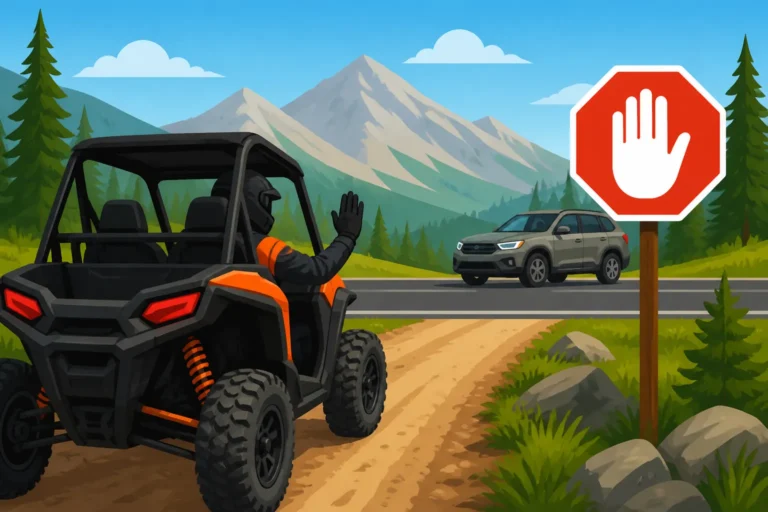
Idaho trail crossings require complete ATV stops before the road surface to check for hidden vehicles and oncoming traffic.
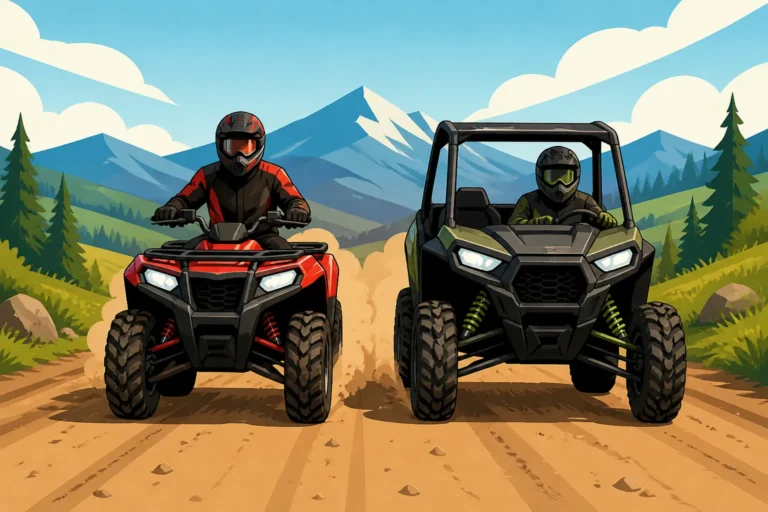
Idaho trail regulations explain whether off-highway vehicle riders can legally travel side by side on public roads.
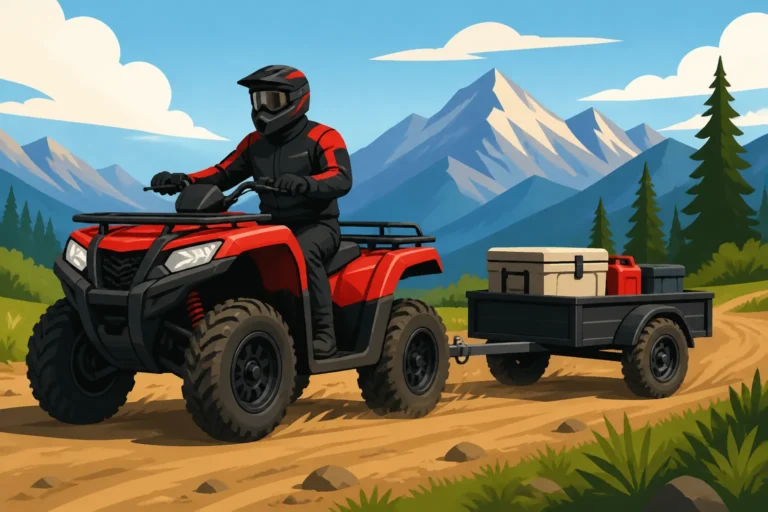
Idaho rules for towing small trailers behind off-highway vehicles explain legal requirements, public lands, and restricted vehicle plates.
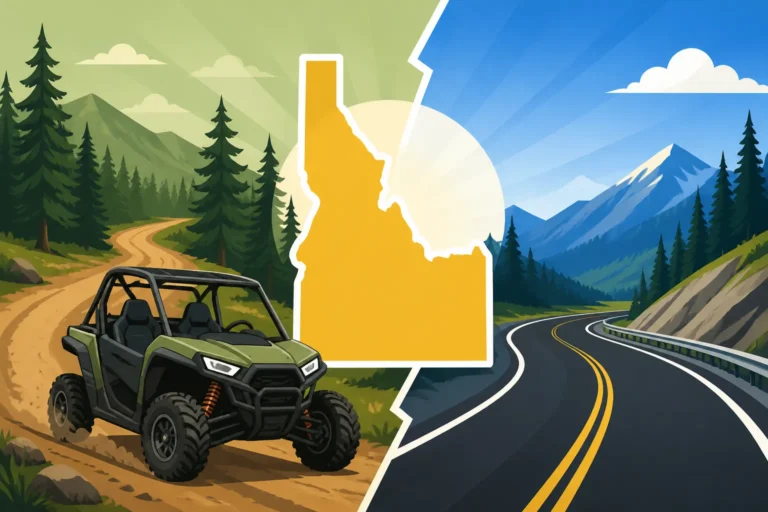
Idaho OHV regulations explain legal requirements for driving ATVs and UTVs when forest roads transition into state highways.
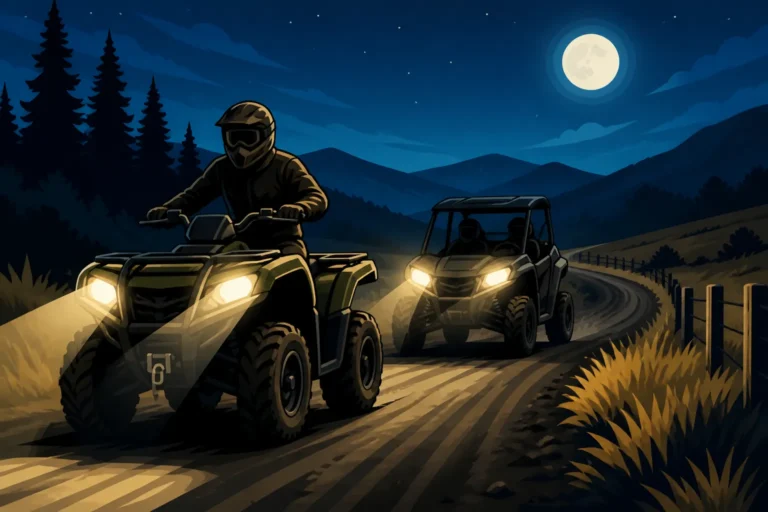
Idaho law for riding ATVs and UTVs on county roads after dark, detailing required headlights, taillights, and mirrors.
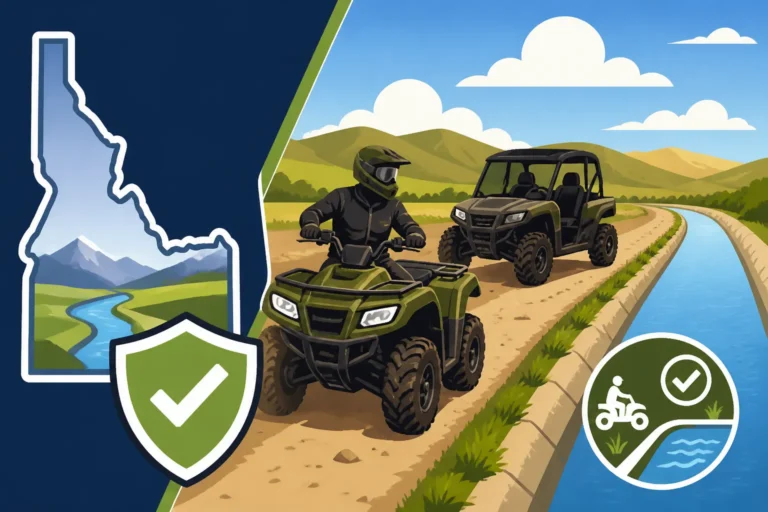
Idaho canal bank road rules, federal reclamation projects, and local irrigation districts determine where ATVs can legally ride.
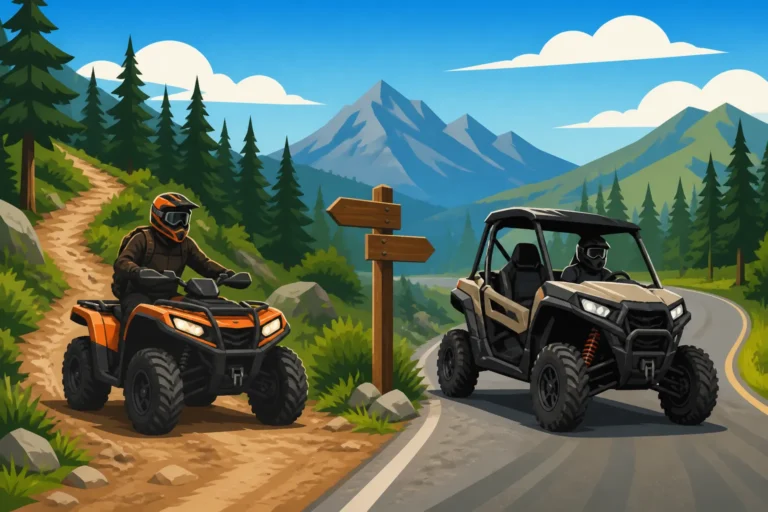
Idaho restricted use plates, county ordinances, and local road access rules govern driving ATVs and UTVs on public roads.
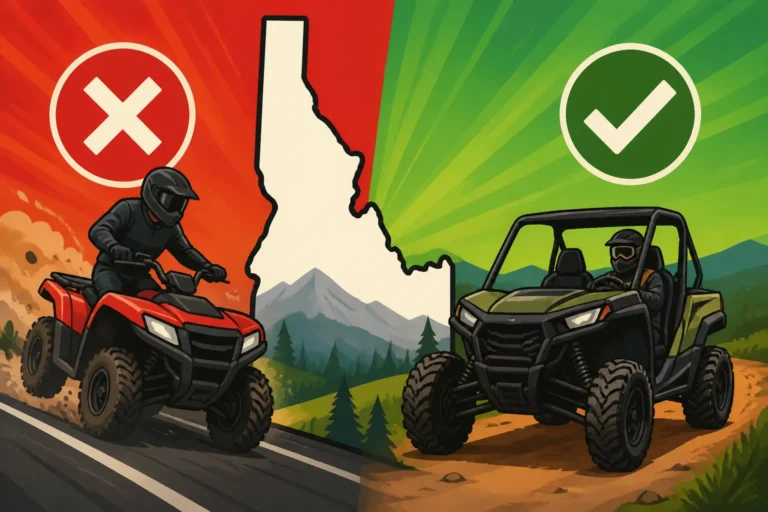
Idaho OHV rules explain how county ordinances, federal Motor Vehicle Use Maps, and license requirements dictate legal riding.
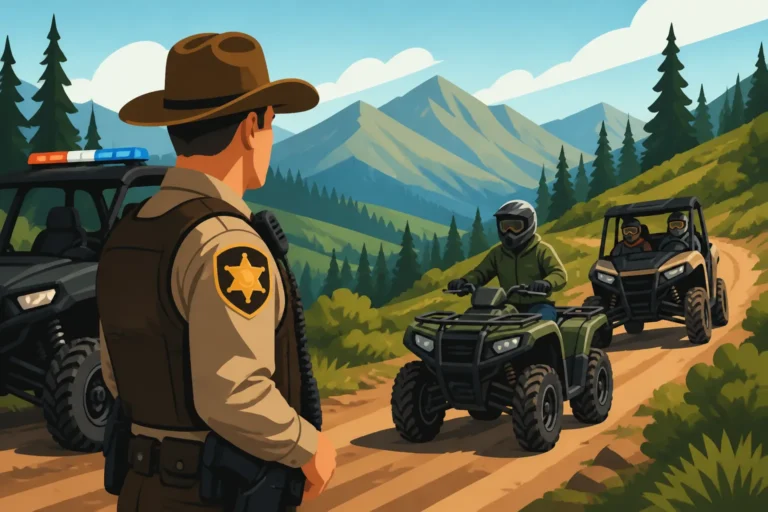
Idaho sheriff patrol methods on remote OHV routes, including why deputies patrol backcountry trails and how jurisdiction works.
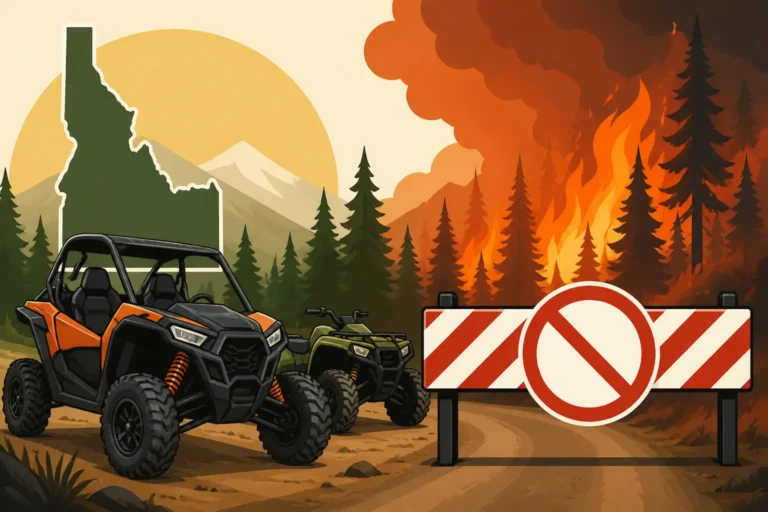
Idaho wildfire road closures protect public safety and allow suppression crews access, requiring riders to check official sources.