Displaying a Sticker on an Idaho R Plate
Navigating the specific requirements for off-highway vehicles (OHVs) in Idaho can feel like trying to solve a puzzle, especially when you encounter specialized items like the Restricted Vehicle Plate, often called an "R plate." Many riders get their new OHV sticker, look at their R plate, and then wonder: Where exactly does this sticker go? This guide is here to clarify precisely how and where to display your Idaho OHV sticker on your R plate, ensuring you stay compliant and enjoy the incredible trails Idaho has to offer without any unnecessary headaches.
Understanding Idaho's Restricted Vehicle Plate (R Plate)
Before we dive into sticker placement, it's crucial to understand what the Idaho Restricted Vehicle Plate, or R plate, actually is and why it exists. It's not just another license plate; it serves a very specific purpose for OHV owners.
What an R Plate Is and Why It Is Used
The Idaho R plate is a distinct type of license plate issued by the state, specifically designed for off-highway vehicles like ATVs, UTVs, and dirt bikes that occasionally operate on designated public roads. Unlike a standard car plate, the R plate grants limited road-legal status, allowing you to connect trails, access fuel, or navigate short sections of county roads where OHV use is explicitly permitted. It's a bridge, if you will, between the trail system and the paved infrastructure. Riders often utilize these plates to access trailheads or move between different riding areas without needing to load their machine onto a trailer. This makes it incredibly convenient for multi-day trips or exploring vast trail networks. Without this plate, most OHVs are strictly confined to off-road areas, making even simple tasks like getting gas a complicated affair. For many, the R plate is the key to unlocking a more versatile and enjoyable Idaho riding experience. You can find more details in our post [Idaho Plates That Begin With R].
The Purpose of an OHV Sticker in Idaho
Separate from the R plate, every off-highway vehicle operating on public land in Idaho is required to display an annual OHV sticker. This sticker is essentially your proof that you’ve paid your share to maintain the extensive trail system that Idaho is so famous for. The funds generated from these stickers go directly into the Idaho Parks and Recreation Department's OHV program, supporting trail maintenance, signage, education, and enforcement. Think of it as your annual contribution to keeping those scenic backcountry routes open and rideable. Without a current sticker, even if you have an R plate, you’re not legally permitted to ride on Idaho's public lands, including Forest Service and BLM trails. It’s a fundamental requirement, and deputies or rangers will certainly be checking for it. Knowing [What an Idaho OHV Sticker Costs Each Year] can help you budget for this essential expense.
The Specifics of Displaying Your OHV Sticker on an R Plate
Now, let's get down to the nitty-gritty: precisely where and how to affix that crucial OHV sticker to your R plate. This isn't just a suggestion; it's a requirement to ensure your machine is compliant.
Locating the Designated Area for the Sticker
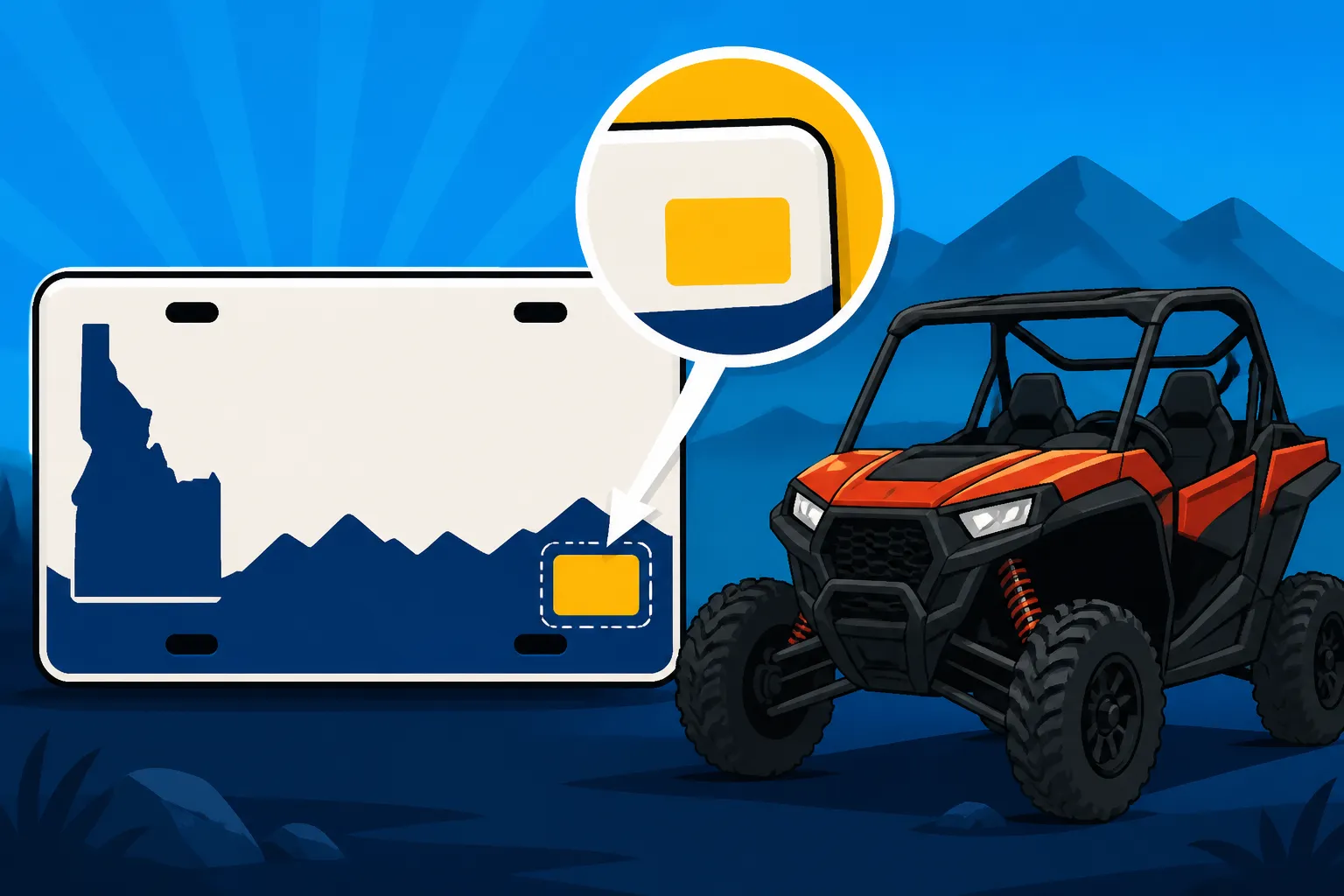
Idaho law specifies a particular location for displaying your OHV sticker on your R plate. You'll notice that the standard Idaho Restricted Vehicle Plate has a designated area, typically in the upper right-hand corner, designed specifically for the annual OHV sticker. This isn't an arbitrary placement; it's there to ensure consistency and easy identification for law enforcement officers. The area is usually a blank, slightly recessed or framed box, often without any other text or graphics, making it clear where the sticker is intended to go. Do not place the sticker over any part of the plate number, state name, or "Restricted Use" designation. The goal is to ensure both the plate number and the sticker's year and unique identifier are clearly visible and unobstructed. If you've ever seen a car's registration tag, think of it in similar terms – a small, specific spot for a small, specific decal.
Step-by-Step Sticker Application
Applying the sticker correctly is straightforward, but taking a moment to do it right can save you trouble later. Here's a simple process:
- Clean the Plate Surface: Before applying the sticker, ensure the designated area on your R plate is clean, dry, and free of dirt, grease, or old sticker residue. Use an alcohol wipe or a clean cloth with a mild cleaner, then dry it thoroughly. A clean surface ensures maximum adhesion.
- Peel Carefully: Gently peel the backing from the OHV sticker. Try to avoid touching the adhesive side with your fingers, as oils can reduce its stickiness.
- Position and Press: Align the sticker precisely within the designated corner of the R plate. Once it's in position, press it firmly from the center outwards, smoothing out any air bubbles with your thumb or a credit card. The goal is a flat, even application with no wrinkles.
- Allow to Cure: While the sticker will adhere immediately, giving it some time to "cure" – ideally 24 hours – before exposing it to harsh elements like heavy rain or pressure washing will help ensure it bonds securely to the plate.
Following these steps will help ensure your sticker stays put for the entire season. For context on where to purchase these, see our guide on [Where Idaho Sells OHV Stickers].
Ensuring Proper Visibility and Durability
Once applied, the sticker needs to remain clearly visible and durable throughout its validity period. This means positioning it so it's not obscured by mud, equipment, or shadows, and protecting it from premature wear.
- Visibility: The primary reason for the designated placement is visibility. When an officer glances at your R plate, they should immediately see both the plate number and the current OHV sticker. If your machine's design or any aftermarket accessories (like fender bags or tool kits) might block the R plate, adjust them or consider relocating the plate itself to ensure it's fully exposed. This is especially critical if you are [Riding an ATV on the Road in Idaho] where visibility is paramount.
- Durability: Idaho's riding conditions can be tough on stickers. Dust, mud, water crossings, and UV exposure can all degrade the sticker over time. While the stickers are designed to be weather-resistant, a proper initial application is key. If you notice the sticker starting to peel, fade, or get damaged, it’s best to replace it sooner rather than later. You don't want to get pulled over simply because your sticker is unreadable. You can learn more about this in [Replacing a Peeled Idaho OHV Sticker].
Common Pitfalls and How to Avoid Them
It’s easy to make a mistake when it comes to sticker placement, especially if you're new to Idaho's OHV rules. Knowing these common pitfalls can help you avoid fines and frustrations.
Incorrect Placement and Obscured Information
One of the most frequent errors riders make is placing the OHV sticker in the wrong spot on the R plate, or even on a different part of the machine entirely. Some might stick it on a fender, a shock reservoir, or the frame, thinking "as long as it's on the machine." However, for machines with an R plate, the sticker must be on the plate itself in the designated area. Another common issue is placing the sticker in a way that obscures critical information on the plate, such as the state name or the plate number. This effectively renders both the plate and the sticker non-compliant because neither can be fully read. Imagine a law enforcement officer trying to verify your registration from a distance; if they can't clearly read your plate or confirm your sticker is current, it raises immediate red flags. Always double-check that your plate number, state identifier, and the OHV sticker are all unobstructed and easy to read.
Deterioration and Loss of Your Sticker
Idaho's rugged terrain and varied weather conditions can be hard on everything, including your OHV sticker. Over time, exposure to sun, rain, mud, and even the vibration of the machine can cause the sticker to fade, crack, or peel away. A sticker that's no longer fully intact or readable is essentially useless from a compliance standpoint. Riders often forget to periodically check the condition of their sticker until they're questioned by a ranger. To prevent this, make it a habit to inspect your R plate and sticker before each major ride. If you see signs of wear, especially peeling edges, consider getting a replacement. Sometimes, pressure washing too aggressively can also cause a sticker to lift. Be mindful of directing high-pressure water streams directly at the sticker during cleaning. [Renewing a Sticker Without the Old One] is possible, but it’s always easier to replace it before it completely disappears.
Consequences of Improper Display
Riding with an improperly displayed or missing OHV sticker on your R plate can lead to more than just a stern talking-to. Law enforcement officers, whether they are local sheriffs or Forest Service rangers, are trained to look for these details. The immediate consequence is typically a citation or a fine. These fines can vary depending on the county and the specific officer, but they are an unnecessary expense that could have been avoided with proper placement. Beyond the financial penalty, an officer might also issue a "fix-it ticket" requiring you to correct the issue and prove compliance. In more extreme cases, particularly if combined with other violations or a history of non-compliance, it could even lead to your riding privileges being temporarily suspended. The simple act of correctly placing your sticker is a quick way to demonstrate that you are a responsible rider who respects Idaho's OHV regulations. Understanding [Fines for an Unstickered OHV in Idaho] highlights the importance of getting it right.
Beyond the Sticker: Other R Plate Considerations
While the OHV sticker on your R plate is critical, there are other aspects of owning and using an Idaho Restricted Vehicle Plate that deserve your attention.
Idaho's Restricted Vehicle Plate and Road Use Rules
Having an Idaho R plate doesn't automatically grant you free rein on all public roads. It's a "restricted use" plate for a reason. Generally, these plates permit OHV operation on designated county roads, specific city streets, and unpaved Forest Service or BLM roads that are explicitly open to OHVs. They do not allow you to ride on state highways, interstates, or any roads where OHV use is prohibited by local ordinance. The rules can be nuanced and vary significantly from county to county and even town to town. For instance, some rural counties might allow OHVs on most secondary roads, while a city might only permit them on very specific routes to access a trailhead or gas station.
Before embarking on a road-legal section of your ride, always check local ordinances and ensure your route is permitted. Riding a restricted vehicle on an unauthorized road can lead to citations. Beyond the permitted roads, you also need to adhere to specific operational rules, such as speed limits, having a valid driver's license, carrying liability insurance, and ensuring your machine has proper lighting and mirrors for road use. Our article [What Idaho Requires to Ride a County Road] delves deeper into these critical requirements.
Maintaining Your R Plate and Sticker
Just like the rest of your OHV, your R plate and the sticker affixed to it require periodic attention. The plate itself can become caked with mud, obscured by dust, or damaged by trail debris. A dirty or unreadable plate is just as problematic as an improperly placed sticker.
- Regular Cleaning: Make it a habit to clean your R plate whenever you wash your machine. A simple scrub with soap and water is usually sufficient to remove dirt and ensure all numbers, letters, and the OHV sticker are clearly visible. Avoid abrasive cleaners or scouring pads that could scratch the plate or damage the sticker's surface.
- Damage Inspection: Periodically check the plate for any damage, such as bends, cracks, or missing fasteners. A bent plate might be harder to read, and if it's severely damaged, it could even fall off. Ensure it's securely mounted with all necessary bolts to prevent loss while riding on rough terrain. If your R plate becomes illegible or damaged beyond repair, you will need to order a replacement. This proactive maintenance helps ensure that your R plate and sticker remain compliant and visible throughout the riding season, saving you potential hassle during an encounter with law enforcement.
| Issue | Description | Solution |
|---|---|---|
| Sticker Obscuring Plate Info | OHV sticker placed over plate numbers or "Idaho" text. | Re-apply sticker to the designated, blank upper-right corner. Peel carefully or get a replacement if needed. |
| Sticker on Wrong Location | Sticker placed on fender, frame, or anywhere other than the R plate. | Remove and properly affix to the R plate. If it won't re-stick, purchase a new sticker. |
| Faded/Unreadable Sticker | Sticker colors are washed out, year or ID number is unclear. | Purchase a [Renewing an Idaho OHV Sticker Online] and apply it as soon as possible. |
| Peeling/Damaged Sticker | Edges lifting, tears, or significant scrapes on the sticker. | Carefully smooth out or replace. Ensure surface is clean and dry during application. |
| Dirty/Mud-Covered Plate | Plate numbers or sticker caked with dirt, making them unreadable. | Clean the R plate thoroughly with soap and water after each dirty ride. |
| Bent/Damaged R Plate | Plate is bent, cracked, or missing pieces, hindering readability. | Order a replacement R plate from the DMV. Re-affix your current sticker to the new plate. |
| Plate Not Securely Mounted | Loose bolts or inadequate mounting, risking loss of the plate. | Tighten all mounting bolts and ensure the plate is firmly attached to the machine. |
Where to Get Your Idaho OHV Sticker and R Plate
Getting your machine properly outfitted for Idaho trails involves two distinct processes: obtaining your annual OHV sticker and ordering your Restricted Vehicle Plate. While both are necessary, they are handled by different entities.
Obtaining Your OHV Sticker
The annual OHV sticker is managed by the Idaho Department of Parks and Recreation (IDPR). You have several convenient options for purchasing and renewing your sticker:
- Online: Many riders find it easiest to purchase their sticker directly through the IDPR website. This allows you to complete the transaction from home, and the sticker will typically be mailed to you. It's a straightforward process, especially for renewals. Our post [Renewing an Idaho OHV Sticker Online] provides a detailed walkthrough.
- Vendors: There are numerous authorized vendors across Idaho, including powersports dealerships, sporting goods stores, and even some small convenience stores, where you can purchase your OHV sticker over the counter. These vendors are particularly handy if you're traveling and realize you need a sticker on short notice. They usually have the stickers in stock, allowing you to get one immediately. The vendor often charges a small fee in addition to the sticker cost, as covered in [Idaho OHV Sticker Fee and the Vendor Charge].
- County Assessors' Offices: While primarily handling vehicle titles, some county assessor offices also sell OHV stickers. It might be convenient if you're already there for other titling or registration needs.
When you purchase your sticker, make sure you have your machine's Vehicle Identification Number (VIN) handy, as it will be required for the transaction. The sticker is valid from January 1st through December 31st of the year indicated on the sticker, regardless of when you purchase it.
Ordering an Idaho Restricted Plate
The Idaho Restricted Vehicle Plate, unlike the OHV sticker, is issued by the Department of Motor Vehicles (DMV) through your local county assessor's office. This process is similar to registering a car or truck, as it involves official vehicle registration.
- Titling First: Before you can get an R plate, your OHV must be properly titled in Idaho. If you've just purchased a new machine or are moving to Idaho, this is your first step. Our article [Titling and Registering an ATV in Idaho] explains this in detail. You'll need proof of ownership, like a bill of sale (which you can draft using resources like LawDepot to ensure all legal details are covered), and the manufacturer's certificate of origin or a previous title.
- Application at the County Assessor: Once your machine is titled, you can apply for the Restricted Vehicle Plate at your county assessor's office. You'll fill out the necessary forms, pay the required fees, and typically receive a temporary registration that allows you to ride while you wait for the physical plate to be mailed to you.
- Plate Arrival: The physical R plate usually takes some time to arrive in the mail, often a few weeks. Our post [How Long an Idaho R Plate Takes to Arrive] gives a clearer expectation. Once it arrives, you’ll mount it securely to the rear of your machine, ensuring it’s clearly visible. Then, and only then, you will affix your current OHV sticker to the designated corner of this plate.
Remember, the R plate and the OHV sticker are separate but equally essential components of legal OHV operation on designated roads and public lands in Idaho. Don't skip either step!
Disclaimer
This article is for general informational purposes only and does not constitute professional advice. Laws, prices and regulations vary by location and change over time. Consult a qualified professional for guidance on your specific situation.