Idaho Title Rules for a 1990 Three-Wheeler
Trying to title an older machine, especially a vintage gem like a 1990 three-wheeler, can feel like you're navigating a dusty, unmapped trail in the Idaho backcountry. Many folks assume these classic OHVs are somehow exempt from modern rules, or that the paperwork requirements are different because of their age, leading to a lot of head-scratching and frustration at the county office. This guide is here to cut through that confusion, giving you a clear path to getting your beloved three-wheeler properly titled in Idaho.
The Basics of Titling Older OHVs in Idaho
It's a common misconception that age somehow makes an off-highway vehicle (OHV) immune to Idaho's titling requirements. You might hear stories around the campfire about "grandfathered" machines or how "back in the day, we never titled these." While those tales certainly paint a picture of a simpler time, the reality today is a bit more structured. When it comes to titling your 1990 three-wheeler in Idaho, its age isn't the primary factor; its engine size is.
Why Age Matters (or Doesn't Always) for Titling
For most vehicles, age plays a role in everything from classic car exemptions to emission standards. But for OHVs in Idaho, the state's main concern for titling purposes is whether the machine has an engine displacement greater than 50 cubic centimeters (cc). Your 1990 three-wheeler, with its typically larger engine, almost certainly falls into this category, regardless of its vintage status. This means that, despite its age, it needs a title just like a brand-new side-by-side rolling off the dealership lot. The confusion often stems from the idea that very old things are exempt from new rules, but in Idaho, the OHV titling laws apply broadly to ensure clear ownership and to track machines that use public lands.
The Over 50cc Rule and Your Three-Wheeler
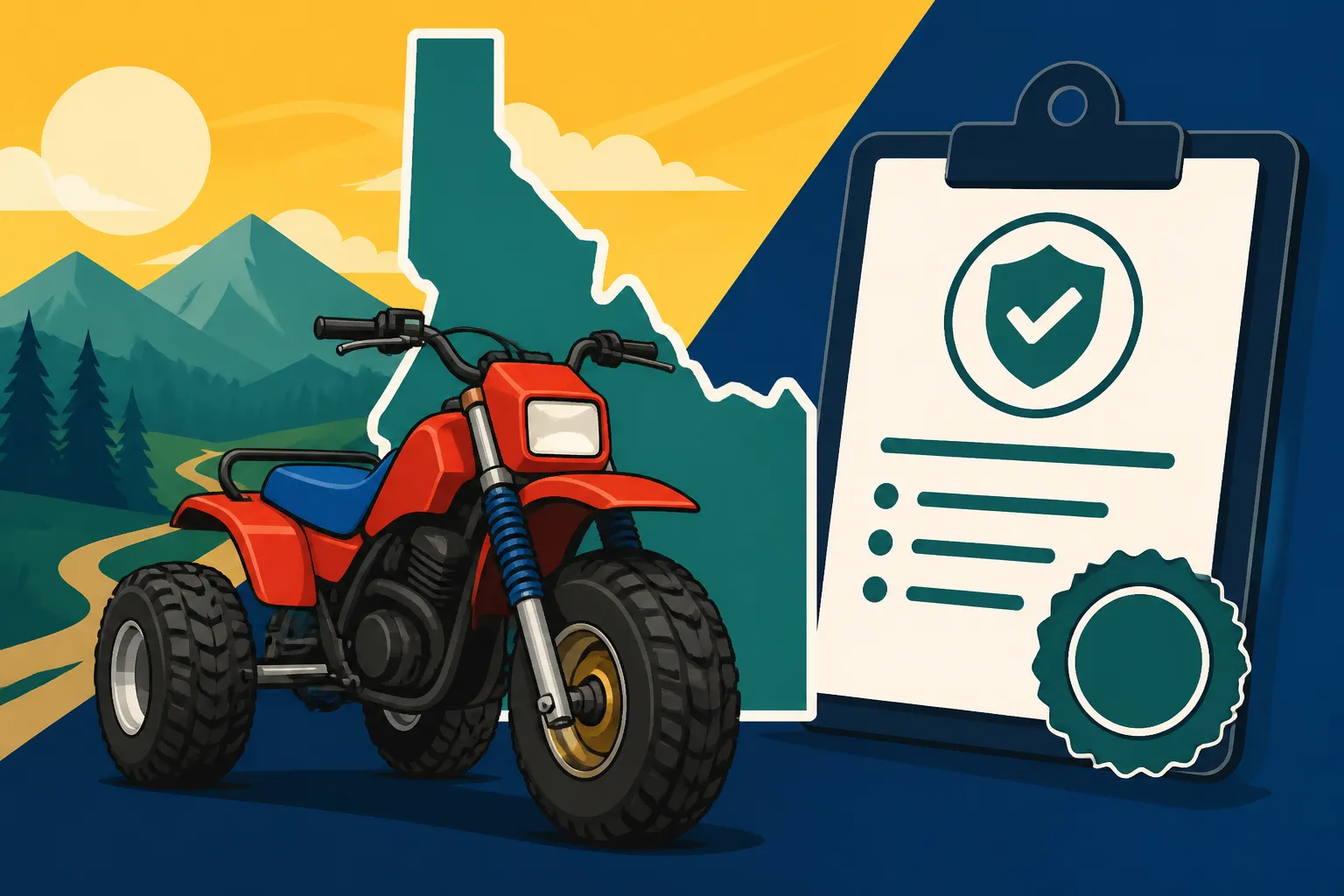
Idaho law is pretty straightforward: if your OHV has an engine over 50cc, it needs a title. This covers virtually all three-wheelers, which were generally built with engines much larger than 50cc to handle varied terrain. So, that classic Honda ATC or Yamaha Tri-Z you're so proud of? It absolutely requires a title. The challenge often isn't if it needs a title, but how to get one, especially if the original paperwork from decades ago has vanished into the ether. This is a hurdle many enthusiasts face when trying to revive or resell these vintage machines. Understanding [Machines Idaho Requires a Title For] is the first step in ensuring you're compliant. Without that title, proving ownership can become a nightmare, affecting everything from selling your machine to even registering it for public land use with an OHV sticker.
Essential Documents for Your 1990 Three-Wheeler
Securing the proper documentation for a machine that's older than some of us can be the trickiest part of the titling process. It's not uncommon for these machines to have changed hands multiple times over the years, often without formal paperwork being exchanged at every step. This can leave you in a bind when the county assessor asks for proof of ownership.
Proof of Ownership: The Missing Link for Older Machines
The cornerstone of titling any vehicle is proving you legitimately own it. For a 1990 three-wheeler, this can be a real headache. Ideally, you'd have the original Certificate of Title, properly signed over by the previous owner. But let's be realistic: for a machine from the early 90s, that's often a long shot.
Here's a breakdown of common scenarios and what generally counts as proof:
- Original Title: If, by some miracle, you have the actual Idaho title, or a title from another state, make sure it's signed by the seller (and any lienholders, if applicable) and dated. This is the gold standard.
- Bill of Sale: This is more common for older machines. A simple handwritten bill of sale might have been enough in the past, but for titling purposes today, the more detailed, the better. It needs to include:
- Full names and addresses of both buyer and seller.
- The machine's make, model, year, and crucially, the Vehicle Identification Number (VIN).
- The purchase price and date of sale.
- Signatures of both parties.
A good, clear bill of sale can bridge gaps in ownership if the original title is lost. You might even use a template from a service like LawDepot to ensure all the necessary details are included and legally sound.
- Previous Registration Documents: Sometimes, if a title is lost, a prior registration card in the seller's name can help establish a chain of ownership, especially when paired with a solid bill of sale.
- No Paperwork at All: This is the toughest situation. Maybe you inherited the machine, found it in a barn, or bought it informally years ago. Without some form of documentation, you'll be facing a significant challenge.
The county assessor's office needs to see a clear, unbroken line from the last titled owner to you. If there's a missing link, you'll need to work to establish that connection.
What if You Don't Have a Title? Addressing the "No Paperwork" Dilemma
So, you've got this awesome 1990 three-wheeler, but no title in sight. Don't despair, but do prepare for some extra legwork. The path forward depends on your specific situation.
- Contact the Previous Owner (If Possible): This is always the easiest solution. If you know who the last titled owner was, or even the person before them, they might be able to apply for a duplicate title and sign it over to you. Offer to cover the cost; it's a small price for clear ownership.
- Affidavits of Ownership: In some cases, if the original title is simply lost and the previous owner is cooperative, they might be willing to sign an affidavit stating they sold the machine to you on a certain date and that they were the legal owner. This can supplement a bill of sale.
- Bonded Title: This is often the route for machines with missing or defective titles. A bonded title essentially involves purchasing a surety bond for a certain value of the machine. This bond protects the state and any previous owners from claims if your ownership turns out to be fraudulent. The process typically involves:
- Applying for a bonded title with the Idaho Transportation Department (ITD) or your county assessor.
- Having a law enforcement officer inspect the VIN.
- Submitting an application, possibly with affidavits and a detailed explanation of how you acquired the machine.
- Purchasing the surety bond, which usually costs a percentage of the machine's value.
This process can be detailed and takes time, but it's a legitimate pathway to clear ownership.
- Court Order: As a last resort, if all other avenues fail and you have a clear claim to ownership but no documentation, you might need to pursue a court order. This is a more complex and costly process, involving legal action to have a judge declare you the rightful owner and order the state to issue a title.
When you're dealing with these kinds of situations, having solid legal forms can make a difference. Services like LawDepot offer customizable templates for bills of sale, affidavits, and other documents that can help you properly structure your claim of ownership. Always ensure that any documents you use meet Idaho's specific requirements. For a deeper dive into what makes a good transfer, check out [ATV Bill of Sale Wording Buyers Should Insist On].
The Idaho Titling Process for Your Classic OHV
Once you've gathered your ownership documents (or have a plan to address missing ones), it's time to visit the local authorities. The process itself isn't terribly complicated once you have everything in order, but knowing what to expect can save you a lot of time and frustration.
Your County Assessor's Office: The First Stop
The county assessor's motor vehicle department is where all OHV titling magic happens in Idaho. This isn't the Department of Parks and Recreation (which handles stickers); this is about legal ownership. You'll need to visit the assessor's office in the county where you reside.
Here’s a typical rundown of what you’ll do:
- Gather Your Documents: Bring every piece of paperwork you have relating to the three-wheeler: the bill of sale, any old registration cards, previous titles (if you have one, even if it's from out of state), and certainly your personal identification (driver's license).
- Fill Out the Application: You'll complete an "Application for Certificate of Title" form. This asks for your personal information, details about the OHV (make, model, year, VIN), and how you acquired it. Be prepared to clearly state the purchase price for tax purposes.
- VIN Inspection: For older machines, especially those without a clear title history, the county assessor's office or a designated law enforcement officer may need to visually inspect the Vehicle Identification Number (VIN) on your three-wheeler. This is to verify that the VIN matches your paperwork and hasn't been altered or is not reported stolen. Make sure your three-wheeler is accessible for this inspection. Sometimes they'll do it on-site at the office; other times, you might need to bring the machine to a specific location or have an officer come to you. You can learn more about this process and the documentation required in [Idaho OHV Title Application at the County Assessor].
- Pay Fees: You'll pay the Idaho title fee at this time.
- Sales Tax or Use Tax: If you purchased the three-wheeler recently, you'll likely pay sales tax based on the purchase price. If you bought it out-of-state and brought it into Idaho, or if you didn't pay sales tax at the time of purchase, you might owe Idaho use tax. Even for a 1990 model, these taxes apply unless you meet a specific exemption.
The assessor's staff are usually helpful, but it's your responsibility to come prepared with the necessary documentation and information.
Fees, Taxes, and What to Expect
When you're titling your 1990 three-wheeler, expect a few costs beyond just the title itself. These fees are standard for nearly all OHVs in Idaho, regardless of their age.
- Idaho Title Fee: There is a specific fee for issuing a new certificate of title. This is a one-time charge per title. It's a modest amount, but it's essential for getting that ownership document in your hand. You can find out more about this in [Idaho Title Fee at the County Assessor].
- Sales Tax: If you bought your three-wheeler from a private party or a dealer, you will likely owe Idaho sales tax. This is calculated as a percentage of the purchase price. Even if it was a cash deal from a buddy, the state expects its cut. It's important to declare the actual purchase price. Providing a properly drafted bill of sale, perhaps generated using a platform like LawDepot, will help substantiate the price you paid. For details on how this applies to private sales, read up on [Idaho Sales Tax on an ATV Purchase].
- Use Tax: If you brought the three-wheeler into Idaho from another state, or if you purchased it from an out-of-state seller who didn't collect Idaho sales tax, you might be assessed Idaho use tax. This is essentially the same rate as sales tax but applies to goods purchased for use in Idaho where sales tax wasn't collected at the point of sale. Don't try to dodge this; the state often catches up, especially when you go to title the machine.
- Late Fees: While less common for original titling of old machines, if you are transferring a title from a previous owner and delay too long, some states impose late fees. It's always best to complete the titling process as soon as possible after acquiring an OHV.
Once all fees and taxes are paid and your application is approved, the county assessor's office will process your new title. It might be mailed to you, or in some cases, you might receive a temporary document on the spot. The actual physical title can take a few weeks to arrive.
Common Pitfalls and Solutions for Older Three-Wheelers
Titling a vintage three-wheeler often comes with its own unique set of challenges. From hard-to-read VINs to lost paperwork, these older machines can throw some curveballs. Understanding these potential roadblocks beforehand can help you navigate them more smoothly.
VIN Verification Challenges on Vintage Machines
The Vehicle Identification Number (VIN) is your machine's unique fingerprint, and it's absolutely critical for titling. For a 1990 three-wheeler, finding and verifying this VIN can sometimes be a struggle.
- Faded or Rusted VINs: After decades of trail dust, mud, and weather exposure, the VIN stamped on the frame can become corroded, painted over, or simply worn down to the point of being illegible. The assessor's office or law enforcement officer needs to clearly read and verify this number.
- Solution: Gently clean the area around the VIN. Use a wire brush (carefully!) or fine sandpaper to remove rust or paint buildup. Take a clear photo once it's legible. If it's truly unreadable, you might need to talk to the assessor about specific procedures for verifying a partial or obscure VIN, which could involve an expert inspection. [Where the VIN Sits on a Side-by-Side Frame] offers tips on locating the VIN.
- VIN Discrepancies: What if the VIN on your bill of sale doesn't exactly match the one on the frame, perhaps due to a typo from years ago? Or what if a previous owner performed an engine swap that changed the VIN plate (though less common on the frame)?
- Solution: If it's a minor clerical error, a sworn affidavit from the seller might correct it. If it's a significant discrepancy, the assessor's office will likely require a thorough investigation to ensure the machine isn't stolen or cobbled together from different parts. This could involve contacting previous owners or even law enforcement. Don't be surprised if this takes extra time. If you face a situation where you need to clarify a VIN error, reviewing [Fixing a Wrong VIN on an Idaho Title] could be helpful.
Always double-check the VIN on any paperwork you receive against the actual VIN on the machine before you finalize a purchase. It's much harder to fix a VIN problem after the sale is done.
Bonded Titles and Other Workarounds for Lost Documentation
We talked about bonded titles earlier, but it's worth reiterating their importance for older machines where the original title has simply vanished. This isn't just a suggestion; for many, it's the only practical pathway to legitimate ownership.
- When a Bonded Title is Your Best Bet: If you've exhausted all options to get a signed title from a previous owner (they're deceased, unreachable, or simply uncooperative) and you have a clear, demonstrable claim to ownership (e.g., a bill of sale, even if informal), a bonded title is designed for you. It legally establishes your ownership while providing financial protection against potential future claims.
- The Process in Brief: You'll typically apply through the Idaho Transportation Department or your local county assessor. It involves submitting your evidence of ownership, a VIN inspection, and purchasing a surety bond equal to 1.5 times the value of the OHV. After a waiting period (often three years), if no one claims ownership, the bond is released, and you receive a standard title.
- Court-Ordered Titles: In extremely rare cases, such as inheriting a machine with absolutely no paperwork and no living relatives to attest to ownership, a court order might be necessary. This is a legal proceeding where a judge reviews your case and, if satisfied, orders the state to issue a title. This is often the most expensive and time-consuming route, so it's usually considered a last resort.
These workarounds exist because the state understands that life happens, and paperwork gets lost. The goal is to provide a legal mechanism for rightful owners to prove their claim, even when traditional documents are missing.
Registration vs. Titling: Clearing Up the Confusion
One of the most frequent sources of confusion for OHV owners, particularly those with older machines, is the distinction between titling and registration. They are related but serve entirely different purposes.
- Titling: This is about ownership. Your title is the legal document that proves you are the owner of the 1990 three-wheeler. It's like the deed to your house. You only get a title once, and it's transferred when the machine changes hands. Without a title, you generally cannot legally sell the machine, and you may face difficulties proving your right to operate it.
- Registration (OHV Sticker): This is about permission to ride on public land. Once your three-wheeler is titled, you then register it annually (or for multi-year terms) with the Idaho Department of Parks and Recreation by purchasing an OHV sticker. This sticker allows you to legally operate your machine on designated public trails, roads, and recreation areas in Idaho. Even if your 1990 three-wheeler is legally titled, you cannot ride it on Idaho's public lands without a current, valid OHV sticker.
Many people think, "It's an old three-wheeler, I don't need a sticker for it." While that may have been true on private property, if you plan to hit any Idaho trails, national forests, or BLM lands, that sticker is mandatory. The money from these stickers goes directly back into maintaining and improving the very trails you ride. Understanding this distinction is crucial, as you'll visit different offices for each: the county assessor for your title, and vendors like county DMVs or authorized dealers for your annual sticker. For more clarity on this, refer to [Why an Idaho Plate Is Not a Registration on Its Own] and [Titling and Registering an ATV in Idaho].
Overview of Titling & Registration Steps
To help visualize the distinct steps for your 1990 three-wheeler, here's a quick comparison:
| Feature | Titling (Ownership) | Registration (Public Land Use) |
|---|---|---|
| Purpose | Establishes legal ownership | Grants permission to ride on public land |
| Document Issued | Certificate of Title | OHV Sticker (Decal) |
| Issued By | County Assessor's Office | Idaho Department of Parks and Recreation (through vendors) |
| Frequency | One-time (transfers with sale) | Annually (or multi-year) |
| Key Requirement | Proof of ownership (prior title, bill of sale, bond) | Valid title (or out-of-state equivalent), payment of fee |
| Age Implications | Required for OHVs over 50cc, regardless of age | Required for all OHVs on public land |
| Where to Get Started | Your local County Assessor's Office | Authorized vendors, county DMVs, or online |
Getting your 1990 three-wheeler titled in Idaho might require a bit more legwork than a newer machine, especially if you're dealing with lost or informal paperwork. But with patience, diligence, and the right documentation, you can confidently hit the trails knowing your vintage ride is fully legitimate and ready for adventure.
Disclaimer
This article is for general informational purposes only and does not constitute professional advice. Laws, prices and regulations vary by location and change over time. Consult a qualified professional for guidance on your specific situation.