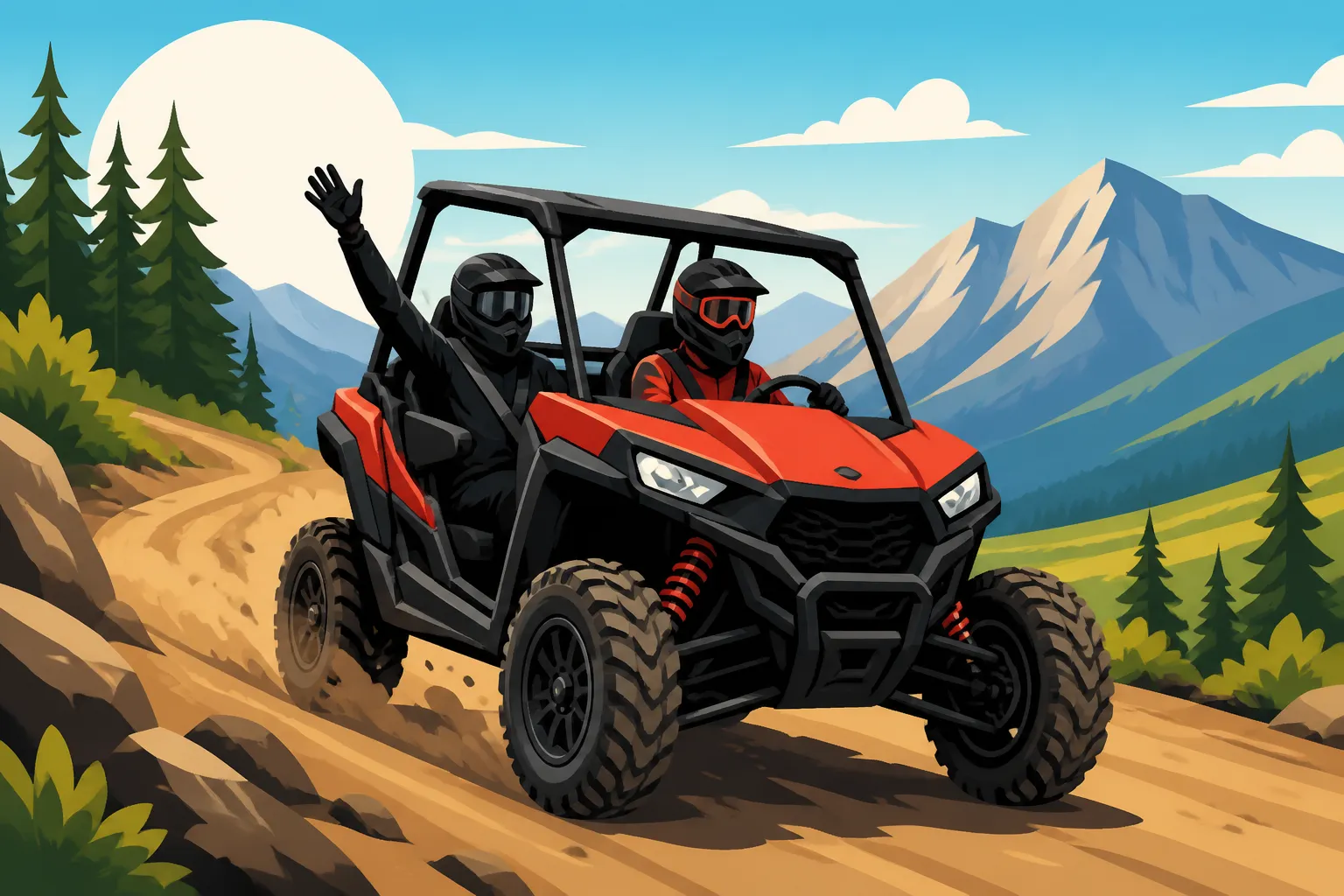
Passengers on a Road Section
We all know that feeling: you're planning an epic ride down an Idaho county road, maybe just a short hop to the trailhead or a scenic cruise through a mountain town, and someone asks, "Can I ride along?" It seems like a simple question, but when it comes to off-highway vehicles (OHVs) on public roads in Idaho, rules about passengers can get surprisingly complex and even downright confusing. This guide is here to untangle those rules, clarify what's allowed, and help you keep everyone safe and legal when you're carrying passengers on designated road sections in Idaho.
Idaho's General Stance on Passengers on OHVs
Idaho's rules around OHVs, particularly when they venture onto paved or gravel public roads, are designed first and foremost with safety in mind. One of the biggest points of confusion for riders, especially those new to the state or new to the street-legal game, revolves around carrying passengers. It’s not just about whether you can fit someone on your machine, but whether the machine is designed for them and whether the law permits it on that specific stretch of road.
Understanding the "Designed for" Rule
At the heart of Idaho's passenger regulations for OHVs is the concept of a machine being "designed for" multiple occupants. This isn't just a suggestion; it's a critical legal distinction. For an ATV (quad) or a motorcycle, the vast majority of models are designed for a single operator. Even if there's a small rack or a somewhat extended seat, if the manufacturer didn't explicitly build it with a separate, secure seating position and handholds for a passenger, then it's generally considered a single-rider machine. Attempting to squeeze a second person onto an ATV not designed for a passenger can lead to instability, reduce the operator's control, and, importantly, result in a citation. This "designed for" principle is often where riders get into trouble, assuming that if there's space, it's okay. Unfortunately, the law doesn't see it that way.
Side-by-sides (UTVs), on the other hand, are almost universally designed for multiple occupants. Whether it's a two-seater sport model or a six-seater utility rig, these machines come from the factory with bucket seats or bench seating, seatbelts, and often grab handles for passengers. The number of passengers you can legally carry in a side-by-side on an Idaho road is directly tied to the number of factory-installed, designated seating positions. If your UTV has four seatbelts, you can carry three passengers plus yourself. If it has two, it's just you and one passenger. Any modifications to add extra seating need to meet specific safety standards and often still face scrutiny under the "original design" rule.
Why Off-Road vs. Road Riding Matters for Passengers
It's crucial to understand that the rules for carrying passengers can differ significantly depending on whether you're on a designated off-road trail or a public road section. When you're deep in the [Idaho's Sawtooth National Forest Trails] or navigating the [Danskin Mountains OHV Area Near Boise], the Idaho Department of Parks and Recreation (IDPR) oversees the rules, which largely focus on safe operation, age limits for operators, and general trail etiquette. While carrying an extra person on an ATV not designed for it is still inherently risky and frowned upon, enforcement might be less stringent about passenger capacity than it is on a county road.
However, once you leave the dirt trail and transition onto a county road that is open to OHV use, you're entering the realm of Idaho motor vehicle law. This means that law enforcement, such as a county sheriff or state patrol, will be enforcing regulations that are much closer to those for conventional vehicles. On roads, the specific requirements for passengers – their age, where they sit, and the safety equipment available – become far more critical. This distinction often catches riders off guard, as they might be accustomed to more relaxed rules while purely off-road. The moment your tires hit that gravel road or paved section, you need to be aware that the rules of the road, including passenger capacity and safety, are now in full effect.
Specific Rules for Riding Passengers on Idaho Roads
Navigating Idaho's roads with your OHV means adhering to a specific set of rules, and nowhere is this more critical than when carrying passengers. It’s not just about getting from point A to point B; it’s about doing it legally and safely. Ignoring these rules can lead to fines, invalidate insurance in the event of an accident, and most importantly, jeopardize the safety of your riders.
One Rider, One Seat: The Basic Principle
For ATVs, the fundamental rule is "one rider, one seat." Unless your all-terrain vehicle was specifically manufactured and designed by the factory to carry a passenger, you are prohibited from doing so on any public road in Idaho. This means no doubling up on single-rider quads, even if it's just for a short distance or if the passenger is small. The design includes features like a designated passenger seat, proper footrests, and handholds separate from the operator's. Very few ATVs are truly designed this way. The typical sport quad or even a utility ATV is built for one person, period. [Carrying a Passenger on a One-Seat Quad] is a common infraction that law enforcement officers look for, especially when OHVs are crossing or traveling on roads.
This rule is rooted in safety. ATVs are nimble machines, and the weight distribution changes dramatically with an extra passenger. This can make steering, braking, and maintaining balance incredibly difficult, particularly on paved surfaces where tire grip differs from dirt. Even a small shift in passenger weight can cause an operator to lose control, leading to serious accidents. If you are operating an ATV on an Idaho county road, make absolutely sure it is a factory two-up model if you plan to carry anyone else.
Side-by-Sides and Designated Seating
Side-by-sides (UTVs) are generally more forgiving when it comes to passengers because they are inherently designed for multiple occupants. However, even with UTVs, there are strict limits: you can only carry as many passengers as there are designated, factory-installed seating positions equipped with seatbelts. If your side-by-side has two seats, you can carry one passenger. If it has four seats, you can carry three passengers. It sounds obvious, but riders sometimes try to squeeze an extra person onto a bench seat or allow someone to stand in the bed, which is illegal and extremely dangerous on public roads.
Every passenger, regardless of age, must occupy a designated seat and use the available seatbelt. These machines are often driven on roads with other vehicles, meaning sudden stops or evasive maneuvers can happen. Without a proper seat and seatbelt, a passenger can be ejected from the vehicle with severe consequences. You might consider aftermarket seating options, but remember that for road legality, these must typically meet rigorous safety standards and be properly installed, often mirroring the factory design intent. Accessories from companies like SuperATV offer robust aftermarket harnesses and safety enclosures that, while not adding seating capacity, can enhance the safety of existing passengers.
Passenger Rules on Restricted Use Plates
For many riders, getting an [Idaho's Restricted Vehicle Plate Explained] is the key to legally traversing county roads to connect trails. However, the plate itself doesn't change the fundamental passenger rules for your OHV. Whether you have a Restricted Use Plate or not, the passenger rules still apply based on your machine type and its factory design.
If you're riding an ATV with an R plate, you're still limited to one rider unless that ATV is explicitly designed by the manufacturer for two people. For a side-by-side with an R plate, you're still limited to the number of factory-installed seating positions with seatbelts. The Restricted Use Plate grants you the privilege to operate on specific county roads, but it doesn't waive any of the fundamental safety or passenger regulations. It's crucial to understand that [What Idaho Requires to Ride a County Road] includes adherence to all general traffic and OHV-specific laws, not just having the proper plate and sticker. Always assume that if you're on a public road, the full suite of rules applies to your passengers, regardless of the plate on your machine.
Age and Supervision Rules for Young Passengers
Riding with children or younger teenagers on an OHV can be a fantastic way to introduce them to the outdoor lifestyle, but it comes with a strict set of responsibilities and legal requirements, especially when you're on Idaho's public roads. The safety of young passengers is paramount, and Idaho law has specific provisions to ensure they are protected.
Young Passengers on Public Roads
Idaho law is very clear: a passenger under the age of 15 may not ride on an ATV or motorcycle that is being operated on a public highway or road. This rule applies even if the ATV is a rare two-up model explicitly designed for a passenger. The rationale behind this is the inherent risk and the dynamic nature of ATVs, even those with dual seating. Young children, despite their size, can struggle to maintain balance and secure grip, especially during bumps, turns, or sudden stops that are common on roads shared with other vehicles.
For side-by-sides (UTVs), the rules are slightly different because of their more stable, car-like seating configuration. Children under 15 are generally allowed as passengers in a side-by-side on public roads, provided they meet two critical conditions: they must be able to sit upright with their back against the seat, and their feet must be able to reach the floorboards. This ensures they can be properly secured by the seatbelt and are not in danger of slipping or being unable to brace themselves. If a child is too small to meet these criteria, they should not be a passenger in a UTV on a public road, even if a seatbelt is present. This is where a quick pre-ride check for comfort and security is essential. [Idaho Rules for a Child Passenger] highlight these requirements, emphasizing that proper fit and secure restraint are non-negotiable.
Supervision and Adult Rider Responsibilities
When carrying any passenger, especially a minor, on an OHV on a public road, the adult operator assumes significant responsibility. For young passengers in a side-by-side, it's not enough that they simply meet the height and foot placement requirements; the operator must ensure they are properly secured with a seatbelt at all times. This includes checking the fit of the seatbelt and making sure it's snug across their chest and lap.
Beyond the physical restraints, the operator is responsible for maintaining a safe riding environment. This means operating the OHV responsibly, adhering to speed limits, and being extra cautious around turns, bumps, and other traffic. Young passengers, especially those new to OHV riding, might not anticipate the machine's movements as an experienced adult would. It’s the adult operator’s job to ride defensively and anticipate situations that could jostle or surprise a child. While [Idaho Rules for Riders Under 16 on Roads] primarily focus on operators, the underlying principles of safety and supervision extend directly to carrying young passengers, making it a critical aspect of responsible OHV use.
Exceptions and Private Land Considerations
It's important to remember that these strict passenger rules primarily apply to public roads and designated OHV trails. When you are on private land – your own property, a friend's ranch with permission, or a private riding park – the state's public road laws regarding passengers typically do not apply. On private land, owners or operators generally have more leeway to set their own rules for passengers, within reason and always with safety as the primary concern. For instance, on a large ranch, you might see a utility side-by-side carrying extra hands in the bed for short distances, which would be illegal on a public road.
However, even on private land, common sense and a strong commitment to safety should always prevail. Just because it's legal doesn't mean it's safe to overload a machine or carry passengers insecurely. Accidents can happen anywhere, and the consequences of an injury, especially to a child, are just as real on private property as on a public road. So while the specific legal requirements might ease up on private land, the moral obligation to protect your passengers remains constant.
Safety Gear and Machine Requirements for Passengers
Ensuring the safety of your passengers on an Idaho road ride goes beyond just fitting them in a seat. It involves proper safety gear and confirming your machine is equipped to protect them. These requirements are not just about avoiding a ticket; they are crucial layers of protection that can make the difference in preventing or minimizing injuries during an unforeseen incident.
Helmet Laws for Passengers
Idaho's helmet laws are a critical component of OHV safety, and they apply equally to passengers as they do to operators, especially when on public roads. In Idaho, any person under the age of 18, whether operating or riding as a passenger on an ATV, UTV, or off-road motorcycle, must wear an approved safety helmet. This isn't a suggestion; it's a mandatory legal requirement. The helmet must be properly fitted and securely fastened. It's a common mistake for adults to put a helmet on a child but not ensure it's the right size or that the chin strap is tight, rendering it less effective.
For passengers 18 years of age and older, helmets are not legally required on OHVs on Idaho roads. However, strongly consider this a recommendation rather than a waiver of good judgment. Head injuries are among the most serious and often life-altering consequences of OHV accidents. Choosing to wear a helmet, even when not legally mandated, is a smart decision for any passenger on an OHV, particularly given the unpredictability of road conditions and interactions with other vehicles. Always remember [Idaho Helmet Rules for Riders Under 18] and proactively ensure all young passengers are compliant.
Seatbelts, Handholds, and Footrests
Beyond helmets, securing passengers within the machine itself is paramount. For side-by-sides, every passenger must be secured by a factory-installed seatbelt. These are designed to keep occupants contained within the vehicle during sudden stops, impacts, or rollovers. Crucially, seatbelts should never be modified or bypassed. If a seatbelt is damaged, it needs to be repaired or replaced before carrying passengers.
Handholds are another critical, often overlooked, safety feature. Most side-by-sides come with grab handles for passengers to hold onto, which significantly helps them brace themselves against bumps, turns, and acceleration/deceleration. It's important to instruct passengers to use these. For ATVs designed for two riders, there should be dedicated passenger handholds and separate footrests, distinct from the operator's. These features prevent the passenger from interfering with the operator's control and provide a secure, stable position. If your two-up ATV lacks these, it’s not truly designed for a passenger and shouldn't be used as such on roads.
Machine Modifications for Passenger Safety
While aftermarket parts can enhance your OHV, it’s vital to distinguish between performance upgrades and safety modifications, especially those related to passengers. When considering modifications, always prioritize those that directly improve passenger safety within the bounds of legal requirements. For instance, upgrading stock seatbelts to multi-point harnesses (like those offered by SuperATV) can provide a much more secure restraint for passengers in a side-by-side, particularly during aggressive trail riding or if you encounter unexpected road hazards. While not always legally required beyond the factory seatbelt, these can be a significant safety upgrade.
Similarly, adding a full enclosure or door nets (again, many manufacturers including SuperATV offer these) can prevent limbs from extending outside the vehicle during a jostle or minor side impact. These types of enhancements, while not adding seating capacity, improve the protection of the passengers already legally within the machine. When making any modifications, ensure they are compatible with your machine's design and do not compromise other safety features. Always consult your owner's manual or a certified mechanic if you're unsure about the impact of a modification on passenger safety or legality. [Seat Belts and Nets in a Side-by-Side] are essential for passenger protection, and thoughtful upgrades can further enhance this.
Here’s a quick overview of passenger considerations for common Idaho OHV types on public roads:
| Machine Type | Passenger Capacity Rule (On Road) | Under 15 Passenger Allowed? | Helmet for Under 18? | Seatbelts/Handholds | Key Safety Point |
|---|---|---|---|---|---|
| ATV (Quad) | 1 operator ONLY (unless factory designed for 2) | NO | YES | Required if 2-up | Most are 1-person only. Do not double up unless explicitly a 2-up model with separate seat, footrests, and handholds. |
| Side-by-Side (UTV) | Number of factory-installed seating positions | YES (if feet reach floor) | YES | ALWAYS Required | Every passenger must have a designated seat with a seatbelt and their feet must reach the floorboards. |
| Off-Road Motorcycle | 1 operator ONLY (unless factory designed for 2) | NO | YES | Required if 2-up | Generally designed for solo riding. Carrying a passenger is highly restricted and often unsafe on public roads. |
Common Misconceptions and Legal Risks
Despite the clear rules, it's easy to fall into common traps or misunderstandings when it comes to carrying passengers on your OHV on Idaho roads. These misconceptions can lead to dangerous situations, legal penalties, and significant personal liability. Being aware of these pitfalls is just as important as knowing the rules themselves.
"Just a Short Hop" Mentality
One of the most prevalent misconceptions is the "it's just a short hop" or "we're only going to the end of the street" mentality. Riders often rationalize bending the rules for brief distances, thinking the risk is minimal or they won't get caught. This is a dangerous gamble. Accidents don't schedule themselves; they can happen in a matter of seconds, regardless of the distance traveled. A quick ride around the corner with an extra person on a single-seat ATV, or with a child not properly secured in a side-by-side, carries the exact same legal and safety risks as a longer journey.
Law enforcement officers are well aware of this common behavior. They often patrol areas where OHVs transition from trails to roads precisely because these "short hops" are frequent. A deputy seeing an improperly loaded OHV, especially one with an unsecured child, is likely to pull you over, regardless of how far you're going. The fine for [Idaho Penalties for a Missing Restricted Plate] or an unstickered machine can be steep, but penalties for unsafe passenger transport can be even more severe, sometimes including child endangerment charges depending on the specifics. Don't let convenience override safety or legality for any distance, no matter how short.
Insurance Implications for Passenger Injuries
This is where the rubber truly meets the road, so to speak. If you're involved in an accident on an Idaho public road while carrying a passenger illegally – for example, an extra person on an ATV not designed for two, or a child not properly restrained in a UTV – your insurance coverage could be severely impacted or even denied. Most insurance policies have clauses that relate to legal operation of the vehicle. If you are found to be operating outside the law at the time of an accident, particularly regarding passenger safety, the insurance company may argue that you violated the terms of your policy.
Imagine a scenario where an illegally carried passenger is injured. Without insurance coverage, you, as the operator and owner of the OHV, could be held personally liable for all medical expenses, lost wages, and pain and suffering of that injured passenger. This could amount to hundreds of thousands of dollars, completely bankrupting an individual. While [Idaho Liability Insurance Minimums for Riders] exist, these minimums might not cover an injury to an illegally carried passenger, or the claim could be outright denied. Always read your policy carefully and ensure you are operating within the legal framework to maintain your coverage. This is a very real, non-negotiable risk that often goes unconsidered until it's too late.
Penalties for Non-Compliance
Violating Idaho's passenger rules for OHVs on public roads comes with tangible penalties. Depending on the specific infraction, these can include:
- Fines: Standard traffic citations for illegal passenger transport, improper machine operation, or safety violations. These can range from dozens to hundreds of dollars per offense.
- Impoundment: In extreme cases of reckless operation or severe safety violations, particularly involving minors, law enforcement has the authority to impound your machine.
- Increased Insurance Premiums: Even if your insurance pays out, a citation for unsafe operation will likely lead to a significant increase in your premiums.
- Civil Liability: As discussed, personal financial responsibility for injuries if insurance denies a claim.
- Criminal Charges: In the most serious scenarios, especially if a child is gravely injured due to gross negligence, criminal charges such as child endangerment or reckless endangerment could be filed.
It's critical to treat OHV operation on Idaho roads with the same seriousness as operating any other motor vehicle. The rules are in place for everyone's safety, and ignoring them not only puts your passengers at risk but also exposes you to substantial legal and financial repercussions. Always prioritize safety, adhere to the "designed for" rules, ensure proper restraints, and comply with all age and helmet regulations to avoid these severe consequences.
Disclaimer
This article is for general informational purposes only and does not constitute professional advice. Laws, prices and regulations vary by location and change over time. Consult a qualified professional for guidance on your specific situation.