Idaho Road Rules for a 15-Year-Old
You've got a 15-year-old who's chomping at the bit to ride their ATV or side-by-side not just on the trails, but maybe even from the campsite to the store, or along a quiet county road. It's a fantastic thought, offering independence and real-world experience, but Idaho's rules for young riders on public roads can feel like a tangled mess of regulations. This guide will help you understand exactly what's required for a 15-year-old to legally and safely operate an off-highway vehicle (OHV) on Idaho's public roads, breaking down the permits, supervision, and machine requirements.
Understanding the Legal Landscape for Young Riders in Idaho
For parents in Idaho, the excitement of watching their teenager develop riding skills often comes with a healthy dose of concern about safety and legal compliance. While Idaho is generally very OHV-friendly, the rules change significantly the moment you transition from a designated trail onto a public road, even a gravel county road. This distinction is crucial, especially when it comes to young riders. Many parents assume that if their child can handle a machine on a trail, they're automatically good to go on a back road, but Idaho law views these two environments very differently. The state aims to protect young riders, other motorists, and pedestrians by imposing stricter requirements for road use.
The Core Idaho Philosophy for Youth Riders
Idaho's approach to young OHV riders is rooted in a balance of fostering responsible outdoor recreation and ensuring public safety. On trails, the focus is more on basic safety education and supervision, but on roads, the stakes are higher. A 15-year-old might be an incredibly skilled trail rider, capable of navigating challenging terrain, but operating an OHV on a public road demands a different set of skills: awareness of traffic laws, understanding of shared-use etiquette, and the ability to react to unforeseen road hazards like oncoming vehicles or sudden stops. The state acknowledges the desire for young people to gain independence, but it prioritizes their safety and the safety of everyone else on the road. This means that merely having a machine that can go on the road isn't enough; the rider themselves must meet specific qualifications.
Distinction Between Trail Riding and Road Riding Rules
It’s easy to get these two sets of rules mixed up, especially since many rides blend both environments. Think of it this way: when you're on a dedicated OHV trail system, you're in a specialized environment where other users are typically expecting OHV traffic. Rules there focus on things like [Idaho OHV Sticker Price This Year], basic safety gear, and often, youth machine size limits, like those covered in [Youth Machine Size Rules Idaho Parents Ask About]. However, once you put a tire on a county road, you're entering shared public infrastructure. Here, you're sharing the space with cars, trucks, bicycles, and even pedestrians who might not be looking out for an OHV in the same way they would on a trail. This shift in environment brings with it a whole new set of rules regarding driver qualifications, machine equipment, and supervision. The requirements for riding a public road are specifically designed to bridge the gap between trail riding and mainstream vehicle operation, even if the road is unpaved and seems remote.
Driver's License and Permit Requirements for 15-Year-Olds
This is often the biggest hurdle and source of confusion for parents of eager 15-year-old riders. You might think that because an OHV isn't a "car," the regular driver's license rules don't apply. But when it comes to riding an OHV on Idaho's public roads, a driver's license or permit is absolutely essential for anyone under 18. This isn't just a suggestion; it's a legal requirement that carries significant weight, ensuring that even young operators have a foundational understanding of road rules and responsibilities before venturing out. It's not about how well they can operate the throttle and brakes, but how well they can navigate the complexities of shared roadways.
Idaho's Learner's Permit for Road Use
For a 15-year-old, the primary path to legally operating an OHV on an Idaho public road is through an Idaho driver's training permit, often referred to as a learner's permit. This permit, typically obtained after passing a written knowledge test and enrolling in a driver's education course, allows a young person to drive a motor vehicle on public roads under specific conditions. Crucially, this includes OHVs that have been made street-legal and are being operated on roads where OHV use is permitted. Without this permit, or a full driver's license, a 15-year-old simply cannot legally operate an OHV on public roads in Idaho, regardless of their skill level or whether the machine is stickered and plated. The permit ensures they've at least begun the formal process of learning traffic laws and safe driving practices.
The permit itself comes with strict stipulations that directly impact OHV riding. For instance, the permit holder must always be accompanied by a licensed driver who is at least 21 years old and sitting in the passenger seat (if applicable to the OHV, like a side-by-side) or within close proximity and direct supervision. This supervision isn't just a suggestion; it's a legal mandate tied to the permit. This means that while a 15-year-old might feel grown up operating their own machine, they are still under the direct legal responsibility of an adult. Furthermore, the permit has limitations on nighttime driving and the number of passengers, which also apply when operating an OHV on a road. For a full breakdown of general requirements, you might want to review [Driver's License Requirements on Idaho Roads].
Age Restrictions and Machine Types
While a 15-year-old can obtain a learner's permit, there are still specific age-related restrictions on what they can ride and where. Generally, a 15-year-old with a valid learner's permit, under direct supervision, can operate a restricted-use OHV on approved public roads. The machine itself must meet certain criteria to be considered "street legal" enough for these roads, which we'll cover later. Idaho law allows those 15 and older to ride OHVs on county roads and roads open by city or county ordinance, provided they meet all other requirements. However, they are still typically barred from state and federal highways, just like any other OHV.
It's also important to remember that these age and permit rules apply to OHVs like ATVs, UTVs, and dirt bikes when ridden on roads. A 15-year-old could be riding a quad with a [Idaho Restricted Vehicle Plate Explained] and all the necessary lights, but without that learner's permit and adult supervision, they are still in violation if they are on a public road. This is a common misunderstanding that can lead to fines and headaches. The combination of an appropriately equipped machine and a properly licensed (or permitted) and supervised operator is what Idaho requires to ride legally on roads.
Specific OHV Road Rules for Young Operators
Navigating Idaho's roads on an OHV as a 15-year-old isn't just about having the right permit; it's also about understanding the specific operational rules that govern OHV use on public roadways. These rules are designed to integrate OHVs safely into the broader traffic flow, even on the quietest back roads. It's a different game than trail riding, where the path ahead might be the only concern. On a road, you're sharing space with others, and that means adhering to universal traffic laws, plus some OHV-specific caveats.
Where a 15-Year-Old Can and Cannot Ride
Even with a learner's permit and adult supervision, a 15-year-old cannot simply ride their OHV on any public road in Idaho. The general rule is that OHVs, including those operated by young riders, are typically permitted on county roads and some city streets where local ordinances specifically allow it. These are often designated as "open by default" roads for restricted-use vehicles or have specific signage. However, state highways (like US-95 or Highway 55) and federal highways (like I-84) are almost universally off-limits to OHVs, regardless of age or street-legal status. There might be specific designated crossing points, but sustained travel on these high-speed, high-traffic routes is prohibited. For more details on this, you can check out [Can You Ride an OHV on an Idaho State Highway?].
It's absolutely vital for parents and young riders to be aware of local ordinances. What's legal in one county or town might be prohibited just across the county line. Many mountain towns, for example, have embraced OHV traffic to support tourism, while others may have stricter rules within their city limits. Always consult local county and city ordinances, and look for signage before venturing onto roads, especially in unfamiliar areas. This diligence prevents accidental violations and keeps everyone safe. The state provides resources, and sometimes local powersports shops are excellent sources of information on local riding zones.
Passenger Rules and Machine Capacity
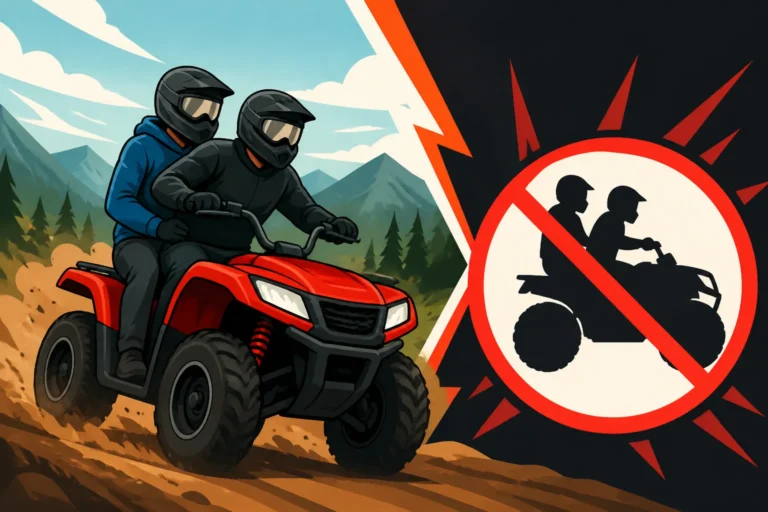
When a 15-year-old is operating an OHV on an Idaho public road, passenger rules become even more stringent. First and foremost, the OHV must be designed by the manufacturer to carry passengers if any are present. A single-rider ATV, for example, is not permitted to carry a passenger on a public road, even if the driver is fully legal. For side-by-sides, which are designed for multiple occupants, all passengers must be seated in designated seating positions and use appropriate safety restraints, such as seatbelts. The number of passengers cannot exceed the manufacturer's design capacity for the machine. For instance, if you have a two-seat side-by-side, you cannot squeeze three people into it.
Furthermore, if the 15-year-old is driving with a learner's permit, the rules of that permit still apply regarding passengers. Often, learner's permits have restrictions on the number of non-family passengers that can be in the vehicle. While the OHV-specific rules don't always directly mirror car rules, the spirit of caution and limited exposure for new drivers prevails. The supervising adult must always be present as required by the learner's permit. These rules might feel restrictive, especially for a group of friends wanting to ride together, but they are in place to minimize risks associated with less experienced drivers in a shared traffic environment.
Supervision Requirements: The 300-Foot Rule
When a 15-year-old, or any rider under 16, is operating an OHV on public lands in Idaho, including legally opened county roads, they must be under the direct supervision of an adult. This isn't a casual "they're somewhere nearby" kind of rule. Idaho law is quite specific about what "direct supervision" means, and it's particularly critical when riding on roads where traffic, even light traffic, is a factor.
What "Direct Supervision" Actually Means
For riders under 16, Idaho law mandates that they must be under the direct supervision of an adult who is at least 18 years old (though for a learner's permit, the supervising driver must be 21 or older). The critical part of this is the "300-foot rule." This means the adult must be within 300 feet of the young rider and must be able to visually observe and communicate with them at all times. This isn't always easy to maintain, especially on winding roads or in dusty conditions. The adult might be on another OHV, in a truck ahead or behind, or even riding as a passenger in the same side-by-side. The key is constant, unobstructed oversight. You can learn more about this specific requirement in [Supervising a Young Rider Within 300 Feet].
This 300-foot rule exists for immediate intervention. If the young rider encounters a sudden obstacle, makes an incorrect turn, or has a mechanical issue, the supervising adult needs to be close enough to react quickly. On a public road, this ability to react is even more vital due to potential interactions with other vehicles. It means that leading a group ride with your 15-year-old far back in the pack simply won't cut it. They need to be within that close visual and communication range, which can sometimes limit how fast or far apart the group can spread out.
Challenges of Maintaining Supervision on Roads
Maintaining the 300-foot supervision distance on a public road presents unique challenges compared to a wide-open trail. On a winding mountain road, keeping a consistent line of sight can be difficult. Dust from gravel roads can obscure visibility, especially when riding in a group. Other vehicle traffic can also complicate the situation, as the supervising adult needs to manage their own driving while simultaneously monitoring the young rider. For a 15-year-old on a learner's permit, the adult must be 21 or older and, if possible, in a position to take control of the vehicle (such as a passenger seat in a side-by-side). If the young rider is on an ATV, the adult would need to be on a separate machine, constantly adjusting their speed and position to stay within range.
Parents often express frustration with this rule, especially when trying to enjoy a family ride, but it's a non-negotiable safety measure. It means thoughtful planning for any road section of your ride. Consider using two-way radios for communication, ensuring everyone knows the plan, and choosing roads that allow for easier supervision, perhaps less winding or dusty routes initially. It’s also crucial that the supervising adult is actively supervising, not just technically present. Their attention needs to be on the young rider and the road conditions affecting them.
Essential Gear and Machine Requirements for Road Use
Even if your 15-year-old has the proper permit and you're ready to provide direct supervision, their OHV needs to meet specific equipment standards to be legally ridden on Idaho's roads. This isn't about looking cool; it's about making the machine visible and controllable in a public traffic environment, ensuring it functions similarly to other road-going vehicles. Without these modifications, even a permitted and supervised rider is operating an illegal machine on the road.
Helmet and Eye Protection Standards
For any OHV rider under the age of 18 in Idaho, wearing a helmet is mandatory, regardless of whether they are on a trail or a public road. This rule is absolute. The helmet must be a DOT-compliant (Department of Transportation) helmet, meaning it meets specific safety standards for impact protection. A bicycle helmet or a non-certified novelty helmet is not sufficient. This rule is clearly outlined in [Idaho Helmet Rules for Riders Under 18]. The brain is simply too vulnerable to risk, especially for developing youth, and a proper helmet dramatically reduces the risk of serious injury in a crash.
In addition to a helmet, eye protection is also a critical requirement for road use. This could be a face shield attached to the helmet or goggles. The purpose is to protect the rider's eyes from dust, debris, insects, and wind, all of which can severely impair vision and lead to accidents. On a road, impaired vision is even more dangerous due to higher speeds and potential interaction with other vehicles. Think about how important clear vision is when you're trying to spot an oncoming car or read a road sign, and you'll understand why eye protection is non-negotiable.
Machine Equipment for Street Legality (Lights, Horn, Mirrors, etc.)
To qualify for road use, an OHV must essentially be equipped to act like a street-legal vehicle. This means having a host of accessories that many trail-only machines lack. These typically include:
- Headlights: At least one working headlight that illuminates the road for a specified distance, especially crucial for dusk or night riding, or even just for visibility during the day.
- Taillights and Brake Lights: A red taillight visible from the rear, and working brake lights that activate when the brakes are applied. These are vital for being seen by traffic behind you.
- Turn Signals: Functional turn signals, both front and rear, to indicate lane changes or turns. Many OHVs don't come standard with these, so aftermarket kits are often needed. Companies like SuperATV offer a range of these essential street-legal conversion parts.
- Horn: A working horn, audible from a certain distance, for signaling other drivers or warning pedestrians.
- Mirrors: At least one rearview mirror, typically mounted on the left side, providing a clear view of traffic approaching from the rear. Often, riders choose to install two for better situational awareness.
- Muffler and Spark Arrester: The machine must have a muffler in good working order to keep noise within legal limits and a spark arrester to prevent wildfires, particularly important on public lands adjacent to roads.
- Tires: Tires must be DOT-approved if the OHV is to be ridden on paved roads; knobby, aggressive off-road tires can be an issue on asphalt.
- Restricted Use Plate: Finally, the OHV must display a valid Idaho Restricted Use Plate. This plate signifies that the machine has met the necessary equipment requirements for road use. Without this plate, even with all the other gear, it's not truly legal for county road operation. You can learn more about its meaning and requirements in [What Idaho's $3 Restricted Use Plate Covers].
The Role of a Restricted Use Plate
The Idaho Restricted Use Plate, often simply called an "R" plate, is not just a fancy sticker; it's the physical proof that your OHV is equipped to state standards for road use and that you've paid the necessary fee to the state. While it doesn't transform your ATV or side-by-side into a car, it grants you the privilege to operate it on designated county and city roads where OHV use is permitted. This plate indicates that the machine has undergone the necessary modifications, such as adding lights, mirrors, and a horn, to make it safer for shared roadways.
It's important to understand that the "R" plate doesn't magically open up all roads. It means the machine is ready for approved roads. The rider still needs to meet age, permit, and supervision requirements, especially for a 15-year-old. The plate must be properly displayed on the rear of the machine, clearly visible, just like a car's license plate. Failure to have a valid, properly displayed Restricted Use Plate can result in citations, even if you have all the other equipment. It's a key component of Idaho's system to regulate OHV road use.
| Requirement | 15-Year-Old OHV Road Rider in Idaho | Notes |
|---|---|---|
| Driver's License/Permit | Idaho Learner's Permit (minimum) | Must have passed written test & be enrolled in driver's ed. |
| Supervising Adult | Required | Adult must be 21+ and within 300 feet (visual & audible contact). |
| Helmet | Required | DOT-compliant helmet. |
| Eye Protection | Required | Goggles or face shield. |
| OHV Sticker | Required | Valid Idaho OHV registration sticker for public land use. |
| Restricted Use Plate | Required | Displayed on the rear of the machine, indicating road-legal equipment. |
| Headlights & Taillights | Required | Functional, visible. |
| Brake Lights | Required | Functional when brakes applied. |
| Turn Signals | Required | Front & rear, functional. |
| Horn | Required | Audible. |
| Mirrors | Required | At least one rearview mirror (left side). |
| Muffler & Spark Arrester | Required | In good working order, to reduce noise and fire risk. |
| Where to Ride | Approved County & City Roads Only | NO state or federal highways (unless specifically designated for crossing). |
Remember, while the idea of a 15-year-old enjoying the freedom of riding their OHV on Idaho's scenic roads is appealing, it comes with serious responsibilities. Understanding and strictly adhering to these rules isn't just about avoiding fines; it's about ensuring their safety, the safety of others, and preserving the privilege of OHV access on public roads for everyone. Be patient, be thorough in your preparations, and make sure your young rider is fully educated and equipped for the experience.
Disclaimer
This article is for general informational purposes only and does not constitute professional advice. Laws, prices and regulations vary by location and change over time. Consult a qualified professional for guidance on your specific situation.