Riding a County Road After Dark
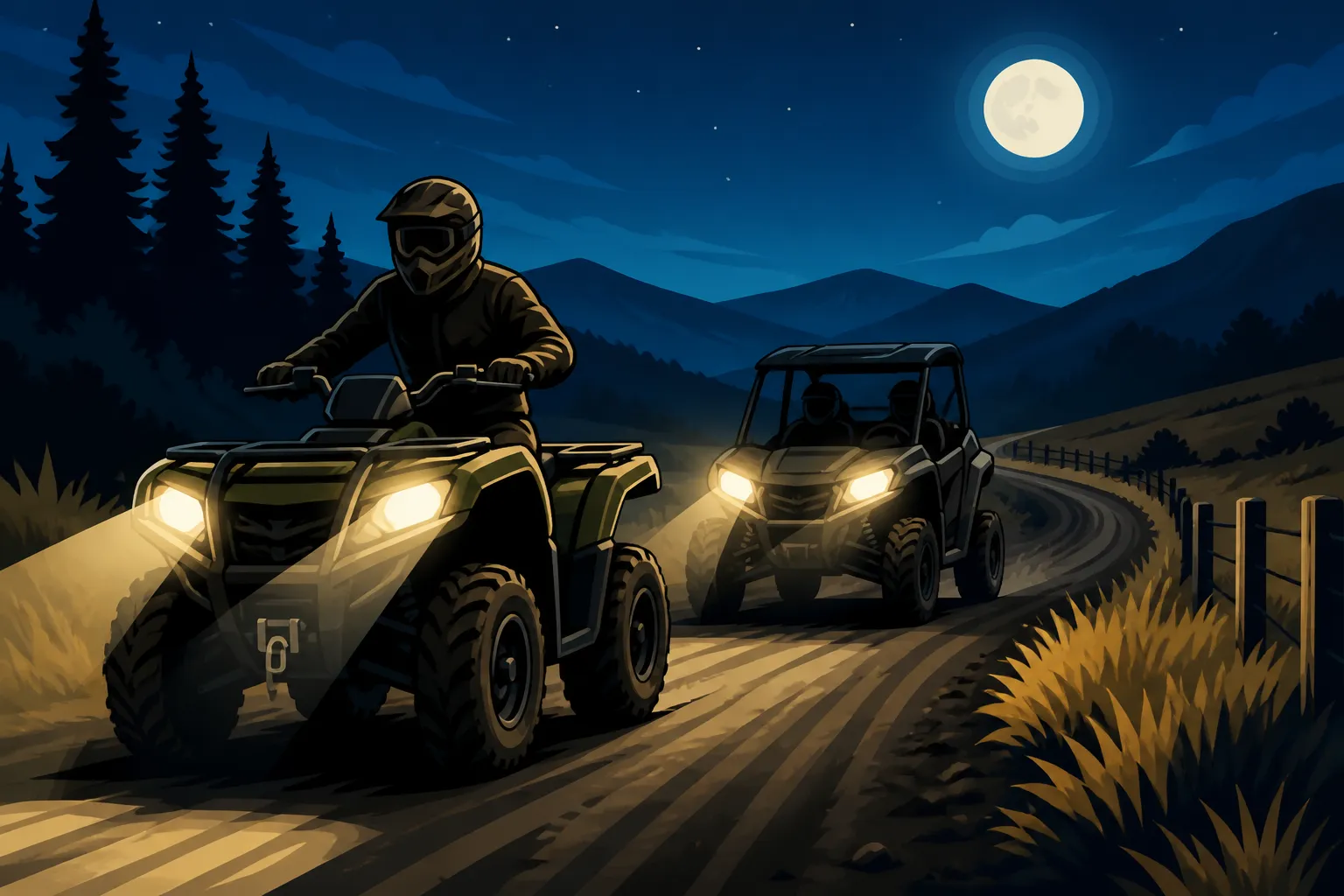
There's nothing quite like extending an epic day of trail riding in Idaho, perhaps heading back to camp or a local diner as the sun dips below the mountains. But when that twilight fades into full darkness, many of us wonder, "Can I actually ride my ATV or UTV on this county road after dark, and what exactly does Idaho expect from me?" It's a common concern, especially when you're far from town on a gravel road that turns to pitch black. This guide is here to unravel all those questions, helping you understand Idaho's specific requirements for safely and legally navigating county roads on your off-highway vehicle once the stars come out.
Understanding Idaho's Core Requirements for Night Riding on County Roads
Idaho's vast network of county roads often serves as crucial connectors between trail systems, staging areas, and local communities. While riding them during the day usually feels straightforward (with the right plate, of course!), nighttime adds a whole new layer of considerations, both for safety and legal compliance. It's not just about turning on your headlights; it's about being prepared and understanding the law.
Why After-Dark Riding is Different on Paved vs. Unpaved County Roads
Whether you're on a smooth, paved county road leading into town or a dusty, washboard gravel track winding deep into the forest, night riding changes everything. Visibility becomes your number one challenge. On paved roads, you're contending with other vehicles whose drivers might not expect an OHV, especially one that could be smaller or less brightly lit than a car. Glare from oncoming headlights can temporarily blind you, obscuring hazards or animals that might dart out.
Unpaved county roads, particularly those in rural or forested areas, bring their own unique set of nocturnal perils. Those potholes you expertly dodged during the day? They become unseen craters. Loose gravel patches that were a minor inconvenience? They're now major traction hazards. And then there's the wildlife—deer, elk, coyotes, even smaller critters—all of whom become far more active and unpredictable after dark. Plus, the dust stirred up by other vehicles, even if they passed minutes ago, can hang in the air, creating a hazy, disorienting fog under your lights. It's a significantly more demanding environment for both your machine and your attention. You'll need that [Idaho's Restricted Vehicle Plate Explained] to even be on those roads in the first place, day or night.
Essential Lighting and Equipment for Nighttime Road Use
Idaho law is very specific about what your ATV or UTV needs to be considered road-legal, and these requirements become absolutely non-negotiable after dark. Simply put, if you plan to ride on a county road at night, your machine needs to be equipped like a motor vehicle, not just a trail machine.
First and foremost, you need proper headlights. These aren't just for seeing; they're for being seen. Your headlights must have both a high and low beam capability, just like a car. This is crucial for navigating varying conditions and dimming for oncoming traffic. A single, fixed-beam light won't cut it. Then, at the rear, you need a red taillight that's visible from a distance, and a functional brake light that illuminates brightly when you apply the brakes. Don't forget the reflectors; often integrated into the taillight assembly, they add another layer of passive visibility.
Beyond the basic lights, turn signals are required for indicating your intentions to other drivers. These need to be visible from both the front and the rear. You also must have at least one rearview mirror, typically mounted to the handlebars or on the side of your UTV, allowing you to monitor traffic behind you. And finally, a working horn is mandatory for warning others of your presence. For those who ride a lot at night or in challenging conditions, consider aftermarket upgrades. Companies like SuperATV offer a wide range of LED light bars, pod lights, and replacement headlights that can dramatically improve your visibility and ability to see down the road. You can dive deeper into these specifics by checking out [Lighting Rules for Riding After Dark in Idaho], [Headlight Rules After Sunset], [Taillight and Brake Light Requirements], [Turn Signals on an Idaho Restricted Vehicle], and [Mirrors on a Road-Legal Side-by-Side].
Navigating the Legal Landscape After Sundown
Riding an OHV on Idaho's county roads, especially after dark, isn't just about having the right lights; it's about understanding the specific legal framework that governs these machines. Ignorance of the law won't keep you from getting a ticket if a sheriff's deputy spots you unprepared.
The Restricted Vehicle Plate: Your Ticket to Evening Road Rides
The single most important piece of legal equipment for riding an OHV on an Idaho county road, day or night, is the "R" plate – the Idaho Restricted Vehicle Plate. This unique license plate signifies to law enforcement that your machine is equipped and registered for limited road use. Without this plate, your OHV isn't legally allowed on designated county roads, period. After dark, its absence becomes even more glaringly obvious and can immediately draw the attention of patrolling officers.
Think of the R plate as your official permission slip. It's what differentiates your trail machine from a fully road-legal vehicle and tells everyone you've met the state's minimum requirements for street-legal accessories. When it gets dark, this plate, along with your proper lighting, is your primary identifier as a legal road user. Riders often confuse the OHV sticker with road legality, but the sticker is for trail use. For roads, especially at night, the "R" plate is absolutely essential. For more details on what these plates cover, be sure to read [Idaho Plates That Begin With R] and [What Idaho's $3 Restricted Use Plate Covers].
Driver's License, Insurance, and Carrying Your Papers
Just as if you were driving a car, operating an OHV on an Idaho county road (again, day or night) means you need to be a licensed driver. This isn't optional. If you're pulled over by a deputy, they'll expect to see a valid driver's license. Furthermore, liability insurance is a non-negotiable requirement for road use. This insurance protects you and others in the event of an accident. It's smart to carry more than the minimum, especially given the potential for significant damage or injury in an OHV collision.
Beyond your physical driver's license, you absolutely must carry proof of your OHV's registration (often tied to your R plate) and your insurance card. These documents prove you're legally entitled to operate the machine on the road and that you're financially protected. Keep these important papers on your person, or in a waterproof, secure compartment on your machine. Fumbling around trying to find them in the dark, or worse, not having them at all, can lead to unnecessary delays and potential citations. Learn more about these requirements by checking out [Driver's License and Insurance on an Idaho Road Ride], [Liability Insurance Idaho Road Riding Requires], and [Keeping Paperwork on the Machine].
Young Riders and Curfews: What Parents Need to Know
For families who enjoy riding together, understanding the rules for younger operators on county roads after dark is crucial. Idaho has specific age restrictions for who can operate an OHV on a public roadway. Generally, to drive an OHV on a public road, the operator needs a valid driver's license, meaning they are typically at least 16 years old. This applies regardless of the time of day, but the risks and the scrutiny from law enforcement increase significantly after dark.
Beyond the driver's license requirement, Idaho law mandates helmet use for all OHV operators and passengers under the age of 18, regardless of where they are riding (trail or road). This rule is especially critical at night when visibility is compromised. Parents supervising younger riders also need to be aware of the "direct supervision" rule, often meaning they must be within 300 feet of the youth rider. While there aren't specific "curfew" laws for OHVs like there are for some young drivers in cars, the combination of age, license, and lighting requirements makes night riding on county roads for minors a complex issue that requires careful planning and strict adherence to all laws. Ignoring these rules could put your child and your family at risk, and you could face penalties. For more information, see [Idaho Road Rules for Young Riders], [Idaho Helmet Rules for Riders Under 18], and [Supervising a Young Rider Within 300 Feet].
Safety Best Practices and Gear for Dark Roads
Even with all the legal boxes checked, riding an OHV on a county road after dark demands an elevated level of vigilance and preparation. The reduced visibility affects not only what you can see but also how well others can see you. Adopting smart safety practices and investing in the right gear can make all the difference between a memorable night ride and a dangerous situation.
Enhancing Visibility: Beyond Basic Lights
While Idaho law specifies minimum lighting requirements, meeting the bare minimum isn't always enough when it comes to safety after dark. Think about what you can do to make yourself and your machine even more conspicuous. Reflective gear for riders is an absolute game-changer. Wearing a reflective vest, jacket, or even adding reflective strips to your helmet and riding pack can significantly increase your visibility to other motorists. The light from their headlights will bounce off these materials, making you stand out.
Don't stop at your personal gear. Adding reflective tape to your ATV or UTV, especially on the front, rear, and sides, can dramatically improve how well your machine is seen. For UTVs, which can sometimes blend into the background, especially in profile, consider a brightly colored flag with reflective elements mounted high above the machine. When it comes to active lighting, many stock headlights on older or basic models might not cut it for serious night riding. Upgrading to brighter, higher-quality LED headlights or adding auxiliary light bars and pod lights can illuminate the road far better, giving you more time to react to hazards. SuperATV, for example, is well-known for its powerful light bars and cubes that can turn night into day, greatly improving your field of vision on those dark country roads. Explore [Reflective Tape for Dusk Riding] for more ideas on boosting your visibility.
Speed, Awareness, and Unexpected Hazards at Night
The biggest rule for night riding on county roads is simple: slow down. Your ability to see and react is drastically reduced, so your speed needs to match those conditions. What might be a comfortable 40 MPH during the day could be a reckless 20 MPH after dark. Give yourself ample stopping distance, especially when approaching curves, hills, or areas with limited sight lines.
Unexpected hazards are more prevalent at night. Wildlife is a huge concern in Idaho's rural areas. Deer, elk, and moose are often on the move during dawn and dusk hours, and their eyes reflecting your headlights can be your only warning. Watch for them along the shoulders of the road and be prepared to stop. Potholes, ruts, cattle guards, and other road imperfections are much harder to spot, even with upgraded lights, so maintain a vigilant lookout. And always assume there might be another vehicle around the bend, even on the most remote county roads. Drivers in cars or trucks might also be distracted or not expect an OHV after dark. Keep an eye on your mirrors – ideally, upgraded ones that offer a wider field of view, perhaps from a company like SuperATV – and be prepared for oncoming lights. Lastly, be mindful of noise. While you might be enjoying the solitude, loud aftermarket exhausts can be particularly disruptive in quiet residential areas or near cabins after sunset. Pay attention to [Speed on an Idaho County Road] and [Idaho Noise Rules Near Mountain Towns] to stay compliant and considerate.
Pre-Ride Checks and Post-Ride Care for Night Expeditions
Before you even think about heading out on a county road after dark, a thorough pre-ride check is essential. This check goes beyond the usual daily inspection. Focus heavily on your lighting system:
- Headlights: Are both high and low beams working? Are they aimed correctly?
- Taillight/Brake Light: Is the taillight bright, and does the brake light illuminate instantly when the brakes are applied?
- Turn Signals: Are all four signals functioning correctly?
- Reflectors: Are they clean and intact?
- Battery: Is your battery fully charged? Night riding draws a lot of power for all those lights.
Beyond lights, ensure your tires are properly inflated for road use, and that your mirrors are clean and adjusted for optimal rear visibility. Carry essential tools, a portable air compressor, a powerful flashlight (headlamps are great!), and consider a backup light source. A small first-aid kit is always a good idea.
After your night ride, take a moment to clean your lights. Dust, mud, or road grime can significantly reduce their effectiveness for your next adventure. Check for any loose wiring or damaged bulbs that might have occurred during your ride. Regular maintenance of your electrical system will ensure your machine is always ready for those stunning Idaho starlit adventures.
Comparison of Day vs. Night Riding on Idaho County Roads
| Feature/Aspect | Day Riding Considerations | Night Riding Considerations |
|---|---|---|
| Visibility | High, clear view of road, surroundings, and other vehicles. | Significantly reduced, relying heavily on artificial light. |
| Equipment Focus | Restricted plate, OHV sticker (for trails), basic safety gear. | All required road-legal lighting (high/low beams, turn signals, brake lights, reflectors, horn, mirrors), helmet (under 18). |
| Hazards | Dust, occasional wildlife, road imperfections. | Increased wildlife activity, unseen potholes, glare from oncoming traffic, fatigue. |
| Speed | Can generally maintain higher legal speeds safely. | Must reduce speed significantly to match limited visibility and reaction time. |
| Rider Gear | Comfortable riding gear, protection. | Reflective elements on rider and machine, eye protection against glare/dust. |
| Awareness | General situational awareness. | Heightened vigilance for periphery, rear view, and listening for sounds. |
| Legal Scrutiny | Plate and basic registration checks. | Intense scrutiny on all lighting, plate, and operator requirements. |
Disclaimer
This article is for general informational purposes only and does not constitute professional advice. Laws, prices and regulations vary by location and change over time. Consult a qualified professional for guidance on your specific situation.