Lodging in Stanley for OHV Trips
Stanley is a small mountain town, and a place that looks perfect for a weekend can turn out to be awkward once you add an ATV or side-by-side, a trailer, helmets, and muddy gear. This guide explains how to choose lodging for an OHV trip in Stanley, what to confirm before booking, and how to plan rides without assuming every nearby road or trail is open to motorized use.
Choose lodging around your riding setup
Decide what you need beyond a bed
A room that works for a hiking weekend may not work for an OHV trip. Think through the whole arrival: Where will you park the truck and trailer? Is there room to unload without blocking other guests? Can muddy boots, dusty helmets, and riding layers be kept separate from the sleeping area? These practical details can matter more than a scenic view when you return tired from a long day.
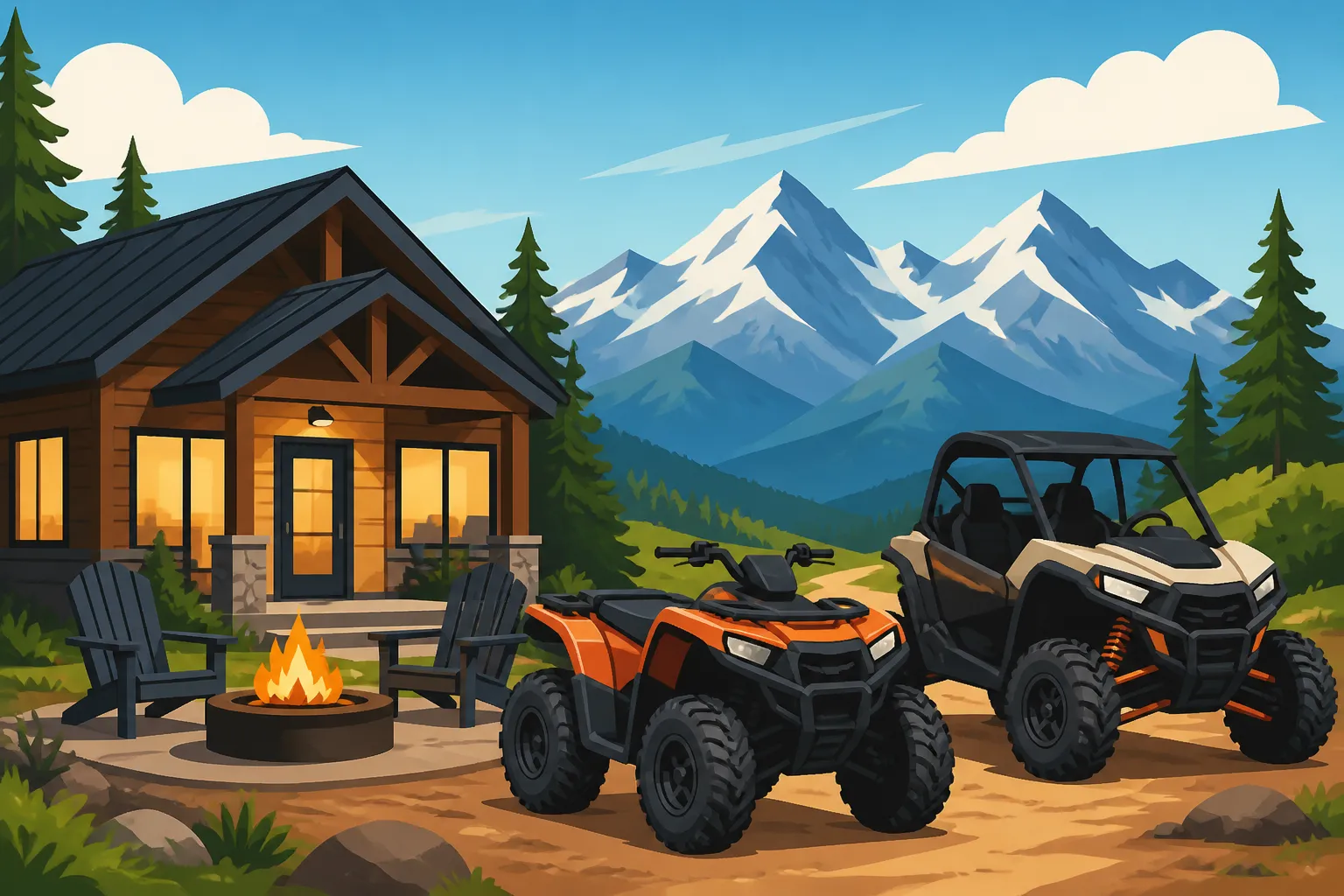
Stanley has lodging options that may include motels, inns, cabins, vacation rentals, and campgrounds. Each has different trade-offs. A motel can make it easy to get indoors and organize gear, while a cabin or rental may offer more space for a group. A campground may suit travelers who bring their own sleeping setup, but it may not provide the same storage, drying, or privacy as a room. Offerings and policies vary, so confirm the details with the property rather than relying on a listing photo.
Be candid when you contact a property. Say how many vehicles you’re bringing, whether you’re towing a trailer, and the approximate trailer length. Ask if the trailer can remain attached overnight, whether parking is reserved, and whether unloading is allowed on-site. If the answer is unclear, request a photo or a description of the parking area. It is much easier to sort this out before driving into a compact mountain-town lot than after arriving at dusk.
Compare lodging options by the needs that affect your ride
| Lodging type | Often suits | Confirm before booking |
|---|---|---|
| Motel or inn | Couples or small groups who want a simple room and easy check-in | Trailer parking, space for multiple vehicles, gear storage, and quiet-hour rules |
| Cabin or vacation rental | Families or groups who want shared space and room to sort gear | Parking limits, surface conditions, access for a trailer, and rules for muddy equipment |
| Campground | Riders bringing tents or camping equipment | Vehicle and trailer arrangements, site dimensions, generator rules, and access to services |
| RV park | Travelers with an RV who may also be towing a machine | Whether the site can accommodate both units and whether the trailer can remain onsite |
Treat “parking available” as a starting point, not a guarantee that your full setup fits. Some properties may have angled spaces, narrow access lanes, or limited room to maneuver. If you’re traveling with a long trailer or several machines, ask whether there is a suitable turnaround area. Also clarify what happens if your group arrives in separate vehicles or comes back at different times.
A base in Stanley can be convenient for exploring the surrounding region, but it does not replace route planning. Read Idaho Trail Towns Worth a Base Camp for a broader look at using a town as a trip hub, and compare lodging with the ride you actually intend to make. If your route starts far from town, a property that looks central on a map may still leave you with a substantial drive to the staging area.
Plan rides from Stanley without assuming access
Match the lodging location to your route
Stanley sits in a mountain setting near the Sawtooth Range, with routes and recreation areas spread across a wide landscape. That makes it tempting to book the closest-looking accommodation and decide on a trail later. A better approach is to identify one or two possible rides first, then check where each begins, what type of machine it allows, and how you can legally reach the trailhead.
The phrase “near Stanley” does not mean every road is open to ATVs or UTVs. Public roads can have different rules from designated motorized routes, and local restrictions, seasonal conditions, and land-management boundaries can change what is practical. A route that appears connected on a digital map might include a prohibited road segment or a trail that does not fit your machine’s width. Check official route information and signs before riding. Riding Near Stanley on an OHV can help you focus on the local riding context, while Idaho’s Sawtooth National Forest Trails provides a broader starting point for thinking about the region.
If your lodging is in town, you may need to trailer your machine to the ride rather than drive it directly from the property. Ask the lodging operator whether riding machines on the property or nearby streets is permitted, and verify road rules independently. Do not assume a parking spot at your accommodation is also an approved staging area. The article Idaho Trailhead Parking and Staging offers useful questions to consider when planning where to unload.
Check maps, restrictions, and conditions before setting out
A good map plan uses more than one source. Review the applicable Motor Vehicle Use Map for land-management routes and restrictions, then compare it with current signs and local information. Finding the Right Motor Vehicle Use Map explains why these maps matter. Keep in mind that maps help establish where motorized travel is allowed; they do not guarantee a route is passable today or appropriate for your vehicle.
Digital tools can make route review easier, particularly when a ride crosses a network of roads and trails. onX Offroad can help riders view route information and organize a trip, but it should be treated as a planning aid rather than permission to ride. Confirm the route against official maps, posted signs, and any applicable closures. Download or save what you need before leaving town, because cell reception can be limited in remote areas. Checking Idaho Trail Status Before You Drive is a helpful companion when weather, maintenance, fire activity, or seasonal access could affect your plans.
It is also worth checking machine width and trail suitability. A route that works for a narrow ATV may not accommodate a full-size side-by-side. Look for restrictions that apply to your machine, and do not rely on a broad description such as “OHV trail” to confirm fit. If you’re bringing a wider machine, Idaho Trails Rated for Full-Size Rigs can help frame the questions to ask before committing to a route.
Make the lodging and trail logistics work together
Ask practical questions before you reserve
A short phone call can prevent the most frustrating part of arrival: discovering that the trailer has nowhere to go. Ask the property about parking dimensions, trailer storage, surface type, and whether the access road or driveway is suitable for your tow vehicle. Confirm whether there is a separate fee or rule for extra vehicles, and whether your group can leave a trailer onsite while riding elsewhere.
Then ask about gear and cleanup. Some hosts may not allow muddy machines or riding equipment inside. Others may have limited outdoor space, no hose, or restrictions on washing vehicles. You can plan around that by bringing a boot tray, gear bags, towels, and a small drying line if permitted. Avoid washing mud into a parking lot or storm drain; follow the property’s instructions and local rules.
For a group, put the answers in writing. One person can confirm the booking while another assumes the trailer fits, or a reservation may be made for a standard vehicle without mentioning a second truck. A quick confirmation message that lists your vehicle count, trailer, and machine can help everyone arrive with the same expectations. Keep a backup lodging option in mind if your setup is unusually large or your dates fall during a busy period.
Build your day around transport, fuel, and recovery
If you’re trailering from lodging to a staging area, include loading and unloading time in the day’s plan. A ride that looks short on a map may take longer once you account for mountain roads, slow towing, parking, and securing equipment. Avoid planning your first departure around the last possible minute, especially if you are unfamiliar with the area or need to meet other riders.
Fuel planning deserves the same attention. Identify where you can fuel the tow vehicle and machine, and do not assume that a service station in town will be close to every route or open when you need it. Pack enough water, food, basic tools, and recovery equipment for the trip you have planned. Fuel Planning for an Idaho Trail Day can help you think through the range and resupply questions before leaving Stanley.
For a remote route, set a turnaround time and tell someone where you expect to ride. Carry a paper map or an offline route backup in case a phone battery dies or reception disappears. onX Offroad may be useful for keeping route information available, but bring the essentials that do not depend on a single device. If the route is blocked, conditions have deteriorated, or the trail is beyond your group’s ability, turn around rather than trying to force a passable-looking line.
Prepare for a comfortable stay and a safer trip
Pack for mountain weather and gear cleanup
Mountain weather can shift quickly, and a comfortable afternoon in town does not guarantee the same conditions at elevation. Bring layers, rain protection, gloves, eye protection, and clothing that can handle dust or mud. Keep a dry set of clothes separate from riding gear. If your lodging has limited drying space, a few bags that separate damp items from clean clothing make a noticeable difference after a long ride.
Use a simple gear routine when you return. Put helmets and goggles somewhere they can air out, check machines for damage, and keep fuel or maintenance products away from guest rooms and living areas. Follow property rules for charging batteries, storing equipment, and handling fuel. A little organization helps keep shared spaces clean and makes the next morning’s departure less hectic.
If you are traveling with children or less experienced riders, plan extra time for fitting helmets, reviewing route expectations, and checking that each person is comfortable with the machine. Choose a route that matches the least experienced rider in the group, not just the most confident driver. Ride within posted restrictions and respect other visitors, residents, livestock, and wildlife.
Use a final booking and ride checklist
Before reserving, confirm the lodging dates, cancellation terms, vehicle and trailer parking, machine storage expectations, and check-in arrangements. Before leaving home, verify your route, machine fit, access rules, and current conditions. The two checklists are connected: a lodging plan that assumes one route may need to change if that route is closed or unsuitable.
Here is a practical final check:
- Confirm the exact number of vehicles, machines, and trailers with the lodging provider.
- Verify that the parking arrangement allows your trailer to remain where you plan to leave it.
- Check the route on the appropriate official map and review posted restrictions.
- Confirm that your machine fits the route’s width and access requirements.
- Check current conditions and closures before driving to the trailhead.
- Plan fuel, water, food, navigation backups, and recovery equipment.
- Share your route and expected return time with someone who is not on the ride.
- Leave the route if signs, closures, or conditions indicate that continuing is unsafe or prohibited.
Stanley can be a rewarding base for an OHV getaway when the lodging, trailer plan, and route all fit together. The key is to book for the complete travel setup—not just the number of beds—and treat access as something to verify rather than assume. A little preparation leaves more time for the ride and fewer surprises at check-in.
Disclaimer
This article is for general informational purposes only and does not constitute professional advice. Laws, prices and regulations vary by location and change over time. Consult a qualified professional for guidance on your specific situation.