Trail Crews and Summer Repairs
Idaho’s summer riding season can turn a familiar trail into a muddy rut, a washout, or a route blocked by active repair work. That can mean changing plans after you’ve already hauled your ATV or UTV to the trailhead. This guide explains who maintains Idaho OHV trails, what summer crews do, how to report damage, and how to ride responsibly around repairs and closures.
Why Idaho Trails Need Summer Repairs
Weather, runoff, and heavy use take a toll
A trail can look solid in the morning and become difficult after a storm. Water running downhill may cut channels through the tread, loosen gravel, or wash out a section near a creek crossing. Snowmelt and spring runoff can also leave saturated soil behind, so a trail that appears open may still be vulnerable to damage from tires.
That vulnerability matters in Idaho’s varied terrain. A route in the Boise National Forest may have different drainage problems from a trail in the Idaho Panhandle or the Sawtooth National Forest. On steep slopes, runoff can carry soil onto the trail or deepen existing ruts. In low spots, water may pool and soften the ground. In rocky country, erosion can expose obstacles that were previously covered.
The summer riding season adds more pressure. Frequent vehicle traffic can widen a soft trail, flatten vegetation at the edges, and turn a small rut into a larger drainage problem. A machine that powers through a wet section may leave deep tracks for the next rider. Staying on the established route and turning around when conditions are poor can prevent a short-lived problem from becoming a repair project.
Small hazards can grow into major maintenance needs
Not every rough patch needs to be fixed immediately. A few loose rocks or a shallow rut may be normal trail texture. But a blocked culvert, a deep washout, a downed tree across the route, or a section where riders are creating new paths around an obstacle can call for attention from the land manager.
The distinction is important because an improvised detour can cause more damage than the original problem. When several riders go around a mud hole through brush, for example, the trail footprint gradually expands. The new tracks may expose soil, harm plants, or lead riders into a place that is not open to motorized use.
If a section seems unsafe or damaged, don’t assume it is acceptable to move rocks, cut a tree, or reshape the trail yourself. Trail work may require land-manager approval, special tools, training, or protections for streams and wildlife. For a clearer picture of who may handle a washout and what happens next, see Who Fixes a Washed-Out Idaho Trail.
Who Maintains Idaho OHV Trails
The responsible land manager depends on where you ride
There is no single crew responsible for every Idaho OHV route. A trail may cross land administered by a federal agency, the state, a county, or another landowner. The managing agency or office is the right place to ask about a closure, maintenance schedule, or problem report for a specific route.
The route’s location can help you work out where to start. A trail in a national forest may be managed by the local Forest Service office or ranger district. A route on Bureau of Land Management property may fall under a BLM field office. Local jurisdictions and private land agreements can add another layer, particularly where a ride connects public roads, trailheads, and access across different ownerships.
Before volunteering or attempting any work, confirm who manages the trail and what permission is required. Even a helpful task such as clearing a fallen branch can create problems if it involves cutting a tree, moving material into a drainage, or altering the route. If you are unsure, report the issue and let the responsible office decide how to address it.
Public agencies, clubs, and volunteers may all contribute
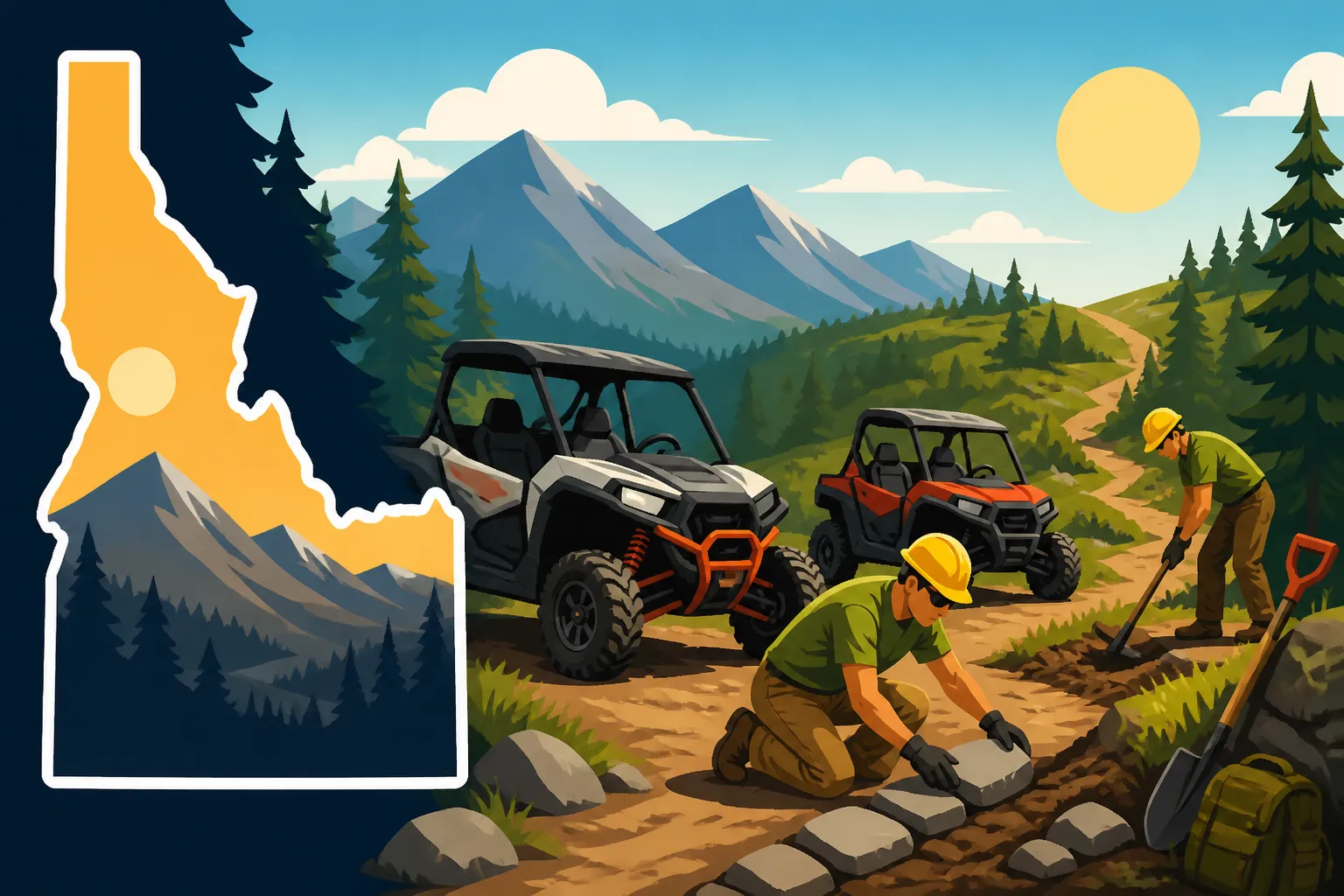
Trail maintenance can involve agency staff, contractors, local OHV clubs, and volunteers. Their roles vary. A club may organize approved workdays or help with ongoing trail-adoption efforts, while an agency determines priorities, permits, safety requirements, and the work that is allowed.
Some repairs are straightforward, such as removing small debris or restoring signs. Others need equipment, engineering judgment, or specialist review. Rebuilding a damaged drainage feature, stabilizing a steep slope, or repairing a stream crossing is not simply a matter of filling a rut. A poorly placed berm or pile of rock can redirect water and worsen erosion farther down the trail.
If you want to help, look for an organized effort rather than starting a solo project. Idaho OHV Clubs and Trail Adoption and Idaho Trail Adoption and Volunteer Days can help riders understand how local groups participate. Ask whether volunteers need to register, bring specific equipment, attend a safety briefing, or stay within a defined work area. Those details protect both the volunteers and the trail.
What Summer Repair Work Can Involve
Crews focus on drainage, access, and trail stability
Water management is often central to trail repair. A crew may clear a blocked drainage feature, shape a trail surface so water can move off it, or reinforce a section that is eroding. The goal is generally to protect the route and reduce damage, not to make every trail smooth or easy. A rugged trail can remain rugged while still shedding water properly.
Crews may also remove fallen trees, repair signs, or address a damaged section where repeated traffic has created an unsafe or confusing route. In some cases, workers need to bring in equipment or materials. That can make the work zone more disruptive than a rider expects, particularly if a narrow trail or limited access road is involved.
A repair area can change quickly as crews work through a problem. A route that was passable earlier in the day might be blocked later, or a temporary detour might be marked while work continues. Follow posted signs and directions from workers. Don’t ride around barriers, enter an active work area, or assume that a track visible on a map is currently open.
Temporary closures protect riders and the work itself
A closure can feel frustrating, especially after a long drive to a staging area. But it may be in place because the surface is unstable, heavy equipment is operating, or the trail needs time to dry and recover. Riding through can put you in the path of machinery, damage unfinished work, or create a new hazard for the next visitor.
Closures can also apply to a specific segment rather than an entire recreation area. That is why checking route details matters. A nearby trail may remain open, or the only practical choice may be to turn around. Never treat an unmarked route around a closure as an approved alternative. It may lead onto private land, a protected area, or a route not designated for motorized travel.
Before leaving home, check the relevant land manager’s notices and route information. Checking Idaho Trail Status Before You Drive is a useful companion when you are planning around changing conditions, while Idaho Trail Closures in Fire Season can help you think through closures that may be tied to fire risk as well as maintenance.
| What you notice | A sensible response | Why it helps |
|---|---|---|
| Fresh rutting or a muddy section | Slow down, stay on the established trail, and turn back if continuing would cause damage | Prevents a soft section from becoming wider or deeper |
| Downed tree or blocked route | Don’t cut it or create a bypass; report the location | Keeps riders out of unauthorized routes and lets the land manager assess the obstruction |
| Equipment, workers, or barriers | Follow signs and directions; do not enter the work area | Protects riders and repair crews |
| Washed-out tread or exposed drainage | Avoid forcing a crossing and share a clear report | Gives managers useful information without adding more damage |
| Conflicting map and field signs | Follow posted restrictions and ask the responsible office if needed | Conditions and closures can change after a map is produced |
How Riders Can Report Damage and Plan Around Repairs
Make a report that helps crews locate the problem
A useful report is specific, calm, and easy to act on. Include the trail or road name if you know it, the nearest junction or landmark, and a description of what you saw. “There’s a problem somewhere near the ridge” may be hard to use; “a tree blocks the marked route just past the junction with the signed spur” gives staff a better starting point.
If it is safe and practical, note the approximate location using a map or GPS app. An app such as onX Offroad can help you identify a route or save a location for your own reference. A screenshot or coordinate may be useful when the trail has few signs, but don’t treat an app map as proof that a route is open. Confirm restrictions and closures through the responsible land manager.
Describe the condition without trying to diagnose its cause. For instance, say that water has cut across the tread or that a section is impassable for your machine, rather than guessing what repair is needed. Avoid entering a dangerous area to take a closer look. For more practical guidance, read Reporting Trail Damage in Idaho.
Prepare for a changed route before you unload
Plan a backup option before the ride, especially if your destination depends on one narrow corridor or a long out-and-back route. Check the latest notices, identify nearby alternatives, and make sure your fuel and daylight plans leave room for a turnaround. A closed segment can add distance or leave you needing to return the way you came.
It can also help to save offline maps and mark your starting point, but keep the basics simple: carry a paper map if appropriate, know the route’s major junctions, and tell someone where you intend to ride. In remote areas, cell coverage may be limited. A map app can support your planning, but it cannot replace posted closure signs, local regulations, or sound judgment on the ground.
Check the staging area information too. Parking, access roads, and trail connections can be affected by maintenance or seasonal restrictions. Idaho Trailhead Parking and Staging offers related planning guidance. If the trail is open but still wet or freshly repaired, consider choosing a more durable route instead of testing the new surface.
Volunteer without creating extra work
If you would like to contribute, start with an established club or the agency that manages the route. Ask what projects are scheduled, what tasks are appropriate for volunteers, and whether there are safety or equipment requirements. A supervised workday may involve simple tasks, but the organizer will explain where to work and what to leave alone.
Donations and volunteer hours can support trail stewardship, but they do not replace the need for approved planning and skilled repairs. Idaho Trail Grants and Where They Come From explains another part of how trail projects may be supported. If you are joining a workday, follow the assigned plan rather than expanding the work area because something nearby looks untidy.
The best help a rider can offer is often careful riding: staying on marked routes, respecting closures, reporting damage with useful details, and not widening the trail to get around an obstacle. Those choices can reduce avoidable wear while crews focus on repairs that require their attention. When a route is closed, choosing another ride is frustrating, but it helps give the trail a better chance to reopen in sound condition.
Disclaimer
This article is for general informational purposes only and does not constitute professional advice. Laws, prices and regulations vary by location and change over time. Consult a qualified professional for guidance on your specific situation.