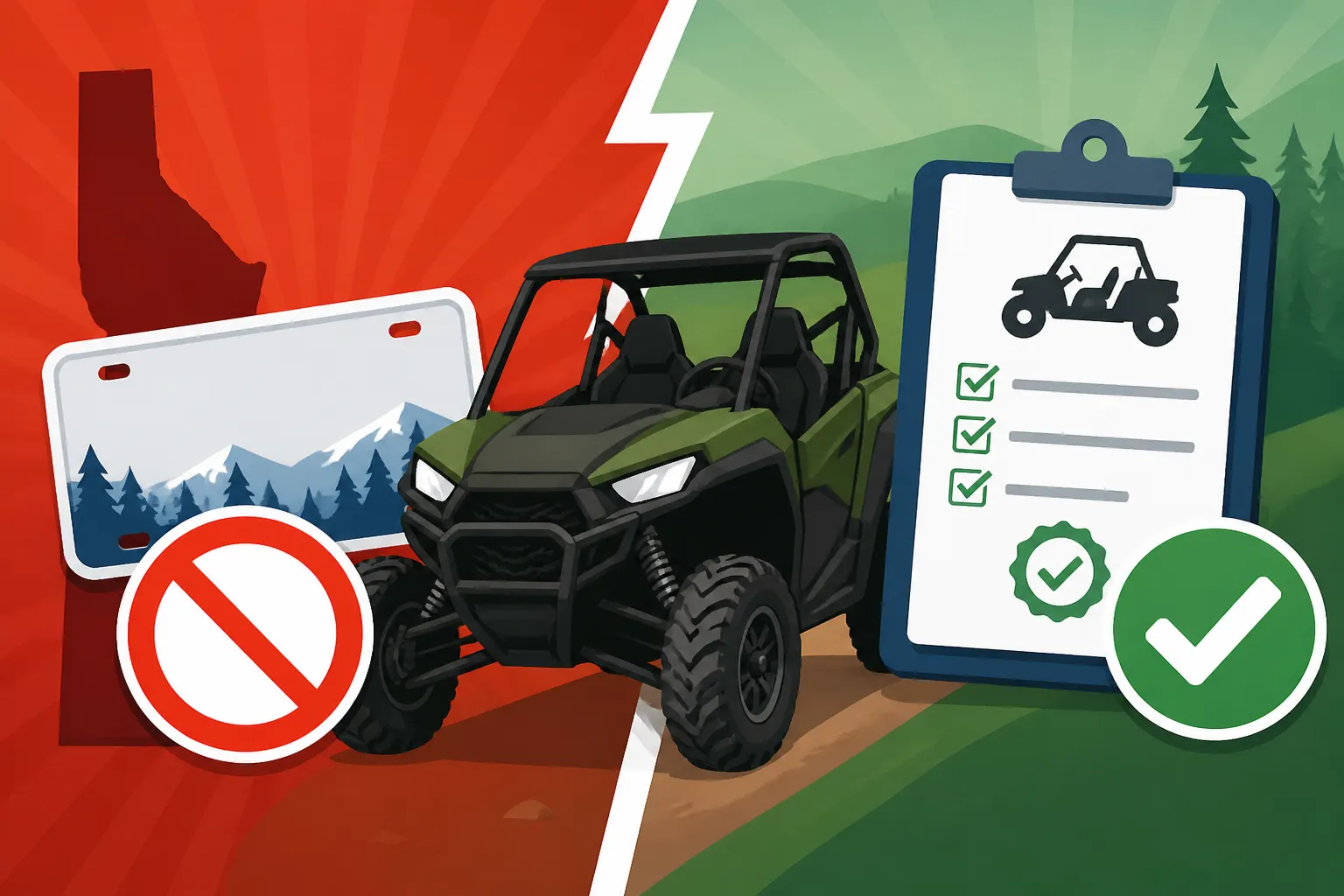
Why an Idaho Plate Is Not a Registration on Its Own
It's a common and totally understandable source of confusion for so many ATV and UTV owners here in Idaho: you've gone through the effort of getting that cool "R" plate for your machine, you've mounted it proudly on the back, and you feel like you've done your part. You're ready to hit those county roads or connect between trails, right? Well, not quite. The truth is, that Idaho plate, while crucial for specific types of riding, is not a registration on its own for all off-highway vehicle (OHV) use. It’s a distinct piece of the puzzle, and misunderstanding its role can lead to unexpected fines or even a spoiled day out on the trails. This guide is here to clear up that confusion once and for all, helping you understand precisely what each piece of paperwork means for your riding adventures in the Gem State.
Understanding the Two Key Components of Idaho OHV Legality
When it comes to legally riding your ATV or UTV in Idaho, you're dealing with two very distinct, yet equally important, pieces of identification that serve different purposes. It's easy to conflate them, especially when you're just trying to get all your ducks in a row and head out for a ride. But thinking of them as separate entities, each with its own job, is the first step to staying compliant and avoiding headaches.
The Idaho Restricted Vehicle Plate: What It Is and Isn't
Let's talk about the "R-plate," or the Idaho Restricted Vehicle Plate. This is the physical metal plate, often with a letter "R" as the first character, that you mount on the back of your ATV, UTV, or even a dirt bike. It looks very much like a miniature car license plate, and it’s issued by the county assessor's office, which also handles your vehicle titles and traditional license plates.
Its primary purpose is exactly what it sounds like: to identify your vehicle when you’re operating it on restricted roads. These are typically specific county roads, Forest Service roads, or Bureau of Land Management (BLM) roads that have been designated as open to OHV use. Think of it as your machine's unique identifier for limited public road access. Without it, you can't legally travel on these designated roads. It tells law enforcement who owns the machine if there's an incident, helps track stolen vehicles, and indicates that your machine meets specific requirements for road operation, such as having proper lighting and mirrors, depending on where you're riding. It's an important step for those who want to use their OHV to connect trails, ride into town for gas, or access remote fishing spots on approved routes.
However, and this is where the confusion often begins, the restricted plate does not automatically grant you permission to ride on Idaho's extensive network of off-highway trails or public lands that are specifically designated for OHV recreation. It allows for road use, not trail use. Many riders, especially those new to Idaho or coming from states with different regulations, assume that once they have a plate, they're fully registered for all types of riding. This just isn't the case in Idaho. It's a key identifier for a specific type of riding, but it's not the comprehensive "registration" for all your off-pavement adventures.
The Idaho OHV Sticker: Your True Off-Highway Registration
Now, let's look at the other essential piece of the puzzle: the Idaho OHV sticker. This small, adhesive decal is your actual permit for operating your ATV, UTV, or dirt bike on designated off-highway trails and public lands. Unlike the plate, which is issued by the county and relates to road use, the OHV sticker is managed by Idaho Parks and Recreation (IDPR) and is specifically designed to fund and permit off-highway trail system use.
The sticker serves a vital role in maintaining Idaho's incredible OHV trail system. The fees collected from these stickers go directly into [The Idaho Trail Fund and Sticker Revenue], which is then used for trail maintenance, signage, mapping, education, and even law enforcement efforts directly related to OHV recreation. When you buy an OHV sticker, you are quite literally contributing to the preservation and improvement of the very trails you love to ride. It's your contribution to the system, and in return, it grants you the privilege to use those trails.
This sticker is what law enforcement, whether it's a local sheriff's deputy, a Forest Service ranger, or a BLM officer, will look for when you're on a designated trail or public land not classified as a road. It signifies that your machine is properly "registered" for off-highway use. It’s an annual sticker, meaning you'll need to renew it regularly to keep your riding privileges active. So, while your "R-plate" might get you from one trailhead to another on a county road, it's that little sticker that actually gives you the green light to leave the pavement and explore the vast backcountry trails Idaho has to offer. Without it, even with a restricted plate, you could face penalties.
Why the Plate Alone Won't Cut It on Idaho Trails
It's easy to think that if you've got a license plate on your side-by-side or ATV, you're all set to go anywhere. After all, cars have plates and they drive everywhere, right? But for OHVs in Idaho, the logic is quite different. The restricted vehicle plate serves a very specific, limited function related to road identification and access. It does not equate to permission for off-highway trail use, and this distinction is incredibly important for every rider to grasp.
The Sticker Funds the Trails You Ride
Imagine pulling up to a trailhead deep in the Boise National Forest. You offload your machine, ready for a day of exploring winding paths, climbing challenging hills, and splashing through shallow creeks. The trail is well-maintained, free of major debris, and clearly marked with signs indicating direction and difficulty. Who do you think pays for that? It's not the general tax fund that supports county roads. It's largely funded by the fees collected from OHV stickers.
Every time you purchase an Idaho OHV sticker, a significant portion of that money is directly allocated to the Idaho Department of Parks and Recreation (IDPR) Off-Highway Vehicle Fund. This fund is specifically designed to support the development, maintenance, and operation of OHV recreation opportunities across the state. This means funding for trail crews who clear fallen trees, repair washouts, and maintain bridges. It goes towards creating and updating trail maps, installing interpretive signs, and even educating riders on responsible use. So, when you ride without a sticker, even if you have an "R-plate" on your machine, you're essentially using a resource that you haven't contributed to. It's like enjoying a well-tended garden without ever chipping in for the seeds or the tools. The sticker is your direct investment in the future and quality of Idaho's OHV trails. It's the mechanism that ensures those incredible riding opportunities remain accessible and enjoyable for everyone.
Law Enforcement's Perspective: What They Look For
When you encounter a Forest Service Ranger, a BLM officer, or a local Sheriff's Deputy out on an Idaho trail, they aren't just casually waving hello. They are often checking for compliance with state and federal regulations, and high on their list is proper registration. While they will certainly note if you have a restricted vehicle plate – especially if you just transitioned from a county road to a trail – their primary focus for off-highway riding is that current OHV sticker.
Consider this scenario: you're enjoying a beautiful ride near the Danskin Mountains OHV Area, and you pull up to a popular overlook. An officer approaches, friendly but observant. They might ask to see your driver's license, proof of insurance (if required for the area you've been riding), and then they'll definitely look for that annual OHV sticker. If your machine is sporting a shiny new "R-plate" but no current OHV sticker, you're going to have a problem. The officer understands that the plate means one thing (conditional road access) and the sticker means another (trail access). Without the sticker, you're operating an unregistered off-highway vehicle on public lands. This can lead to a citation and a fine for [Penalties for an Unstickered OHV in Idaho]. It's not about being a bad person; it's simply about not having the correct, required documentation for the activity you're engaged in. Law enforcement treats these as separate violations because they are, in fact, separate requirements designed to manage different aspects of OHV use. Having the plate provides no legal cover for not having the sticker when you're on a trail.
The Restricted Plate and Road Access: A Separate Layer of Rules
The Idaho Restricted Vehicle Plate, often referred to as an R-plate, is a fantastic tool for OHV riders who want to connect trails or access amenities in town via certain public roads. However, it's critical to understand that this plate isn't a golden ticket to every paved surface in Idaho. It comes with its own set of specific rules and limitations, creating a distinct layer of regulation separate from your off-highway trail use.
Specific Roads Where the Plate Matters
The primary function of the [Idaho's Restricted Vehicle Plate Explained] is to allow your ATV or UTV to operate legally on designated county roads, as well as many Forest Service and Bureau of Land Management (BLM) roads. These are typically the gravel, dirt, or lightly paved roads that crisscross Idaho's vast landscapes, often serving as connectors between trail systems or access points to remote recreation areas. Picture yourself riding near Stanley, wanting to go from your campsite to a gas station a few miles down a county road. Your R-plate is what makes that trip legal, provided the county or agency has specifically opened that road to OHV use.
The key word here is "designated." Not all county roads are open to OHVs, and it's essential for riders to do their homework on local ordinances. Some counties welcome OHV traffic on most secondary roads, while others have very restrictive rules. The plate doesn't magically open every road; it merely allows you to ride on those that are open. What it absolutely does not do is grant you access to state highways (like US-95 or ID-21), interstates (I-84 or I-15), or within most city limits unless specifically allowed by local ordinance. These high-speed, high-traffic routes are typically off-limits to OHVs, regardless of whether you have an R-plate. The R-plate provides a very useful, but precisely defined, form of road access for OHVs in Idaho, enabling a kind of "town-to-trailhead" connectivity that enhances the overall riding experience.
Other Requirements for Road Use Beyond the Plate
While the restricted plate is a cornerstone for legal road riding, it's far from the only requirement. Merely having the plate on your machine doesn't make it fully "street legal" in the way a car is. Idaho law outlines additional equipment and operational standards that OHVs must meet when traversing these designated roads, and failing to adhere to them can still result in a citation, even if your plate is current.
For instance, when riding on roads, your OHV generally needs functional headlights, taillights, brake lights, and at least one mirror that allows you to see 200 feet to the rear. A horn is also typically required. These are safety features designed to make your OHV more visible and controllable in a mixed traffic environment, protecting both you and other road users. Additionally, riders on public roads must generally possess a valid driver's license, and in some cases, liability insurance may also be mandated, especially if you're riding in areas with stricter local rules. This means that if you're riding your side-by-side down a county road to connect to the next trail, and you only have your plate, but no working brake lights or a driver's license, you're still in violation of Idaho law. The plate is foundational, but it is just one component of the broader set of rules outlined in [What Idaho Requires Before You Ride a County Road]. These other requirements underscore that road use for OHVs is a privilege with responsibilities, not an open invitation simply because you've got a small license plate bolted on.
Common Misconceptions and Cost Implications
One of the biggest hurdles for new and even experienced OHV riders in Idaho is untangling the distinct requirements for plates and stickers. The "one and done" mentality, where getting a plate seems to cover all bases, is a persistent myth that can lead to frustration and financial penalties. Understanding that these are separate, concurrent requirements, each with its own associated cost, is vital for a smooth riding experience.
The "One and Done" Myth
It's completely understandable why many people fall into the trap of believing that once they have an Idaho Restricted Vehicle Plate, they've completed all necessary registration. After all, most vehicles only require one form of registration (their license plate) to operate on public roads. Our brains are wired to simplify processes, and getting a physical, numbered plate feels like a comprehensive "registration." You've gone to the county office, presented your paperwork, and walked away with a piece of metal that clearly identifies your machine – so surely, that's it, right?
The reality in Idaho is that the plate and the sticker are not interchangeable, nor is one a substitute for the other. They are distinct requirements issued by different state agencies for different purposes, and you need both if you plan to utilize both the restricted road access and the off-highway trail access that Idaho offers. The restricted plate allows your machine to be identified and, conditionally, to operate on specific county and federal agency roads. The OHV sticker, on the other hand, is your permit to ride on designated OHV trails and public lands that are not part of the road system, and its fees contribute directly to the maintenance of those trail systems. Thinking of them as one comprehensive registration is a myth that can get you into trouble. It's crucial to disassociate the plate from the sticker mentally and understand they address entirely separate regulatory needs.
Paying for Both: What to Expect
Since the restricted plate and the OHV sticker serve different functions, it logically follows that they each come with their own distinct costs. This can sometimes catch riders by surprise, especially if they were operating under the "one and done" misconception. You're not paying for the same thing twice; you're paying for two different privileges that support two different aspects of OHV infrastructure and regulation.
First, there's the [Idaho Restricted Vehicle Plate Cost]. This fee is paid to your county assessor's office when you apply for or renew your R-plate. This fee helps cover the administrative costs of issuing and tracking the plates, as well as contributing to the general revenue that supports various county and state functions, including road infrastructure. Then, there's the [What an Idaho OHV Sticker Costs Each Year]. This fee is paid when you purchase your annual OHV sticker through Idaho Parks and Recreation or one of its authorized vendors. This money, as we've discussed, is directly funneled into the OHV trail fund, ensuring the trails themselves are maintained and available for your enjoyment. Both are recurring annual costs, though the plate might have options for multi-year renewals depending on local regulations, while the OHV sticker typically runs from January to December regardless of when you buy it during the year, as outlined in [Idaho OHV Registration Runs January to December].
It's important to always check the most current rates for both the plate and the sticker, as these can change over time. When budgeting for your OHV, factor in both of these distinct expenses. While it might seem like an extra layer of cost and bureaucracy, each fee serves a specific and beneficial purpose, ultimately allowing you to enjoy Idaho's diverse riding opportunities legally and responsibly.
How to Get Both Your Plate and Sticker
Navigating the administrative process for getting both your Idaho Restricted Vehicle Plate and your Idaho OHV Sticker might seem like a bureaucratic maze, but once you understand the two separate paths, it becomes much clearer. These are two distinct processes handled by different entities, and knowing where to go and what to bring will save you a lot of time and frustration.
Obtaining Your Idaho Restricted Vehicle Plate
Getting your Idaho Restricted Vehicle Plate involves a trip to your local county assessor's office, which often shares space with the Department of Motor Vehicles (DMV) in your county seat. This is the same place you'd go to title your car or renew your truck's license plates. The process is straightforward, but it requires the correct documentation.
First, you'll need proof of ownership for your ATV or UTV. This usually means a manufacturer's certificate of origin (MCO) for a brand-new machine, or a properly endorsed [Idaho OHV Title Application at the County Assessor] if you've purchased a used one. You'll also need the vehicle identification number (VIN) readily available; they'll verify this against your paperwork. You'll fill out an application form for the restricted plate and pay the associated fee, which, like all fees, is subject to change, so it's always wise to check current rates before you go. Remember, the goal here is to get the physical plate itself, which then needs to be securely mounted on the rear of your machine for visibility when riding on designated roads. While you might walk out with a temporary registration, the actual metal plate will often be mailed to you, so don't expect to ride away with it immediately. It can take some time for it to arrive, so if you have a specific date in mind for a road-legal ride, plan ahead for [How Long an Idaho R Plate Takes to Arrive].
Securing Your Idaho OHV Sticker
Once you have your restricted plate in motion (or even before, as these processes are independent), your next step is to secure your Idaho OHV sticker. This is handled by the Idaho Department of Parks and Recreation (IDPR) and its network of authorized vendors, not the county assessor's office. This decentralized system is actually quite convenient for riders.
You have several options for purchasing your sticker. One of the easiest ways for many is to buy it online directly through the IDPR website, which allows you to purchase it from the comfort of your home. Alternatively, you can visit one of the many authorized vendors across the state. These often include sporting goods stores, powersports dealerships, and even some smaller convenience stores, especially in popular riding areas. To find out [Where Idaho Sells OHV Stickers], you can check the IDPR website for a list of current vendors. You'll need some basic information about your machine, such as the make, model, and VIN, but usually not the full title paperwork. You'll pay the [Idaho OHV Sticker Fee and the Vendor Charge], which is an annual fee, and you'll typically receive the adhesive sticker on the spot. Once you have it, it needs to be properly displayed on your machine. For quads, it's often placed on the left rear fender, while for side-by-sides, it can be affixed to a visible area on the body or directly onto your restricted plate, as detailed in [Where the Idaho Sticker Goes on the Plate]. Ensuring it's clearly visible is important for compliance.
Practical Advice for Navigating Idaho's OHV Regulations
Understanding the regulations for riding ATVs and UTVs in Idaho can feel like a lot to keep track of. With separate requirements for plates, stickers, titles, and sometimes even additional road-specific equipment, it’s easy to get overwhelmed. However, a few simple best practices and knowing where to find reliable resources can make navigating these rules much more manageable for both seasoned riders and newcomers.
Best Practices for New and Experienced Riders
Regardless of how long you've been riding in Idaho, maintaining compliance is an ongoing effort. The rules can evolve, and it's easy for paperwork to get misplaced or simply forgotten in the rush to hit the trails. Developing a few key habits can save you a lot of grief.
Firstly, always, always carry proof of your current OHV sticker and, if applicable, your restricted plate registration when you ride. This doesn't mean you need to carry your actual title on the machine (in fact, it's often advised not to due to theft concerns), but having a copy of your sticker receipt, or digital proof of your plate registration, can be incredibly helpful if you're stopped by an officer. Many riders find a small, waterproof document pouch that can be securely stored on the machine to be invaluable for this purpose. Secondly, make it a point to stay on top of renewals for both your sticker and your plate. The Idaho OHV sticker runs on a calendar year, from January to December, meaning it expires on December 31st regardless of when you bought it, as covered in [Idaho OHV Registration Runs January to December]. Setting a reminder on your phone or marking it on a calendar for early December can help you avoid unintentionally riding with an expired sticker at the start of the new year. For the restricted plate, pay attention to the expiration date printed on it and renew it promptly at your county assessor's office. Finally, make it a habit to do a quick visual check of your machine's documentation before each major ride, especially if you haven't been out in a while. Are both the plate and the sticker visible and current? This simple step can prevent a minor oversight from turning into a costly citation.
Using Forms and Resources
The good news is that Idaho provides a wealth of resources to help OHV owners stay informed and compliant. Knowing where to look for official forms, current regulations, and reliable advice is crucial. The Idaho Department of Parks and Recreation (IDPR) website is your absolute go-to source for anything related to the OHV sticker, trail information, and general riding rules. They often have FAQs, maps, and updates on closures or new regulations.
For any questions related to titling, restricted plates, or sales tax, your local county assessor's office website or in-person staff are the best resources. They can provide specific guidance tailored to your county's procedures. When it comes to buying or selling a used OHV, using proper documentation is paramount to protect yourself. A well-drafted bill of sale is essential. Resources like LawDepot offer templates for creating legally sound documents, which can be incredibly useful when you're dealing with private sales or need specific wording for things like [ATV Bill of Sale Wording Buyers Should Insist On]. These platforms can help ensure all necessary information is included, protecting both the buyer and the seller from future disputes. Don't hesitate to utilize these readily available tools. A few minutes spent online or a quick phone call can save you hours of confusion or potential legal trouble down the road.
The Interplay with Titling and Ownership
Beyond the plate and the sticker, there’s another critical piece of paperwork that often gets mixed into the OHV regulatory discussion: the title. While the title is absolutely essential for legal ownership, it's important to understand that it serves a completely different purpose than the registration plate or sticker. Confusing the title with riding permission is another common pitfall for Idaho riders.
The Title: Proof of Ownership, Not Riding Permission
When you buy an ATV or UTV, whether new from a dealership or used from a private seller, the transfer of ownership is formalized through a vehicle title. In Idaho, most off-highway vehicles over 50cc are required to have a title, as detailed in [Machines Idaho Requires a Title For]. This document is a legal certificate that officially establishes who the rightful owner of the machine is. It contains vital information like the VIN, make, model, and year, and it’s typically issued by your county assessor's office after you've paid any applicable sales tax and filed the proper paperwork.
However, the title itself does not give you permission to ride your machine on any public land or road. Think of it like the deed to your house: it proves you own the property, but it doesn't give you permission to ride an ATV across your neighbor's lawn, nor does it guarantee you utility service. Similarly, having a clear and valid title for your OHV confirms that you are the legal owner, which is crucial for proving your claim if the machine is stolen, for selling it in the future, or for obtaining financing. But it doesn't grant you the operational privileges that the restricted plate (for roads) or the OHV sticker (for trails) provide. The process of [Titling and Registering an ATV in Idaho] involves several steps, but it’s distinct from getting your machine ready to roll on public access routes. You can have a perfectly titled machine sitting in your garage, but if it lacks a current OHV sticker, it cannot be legally ridden on public trails.
Buying and Selling: Ensuring All Paperwork is in Order
The distinction between title, plate, and sticker becomes particularly critical during the buying and selling process of a used OHV. For buyers, it’s imperative to ensure that the seller provides not only a properly signed-over title but also that the machine has been legitimately used and maintained, often evidenced by a history of proper registration. For sellers, providing clear documentation streamlines the process and builds trust.
When you're looking to purchase a used ATV or UTV, always insist on a clean, clear title in the seller's name. A missing or improperly signed title can lead to significant headaches down the road when you try to transfer ownership into your name at the county assessor's office. Beyond the title, savvy buyers will also inquire about the machine's registration history. A seller who consistently bought annual OHV stickers is often a sign of a responsible owner who has used the machine legally. When finalizing the transaction, a comprehensive [ATV Bill of Sale Wording Buyers Should Insist On] is your best friend. This document should clearly state the purchase price, VIN, date of sale, and explicitly note that the machine is being sold "as-is," but it should also confirm the transfer of the title. Resources like LawDepot can be incredibly helpful here, offering customizable bill of sale templates that cover all the necessary legal ground, protecting both the buyer and the seller. Neglecting any of these documents can leave either party vulnerable, so always aim for complete and accurate paperwork when buying or selling an OHV in Idaho.
Comparison: Idaho Restricted Plate vs. OHV Sticker
To help clarify the differences between these two crucial documents, here's a table summarizing their distinct features and purposes.
| Feature | Idaho Restricted Vehicle Plate (R-Plate) | Idaho OHV Sticker (Annual Sticker) |
|---|---|---|
| Primary Purpose | Road use identification, limited road access | Off-highway use permit, trail funding |
| Issued By | County Assessor / DMV | Idaho Parks and Recreation (IDPR) / Authorized Vendors |
| Required For | Riding on approved county/Forest Service roads | Riding on designated OHV trails, public lands |
| Cost | Fixed fee (check current rates with your county) | Annual fee (check current rates with IDPR or vendors) |
| Display | Mounted on rear of machine (like a license plate) | Affixed to the machine (e.g., fender, body, or plate) |
| Renews | Annually (or longer, depending on county options) | Annually (January to December, regardless of purchase date) |
| Funds | General state/county revenue, road departments | Idaho Trail Fund, OHV education, enforcement |
| Proof of | Conditional road-legal identification | Off-highway operational permission |
| Does NOT Mean | You can ride on all roads or any OHV trail | You are road-legal for all public roads |
Disclaimer
This article is for general informational purposes only and does not constitute professional advice. Laws, prices and regulations vary by location and change over time. Consult a qualified professional for guidance on your specific situation.