Youth Machine Size Rules Idaho Parents Ask About
One of the biggest concerns for parents who love off-roading in Idaho is making sure their kids can enjoy the trails safely and legally. It’s easy to feel overwhelmed by the state’s rules, especially when you're trying to figure out what size machine your child can ride and under what conditions. This guide is here to untangle the complexities of Idaho’s youth machine size rules, helping you understand the regulations so your young riders can hit the trails with confidence and compliance.
The Essential Question: Why are Youth Machine Size Rules Even a Thing in Idaho?
It’s natural to wonder why the state has such specific rules about engine sizes for younger riders. After all, if your child is a skilled operator, why should a few extra cubic centimeters matter? The truth is, these regulations aren't arbitrary; they are deeply rooted in safety and designed to protect our most vulnerable riders. Idaho, like many other states, has established these guidelines based on extensive research into accident data, rider development, and the physical capabilities required to safely operate various types and sizes of off-highway vehicles (OHVs).
Understanding the "Why" Behind the Regulations
Think about it from a developmental perspective. A younger child, with less physical strength, coordination, and judgment, simply isn't equipped to handle the weight, speed, and power of a machine designed for adults. Larger engines typically mean more horsepower, faster acceleration, and heavier vehicles, all of which demand a higher level of experience and strength to control, especially in unpredictable off-road environments. Idaho's rules aim to create a tiered system, gradually allowing riders to advance to more powerful machines as they mature and gain experience. This approach minimizes the risk of accidents caused by a child being on a machine that's too much for them to manage effectively. It’s about building foundational skills on appropriate equipment, rather than throwing them onto something that could quickly get out of control.
The Idaho Parks and Recreation Role
The Idaho Department of Parks and Recreation (IDPR) plays a central role in developing and enforcing these youth OHV rules. They are the agency tasked with managing Idaho's vast network of trails and promoting safe outdoor recreation for everyone, including families. IDPR works closely with law enforcement, safety organizations, and rider groups to gather input and ensure the rules are practical, enforceable, and, most importantly, effective in preventing injuries. They often provide resources, educational materials, and even organize safety courses specifically tailored for young riders. When you see a rule about engine size or supervision, it often stems directly from IDPR's commitment to creating a safe and enjoyable environment for all OHV enthusiasts, young and old. They aren't trying to make things difficult; they're trying to make them safe, preserving the future of off-road riding for generations.
Navigating Idaho's Age and Machine Size Limits for Young Riders
Understanding the specific age and engine displacement rules is crucial for any parent with a young rider in Idaho. These aren't just suggestions; they are enforceable laws designed to ensure that the machine matches the rider's physical and developmental capabilities. Ignoring these rules can not only put your child at risk but also lead to citations from law enforcement. It's about finding that sweet spot where the thrill of riding meets responsible safety practices.
Specific Age Brackets and Corresponding CC Limits
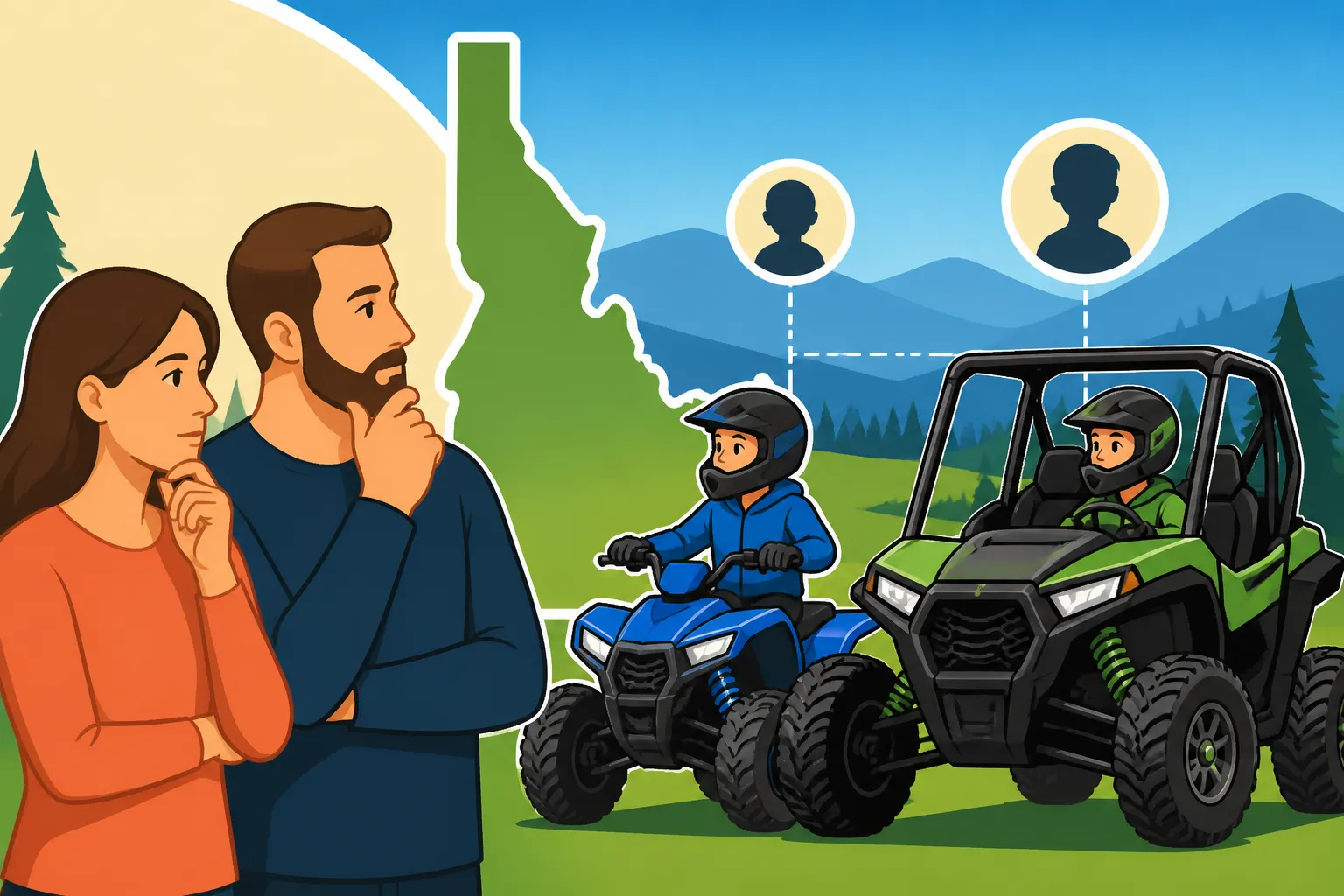
Idaho categorizes youth riders into distinct age groups, each with its own maximum engine size limitations for ATVs and UTVs. These limits are designed to prevent children from operating machines that are too powerful or too heavy for their strength, coordination, and judgment. Generally, the younger the child, the smaller the allowable engine size. For instance, a child might start on an ATV with a very small engine, perhaps under 70cc, before graduating to something larger as they get older and gain more experience.
It’s important to remember that these are maximum limits. Just because a child can ride a machine up to a certain CC doesn't mean it's always the best machine for them. You should always consider your child's individual skill level, physical size, and maturity when choosing an OHV. A child who is new to riding, even if they meet the age requirement for a larger machine, might benefit from starting on something smaller and less powerful to build confidence and skills gradually. You can find more specific details by checking the official Idaho Parks and Recreation guidelines or contacting their office.
Here's a general breakdown of the age and engine size guidelines for youth OHVs in Idaho:
| Rider Age Group | ATV Engine Size Limit (Maximum CC) | Side-by-Side/UTV Size Limit (Maximum CC) | Notes |
|---|---|---|---|
| Under 11 | Up to 70cc | Up to 90cc (may vary by model) | Must be designed for single rider only. |
| 11 to 15 | Up to 90cc | Up to 200cc (may vary by model) | Must be designed for single rider only, unless UTV. |
| 16 and Over | No CC limit, but must be adult-sized | No CC limit, but must be adult-sized | Requires valid driver's license for road use. |
Note: These are general guidelines. Always check the current Idaho Parks and Recreation regulations for the most up-to-date and specific rules on [Engine Size Limits for Idaho Riders Under 16] and machine types.
When Engine Size Isn't the Only Factor
While engine size is a primary concern, it's not the sole determinant of whether a machine is appropriate for a young rider. Several other factors play a significant role in safety and suitability. The overall weight of the machine, its physical dimensions (like seat height and handlebar reach for ATVs, or pedal reach for UTVs), and its design features (such as suspension, braking capability, and speed governor options) are all critical. A machine might technically fall within the allowable CC limit but could still be too heavy or too tall for a child to comfortably and safely control.
For side-by-sides or UTVs, it's also important to consider passenger capacity and whether the machine is designed for multiple riders. Many youth UTVs are built for a single driver or a driver and one small passenger, but adult models can carry more. Ensuring the machine's design aligns with the intended use and the child's abilities is paramount. For example, some manufacturers offer youth models with adjustable speed limiters, which can be an excellent feature for progressive skill development. This allows parents to gradually increase the machine's top speed as their child's abilities grow. Taking the time to observe your child on the machine, checking their posture, reach, and how easily they can manipulate the controls, will give you invaluable insight beyond just the engine's displacement.
Supervision Requirements: Keeping Young Riders Safe on Idaho Trails
Sending a child out on an OHV, even a youth-sized one, requires more than just making sure they have the right machine. Idaho law places significant emphasis on adult supervision, recognizing that young riders benefit from guidance and immediate assistance. These supervision rules aren't just about being present; they dictate how close you need to be and what your responsibilities are as the supervising adult. This is about being proactive in preventing accidents and being there to teach and react.
The Critical 300-Foot Rule Explained
One of the most frequently asked questions Idaho parents have revolves around the "300-foot rule." This regulation states that any operator under the age of 16 must be under the direct visual supervision of an adult who is at least 18 years old. Critically, this supervision must occur within 300 feet of the youth rider. This isn't an arbitrary number; it's a distance deemed short enough for an adult to quickly respond in case of an emergency, offer immediate instruction, or provide assistance if a rider gets stuck or has a mechanical issue.
Imagine you're out on a winding trail in the Boise National Forest. If your child rounds a bend and encounters an unexpected obstacle or loses control, being within 300 feet means you could potentially see the incident unfold and react almost immediately. If you're a quarter-mile back, by the time you realize something is wrong, it could be too late. This rule applies whether you're riding a separate machine, hiking alongside, or even watching from a fixed point like a staging area. The key is "direct visual supervision," meaning the adult must be able to see the youth rider at all times. This can sometimes be challenging in dense timber or over hilly terrain, requiring thoughtful planning of your route. This rule is particularly important when considering [Supervising a Young Rider Within 300 Feet].
Who Qualifies as an Adult Supervisor
So, who can be the adult supervisor? The law is clear: it must be an individual at least 18 years of age. This means a responsible older sibling, even if they're quite mature, might not qualify if they haven't reached their 18th birthday. Parents, legal guardians, or any adult aged 18 or older who is designated by the parent or guardian can serve as the supervisor. The crucial element is that this adult understands their responsibility and is capable of providing the necessary oversight.
It's not just about age, however. The supervising adult should also be knowledgeable about OHV operation, trail conditions, and emergency procedures. They need to be attentive, not distracted by their own ride or other activities. If you're riding with a group, it's wise to designate specific adults for specific young riders, ensuring that no child is inadvertently left unsupervised. Communication within the riding group becomes paramount, especially when navigating turns, intersections, or varying terrain where visual contact might be temporarily broken. Understanding these requirements helps ensure compliance when an Idaho deputy asks for documentation or verification during a trail stop, as outlined in [What an Idaho Deputy Asks a Rider For].
Safety Training and Certificates: What Your Child Needs to Ride Legally
Beyond machine size and supervision, Idaho takes safety education very seriously for its younger riders. It's not enough to just own a machine and follow the age limits; formal training is a cornerstone of responsible OHV operation. This commitment to education helps instill good habits from a young age, preparing riders for increasingly complex situations on the trails.
Mandatory Safety Course Requirements for Idaho Youth
In Idaho, it's generally mandatory for riders under the age of 16 to complete an approved OHV safety course. This course covers essential topics such as safe riding practices, environmental awareness, basic maintenance, and specific Idaho OHV laws and regulations. Think of it like a driver's education course, but for off-road vehicles. These courses are designed to give young riders the foundational knowledge and skills they need to navigate trails safely and responsibly. They often include both classroom instruction and hands-on riding exercises, ensuring that theoretical knowledge is reinforced with practical experience.
Many parents wonder about the cost and accessibility of these courses. Fortunately, Idaho Parks and Recreation (IDPR) provides resources to help locate approved courses, many of which can even be taken online, making it easier for families to fit the training into their schedules. While an online course provides theoretical knowledge, hands-on training is invaluable for developing practical skills. The requirement for this safety course is a non-negotiable step toward legally and safely operating an OHV on public lands in Idaho. Knowing [Who Must Take the Idaho Safety Course] and the specifics of [Idaho OHV Safety Course Requirements] will ensure your child is prepared.
Carrying Proof of Completion
Once your child successfully completes an approved OHV safety course, they will receive a certificate or card as proof of completion. This document is not just a nice-to-have; it's a critical piece of paperwork that your child should carry with them whenever they are operating an OHV on public land. Just like an adult driver needs to carry their driver's license, a young OHV operator needs their safety certificate.
Law enforcement officers, such as county deputies or Forest Service rangers, have the authority to ask for this proof during routine checks on trails or at staging areas. Failure to produce a valid certificate could result in a citation or other penalties. To avoid any issues, it’s a good practice to laminate the certificate or keep it in a waterproof bag stored securely on the machine or with the supervising adult. Before heading out on any ride, always double-check that this document is packed. It’s a simple step that ensures compliance and peace of mind. Keeping this certificate accessible is as important as having a valid [Idaho OHV Sticker Cost This Year] on the machine itself. For more details, refer to [Carrying a Safety Certificate].
Titling and Registering a Youth Machine in Idaho: The Adult's Responsibility
Just because a machine is small and ridden by a child doesn't mean it's exempt from Idaho's titling and registration requirements. In fact, correctly titling and registering a youth OHV is a critical legal step that falls squarely on the shoulders of the adult owner. This process ensures legal ownership, allows the state to track machines for safety and revenue purposes, and is a prerequisite for getting that all-important OHV sticker.
Titling a Machine for a Minor: Whose Name Goes On?
When you purchase an OHV for your child, even if it's explicitly a "youth machine," the title generally needs to be in an adult's name. Idaho law typically requires individuals to be 18 years or older to hold legal title to a vehicle. This means that as the parent or legal guardian, your name (or both parents' names, if applicable) will appear on the certificate of title. This makes perfect sense, as a minor cannot legally enter into a contract or be held fully responsible for the machine in the same way an adult can.
If you're buying a used machine, ensure the seller properly signs off on their existing title so you can transfer it into your name at the county assessor's office. This process involves filling out the necessary paperwork and paying any applicable fees and sales tax. While your child will be the primary rider, you, as the title holder, are ultimately responsible for the machine's legal status, maintenance, and safe operation. This includes everything from ensuring it has a valid title to making sure the youth sticker is current. If you have questions about [Whose Name Goes on a Youth Machine Title], it's best to consult the county assessor's office.
The Importance of a Current OHV Sticker
Once the youth OHV is titled in an adult's name, the next crucial step is obtaining an Idaho OHV sticker. This sticker serves as your machine's registration for a given year, signaling that you've paid your dues and contributed to the maintenance of Idaho's incredible trail system. Without a current sticker, your child's machine cannot legally be operated on Idaho's public lands, including designated OHV trails, Forest Service roads, or BLM lands.
The OHV sticker is typically purchased annually and must be displayed prominently on the machine. For a youth ATV, it often goes on the rear fender; for a youth UTV, it might go on the rear plate or another visible location. The funds collected from these stickers go directly into the Idaho Trail Fund, which helps pay for trail maintenance, signage, and enforcement—all things that directly benefit your family's riding experience. Make it a routine part of your pre-season prep to get a new sticker, whether you buy it online, at a county DMV, or from an authorized vendor. This simple sticker is the key to unlocking Idaho's vast network of trails for your young rider. Details on this process, including where to go, can be found by researching [Idaho OHV Title Application at the County Assessor] and [Where Idaho Sells OHV Stickers].
Equipping Your Young Rider: Helmets, Gear, and Machine Safety Checks
Beyond legal requirements, ensuring your young rider has the proper safety gear and that their machine is in top condition is paramount. This isn't just about compliance; it's about mitigating risk and fostering a culture of safety. As parents, we want our kids to enjoy the adventure, but never at the expense of their well-being.
Idaho Helmet Rules for Riders Under 18
Idaho has clear and strict rules regarding helmets for young OHV operators. Specifically, all riders under the age of 18 are required to wear a U.S. DOT-compliant helmet whenever they are operating or riding as a passenger on an OHV. This rule applies across the board, whether they're on public trails, forest service roads, or even private land (though enforcement may vary on private property). A DOT-compliant helmet is one that meets the safety standards set by the Department of Transportation, ensuring it offers adequate protection in the event of an impact.
Choosing the right helmet is crucial. It should fit snugly but comfortably, without obstructing vision. Check for the DOT sticker on the back of the helmet to ensure compliance. Never let your child ride with a bicycle helmet or one that isn't specifically designed for motorized off-road use, as these do not offer the same level of protection. Investing in a quality, properly fitting helmet is perhaps the single most important safety decision you'll make for your young rider. This rule is outlined in detail in [Idaho Helmet Rules for Riders Under 18].
Essential Safety Gear Beyond the Helmet
While a helmet is non-negotiable, it's just the starting point for comprehensive safety gear. Young riders, in particular, need additional protection to guard against impacts, abrasions, and flying debris. Encourage, and ideally require, your child to wear the following:
- Eye Protection: Goggles or a full-face helmet with a face shield are essential to protect eyes from dust, branches, insects, and other hazards. Regular sunglasses are not sufficient.
- Over-the-Ankle Boots: Sturdy boots provide ankle support and protection from the machine's hot parts, sharp rocks, and potential foot injuries.
- Long Pants and Long-Sleeved Shirt: Even on warm days, long pants and shirts made of durable material help protect skin from scrapes, cuts, and minor burns from the exhaust. Specialty riding jerseys and pants offer even better protection and comfort.
- Gloves: Riding gloves protect hands from blisters, provide better grip on the handlebars, and offer some impact protection.
- Chest Protector/Body Armor: For more aggressive riding or for younger, less experienced riders, a chest protector or full body armor can significantly reduce the risk of injury to the torso and spine.
Beyond personal gear, it’s critical to perform a quick safety check on the machine before every ride. This includes checking tire pressure, fluid levels, brakes, lights, and ensuring all bolts are tight. A well-maintained machine is a safer machine. Creating a pre-ride checklist and involving your child in the process can instill good safety habits that will last a lifetime. Also, consider having a basic repair kit and a LawDepot general bill of sale (if you've recently bought or sold the machine) or similar proof of ownership documentation with you, just in case a park ranger or deputy needs to verify details or you need a roadside repair.
Where Can Young Riders Legally Operate Their OHVs in Idaho?
Understanding where your child can legally ride their OHV is just as important as knowing what machine they can operate. Idaho boasts an incredible network of trails and public lands, but not all areas are open to OHVs, and rules can vary from one type of land to another. Navigating these access points ensures your family stays on the right side of the law and respects land management regulations.
Permitted Riding Areas vs. Restricted Zones
Idaho offers a wealth of opportunities for OHV enthusiasts, including designated OHV trail systems, many Forest Service roads, and Bureau of Land Management (BLM) lands. These are typically the safest and most legal places for your young rider to operate their machine. It’s important to always consult a current motor vehicle use map (MVUM) for the specific area you plan to ride. MVUMs are issued by the Forest Service and BLM and clearly delineate which roads and trails are open to which types of vehicles, including OHVs. These maps are invaluable resources for planning your rides and avoiding restricted areas.
Conversely, there are many places where OHVs are strictly prohibited. These include wilderness areas, some designated recreation areas, and private property without explicit permission from the landowner. Riding in these restricted zones can lead to significant fines, impoundment of your machine, and even charges for resource damage. It’s also important to be aware of seasonal closures, which might occur due to wildlife calving, fire danger, or extreme weather conditions. Always check with the local land management office (Forest Service, BLM, or Idaho Department of Lands) for current conditions and closures before heading out. Respecting these boundaries helps preserve access for all riders and protects Idaho's natural resources.
Road Riding and Young Operators: What's Allowed?
Idaho has specific rules regarding OHV use on public roads, and these rules are even more stringent for young operators. Generally, children under the age of 16 are not permitted to operate an OHV on a public highway or county road, even if the road is open to OHV traffic for adults. There might be very limited exceptions, such as crossing a road at a designated intersection, but riding along a public roadway is typically off-limits for youth.
For adults, [What Idaho Requires Before You Ride a County Road] includes having a restricted vehicle plate and often a valid driver's license and insurance. These requirements are largely in place because road riding presents different hazards and requires different skills than trail riding. The speeds are higher, there's interaction with other vehicles, and traffic laws must be followed. Therefore, the state understandably restricts younger, less experienced operators from these environments. If your family plans to ride trails that involve short sections of county road travel, the youth machine should be trailered or transported over those road segments, rather than ridden. Always assume that if your child is under 16, they should not be operating their OHV on any public road, unless you have explicit, current information to the contrary from a local authority. For adults, information on [Driver's License and Insurance on an Idaho Road Ride] is crucial.
Common Parent Questions and Misconceptions About Idaho Youth OHV Rules
Even with all the rules laid out, parents often have lingering questions or operate under common misconceptions. It's easy to assume certain things, especially if you're an experienced rider yourself, but Idaho's youth OHV laws are quite specific. Let's tackle some of these common concerns head-on.
My Child is a Great Rider – Do the Rules Still Apply?
This is perhaps the most common sentiment among parents. You might have a child who started riding almost as soon as they could walk, who shows exceptional skill, and handles their machine with grace and confidence. It’s natural to feel that the age and size restrictions don’t quite apply to your prodigy. However, Idaho law makes no exceptions for skill level. The rules regarding engine size, age limits, safety courses, and supervision are universal for all riders under 16, regardless of their proficiency.
Law enforcement officers on the trail aren't there to judge your child's riding ability; they are there to enforce the statutes. A skilled 10-year-old on a 150cc ATV, while impressive, is still in violation of the regulations if the machine exceeds the allowed displacement for their age group. The state's position is that even highly skilled young riders are still developing cognitively and physically, and the rules are in place to mitigate risks that even skill can't entirely overcome. Adhering to these rules isn't about stifling talent; it's about operating within the legal framework designed for everyone's safety.
Out-of-State Machines and Idaho Youth Rules
Another frequent question comes from families visiting Idaho from other states. "Does my child still have to follow Idaho's rules if their machine is registered in Oregon or Washington?" The answer is a resounding yes. When you bring an OHV into Idaho and operate it on Idaho's public lands, you are subject to Idaho's laws. This includes all youth machine size rules, supervision requirements, and the need for an Idaho OHV sticker.
Idaho does not have reciprocity agreements with other states when it comes to OHV registration, meaning an out-of-state sticker won't exempt you. You will need to purchase an Idaho Non-Resident OHV Sticker for your child's machine, even if it's already registered in your home state. This ensures that you are contributing to Idaho's trail maintenance fund, just like Idaho residents. Furthermore, the age and machine size rules for youth riders are based on where the machine is being operated, not where it's registered. So, even if your home state allows a larger machine for your child's age, Idaho's more restrictive rules will apply while you are riding here. Always check current IDPR guidelines or call their [Idaho Parks and Recreation Registration Phone Line] to ensure you're fully compliant before your trip.
Disclaimer
This article is for general informational purposes only and does not constitute professional advice. Laws, prices and regulations vary by location and change over time. Consult a qualified professional for guidance on your specific situation.