Idaho Titles Every ATV Over 50cc
One of the most common questions I hear from fellow riders, especially those new to Idaho or bringing in a machine from out of state, revolves around titles. There's a lot of confusion out there about which ATVs and UTVs actually need to be titled in the Gem State, and it can feel like navigating a maze of paperwork when all you really want to do is hit the trails. This guide is here to clear up that confusion, specifically addressing Idaho's requirement that every ATV over 50cc must have a title, and walking you through exactly what that means for you and your machine.
Understanding Idaho's OHV Titling Mandate
When you're looking to buy a new side-by-side or a used quad, or perhaps you're just moving into Idaho with your beloved off-highway vehicle (OHV), the concept of titling can seem a bit daunting. Many states have different rules, and what applied where you came from might not apply here. Idaho has a pretty clear, overarching rule that simplifies things for most OHV owners, even if it might surprise some folks used to less stringent regulations.
The "Over 50cc" Rule: What It Means for Your Machine
Let's get straight to the heart of it: in Idaho, if your ATV or UTV has an engine displacement greater than 50 cubic centimeters, it needs a title. This isn't just a suggestion; it's a legal requirement. This rule covers the vast majority of adult-sized ATVs and UTVs you see out on the trails, from your standard utility quads to high-performance sport machines and multi-passenger side-by-sides. If your engine is bigger than that of a small scooter, you're in title territory. This regulation is put in place to ensure clear ownership records for these significant recreational investments, and it helps the state track machines for various administrative purposes. It’s also crucial for you, the owner, as it forms the bedrock of your legal claim to the vehicle.
This 50cc threshold means that almost every full-sized ATV or UTV will require a title. Imagine you just bought that shiny new Polaris RZR or a trusty Honda Foreman; they absolutely fall under this rule. Even if you snagged a classic three-wheeler from the '80s that's been sitting in a barn, if its engine is over 50cc, you'll need to go through the titling process to make it legally yours in Idaho. This can be a bit of a hurdle for older machines with lost paperwork, but the state has processes in place to help (more on that later). It’s all about creating an official paper trail that defines who owns what.
Why Titles Matter: Proof of Ownership and Theft Prevention
A title isn't just another piece of paper to file away; it's the ultimate proof that you legally own your ATV or UTV. Think of it as the deed to your off-road property. Without a clear title in your name, selling your machine becomes incredibly difficult, transferring it to a family member is a headache, and proving it's yours if it ever goes missing can be nearly impossible. This document is your legal safeguard, protecting your investment and preventing future headaches. When you ride into an Idaho county assessor's office, you're not just registering a vehicle; you're securing your asset.
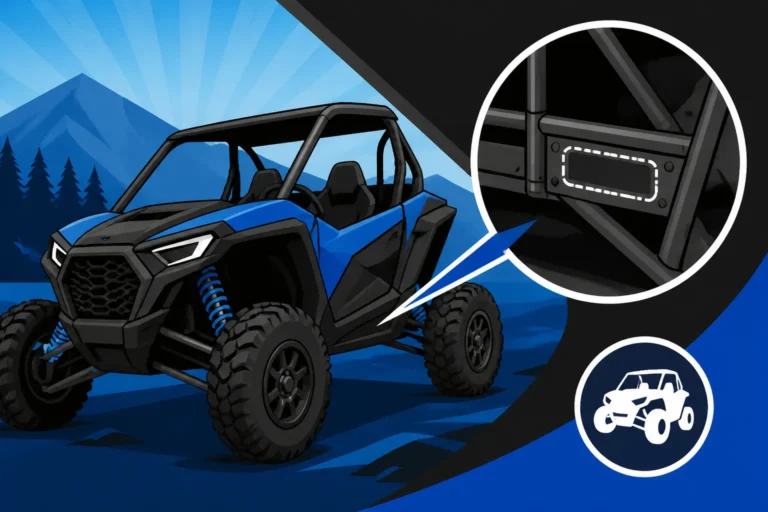
Beyond establishing clear ownership for transactions and personal records, titles play a vital role in combating vehicle theft. A titled machine has a verifiable history linked to its Vehicle Identification Number (VIN). When an OHV is stolen, law enforcement can use that VIN to check title records, track ownership, and ultimately, recover the machine for its rightful owner. This digital trail makes it much harder for thieves to sell stolen machines, as any legitimate buyer will insist on seeing a clean, properly endorsed title. Without this system, the market for stolen vehicles would be far more rampant, and our peace of mind as owners would be significantly diminished. You can learn more about [Machines Idaho Requires a Title For].
Distinguishing Between Titles and Registration Stickers
This is a point of frequent confusion for many riders. A title and a registration sticker are two distinct things with different purposes, although they both fall under the umbrella of making your OHV legal for Idaho's trails. The title, as we just discussed, is your official proof of ownership. It's a one-time document that establishes who the legal owner is and describes the machine's specifics, like its VIN and model year. You generally keep this document in a safe place, not on your machine itself.
A registration sticker, on the other hand, is proof that you've paid your annual user fees to the state. This sticker, which you display prominently on your OHV (or on your restricted use plate), signifies that you're authorized to ride on Idaho's public lands and designated trails. It's essentially your annual pass to enjoy the state's vast network of off-road opportunities. You renew it regularly, usually every year, and the funds from these stickers go directly back into maintaining and improving those trails. Many riders mistakenly believe that if they have a sticker, they don't need a title, or vice-versa. But in Idaho, for machines over 50cc, you absolutely need both: a title to prove you own it, and a current registration sticker to prove you're legal to ride it on public land. [What an Idaho OHV Sticker Costs Each Year] can give you a better idea of the annual fees involved.
Essential Documents for Your Idaho OHV Title Application
So, you've got a machine over 50cc and you know you need a title. Great! Now comes the practical part: gathering the right paperwork. This is where many people can get bogged down, but with a little preparation, it's a straightforward process. The key is to arrive at the county assessor's office with everything they need, saving you from making multiple trips.
Proving Ownership: The Bill of Sale or MCO
The most critical piece of documentation you'll need to title your OHV is proof that you legally acquired it. For a brand-new machine purchased from a dealership, this will typically be the Manufacturer's Certificate of Origin (MCO), sometimes called a Manufacturer's Statement of Origin (MSO). This document is like the machine's birth certificate, proving it's never been titled before and listing its initial details. The dealer should provide this to you, often filled out with your information. Ensure all details are correct before you leave the dealership, as corrections can be a hassle later on.
If you're buying a used machine from a private seller, your primary proof of ownership will be a properly executed bill of sale and the previously issued title, signed over to you. The bill of sale acts as a receipt and a formal declaration of the transaction. It should include the date, the sale price, the full names and addresses of both buyer and seller, and crucially, a complete description of the OHV, including its make, model, year, and VIN. While many online templates exist, ensure the one you use meets Idaho's requirements. Resources like LawDepot offer templates that can help you draft a comprehensive bill of sale, ensuring all necessary details are covered. Make sure the seller's signature on the title matches the name printed on it, and that the odometer reading (if applicable) is noted. Without a clear chain of ownership documented on the title, you might face significant delays or even be unable to title the machine. For more specific guidance, check out [ATV Bill of Sale Wording Buyers Should Insist On].
Your Identity: What to Bring to the Assessor's Office
When you walk into the county assessor's office, you're not just presenting documents about your ATV; you're also proving who you are. This is a standard security measure to prevent fraud and ensure that titles are only issued to legitimate individuals. You'll need to bring valid, government-issued identification. Typically, an unexpired driver's license or a state-issued identification card will suffice. Make sure the name on your ID matches the name you want on the title application. If you've recently changed your name, you might need to bring supporting documentation, such as a marriage certificate or court order.
Sometimes, if there are multiple owners or if you're applying on behalf of a business or trust, additional identification or authorization documents may be required. For example, if you're titling the OHV under your LLC, you'll need to bring your business registration documents and proof that you are an authorized representative of that business. It’s always a good idea to call your specific county assessor's office beforehand or check their website to confirm their exact ID requirements. A quick phone call can save you a wasted trip and ensure a smooth process. Having all your personal identification in order is just as important as having the machine's paperwork ready.
Specifics for Out-of-State or Previously Titled Machines
Bringing an OHV into Idaho that was previously titled in another state adds a couple of extra steps but is still manageable. The Idaho county assessor will need to see the out-of-state title. Make sure this title is properly assigned to you by the previous owner, just as you would for an Idaho title. If the other state didn't title OHVs, but only registered them, you'll need to provide the out-of-state registration and a bill of sale, along with any other proof of ownership required by Idaho. The goal is to establish a clear and legal chain of ownership, regardless of where the machine originated.
Additionally, for machines coming from out of state, an VIN inspection might be required. This inspection verifies that the VIN on your machine matches the one on your ownership documents and checks for any signs of tampering. This can often be done by a law enforcement officer or, in some counties, by specific personnel at the DMV or assessor's office. Again, confirming this requirement with your local Idaho county assessor's office is highly recommended before you go. This extra layer of verification helps prevent stolen machines from being retitled in Idaho, adding another layer of security for all owners. Check out [Registering an Out-of-State Machine in Idaho] for more details on this process.
The Step-by-Step Titling Process at the County Assessor's Office
Alright, you've got your documents in hand, you've confirmed your identity, and you're ready to make it official. The actual titling process in Idaho takes place at your local county assessor's office. While the general steps are consistent across the state, there might be slight variations in office procedures or specific forms, so a little local research never hurts.
Finding Your Local County Assessor
Idaho is divided into 44 counties, and each one has an elected County Assessor. This is the office responsible for vehicle titling within that county, including your OHV. You'll need to visit the assessor's office in the county where you primarily reside or where the OHV will be primarily garaged. Don't worry if you bought your machine in another county or even another state; your home county is where the titling action happens. A quick search online for "[Your County Name] County Assessor Idaho" will usually lead you straight to their official website, where you can find office hours, addresses, and sometimes even specific instructions for OHV titling.
Once you've located your assessor's office, it's a good idea to check if they have specific OHV titling forms available online that you can print and fill out beforehand. This can save you time in the office. Some smaller county offices might have specific days or hours dedicated to vehicle services, so confirming this can prevent a wasted trip. Remember, these offices handle a wide range of responsibilities, so arriving prepared and during appropriate hours will make your experience much smoother. [Idaho OHV Title Application at the County Assessor] is a great resource to understand the forms you'll encounter.
Filling Out the Idaho OHV Title Application Form
The core of the titling process is completing the "Application for Idaho Title" form. This form will ask for detailed information about you, the owner, and your OHV. You'll need to provide your full legal name, address, and driver's license number. For the OHV, you'll enter its make, model, year, and the all-important VIN. It will also ask for details about how you acquired the machine, such as the seller's information and the purchase date. This is where your bill of sale and previous title (or MCO) come into play, providing all the necessary data points.
Take your time filling out the form. Accuracy is paramount here. Even a minor typo in the VIN or your name could lead to delays or require a correction later, which is an unnecessary hassle. If you're unsure about a specific field, don't guess. Ask the clerk at the assessor's office for clarification. They are there to help guide you through the process. Having your supporting documents like the bill of sale and previous title right there with you will ensure you can transfer all the information precisely. This form is the blueprint for your new title, so make sure it's perfect.
Paying the Title Fee and Sales/Use Tax
There are two primary financial components you'll need to address at the assessor's office: the title fee and any applicable sales or use tax. The title fee itself is a relatively modest, one-time charge for the creation and issuance of your new title certificate. This fee helps cover the administrative costs associated with maintaining the state's titling records. While the amount can vary slightly, it's generally a fixed cost per title.
The more substantial financial obligation for many will be sales tax or use tax. If you purchased your OHV from an Idaho dealer, they would have collected Idaho sales tax at the time of sale, and you'll typically provide proof of that payment to the assessor's office. However, if you bought your machine from a private party or from an out-of-state seller, you'll likely be responsible for paying Idaho's sales tax (if from a private Idaho seller) or use tax (if bringing it in from out-of-state) directly to the county assessor. This tax is calculated based on the purchase price of the OHV. Be prepared to pay this amount when you apply for your title. Some counties accept various forms of payment, but it’s wise to confirm their accepted methods beforehand, especially for larger sums. For more specific information, refer to [Idaho Sales Tax on an ATV Purchase] and [Use Tax When a Machine Comes Into Idaho].
Common Titling Challenges and How to Overcome Them
While the titling process is generally straightforward when you have all your ducks in a row, life isn't always that neat. Riders often encounter bumps in the road, especially when dealing with used machines, lost paperwork, or previous owners who weren't as meticulous as they should have been. The good news is that Idaho has procedures in place to help you navigate most of these common challenges.
When the Seller Never Signed the Title
This is a classic headache scenario. You bought a used quad, the seller handed you the title, but you realize later they forgot to sign it over, or maybe they signed in the wrong spot, or the signature doesn't match the name printed on the title. Without a proper endorsement from the previous owner, the title is essentially still in their name, and the county assessor cannot legally transfer it to you. Your first and best option is always to contact the seller and arrange for them to properly sign the title in the designated "seller" or "assignment" area. If they made a mistake, they might need to initial the correction, but generally, a clean, correct signature is preferred.
If you can't reach the seller, or they're uncooperative, things get a bit trickier. You might need to explore options like a bonded title. A bonded title is essentially a guarantee that you are the rightful owner, even without a perfect chain of title. It involves purchasing a surety bond for a certain amount, which protects the state and any previous owners from potential claims against the vehicle. This is a more involved process, often requiring additional documentation like sworn affidavits and a longer waiting period, but it can be a lifeline when the original seller is unreachable. Always discuss these complex situations directly with your county assessor's office to understand the specific steps they require.
Dealing with a Lost Title or No Previous Paperwork
Another common dilemma is buying a used machine where the seller claims they never received a title, or they simply lost it. For machines that are supposed to be titled (i.e., over 50cc), the lack of a title is a red flag. If the seller legitimately lost the title, they are the one who needs to apply for a duplicate title in their name from the state where it was last titled. You should insist on this before completing the purchase. Never buy a machine over 50cc without a title, especially if the seller claims it was titled at some point. It opens you up to potential ownership disputes or even purchasing a stolen vehicle.
If the machine is genuinely very old and from a time or state where titles weren't commonly issued for OHVs, or if you've inherited a machine with no paperwork, you might also have to pursue a bonded title. This process is designed for situations where legitimate proof of ownership exists (like a bill of sale from a long time ago, or clear family history) but the official title document is missing or was never issued. The county assessor's office will guide you through the requirements, which often include a thorough VIN inspection and sometimes even an advertisement in a local newspaper to notify any potential claimants. This ensures that even machines with murky histories can eventually get into the legal titling system. You can get more information on [Replacing a Lost Idaho OHV Title] or [Idaho Title Rules for an Older Machine].
Correcting Errors on Your Existing Title
Mistakes happen, whether it's a typo from the dealership, a miswritten VIN from a previous owner, or an error made during your initial application. Discovering an error on your OHV title, like an incorrect VIN, a misspelled name, or a wrong model year, can be frustrating. It's crucial to get these errors corrected as quickly as possible because an inaccurate title can cause problems when you try to sell the machine, insure it, or even if you're stopped by law enforcement. The process for correction typically involves returning to the county assessor's office where the title was issued.
You'll usually need to bring your incorrect title, your proof of identity, and any supporting documentation that verifies the correct information (e.g., your bill of sale, MCO, or a manufacturer's spec sheet for the VIN). You will then fill out an application for a corrected title. There may be a small fee associated with issuing a corrected title. It’s important to be patient and provide all requested information, as the assessor's office needs to ensure the correction is legitimate and not an attempt at fraud. Addressing errors promptly ensures your title accurately reflects your machine and your ownership.
Special Scenarios: Titling Unique OHVs in Idaho
Not every OHV fits neatly into the "new quad from a dealer" box. Idaho's trails are diverse, and so are the machines that ride them. From vintage three-wheelers to custom-built buggies, and even the smallest youth machines, there are specific titling considerations for these unique situations. Understanding these nuances will help you navigate the process without unexpected surprises.
Titling Older, Classic, or Homemade Machines
Idaho's "over 50cc" rule applies regardless of a machine's age. So, if you've unearthed a classic 1980s three-wheeler or an older ATC, and its engine is larger than 50cc, you'll still need to title it. The challenge often lies in the paperwork for these older machines. Many vintage OHVs may have been purchased before titling laws were as prevalent or strictly enforced, or their original titles may have been lost over decades. In these cases, you'll likely follow a similar path as someone dealing with a lost title, which may involve a bonded title application. You'll need to demonstrate legitimate possession, often through a bill of sale (even a very old one), and undergo a VIN inspection.
For homemade buggies, sand rails, or custom-built side-by-sides, the titling process is unique. Since there's no Manufacturer's Certificate of Origin, the state needs a way to identify and track your creation. You'll typically apply for a "homemade" or "special construction" title. This often involves a detailed inspection by a state official or law enforcement to assign a new VIN (if it doesn't have one) or verify the existing one, and to ensure it meets basic safety standards. You'll also need to provide receipts for major components to prove legitimate acquisition of parts. While more complex, Idaho's system allows for these unique machines to be legally titled and enjoyed. You can find out more about [Idaho Title Rules for an Older Machine].
Machines Under 50cc: Do They Need a Title?
This is the exception to the "over 50cc" rule! If your ATV or UTV has an engine displacement of 50cc or less, Idaho generally does not require it to be titled. These are typically smaller youth machines, electric ATVs, or very basic mini-bikes. The assumption is that these machines, due to their smaller size and lower power, represent less of a financial investment and are used in more controlled environments, making a full title less critical for ownership tracking. This exemption simplifies things for parents buying smaller quads for their kids.
However, even though they don't require a title, machines under 50cc still need an Idaho OHV registration sticker if you plan to ride them on public lands or designated trails. So, while you're spared the title paperwork, you're not completely off the hook for making them trail-legal. Always double-check the exact engine size specification on any machine you purchase, especially if it's borderline. A 51cc machine requires a title, while a 49cc machine does not, creating a subtle but important distinction. The sticker still ensures that even these smaller machines contribute to trail maintenance and access. [Do Machines Under 50cc Need an Idaho Title?] has more on this.
Business Ownership and Multiple Names on a Title
Many riders opt to title their OHV under a business entity, such as an LLC or corporation, especially if the machine is used for commercial purposes, like guiding tours, farming, or ranch work. Titling an OHV under a business is absolutely permissible in Idaho. When you go to the county assessor's office, you'll need to provide your business registration documents (like Articles of Organization) and proof that you are an authorized agent of that business, such as a corporate resolution or operating agreement. The title will then be issued in the name of the business, rather than an individual. This can have implications for liability and accounting, so it's a decision often made in consultation with legal or financial advisors.
Similarly, if you're purchasing an OHV with a partner, family member, or friend, you can have multiple names listed on the title. The typical convention is to use "and" or "or" between the names. If "and" is used (e.g., John Doe AND Jane Smith), both parties generally must sign off on any future transfer or sale of the machine. If "or" is used (e.g., John Doe OR Jane Smith), either party can usually act independently to sell or transfer the machine. This is a crucial distinction that has significant legal implications for joint ownership, so discuss it carefully with any co-owners before titling. Choosing the right wording is essential for future clarity and control over the asset. You can also explore options like [Registering an OHV Under an an Idaho Business] for more details.
Beyond the Title: What Comes Next for Your OHV
Getting your OHV titled is a huge step, making your ownership official and secure. But for most riders, the goal isn't just to own a machine; it's to ride it! Once your title is in hand, there are a few more important pieces of the puzzle to ensure your ATV or UTV is fully legal and ready for Idaho's diverse terrain, whether it's a remote forest trail or a designated county road.
Understanding Idaho's OHV Sticker Requirements
Remember how we talked about the difference between a title and a registration sticker? Now that you have your title, the next crucial step is to obtain an Idaho OHV sticker. This annual sticker is your permit to ride on Idaho's public lands, including designated trails managed by the Idaho Department of Parks and Recreation (IDPR), the U.S. Forest Service, and the Bureau of Land Management (BLM). The funds generated from these stickers directly support the development and maintenance of these trails, benefiting all riders. Without a current sticker, even with a valid title, you can face fines if caught riding on public lands.
You can purchase your OHV sticker from a variety of vendors, including county assessor offices, authorized powersports dealers, and even online through the IDPR website. The sticker needs to be renewed annually, and its validity typically runs from January 1st to December 31st, regardless of when you purchase it during the year. Displaying it correctly on your machine is also important; for most ATVs, it goes on the rear fender or the number plate, while for UTVs, it's often placed on the restricted use plate if you have one. Make sure it's clearly visible and not obscured. [Where Idaho Sells OHV Stickers] and [Idaho OHV Registration Runs January to December] are excellent resources for timing and locations.
When and How to Apply for an Idaho Restricted Plate
For many side-by-sides and some ATVs, the ability to legally ride on certain county roads is a game-changer, allowing riders to connect trails, access services in small towns, or simply enjoy a scenic backroad cruise. To do this in Idaho, your OHV often needs a Restricted Vehicle Plate, commonly known as an "R plate." This plate, which starts with the letter 'R', signifies that your machine meets specific equipment requirements (like headlights, taillights, mirrors, and a horn) and is authorized for use on designated county and Forest Service/BLM roads. It's important to remember that this plate does not allow you to ride on state or federal highways.
You can apply for a restricted plate at your county assessor's office after your machine is titled. You'll typically need to certify that your OHV has the necessary safety equipment. There's a separate fee for the restricted plate itself, in addition to your annual OHV sticker. The restricted plate must be displayed on the rear of your OHV, much like a car license plate. Once you have this plate, it effectively combines your annual registration sticker with your road-legal capabilities, opening up even more riding opportunities across Idaho. For more detailed information, see [Idaho's Restricted Vehicle Plate Explained] and [What Idaho's $3 Restricted Use Plate Covers].
The Importance of Insurance for Your Titled Machine
While Idaho state law doesn't mandate liability insurance for OHVs operating solely on public lands and trails, it becomes a critical requirement if you plan to operate your machine on any public roads (even those restricted county roads) with your R plate. Just like with a car, if you're involved in an accident on a public road, liability insurance protects you from the financial fallout of damages or injuries you might cause to others. Many seasoned riders, myself included, strongly recommend carrying OHV insurance even for purely off-road use.
Accidents can happen anywhere, and the costs of medical treatment or repairing a damaged machine can be substantial. Comprehensive OHV insurance can cover damage to your own machine, theft, and even medical payments for yourself. It offers invaluable peace of mind, knowing that if something goes wrong, you're not left to shoulder the entire financial burden alone. Plus, if you financed your OHV, your lender will almost certainly require you to carry full coverage insurance as a condition of the loan. Don't overlook this vital layer of protection for your titled investment. [Insuring an ATV in Idaho] is a helpful read here.
Here's a quick reference table to help clarify the requirements:
| Machine Type | Engine Size Requirement | Title Required? | OHV Sticker Required for Public Land? | Restricted Plate for Road Use? | Primary Purpose of Document |
|---|---|---|---|---|---|
| Standard ATV/UTV | Over 50cc | Yes | Yes | Optional (for legal road access) | Proof of Ownership |
| Youth ATV | 50cc or less | No | Yes | No | Proof of Annual User Fees |
| Older/Classic OHV | Over 50cc | Yes | Yes | Optional (for legal road access) | Proof of Ownership (may require bond) |
| Homemade Buggy | N/A (must be titled) | Yes | Yes | Optional (for legal road access) | Proof of Ownership (assigned VIN) |
| OHV on Private Land | Any | Yes (if > 50cc) | No (unless crossing public land) | No | Proof of Ownership |
Protecting Your Investment: Safeguarding Your Title and Machine
Once you've gone through the process of titling your OHV, you've made a significant investment in both time and money. It's smart to take steps to protect that investment, ensuring your title remains secure and your machine is as safe as possible from theft or damage. A little foresight goes a long way in preventing future hassles.
Where to Securely Store Your OHV Title
Your OHV title is a vital legal document, much like the deed to your house or the title to your car. As such, it should be stored in a secure location, separate from your machine. Never, ever keep the physical title on your ATV or UTV, or even in your glovebox or tool kit. If your machine were to be stolen, you'd be handing the thief the very document they need to try and illegally transfer ownership, making recovery much more difficult.
The best place for your title is in a secure, fireproof location in your home, like a safe, a safety deposit box, or a locked file cabinet. Make sure it's somewhere you can easily access if you need it for a sale or transfer, but not somewhere it's prone to being lost, damaged, or stolen. It's also a good practice to make a digital copy (a clear scan or photo) and save it in a secure cloud storage service or on an external hard drive, separate from your physical copy. This way, if the original is ever lost or destroyed, you at least have a record of the information.
Checking for Liens Before You Buy
When purchasing a used OHV, especially from a private seller, it's absolutely critical to check for any outstanding liens on the title. A lien means that another party (typically a bank or financing company) has a legal claim on the machine until a debt is paid off. If you buy a machine with a lien on it, and the seller defaults on their loan, the lender could legally repossess your newly purchased OHV, even if you paid the seller in full. It's a nightmare scenario that can be easily avoided with due diligence.
Before you hand over any money, always inspect the title for any recorded liens. You can also often perform a lien search through your county assessor's office or the state DMV, sometimes for a small fee, using the OHV's VIN. Insist that any outstanding liens be officially released and noted on the title before you complete the purchase. The seller should provide a "lien release" document from their lender if the title shows a lien. Never take possession of a machine or pay for it if there's an active lien and no clear path to its release. This step alone can save you thousands of dollars and immense heartache. [Liens on an OHV Title] provides specific information on this.
What to Do If Your Titled Machine is Stolen
The unfortunate reality is that OHV theft does occur, even in beautiful Idaho. If your titled ATV or UTV is stolen, acting quickly and methodically is key. Your first step should always be to report the theft immediately to your local law enforcement agency. Provide them with all the details you have: the make, model, year, color, and most importantly, the Vehicle Identification Number (VIN). The VIN is what police will use to enter your machine into national databases for stolen vehicles. Having your title handy will make this process much faster and more accurate.
Next, notify your insurance company. If you have comprehensive coverage on your OHV policy, they will guide you through the claims process. They will also need details from the police report. Having a title in your name is absolutely crucial at this stage, as it's the primary proof you owned the stolen machine. Remember that digital copy of your title you stored securely? Now's the time it might come in handy. While it's a horrible situation to be in, having your machine properly titled and insured gives you the best possible chance of recovery or financial compensation. [Recovering a Stolen ATV] is a good resource to review in such an event.
Disclaimer
This article is for general informational purposes only and does not constitute professional advice. Laws, prices and regulations vary by location and change over time. Consult a qualified professional for guidance on your specific situation.