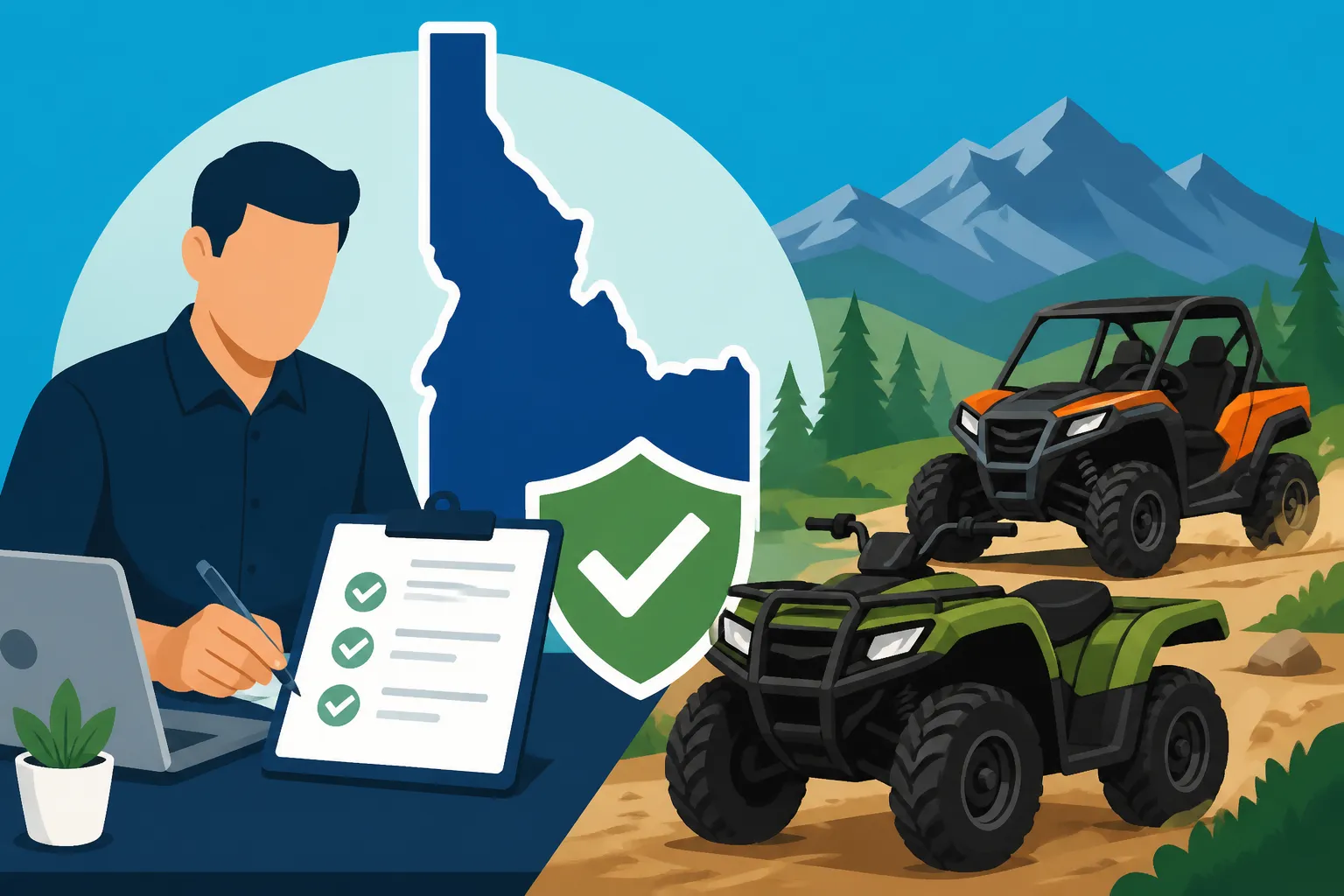
Registering an OHV Under an Idaho Business
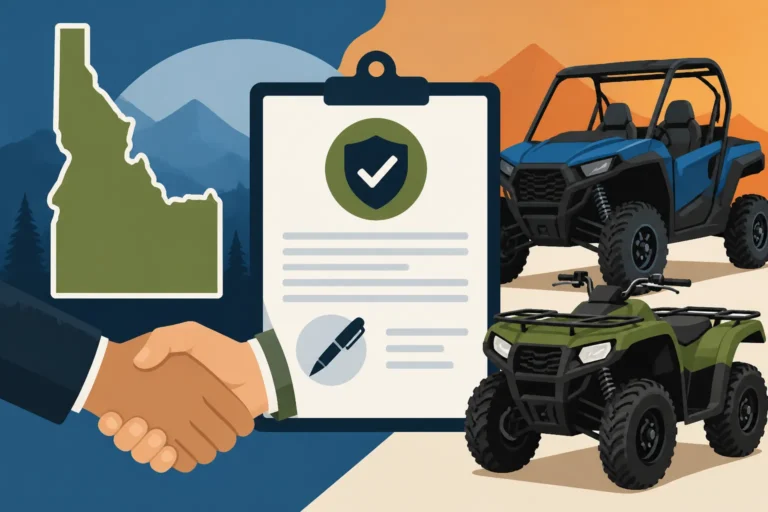
Navigating the world of Idaho OHVs can be complex enough for personal use, but when you introduce the layer of business ownership, things can feel like they just got a whole lot more complicated. Many small business owners, especially those in contracting, landscaping, guiding, or even property management, find themselves needing an ATV or UTV for work. This guide aims to cut through the confusion and provide a clear, empathetic roadmap for registering an Off-Highway Vehicle (OHV) under your Idaho business, helping you understand the "why" and "how" without getting bogged down in bureaucratic jargon.
Why Register an OHV Under Your Idaho Business?
It might seem simpler to just keep your business's quad or side-by-side registered in your personal name, but that approach can actually open you up to a world of unnecessary risk and missed opportunities. There are compelling reasons why formally placing your OHV under your business's ownership structure makes sound financial and legal sense.
Limiting Personal Liability
One of the biggest advantages of owning assets, including OHVs, through a business entity like an LLC or corporation, is the separation it creates between your personal and business liabilities. Imagine a scenario where a business-owned side-by-side is involved in an accident, perhaps while an employee is using it to transport tools on a job site, or even if it's stolen from a company yard. If that machine is registered in your personal name, you could be personally sued for damages, and your personal assets—like your home or savings—might be at risk.
However, if the OHV is legally owned by your business, the liability generally rests with the business entity itself. This means that in the event of a lawsuit, your personal assets are typically protected, assuming you’ve maintained the corporate veil properly (meaning you haven't mixed personal and business funds or ignored other legal formalities). This layer of protection is invaluable, providing peace of mind as your business grows and its operations expand. It's a critical step in risk management that many business owners overlook until it's too late.
Tax Implications and Deductions
Let's talk about money. When your OHV is a legitimate business asset, you can often take advantage of various tax deductions and write-offs that wouldn't be available if it were personally owned. For instance, the purchase price, depreciation over time, fuel, maintenance, repairs, insurance premiums, and even the cost of [What an Idaho OHV Sticker Costs Each Year] can potentially be deducted as business expenses. This can significantly reduce your business's taxable income, putting more money back into your pocket or allowing you to reinvest in your company.
Of course, the specifics depend on your business structure and how the OHV is used. If it's solely for business purposes, the deductions are generally straightforward. If there's mixed personal and business use, you'll need to meticulously track usage to accurately allocate expenses. Always consult with a tax professional who understands Idaho's business tax laws to ensure you're maximizing your deductions legally and correctly. They can help you navigate the nuances and ensure your record-keeping stands up to scrutiny, making the most of your investment.
Professional Image for Commercial Use
Beyond the legal and financial benefits, there's also the often-underestimated aspect of professional appearance. When your business vehicles, including your OHVs, are clearly identifiable as company assets—perhaps with company branding or consistent documentation—it projects a more established and trustworthy image. For clients, suppliers, or even potential employees, seeing a well-maintained, professionally registered fleet, even if it's just one side-by-side, signals stability and seriousness.
This is especially true for businesses that use OHVs in front of clients or customers, such as an outfitter guiding hunting trips, a surveyor accessing remote property, or a construction crew moving equipment. It demonstrates that your business operates with due diligence and attention to detail, reinforcing confidence in your services. Furthermore, should you ever need to finance additional equipment or apply for business loans, having properly registered and titled assets under your company's name can strengthen your business's financial profile, making it easier to secure capital.
Essential Steps to Setting Up Your Business for OHV Ownership
Before you even think about visiting the county assessor's office, there are some fundamental steps you need to take to ensure your business entity is properly established to own an OHV. These steps lay the groundwork for a smooth titling and registration process and reinforce the legal separation between you and your business.
Establishing Your Legal Entity
The first and most crucial step is to formally establish your business as a legal entity separate from yourself. For most small businesses looking to own an OHV, this typically means forming a Limited Liability Company (LLC) or a corporation. A sole proprietorship, while simpler to set up, generally doesn't offer the same personal liability protection, which, as we discussed, is a primary reason for registering an OHV under a business.
To establish an LLC in Idaho, you'll need to file Articles of Organization with the Idaho Secretary of State. This involves choosing a unique business name, designating a registered agent, and outlining the basic structure of your company. The Idaho Secretary of State's website is the primary resource for this process, offering forms and guidance. Taking the time to properly form your entity ensures that when you title the OHV, it will clearly belong to the business, not you personally. This legal distinction is what provides the protective barrier for your personal assets, making it a non-negotiable step for any serious business owner.
Obtaining an EIN
Once your business entity is officially formed with the state, your next stop is the Internal Revenue Service (IRS) to obtain an Employer Identification Number (EIN). Think of an EIN as a Social Security number for your business. Even if you don't plan on having employees right away, most banks require an EIN to open a business bank account, and you'll need one for tax purposes. More importantly for our discussion, the EIN is a critical piece of identification that ties the OHV to your business on all official documents, including title and registration forms.
Applying for an EIN is a free and relatively quick process that can be done online through the IRS website. You'll need information about your business, such as its legal name, mailing address, and the name and Social Security number of the principal officer. Having your EIN firmly in place ensures that all future transactions, from purchasing the OHV to paying its associated fees and filing taxes, are correctly attributed to your business. This prevents confusion and helps maintain the integrity of your business's separate legal identity, simplifying future administrative tasks.
Drafting an Operating Agreement
While not always a strict legal requirement in every state for LLCs, drafting a comprehensive operating agreement is incredibly wise, especially when your business plans to acquire significant assets like an OHV. An operating agreement is essentially an internal document that outlines the ownership structure, roles and responsibilities of members (if it's a multi-member LLC), how profits and losses are distributed, and how major decisions are made. It also specifies what happens if a member leaves or if the business dissolves.
For businesses owning OHVs, the operating agreement can detail the purpose of the OHV, who is authorized to use it, and procedures for its maintenance and storage. This internal clarity can prevent disputes among partners and provides a clear framework for how business assets are managed. Platforms like LawDepot offer customizable templates for operating agreements, making it easier for small business owners to create a legally sound document without incurring exorbitant legal fees. Having this agreement in place solidifies the operational rules around your business assets, reinforcing the professional management of your enterprise.
| Feature | Personal OHV Ownership | Business OHV Ownership (e.g., LLC) |
|---|---|---|
| Liability | Personal assets at risk | Personal assets generally protected (limited liability) |
| Tax Deductions | Limited to no business deductions | Potential deductions for purchase, fuel, maintenance, insurance, depreciation |
| Record Keeping | Informal, often minimal | Formal, detailed for tax and legal compliance |
| Insurance | Personal OHV policy | Commercial OHV/Business General Liability policy |
| Asset Identity | Personal asset, separate from business | Business asset, distinct from personal property |
| Financing | Personal credit | Business credit, potentially easier with established entity |
| Resale Value | Market value for personal use | Can be part of business asset sale |
The Idaho OHV Titling Process for Businesses
Once your business is properly structured and you have your EIN, you're ready to tackle the exciting part: actually getting that OHV titled in your business's name. This process is similar in many ways to titling a personal machine, but with specific documentation unique to businesses.
Required Documents for Business Titles
When you head to your county assessor's office in Idaho to title your OHV under your business name, you'll need to come prepared with a specific set of documents. Think of it like bringing your business's entire resume. These typically include:
- Proof of Ownership: This is paramount. If you bought the OHV new from an Idaho dealer, they typically handle the initial paperwork and submit it to the state. If you purchased it used from a private party, you'll need the original, properly signed-off title from the previous owner. Make absolutely certain the seller has correctly filled out their portion, including the odometer reading and their signature. An improperly transferred title can cause significant delays. For machines without a prior title, such as a very old model or one coming from a non-titling state, you might need a bill of sale and other supporting documents to establish [Proof of Ownership for an Idaho OHV Title].
- Bill of Sale: Even if you have a title, a detailed bill of sale is crucial, especially for private party purchases. This document should clearly state the buyer (your business's legal name), the seller, the purchase price, the date of sale, and the OHV's VIN. Services like LawDepot can provide robust bill of sale templates that ensure all necessary legal details are covered, protecting both parties.
- Business Formation Documents: Bring copies of your Articles of Organization (for an LLC) or Articles of Incorporation (for a corporation) filed with the Idaho Secretary of State. This proves your business is a legitimate legal entity.
- EIN Confirmation: While not always explicitly asked for at the counter, having your EIN confirmation letter or other document showing your business's EIN is a good idea. It helps verify your business's identity.
- Idaho Sales Tax Form: You'll need to account for Idaho sales tax on the purchase price, unless it was a private sale where sales tax was not applicable, or if you paid tax to a dealer. If you bought the machine out-of-state and brought it into Idaho, you might owe [Use Tax When a Machine Comes Into Idaho].
It's always a good practice to call your specific county assessor's office (e.g., [Titling an ATV in Ada County] or [Titling an OHV in Kootenai County]) before you go, as requirements can sometimes vary slightly, and they can confirm exactly what you'll need to bring.
Navigating the VIN Inspection
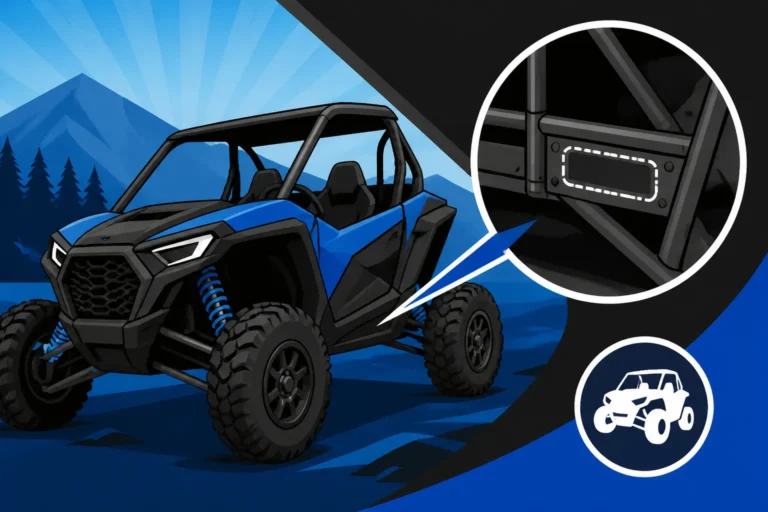
For many OHV titling scenarios in Idaho, particularly for out-of-state machines or those without a clear title history, a Vehicle Identification Number (VIN) inspection might be required. This isn't just a quick glance; it's a verification process to ensure the VIN on the machine matches the paperwork and hasn't been tampered with or stolen. The inspection is usually performed by a certified law enforcement officer, such as a sheriff's deputy or Idaho State Police trooper.
You'll need to arrange for this inspection, which often means taking your OHV to a designated location or, in some cases, having an officer come to your business's location. They will physically examine the VIN plate or stamping on the machine, compare it to your title or bill of sale, and complete a verification form. This step is critical for preventing fraud and ensuring the legitimate transfer of ownership. Make sure you know [Where the VIN Sits on a Side-by-Side Frame] on your specific machine before the inspector arrives. The officer will also check for any outstanding theft reports associated with the VIN, providing an extra layer of security and peace of mind for your business.
Transferring an Existing Title to Your Business
If you're bringing an OHV that's already titled in your personal name into your business's ownership, or if you've purchased one from a private seller, you'll need to formally transfer that title. This process involves filling out the "Assignment of Title" section on the back of the current Idaho title certificate.
Crucially, when filling out the buyer's information, you must use your business's full legal name (e.g., "XYZ Landscaping LLC") as it appears on your Articles of Organization, not your personal name. If there are multiple owners of the business, it's typically the business entity itself listed as the owner. The seller (which would be you, if you're transferring it from personal to business ownership, or the previous private seller) will sign and date the document. Then, you'll take this signed-off title, along with your business formation documents and EIN, to the county assessor's office to apply for a new title in your business's name. It's a clear legal distinction that ensures the machine is an asset of your business from that point forward, complete with all the associated benefits and responsibilities.
Getting Your Idaho OHV Sticker and Plate as a Business
With the title successfully transferred to your business, the next logical step is to ensure your OHV is legally able to hit Idaho's extensive trail system or designated county roads. This means obtaining the necessary OHV sticker and, if applicable, a restricted use plate.
Applying for the OHV Sticker
Every OHV operating on public lands or designated roads in Idaho, regardless of whether it's for personal or business use, must display an [What an Idaho OHV Sticker Costs Each Year]. This sticker signifies that you've paid your annual fee, which contributes to the maintenance and development of Idaho's OHV trail system through the Idaho Parks and Recreation Department.
Applying for the sticker for your business-owned OHV is straightforward. You can typically do this at most county assessor's offices, [IDPR Service Centers and What They Handle], or even some authorized vendors, including sporting goods stores. You'll need to provide proof of ownership (the new title in your business's name) and the OHV's VIN. The application form will require your business's name and address as the owner. Once paid, you'll receive the sticker, which must be clearly displayed on your OHV. Remember, [Idaho OHV Registration Runs January to December], so plan your renewal accordingly, usually at the beginning of the year. If you buy a machine mid-year, the sticker is good until the end of that calendar year, regardless of when you purchased it.
Understanding Restricted Use Plates
If your business-owned OHV will be operating on designated county roads in Idaho, even for short distances to get from one trail segment to another, or to access a job site, it will need more than just the annual OHV sticker. It will require an [Idaho's Restricted Vehicle Plate Explained]. This special plate, often referred to as an "R plate," allows OHVs to legally traverse approved roads.
To obtain a restricted use plate for your business, you'll apply at your county assessor's office. You'll need the OHV's title in your business's name, proof of liability insurance (which is mandatory for road use), and the appropriate fee for the plate itself, separate from the OHV sticker. The plate indicates that your OHV meets specific equipment requirements for road use, such as headlights, taillights, brake lights, mirrors, and a horn. These are critical safety features for mixed-use riding. The cost for this plate is a separate fee from the annual sticker fee, and it typically covers the plate for its duration, though you still need to keep your OHV sticker current. Make sure to consult [What Idaho's $3 Restricted Use Plate Covers] for full details on what this plate permits.
Displaying Your Business's OHV Credentials
Once you have your OHV sticker and, if applicable, your restricted use plate, correctly displaying them is not just about compliance, it's about avoiding unnecessary hassle with law enforcement. The OHV sticker typically needs to be placed in a visible location on the machine, often on the left-hand side of the vehicle, near the front. For quads, it often goes on the fender, while for side-by-sides, it could be on a roll bar or another prominent spot. There are specific guidelines for [Sticker Placement on a Quad's Fender].
If you have a restricted use plate, it must be securely mounted and clearly visible on the rear of the OHV. Many side-by-sides have dedicated mounting points. The plate should be free from dirt or obstruction that might prevent an officer from reading it. Ensure any company branding or accessories don't obscure the plate or sticker. Properly displayed credentials show that your business is operating legally and responsibly, reflecting well on your company's professionalism. For situations where you might be [Riding an ATV on the Road in Idaho] or crossing public highways, having these visible and correctly displayed is absolutely critical to avoid citations.
Ongoing Compliance and Best Practices for Business-Owned OHVs
Registering and titling your business's OHV is a significant first step, but it's just the beginning. To ensure long-term compliance, protect your assets, and maintain legal standing, there are ongoing best practices and responsibilities that your business needs to embrace.
Maintaining Proper Insurance Coverage
This cannot be stressed enough: adequate insurance is absolutely vital for any business-owned OHV. Your standard personal ATV or UTV insurance policy is almost certainly not sufficient, nor would it likely cover business operations or an employee using the machine. You'll need a commercial insurance policy that specifically covers OHVs used for business purposes.
This commercial policy should typically include liability coverage to protect your business in case of an accident where your OHV is at fault. If your OHV is going to be used on public roads, even just county roads, [Liability Insurance Idaho Road Riding Requires] becomes a legal mandate. Beyond liability, consider collision and comprehensive coverage to protect your business's investment in the OHV itself from damage, theft, or other perils. The cost of commercial insurance can vary, so it's wise to shop around and get quotes from providers who specialize in commercial vehicle or equipment insurance. Your insurance provider can guide you on the specific coverage needed based on how your business utilizes the OHV, helping to prevent financial catastrophe should the unexpected occur.
Keeping Meticulous Records
For tax purposes, liability protection, and general business management, maintaining meticulous records for your business-owned OHV is non-negotiable. This includes:
- Purchase Records: Keep the original bill of sale, title application, and the finalized title in your business's name. These are crucial for proving ownership and calculating depreciation.
- Maintenance Logs: Document all maintenance, repairs, and service performed on the OHV. This helps track operational costs for tax deductions and demonstrates responsible asset management. It's also vital for warranty claims and resale value.
- Fuel and Usage Logs: If the OHV has mixed personal and business use (though ideally, a business asset should be solely for business), or if you need to track specific job costs, detailed fuel and usage logs are essential for accurate expense allocation and tax deductions.
- Insurance Documents: Keep copies of your commercial OHV insurance policy, declarations page, and proof of insurance accessible.
- Registration & Plate Records: Maintain records of your annual OHV sticker purchase and restricted use plate acquisition.
These records should be stored securely, both physically and digitally, as part of your business's overall financial and asset management system. Should you ever face an audit, a claim, or decide to sell the OHV, having these documents readily available will save you immense time and potential headaches. This level of detail reinforces the professionalism and diligent management of your business operations.
Annual Renewal Reminders
Just like personal OHV stickers, your business's annual OHV sticker will need to be renewed. Since [Idaho OHV Registration Runs January to December], planning for renewal at the beginning of each year is crucial. You'll want to ensure you don't miss the deadline, as operating an unstickered OHV on public land can result in [Penalties for an Unstickered OHV in Idaho] for your business.
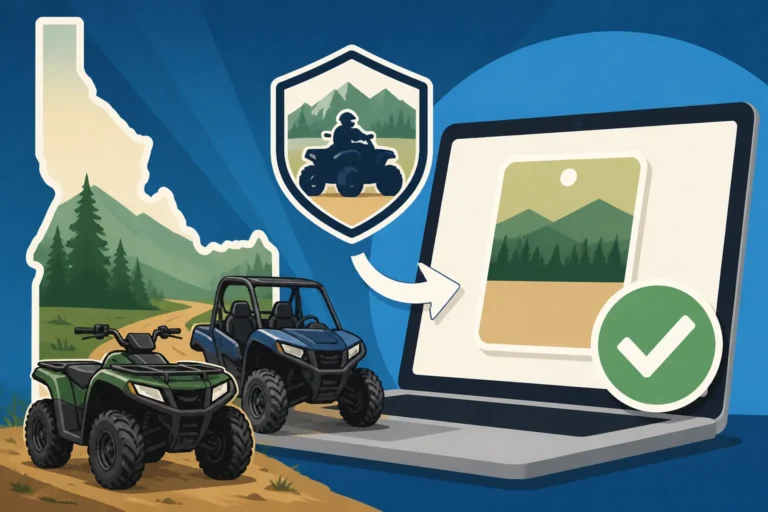
The Idaho Parks and Recreation Department sometimes sends out [Renewal Reminders From Idaho Parks and Recreation], but it's ultimately your business's responsibility to track and complete the renewal. You can often [Renewing an Idaho OHV Sticker Online] or in person at various vendors. If your business also uses a restricted plate, ensure you are aware of its renewal cycle and any associated fees. Setting up calendar reminders, or even assigning the task to a specific employee, can help ensure your business's OHVs remain legally compliant year after year, allowing you to continue using them for essential operations without interruption.
Disclaimer
This article is for general informational purposes only and does not constitute professional advice. Laws, prices and regulations vary by location and change over time. Consult a qualified professional for guidance on your specific situation.