Buying From an Idaho Dealer: What They File
Buying a new ATV or UTV is an exciting milestone, but the stack of paperwork that comes with it can quickly turn that enthusiasm into a dizzying array of forms and signatures. Many new owners feel overwhelmed, wondering what their Idaho dealer actually handles for them and what responsibilities still fall on their shoulders. This guide will meticulously break down the entire filing process an Idaho dealer undertakes when you purchase a new off-highway vehicle (OHV), ensuring you understand every step, from sales tax to title applications and everything in between.
The Initial Purchase: Navigating the Dealership Paperwork
When you walk into an Idaho powersports dealership and pick out your dream machine, you're not just buying a set of wheels; you're entering into a detailed transaction that involves a significant amount of paperwork. The dealer's expertise in handling these documents is one of the key benefits of buying new.
Understanding the Purchase Agreement and Sales Contract
The purchase agreement, often called a sales contract, is the cornerstone of your entire transaction. This document legally binds you and the dealer, outlining the ATV or UTV you're buying, its price, any trade-in value, financing terms, and the total amount due. It's not just a receipt; it's a comprehensive legal record of the sale. You’ll see the VIN (Vehicle Identification Number), year, make, and model of your new machine clearly listed, along with any optional accessories you’re adding.
It's crucial to take your time reading through this agreement. Don't feel rushed, even if the showroom is busy. Look for clarity on the purchase price, any added fees, and the interest rate if you're financing. For those who've ever considered a private sale, they might have looked into drafting their own agreements using platforms like LawDepot. Seeing how detailed a dealer's contract is highlights the comprehensive nature of these professional documents compared to a basic template you might create yourself. The dealer's contract covers many more contingencies and legal protections for both parties.
Sales Tax, Fees, and Your Total Out-the-Door Cost
One of the major conveniences of buying from an Idaho dealer is their responsibility for collecting and remitting sales tax on your behalf. In Idaho, sales tax is applied to the purchase price of the OHV. The dealer calculates this amount, adds it to your total, and then sends it to the state. This saves you the separate step of going to the county assessor's office to pay [Idaho Sales Tax on an ATV Purchase] yourself, which you'd have to do in a private sale.
Beyond sales tax, you'll likely encounter several other fees. These can include documentation fees (for processing all the paperwork), freight charges (for getting the machine from the manufacturer to the dealership), and setup or preparation fees (for assembling and test-riding the OHV). While these fees can sometimes add up, they cover legitimate costs incurred by the dealership to get your machine ready for the trail. Always ask for an itemized list of all charges so you understand exactly what you're paying for before you sign.
Handling Your Trade-In: Documents for Both Machines
If you're trading in an old ATV or UTV, the dealer will handle the necessary paperwork for both your old machine and your new one. For your trade-in, they will require you to sign over its existing title. This transfers ownership to the dealership. The value of your trade-in will then be deducted from the purchase price of your new OHV, which can often reduce the amount of sales tax you owe, as Idaho sales tax is typically calculated on the net purchase price after trade-in credit.
The dealer will also need to inspect your trade-in thoroughly and will likely document its condition. Make sure you remove any personal belongings from your old machine before you finalize the deal. Understanding the full implications of a [Trade-In Credit at an Idaho Powersports Dealer] is important, not just for the immediate financial benefit but for ensuring clear transfer of ownership on the trade-in. This entire process simplifies what could otherwise be two separate, complex transactions (selling your old machine privately and buying a new one).
Dealer's Role in Titling Your New Idaho OHV
After the financial transaction is complete, the dealer's next crucial responsibility is to get your new OHV properly titled in Idaho. This is a multi-step process that involves specific documents and interactions with the county assessor's office.
Submitting the Application for Idaho Title
The dealer is responsible for preparing and submitting the official [Idaho OHV Title Application at the County Assessor] on your behalf. This application collects all the vital information about you (the new owner) and your new machine (VIN, make, model, year). They will ensure your name, address, and contact information are accurately recorded, which is critical for ensuring the title is issued correctly and mailed to the right place.
Along with the application, the dealer will collect the necessary title fees from you. These fees are set by the state and county and cover the cost of processing and issuing your new title. By handling this submission, the dealer acts as an intermediary, saving you a trip to the county assessor's office and ensuring all forms are filled out correctly according to Idaho's specific requirements. This often prevents delays that can arise from improperly completed paperwork.
The Manufacturer's Certificate of Origin (MCO/MSO)
Every brand-new ATV or UTV starts its legal life with a Manufacturer's Certificate of Origin (MCO) or Manufacturer's Statement of Origin (MSO). This document is essentially the vehicle's birth certificate. It certifies that the machine is new, has never been titled before, and identifies its manufacturer, model, year, and crucially, its unique VIN. The MCO/MSO is the ultimate proof of initial ownership and is required to apply for the very first title for the machine.
When you buy from a dealer, they will retain the original MCO/MSO and use it to complete the title application. They will also certify that the machine has been sold to you, effectively transferring the initial ownership from the manufacturer through the dealer to you. Without this critical document, you wouldn't be able to get a title for your new OHV, underscoring the dealer's essential role in establishing legal ownership.
Recording Lienholder Information for Financed Machines
If you financed your ATV or UTV purchase, the bank or credit union that provided your loan will hold a lien on the machine until it's paid off. The dealer is responsible for accurately recording this lienholder information on the title application before it's submitted. This means the title, when issued, will show the lienholder's name and address, indicating their financial interest in the vehicle.
This step is vital for the lender, as it legally protects their investment. It also means that once you've made your final payment, you'll need to go through a separate process to get the lien released and eventually receive a clear title in your name. The dealer ensures this initial lien recording is handled correctly from day one, streamlining the process for both you and your lender. Understanding [Lien Release After the Last Payment] is a good thing to keep in mind for future reference, even if the dealer handles the initial lien recording.
Securing Your Idaho OHV Sticker and Plate
Beyond just the title, your dealer also plays a role in helping you get the necessary permits to legally ride your new OHV in Idaho. This includes the annual OHV sticker and, if desired, a restricted use plate for road access.
Obtaining Your Annual Idaho OHV Sticker
In Idaho, nearly all OHVs that operate on public lands, including designated trails and routes, require an annual OHV sticker. This sticker helps fund trail maintenance and enforcement. Some Idaho dealerships are authorized vendors for these stickers. This means they can process your sticker purchase right there when you buy your machine, affixing it to your new OHV or providing it for you to place on your plate or fender. This is a huge convenience, allowing you to ride legally much sooner.
However, not all dealers offer this service. In some cases, you might receive a temporary operating permit, or you'll need to purchase your sticker separately. If your dealer doesn't issue it, you'll need to visit a county assessor's office, an Idaho Department of Parks and Recreation (IDPR) vendor, or purchase it online. It's always a good idea to ask your dealer upfront if they provide the OHV sticker service so you know [What an Idaho OHV Sticker Costs Each Year] and what your next steps will be.
Assistance with the Idaho Restricted Use Plate
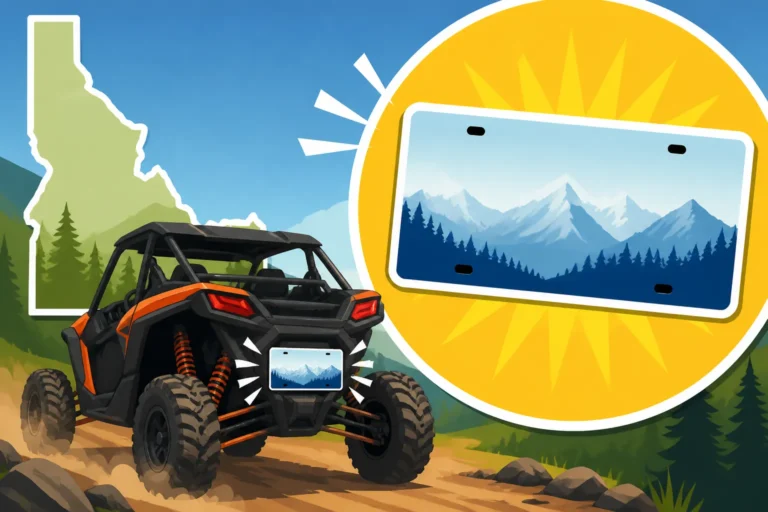
If you plan to ride your ATV or UTV on public roads where allowed (county roads, certain city streets), you'll need an Idaho Restricted Vehicle Plate, often referred to as an "R" plate. This plate demonstrates that your OHV meets specific equipment requirements for limited road use. While the dealer typically doesn't issue the plate directly, many can assist you with the application process.
They may help you fill out the application, collect the necessary fees, and forward your request to the Idaho Transportation Department (ITD). This streamlines the process, ensuring all required information about your machine's road-legal equipment (like mirrors, horn, turn signals) is properly documented. Understanding [Idaho's Restricted Vehicle Plate Explained] will help you determine if this plate is necessary for your riding plans, and whether your dealer can help you get started on that application.
Temporary Riding Privileges While You Wait
It can take some time for your official Idaho title and restricted plate to arrive in the mail. Recognizing that riders want to hit the trails as soon as possible, dealers often provide temporary solutions. They might issue a temporary operating permit or provide documentation that allows you to legally transport your new OHV and ride it on approved trails for a short period, typically 30-60 days, while the official paperwork is processed.
This temporary authorization usually includes a temporary registration number or a copy of your purchase agreement. It’s crucial to keep these temporary documents with you whenever you operate the OHV, as they serve as proof that your titling and registration are in process. Always clarify with your dealer what temporary riding privileges you have and for how long they are valid. This way, you can avoid any potential issues with law enforcement while enjoying your new machine.
What to Expect: Documents in Hand and Mail-Arriving Essentials
After the excitement of the purchase, it's vital to know what documents you should immediately receive from the dealer and what will arrive later in the mail. This clarity helps manage expectations and ensures you have all necessary proof of ownership and registration.
Immediate Documents You'll Take Home
When you leave the dealership, you won't have your official title or restricted plate yet, but you should walk out with several crucial documents. These typically include a copy of your signed purchase agreement or sales contract, any financing documents you’ve signed, and your warranty information. The dealer will also provide a copy of the bill of sale, which serves as immediate proof of your purchase.
Additionally, you might receive the temporary operating permit mentioned earlier, which allows you to ride while the state processes your permanent registration. Some dealers also provide a packet with the owner's manual, service schedule, and important contact information for the manufacturer and the dealership itself. Keep all these documents organized and safe, as they are your immediate proof of purchase and can be essential if any questions arise before your official title arrives.
The Wait for Your Official Idaho Title and Plate
While the dealer has done the heavy lifting of submitting your title application and restricted plate request, the actual documents come directly from the state. The official [How Long an Idaho OHV Title Takes] to arrive can vary, often taking several weeks to a few months. The title will be mailed to the address you provided on the application, or directly to your lienholder if you financed the purchase.
Similarly, if you applied for a restricted plate, that will also arrive separately from the Idaho Transportation Department. During this waiting period, your temporary permits or dealer-provided documentation are your proof of legal operation. It’s common for new owners to feel a bit anxious during this wait, but rest assured, the process is underway once the dealer has filed everything correctly. If an extended period passes and you haven't received your documents, contact the dealer first, and then the county assessor’s office.
Understanding and Reviewing All Your Paperwork
Once you get home, take the time to sit down and review every single document you received from the dealership. Check that your name, address, and the VIN of your new OHV are correct on all forms. Look for any discrepancies in pricing or terms compared to what you agreed upon. Even minor errors can cause significant headaches down the road when you try to transfer ownership or sell the machine.
Understanding the basic elements of a purchase agreement, perhaps by reviewing generic templates on platforms like LawDepot, can empower you to confidently review the dealer's more complex forms. This proactive review can help catch mistakes early, saving you from future frustration. If you find any errors, contact your dealer immediately to get them corrected. It’s much easier to fix an error before the official title is printed and mailed out.
Why an Idaho Dealer Simplifies the Process
While buying from an Idaho dealer involves a lot of paperwork, the good news is that they handle much of the most complex and time-consuming parts for you. This convenience is a significant advantage over private sales.
The Convenience of Dealer-Handled Filings
One of the greatest benefits of purchasing a new ATV or UTV from a licensed Idaho dealer is the sheer convenience of having them manage the bureaucratic maze of titling and registration. They are experts in Idaho’s specific regulations and filing procedures. This means they know exactly which forms to fill out, what fees to collect, and where to submit everything. For a busy individual, this saves countless hours of research, trips to government offices, and the stress of ensuring every detail is perfect.
Imagine trying to navigate the [Titling and Registering an ATV in Idaho] process completely on your own, fresh off a private sale. You'd be responsible for paying sales tax to the county, filling out the title application correctly, understanding the MCO/MSO, and then figuring out how to get your OHV sticker and any necessary plates. The dealer takes all this burden off your shoulders, allowing you to focus on the excitement of your new ride rather than the paperwork.
What to Do if Paperwork Issues Arise
Even with the dealer handling the process, sometimes errors or delays can occur. Perhaps a VIN was entered incorrectly, or the title application gets held up. If you notice a mistake on any of your documents, or if your title and plate don’t arrive within the expected timeframe, your first step should always be to contact the dealership. They are your primary point of contact and have a vested interest in ensuring your transaction is completed smoothly.
Keep records of all communication with the dealer, including dates, names of people you spoke with, and summaries of your conversations. If you're dealing with a [Fixing a Wrong VIN on an Idaho Title], the dealer will typically have established procedures for correcting these kinds of errors. Be persistent but polite. If the issue isn't resolved to your satisfaction through the dealership, you can then consider contacting the Idaho Department of Parks and Recreation (IDPR) or your local county assessor's office for further guidance.
Dealer Sale vs. Private Sale: Paperwork Differences
The distinction between buying from a dealer and a private seller is stark, particularly when it comes to paperwork. When you buy from an Idaho dealer, they are legally obligated to ensure the machine is properly titled and registered in your name, and they handle the sales tax. This gives you significant peace of mind and protection as a consumer.
| Feature | Buying from an Idaho Dealer | Buying from a Private Seller |
|---|---|---|
| Sales Tax | Dealer collects and remits to the state. | Buyer responsible for paying Idaho Sales Tax on a Private Machine Sale in Idaho to county assessor. |
| Title Application | Dealer prepares and submits to county assessor. | Buyer must prepare and submit. Seller only signs over title. |
| Proof of Ownership | Dealer uses MCO/MSO for new machine; provides clear title. | Seller provides signed-over title. Buyer verifies validity. |
| OHV Sticker | Often issued by dealer directly. | Buyer must purchase separately from authorized vendor. |
| Lien Recording | Dealer includes lienholder info on title application. | Buyer ensures lien release from seller; new lien handled separately. |
| Temporary Permits | Dealer may issue temporary riding documents. | No temporary permits, buyer must wait for sticker/plate. |
| Bill of Sale | Comprehensive dealer purchase agreement. | Buyer and seller create. [ATV Bill of Sale Wording Buyers Should Insist On] is crucial. |
In a private sale, all the responsibility for filing the correct paperwork, paying the sales tax, and obtaining the OHV sticker falls squarely on the buyer's shoulders. You would need to ensure the seller provides a properly signed-over title and a detailed bill of sale. For private transactions, resources like LawDepot can be invaluable for creating clear, legally sound bills of sale, something a buyer might consider if they ever venture into selling their own machine privately down the road. This contrast truly highlights the full-service approach a licensed dealer provides, making the initial ownership transition much smoother.
Disclaimer
This article is for general informational purposes only and does not constitute professional advice. Laws, prices and regulations vary by location and change over time. Consult a qualified professional for guidance on your specific situation.