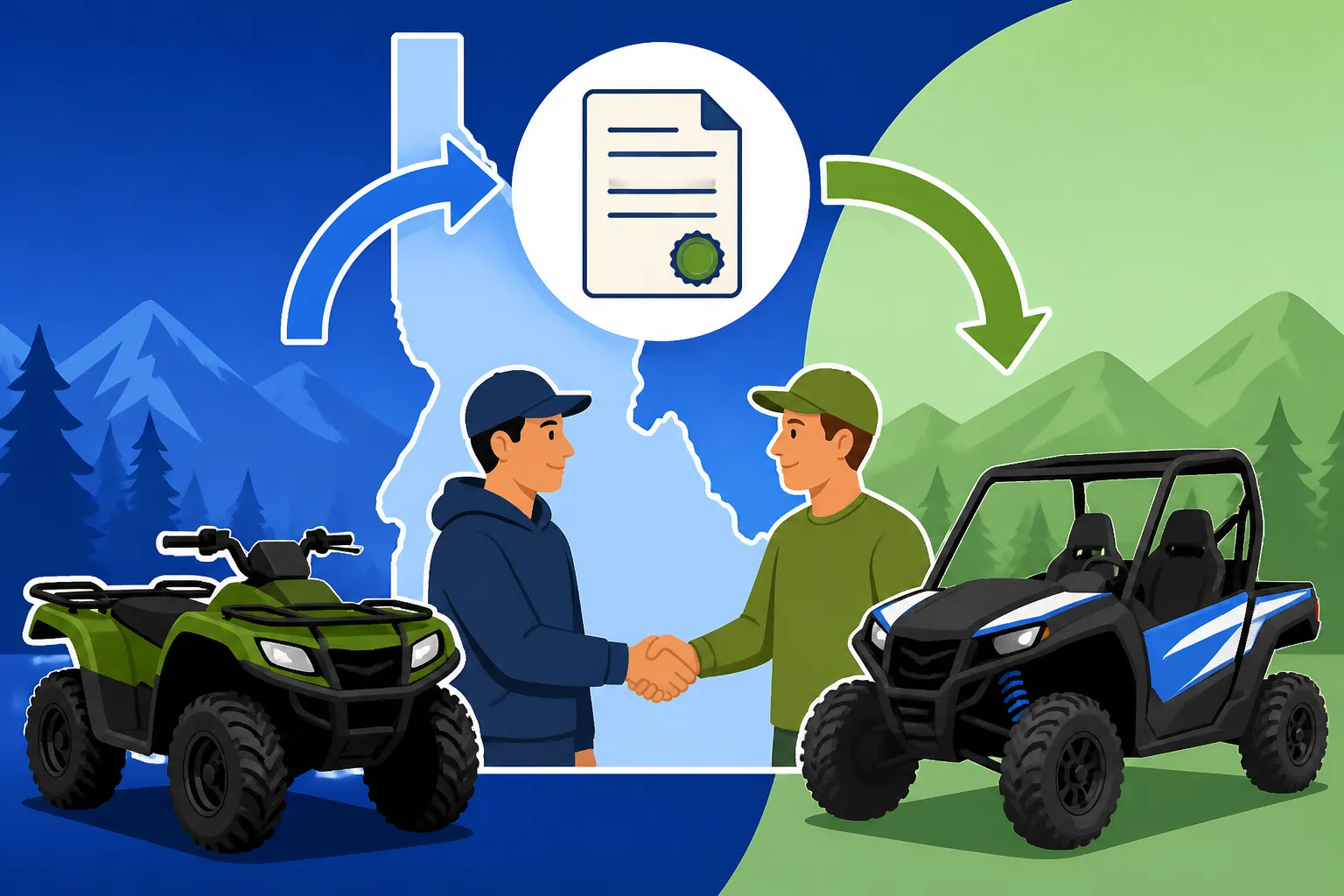
Transferring an Idaho OHV Title After a Sale
The moment you find that perfect pre-loved ATV or side-by-side in Idaho, it's exhilarating! But that excitement can quickly turn into a headache if you’re not prepared for the title transfer process. This guide is here to help both buyers and sellers navigate the often-confusing steps involved in officially transferring an Idaho OHV title after a sale, making sure your new adventures start on the right legal footing.
Understanding the Idaho OHV Title Basics
Before we dive into the nitty-gritty of signing on the dotted line, it's really helpful to understand what an Idaho Off-Highway Vehicle (OHV) title actually is and why it's such a crucial piece of paper. Many folks new to the powersports world might assume a bill of sale is enough, but in Idaho, the title is the undisputed proof of ownership, and getting it transferred correctly is non-negotiable for both the buyer and the seller. Skipping steps here can lead to big problems down the road, from legal disputes to an inability to register your machine.
What an Idaho OHV Title Represents
Think of an Idaho OHV title as the deed to your home, but for your recreational vehicle. It's an official document issued by the state that legally establishes who owns a specific ATV, UTV, or dirt bike. This isn't just a fancy certificate; it contains vital information about your machine, including its Vehicle Identification Number (VIN), make, model, and year, along with the names of the current legal owners. Without this title, proving you actually own the machine can be incredibly difficult, and it opens up a world of potential issues if the previous owner decides to claim it back, or if you ever try to sell it yourself.
This document serves as the foundation for all subsequent transactions and official actions related to the OHV. It's the primary record that the state relies on to track ownership, ensure proper registration, and manage any liens that might be placed against the machine. When you see an Idaho OHV title, you're looking at the legal DNA of that specific off-highway vehicle, tying it directly to its rightful owner. For a deeper dive into the initial process, check out [Titling and Registering an ATV in Idaho].
When an Idaho OHV Title is Required
Idaho has fairly clear-cut rules about which off-highway vehicles need a title. Generally, if your ATV, UTV, or dirt bike has an engine displacement of 50cc or more, it requires an Idaho title. This covers the vast majority of machines you'll encounter on the trails. There are some nuances, of course, but for most riders, if you're buying a standard quad or side-by-side, assume it needs a title. This requirement ensures that ownership is properly documented and helps prevent the sale of stolen machines. It also streamlines the process when you eventually need to get an [Idaho OHV Sticker] for legal trail riding.
It's a common misconception that smaller machines, like certain youth ATVs, might be exempt. While some very small, often battery-powered or under-50cc machines may not require a title, it's crucial to verify the specific engine size. The rule of thumb in Idaho is quite broad: [Idaho Titles Every ATV Over 50cc]. Always confirm the specific requirements with the county assessor's office if you're unsure about a particular machine's titling status, especially if it's an older or less common model.
Why the Title is Key to a Smooth Transfer
The title isn't just a bureaucratic hurdle; it's the very mechanism that allows for a smooth, legal transfer of ownership from seller to buyer. Without a properly completed and signed title, the buyer cannot legally register the machine in their name, obtain an OHV sticker, or secure financing if needed. Imagine buying a house without a deed; it's effectively the same situation. A clean, properly endorsed title protects both parties by clearly documenting the change in ownership and releasing the seller from any future liability or responsibility for the machine.
For buyers, receiving a correctly transferred title means peace of mind. It confirms that the seller had the legal right to sell the machine and that you are now its rightful owner, free and clear of previous claims (unless specifically noted). For sellers, a signed-over title officially severs your connection to the OHV, preventing potential issues like receiving parking tickets or being held responsible for accidents that occur after the sale. It's the cornerstone of a legitimate and problem-free transaction.
The Seller's Responsibilities Before the Sale
As a seller, you have a few critical responsibilities to ensure the title transfer goes smoothly for both you and the buyer. Taking these steps seriously will not only make the sale easier but also protect you from any lingering liabilities after the machine has left your hands. Rushing this part can lead to frustration and delays for the buyer, and even potential legal headaches for you if something isn't handled correctly.
Locating the Original Idaho OHV Title
The very first step for any seller is to lay hands on the original physical title for the OHV. This might sound obvious, but you'd be surprised how many people misplace these documents. Dig through your important papers, safe deposit boxes, or wherever you keep critical records. A photocopy or a picture simply won't cut it; the county assessor's office will require the original document to process the transfer.
If you can't find your title, don't panic, but don't delay either. You'll need to apply for a replacement title before you can complete the sale. This process takes time and involves a trip to your local county assessor's office. Make sure you factor in this time if you're trying to sell your machine quickly. You can find more information on this process in [Replacing a Lost Idaho OHV Title]. Having the title ready makes the entire sale process much more efficient and professional.
Ensuring the Title is Free of Liens
Before you can truly transfer ownership, you need to ensure that the OHV's title is "clean," meaning there are no active liens against it. A lien is essentially a legal claim a lender (like a bank or credit union) has on the property until the debt is fully paid off. If you financed your ATV or UTV, the lender would have held the title or had their name recorded as a lienholder on the title itself. You cannot legally transfer full ownership until that lien is satisfied.
If you still owe money, you'll need to pay off the balance, and the lender will then provide a lien release. This is often a separate document from the title and must be presented along with the title at the time of transfer. Sometimes, if you're selling the machine for enough money to cover the lien, the transaction can be structured so that the lien is paid directly out of the sale proceeds at a bank or credit union. This is a crucial step that protects the buyer from inheriting your debt. For more details on this, look into [Liens on an OHV Title].
Preparing for the Signature and Sale Date
Once you have the original, lien-free title in hand, the next step is to prepare it for signing. Most Idaho OHV titles have a specific section on the back for "Assignment of Title by Seller." This is where you, as the seller, will provide your signature, print your name, fill in the sale price, and most importantly, the date of sale. It's absolutely critical to sign exactly as your name appears on the front of the title. If your name is misspelled or different, it can cause problems during the transfer.
It's also a good practice to avoid signing anything until the buyer is present and the terms of the sale are finalized. This prevents any ambiguity or potential issues if the sale falls through. Having a clear date of sale is important for both parties for tax and liability purposes. Additionally, while the title is paramount, having a separate [ATV Bill of Sale Wording Buyers Should Insist On] is a smart move. A comprehensive bill of sale, which you can easily draft using templates from services like LawDepot, provides an extra layer of protection, detailing the machine's condition, sale price, and any warranties (or lack thereof).
Completing the Title Transfer During the Sale
This is the moment of truth! When you and the buyer meet to complete the transaction, the title transfer itself is paramount. Doing this correctly, right then and there, minimizes future headaches for everyone involved. It’s not just about passing over the keys; it’s about making the official change in ownership on paper, according to Idaho’s rules.
Filling Out the Assignment of Title Section
The back of an Idaho OHV title typically has designated spaces for the seller to assign the title to the new owner. This section requires careful completion. You'll need to sign your name exactly as it appears on the front of the title, print your name, and fill in the exact selling price and the date of sale. The buyer will also need to sign and print their name in the designated "Purchaser" or "Buyer" section. Ensure all fields are legible and accurate. Any erasures, white-out, or illegible handwriting can lead to the county assessor rejecting the title and delaying the transfer.
It's also incredibly important to fill in the date of sale accurately. This date dictates when the ownership officially changes hands for legal and tax purposes. If there are two sellers (e.g., "John AND Jane Doe"), both individuals must sign the title. If it's "John OR Jane Doe," only one signature is typically required. Pay close attention to how the names are listed on the front of the title to ensure proper endorsement. This section is often reviewed meticulously by the county assessor's office, so accuracy is key to a smooth process for [Idaho OHV Title Application at the County Assessor].
The Importance of a Bill of Sale
While the signed-over title is the primary document for ownership transfer, a separate bill of sale is highly recommended for both the buyer and the seller. This document serves as a detailed receipt and a record of the transaction. It should include the full names and addresses of both parties, the date of sale, the purchase price, and a thorough description of the OHV, including its VIN, make, model, and year. It's also a great place to explicitly state that the vehicle is being sold "as-is, where-is" if that is the agreement, which is common for private sales.
A well-drafted bill of sale, which you can find templates for through resources like LawDepot, protects both parties. For the seller, it proves that the machine was sold and transferred on a specific date, freeing them from future liability. For the buyer, it provides additional proof of purchase, which can be useful for tax purposes or if any questions arise about the sale. This document, alongside the title, forms a complete record of the transaction. Remember, a simple handshake is rarely sufficient when dealing with a valuable asset like an OHV.
Handling Odometer Readings for OHVs
Unlike cars and trucks, many ATVs and UTVs don't have odometers, or if they do, the readings aren't legally required to be disclosed for title transfer in the same way. However, if your machine does have a working odometer, it's a good practice to note the mileage on both the bill of sale and the title (if there's a designated spot for it). While not a federal or state requirement for OHVs, it adds another layer of transparency to the sale.
If the odometer is broken or has been replaced, you might note "actual mileage unknown" or "not actual mileage." Always be honest and upfront about the odometer's condition and reading, even if it's not legally mandated. Transparency builds trust between buyer and seller and prevents misunderstandings later on. This helps the buyer understand the machine's history, even if it's not a strict legal requirement for off-highway vehicles in Idaho.
The Buyer's Journey: Registering Your New-to-You Machine
Congratulations, you've bought your new ATV or UTV! Now, the real work begins to make it officially yours in the eyes of the State of Idaho. This involves a trip to the county assessor's office and making sure you have all your ducks in a row. Skipping this part means you can't get that all-important OHV sticker, which is required for riding on designated trails and public lands.
Gathering Required Documents for the Assessor
Before you head to your local county assessor's office, make sure you have all the necessary paperwork. This will save you a frustrating second trip! You'll absolutely need the original title, properly signed and filled out by the seller and yourself. If there was a lien, you'll also need the lien release document from the lender. Beyond that, bring a comprehensive bill of sale, even if it's not strictly required for the title itself, as it provides clear proof of purchase and the sale price. [Proof of Ownership for an Idaho OHV Title] often means more than just the signed title.
You'll also need your driver's license or other valid identification. If you're applying for the title in more than one name, both individuals might need to be present with their IDs, or one person might need a notarized power of attorney. Lastly, be prepared to pay the applicable title transfer fee and any sales tax due. It's a good idea to call ahead to your county assessor's office or check their website to confirm their specific requirements and accepted payment methods, as these can sometimes vary slightly by county.
Visiting Your County Assessor's Office
Once you have all your documents ready, your next stop is the Motor Vehicle Department within your local county assessor's office. This is where the magic happens and your name officially gets recorded as the new owner. It’s not an IDPR office, but rather your county government office. While wait times can vary, having everything organized will make the process as smooth as possible. Be prepared to present all your documents to a clerk, who will review them for accuracy and completeness.
They'll check the VIN on the title against any accompanying paperwork and ensure that the seller's signature matches the name on the title. This is why accuracy during the sale is so important! If any issues arise, such as a missing signature or an incorrect date, you might be asked to contact the seller to rectify it, which can be a huge hassle. Be polite, be prepared, and you'll likely have a quick and efficient visit.
What to Expect During the Title Application Process
During your visit, the clerk will process your application for the new title. You'll fill out a form that officially requests the title to be transferred into your name. At this point, you'll also pay the title transfer fee. In Idaho, you'll also pay any [Idaho Sales Tax on an ATV Purchase] that's due on the purchase price, unless a specific exemption applies (like gifting to a family member, though specific paperwork would still be needed). The assessor's office will calculate this based on the sale price listed on the title or bill of sale.
After everything is processed, you won't walk out with a new physical title immediately. Idaho typically mails the new title to the registered owner's address. The turnaround time can vary, but it usually takes a few weeks for the official document to arrive in your mailbox. However, you should receive a temporary registration or receipt that day, which proves you've initiated the process and allows you to then purchase your OHV sticker. Understanding [How Long an Idaho OHV Title Takes] can help set realistic expectations.
Common Roadblocks and How to Navigate Them
Even with the best intentions, title transfers don't always go perfectly smoothly. Sometimes, you encounter situations that can throw a wrench into the works. Knowing how to handle these common roadblocks can save you a lot of stress and ensure you still end up with a legally titled machine. Don't let these challenges deter you; there's usually a process to resolve them.
Dealing with a Lost Idaho OHV Title
One of the most frequent issues is a lost title. As a seller, if you can't find your original title, you cannot legally transfer ownership. Your first step, as mentioned earlier, is to apply for a duplicate title at your local county assessor's office. This typically requires you to fill out an application, pay a fee, and often prove your identity and current ownership of the machine. The process usually takes a few weeks, so plan accordingly.
As a buyer, if a seller claims they've lost the title, do not proceed with the sale until they can produce a duplicate. Buying an OHV without a title, especially from a private seller, is a massive risk. You could end up with a machine you can't legally register or sell, and potentially one that's stolen. Insist on a clear title. If the seller won't or can't get a duplicate, walk away. Your local assessor's office can provide the specific steps and forms for [Replacing a Lost Idaho OHV Title].
When a Lienholder is Involved
If the seller still owes money on the OHV, a lienholder (usually a bank or credit union) will be listed on the title. This means the seller doesn't fully own the machine until that debt is paid off. You cannot complete a clean title transfer until the lien is released. As a buyer, this can be a tricky situation. The safest approach is for the seller to pay off the lien before the sale is finalized and provide you with a lien release document along with the signed title.
Alternatively, if the sale price is enough to cover the lien, the transaction can sometimes happen directly at the lienholder's bank. The buyer pays the bank directly, the bank releases the lien, and then the remaining funds go to the seller. This ensures the lien is cleared. Never pay a seller directly and trust them to pay off the lien themselves without official proof; you could end up with no OHV and still be responsible for the seller's debt. Confirming [Liens on an OHV Title] is a critical pre-purchase check.
Titling a Machine Without the Previous Owner
Occasionally, you might find yourself in a situation where you've purchased a machine, but for some reason, the previous owner didn't properly sign the title, or perhaps you acquired it in a way that didn't involve a clear title transfer initially. This can be a significant hurdle. [When the Seller Never Signed the Title] is a common scenario that causes immense frustration. Your county assessor's office will likely require the seller's signature to process the transfer.
If you cannot locate the seller, or they are unwilling to cooperate, you might have limited options. One possibility in Idaho, though often a last resort, is to apply for a bonded title. This process is complex, involves purchasing a surety bond, and is typically reserved for situations where ownership is unclear but you can demonstrate legitimate possession. It's best to consult with your county assessor's office about specific requirements and whether a bonded title is a viable option for your situation. Always try to get the original seller to properly endorse the title before considering these more involved routes.
Beyond the Title: Other Post-Sale Essentials
Getting the title transferred is a huge step, but your journey isn't quite over. There are a few other essential items you'll need to take care of to ensure your new ATV or UTV is fully legal and ready for all those Idaho adventures. These steps ensure compliance with state regulations and protect your investment.
Understanding Idaho Sales Tax on an ATV Purchase
When you buy an ATV or UTV in Idaho, whether from a dealer or a private party, you're generally subject to Idaho sales tax. If you buy from a licensed dealer, they will collect the sales tax at the time of purchase. However, if you purchase from a private seller, you as the buyer are responsible for paying the sales tax directly to the county assessor's office when you apply for the title transfer. They will calculate the tax based on the sale price you declare on the title or bill of sale.
It's tempting for some private sellers and buyers to declare a lower sale price to reduce the tax burden, but this is illegal and can lead to penalties if discovered. The county assessor's office has ways of assessing fair market value, especially for common machines, so being honest is always the best policy. Always factor the sales tax into your budget when buying a used OHV. For more information, read up on [Idaho Sales Tax on an ATV Purchase].
Getting Your Idaho OHV Sticker
Once your title is successfully transferred into your name (or at least the application is processed and you have a temporary receipt), your next crucial step is to get your Idaho OHV Sticker. This sticker is your permit to ride on Idaho's vast network of designated OHV trails and public lands. Without it, you're looking at potential fines from Idaho Parks and Recreation (IDPR) or local law enforcement. It's a small annual fee, but it directly contributes to the maintenance and development of the trails we all love.
You can purchase your OHV sticker at your local county assessor's office at the same time you title your machine, or from various vendors across the state. Remember, the sticker needs to be renewed annually. Make sure you apply it correctly to your machine or restricted use plate as per IDPR guidelines. For detailed information on costs and where to buy, check out [What an Idaho OHV Sticker Costs Each Year].
Insuring Your New Machine for Idaho Adventures
While an OHV sticker allows you to ride, insurance protects your investment and provides liability coverage. Although Idaho does not mandate liability insurance for all OHV riding, it is required if you plan to operate your ATV or UTV on any public roads or highways (where legal, of course, with a restricted use plate). Even if you only plan to ride off-road, carrying insurance is a very smart decision.
Accidents happen, and an OHV can be a significant investment. Comprehensive insurance can cover damage to your machine from theft, fire, or collision, while liability insurance protects you if you cause damage to property or injure someone else. Contact your insurance agent to discuss your options. They can help you understand what coverage makes sense for your riding habits and machine value. Don't wait until it's too late; get your machine insured before you hit the trails. Learn more in [Insuring an ATV in Idaho].
Table of Buyer and Seller Responsibilities for Idaho OHV Title Transfer
To help keep everything straight, here's a quick summary of who does what during an Idaho OHV title transfer:
| Responsibility | Seller's Role | Buyer's Role |
|---|---|---|
| Locate Title | Must have the original, physical title document. | N/A (Insist seller provides original title). |
| Clear Liens | Must pay off any outstanding loans and obtain a lien release document. | Verify title is lien-free or ensure lien is paid off at the time of sale with documentation. |
| Complete Title Transfer | Sign and print name on the "Assignment of Title" section, fill in sale price and date. | Sign and print name on the "Purchaser" section of the title. |
| Bill of Sale | Provide a signed bill of sale detailing the transaction (recommended). Can use a template from LawDepot. | Obtain a signed bill of sale for your records and tax purposes (recommended). |
| Odometer Reading | Disclose actual mileage if known and functioning, or note "unknown" if applicable. | Be aware of odometer reading (if applicable) and ensure it's noted on documents. |
| Submit to Assessor | N/A (Buyer's responsibility to submit). | Submit the signed title, bill of sale, and lien release (if any) to the County Assessor's office. |
| Pay Fees & Tax | N/A (Buyer's responsibility). | Pay title transfer fee and Idaho sales tax on the purchase price. |
| Obtain New Title | N/A (Buyer will receive the new title). | Receive the new title in the mail, typically a few weeks after application. |
| OHV Sticker | N/A. | Purchase and display an Idaho OHV Sticker for legal riding on designated trails. |
| Insurance | N/A. | Arrange for appropriate insurance coverage for your new machine, especially for road use. |
Disclaimer
This article is for general informational purposes only and does not constitute professional advice. Laws, prices and regulations vary by location and change over time. Consult a qualified professional for guidance on your specific situation.