Registering an Out-of-State Machine in Idaho
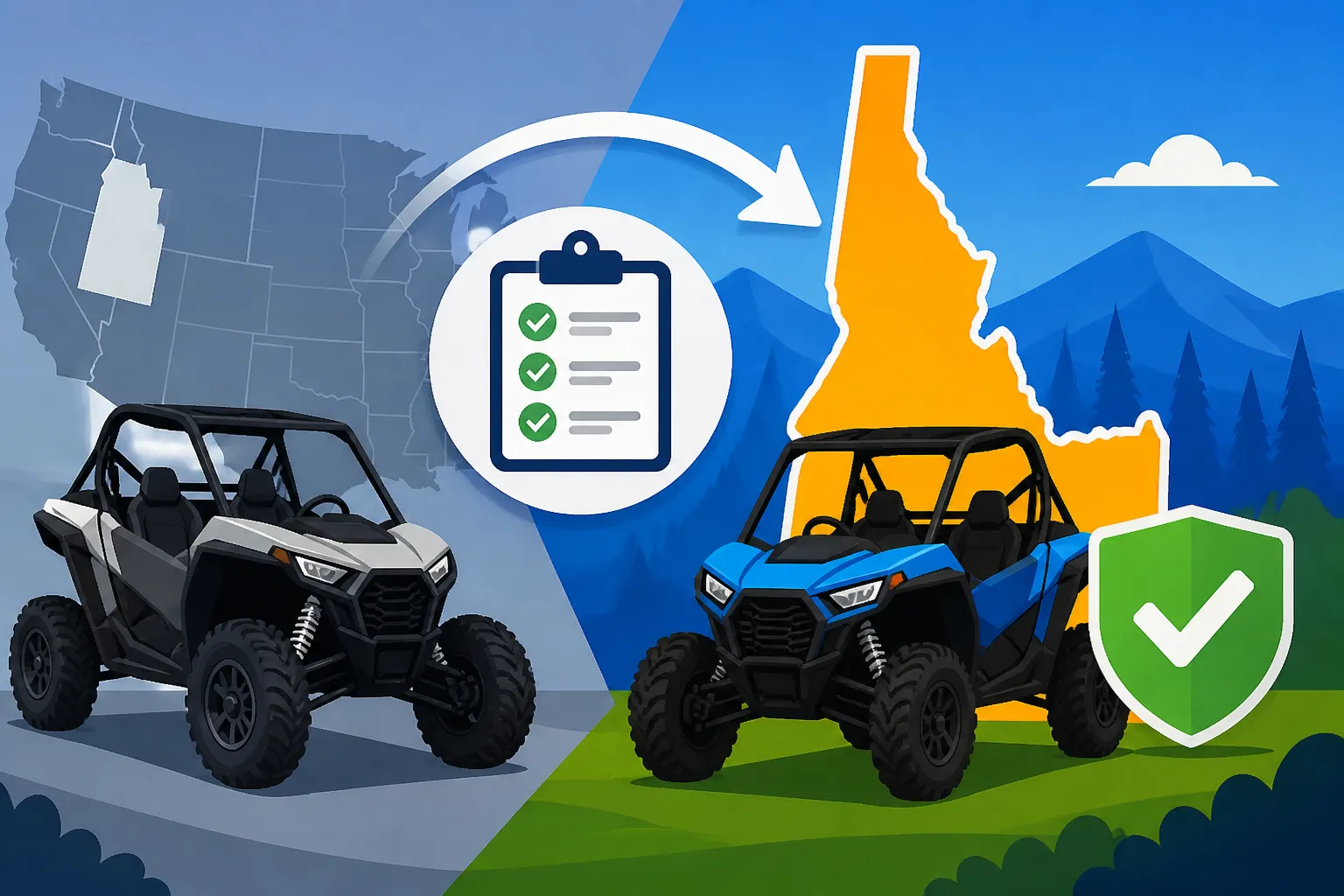
Moving to a new state, or simply bringing your beloved off-highway vehicle (OHV) across state lines for a vacation, often brings a wave of paperwork anxiety. It’s a common frustration to have everything in order in your home state, only to find a whole new set of rules staring you down in Idaho. This guide is here to untangle that process, walking you through exactly what you need to do to get your out-of-state ATV or UTV legally titled and stickered for Idaho’s incredible trails and roads.
Understanding Idaho's OHV Sticker and Title System
When you move to Idaho or bring your machine here to stay, you'll quickly realize that Idaho has its own distinct system for managing off-highway vehicles. It's not always as simple as transferring what you had from another state. This can be a bit of a shock, especially if you're used to a different process, but understanding these foundational elements is key to a smooth transition.
The Two Key Pieces of Idaho OHV Paperwork
Idaho separates the concept of ownership from the privilege of riding on public lands. This means you’ll typically encounter two main pieces of paperwork for your ATV or UTV. First, there's the title, which is the official document proving who owns the machine. It's like the deed to your house or the title to your car. Your out-of-state title serves as proof of ownership when you first arrive, but Idaho will issue its own title once you complete the process. This new title will be a uniform Idaho document, crucial for future sales or transfers within the state.
The second piece is the OHV sticker, sometimes called a registration sticker. This sticker is your permit to operate your ATV or UTV on Idaho's extensive network of public trails, roads open to OHVs, and other designated areas. Without it, even with a valid title, you risk fines if you're caught riding on public land. Many new residents assume their previous state's registration is sufficient, but Idaho has specific requirements that apply to everyone using its public land. We have a detailed guide on [Titling and Registering an ATV in Idaho] that further breaks down the distinctions, and another that clarifies [What an Idaho OHV Sticker Costs Each Year]. Both are essential to ensure you're fully compliant and ready to hit the trails without any unexpected headaches.
Why Idaho Requires a New Sticker No Reciprocity
One of the biggest surprises for out-of-state riders, particularly those who are just visiting, is Idaho’s stance on reciprocity. For many years, Idaho honored OHV stickers from other states, assuming those states reciprocated. However, this changed, and Idaho now requires all OHVs operating on public lands within the state to display an Idaho OHV sticker. This applies whether you're a long-time resident, a new Idahoan, or just passing through for a long weekend of riding.
This policy shift, which can certainly feel like an added burden or frustration, was implemented for several important reasons. The revenue generated from Idaho OHV stickers directly funds the maintenance and development of Idaho's OHV trail system, supports educational programs, and contributes to essential services like search and rescue operations that benefit all riders. While it might seem unfair to pay for another sticker when you already have one from your home state, this dedicated funding mechanism ensures that the trails you want to ride are well-maintained and safe. You can learn more about this change in our post, [Why Idaho Ended OHV Reciprocity], and specifically about the timeline in [The Non-Resident Rule That Started in 2020]. It's a key piece of information that every rider bringing a machine into Idaho needs to understand before their wheels touch the dirt.
Step-by-Step: Getting an Idaho OHV Title for Your Machine
Getting your out-of-state machine titled in Idaho is a structured process that primarily involves your local county assessor's office. It can seem daunting if you're not familiar with Idaho's specific requirements, but breaking it down into manageable steps makes it much clearer. The most important thing is to arrive prepared with the correct documentation to avoid multiple trips.
Gathering Your Out-of-State Documents
The very first step is to collect all the necessary paperwork related to your ATV or UTV from its previous state. The absolute most crucial document you'll need is your current out-of-state title. This is your primary proof of ownership. Make sure it's original, not a copy, and that all the ownership information matches your current identification. If you recently purchased the machine, even in your previous state, you'll also want to bring a bill of sale. This document supports the title transfer, especially if the title itself hasn't been fully updated in your name or if you’re trying to avoid sales tax implications if you've already paid it elsewhere.
Common frustrations arise when titles are lost, or signatures on the back of a title aren't quite right. If you've lost your out-of-state title, you'll need to apply for a duplicate from the state where it was issued before you can title it in Idaho. If the previous owner never properly signed the title over to you, that can also cause a significant delay. It's also vital to ensure the Vehicle Identification Number (VIN) on your machine is clear, readable, and matches all your documents. A discrepancy here will halt the process immediately. For more in-depth guidance on acceptable ownership proof, refer to [Proof of Ownership for an Idaho OHV Title].
The County Assessor's Office: Where to Go
Unlike regular passenger vehicles that might go through a Department of Motor Vehicles (DMV) or equivalent, titling an ATV or UTV in Idaho happens at your local county assessor's office. This is a critical distinction that often trips up new residents. When you visit the assessor's office, you'll present your out-of-state title, bill of sale (if applicable), and your personal identification. The staff will review your documents and guide you through the Idaho title application form. Sometimes, particularly for machines coming from states with less rigorous titling standards or if there are any VIN anomalies, a physical VIN inspection may be required. This usually involves a law enforcement officer verifying the VIN on your machine matches your paperwork.
You will also pay a title fee and potentially sales or use tax during this visit. If you purchased the machine within the last 90 days, or if you're bringing it into Idaho for the first time as a new resident, you might owe Idaho sales tax, or use tax if you've been living out-of-state and bringing it in. It's always best to call your county assessor's office ahead of time to confirm their exact requirements and what forms of payment they accept. Our article on [Idaho OHV Title Application at the County Assessor] provides a more detailed walkthrough, and you can find specific information on [Idaho Sales Tax on an ATV Purchase] and [Use Tax When a Machine Comes Into Idaho] to prepare for those costs.
Special Circumstances: Liens, Older Machines, and Missing Paperwork
Sometimes, the titling process isn't straightforward. You might be bringing in a machine that still has an outstanding lien from a bank or financial institution in another state. In this scenario, you'll need a lien release from that lender before Idaho can issue a clean title in your name. This often involves contacting your lender and getting specific paperwork or having them send the release directly to the Idaho county assessor's office. It's a common hurdle, but one that's resolvable with direct communication with your lender.
What about older machines? Idaho does have different rules for ATVs and UTVs manufactured before a certain year, typically pre-1990s. These machines might be exempt from titling, or they may have a simplified process due to their age and the lack of comprehensive titling records from decades past. Always check with your specific county assessor’s office to understand the exact requirements for vintage or significantly older machines. For more details, see [Idaho Title Rules for an Older Machine].
Finally, the dreaded scenario: missing paperwork. What if you acquired your machine with only a bill of sale, or even less, and no title? This is where things get more complicated. Idaho offers a bonded title process for situations where you can prove ownership but lack a clear chain of title. This involves obtaining a surety bond for a certain value of the machine, which protects the state and any potential previous owners for a set period. If you find yourself needing to create or solidify a bill of sale, especially if the original is flimsy or non-existent, resources like LawDepot can provide customizable templates that meet legal standards. Their forms can be helpful for establishing the clear chain of ownership required for a bonded title application. Understanding [Liens on an OHV Title] and the [Bonded Title for an ATV in Idaho] can help navigate these more complex situations.
Acquiring Your Idaho OHV Sticker
Once your out-of-state machine is officially titled in Idaho, or even if you're just visiting for a season, the next crucial step is getting that all-important Idaho OHV sticker. This sticker is your literal ticket to ride on Idaho's public lands, and it's something every single OHV needs, regardless of where it came from. Don't skip this step – enforcement is consistent, and you don't want your adventure cut short by a citation.
Sticker Requirements for Out-of-State Machines
Let's be absolutely clear: every ATV and UTV, regardless of its origin, must display a current Idaho OHV sticker when operated on designated public lands within the state. This means if you've just moved here from Oregon, or if you're bringing your rig down from Montana for a riding vacation, your out-of-state sticker or registration is not sufficient. This can be a point of confusion and frustration, especially for riders who maintain registrations in multiple states, but it's a non-negotiable Idaho rule.
The Idaho OHV sticker system is entirely separate from vehicle titling. You could technically have your out-of-state machine titled in Idaho and still need to purchase an OHV sticker before you head out. The good news is that acquiring a sticker is generally a much simpler process than titling. You'll need to provide some basic information about your machine, and whether you're a new resident or a non-resident, you'll pay the appropriate fee. This system ensures that all users contribute to the upkeep of the state's incredible riding resources. Our guide on the [Idaho Non-Resident OHV Sticker] offers specific information for those who plan to remain out-of-state residents but want to ride here, and [Idaho Permit Rules on Public Land] gives a broader overview of public land access.
Where to Buy Your Idaho OHV Sticker
Idaho makes it fairly convenient to purchase your OHV sticker, offering several avenues to ensure you can get one without too much hassle. Here are the primary places you can acquire your sticker:
| Location Type | Benefits | Considerations |
|---|---|---|
| County Assessor Offices | Often combined with titling process; convenient for new residents. | May have limited hours; focus primarily on titling. |
| IDPR Service Centers | Dedicated to outdoor recreation; knowledgeable staff. | Fewer locations than other options. |
| Authorized Vendors | Many powersports dealers, sporting goods stores (e.g., Cabela's, some smaller local shops). | Widespread and accessible; good for last-minute purchases. |
| Online | Most convenient for non-residents or those renewing; 24/7 access. | Sticker mailed, so not immediate; plan ahead. |
If you're a new Idaho resident, you can often handle both titling and your OHV sticker at the same visit to your county assessor's office, streamlining the process. This is often the most efficient route. For those who are simply visiting or need a quick renewal, the widespread network of authorized vendors makes it easy to pick up a sticker near your riding destination. And for ultimate convenience, especially for non-residents planning a trip, buying your [Idaho Sticker Online] is a straightforward option, though you'll need to account for mail delivery time. Regardless of your choice, make sure you purchase it before you head to the trailhead. For a full list of options, our post on [Where Idaho Sells OHV Stickers] is a great resource.
Displaying the Sticker and Other Considerations
Once you have your Idaho OHV sticker in hand, proper placement is important. The sticker needs to be clearly visible on your machine. For most quads or three-wheelers, this means affixing it to the right-hand side of the rear fender. For side-by-sides and other larger machines, it's typically placed on the left side of the machine, often near the VIN plate or on the frame, where it's easily seen by enforcement officers. The key is visibility and adherence to the manufacturer's suggested placement if available, or a prominent, durable location. You can find more specific guidance on [Sticker Placement on a Quad's Fender].
Beyond the standard OHV sticker, if you plan to ride your ATV or UTV on county roads that are open to OHV use, you will also need an Idaho Restricted Vehicle Plate, often referred to as an "R" plate. This plate allows your machine to be considered street-legal on designated county roads, provided you meet other requirements like having a driver's license and insurance. If you have an R plate, your OHV sticker is typically affixed directly to the plate itself, ensuring both are visible and properly displayed. This integrates the two requirements into one clear display. For detailed information on this, refer to [Displaying a Sticker on an Idaho R Plate] and [What Idaho Requires Before You Ride a County Road]. It's crucial to understand these rules, as they dictate where and how you can legally enjoy your machine on Idaho's diverse terrain.
Planning Your Ride: What Else You Need to Know
Getting your out-of-state machine titled and stickered in Idaho is a huge accomplishment, but the paperwork isn't the only consideration before you hit the trails. Idaho has a number of additional rules and recommendations designed to keep everyone safe and ensure responsible riding. Taking the time to understand these elements will prevent unexpected issues and make your riding experience much more enjoyable.
Insurance and Driver's License for Road Riding
While Idaho doesn't generally require liability insurance for simply riding on designated OHV trails or public lands that are not open to licensed vehicles, the rules change significantly if you intend to ride your ATV or UTV on county roads that permit OHV use. If you're going to use your machine to connect trails, ride into town for gas or a meal, or access designated road-legal routes, you must carry liability insurance. This is similar to the requirements for any other motor vehicle on public roads. Proof of this insurance should always be carried with you when you ride.
In addition to insurance, operating an OHV on these county roads also requires a valid driver's license. This means if you're planning to ride a side-by-side or ATV on a public road, you need to hold a current, unexpired driver's license from Idaho or another state. These rules ensure that all operators on shared public roadways have demonstrated a basic level of driving competence and financial responsibility. Don't assume that just because it's an OHV, standard road rules don't apply. They absolutely do on designated roads. Our articles [Insuring an ATV in Idaho] and [Driver's License and Insurance on an Idaho Road Ride] cover these critical requirements in much more detail.
Safety Course and Age Restrictions for Younger Riders
Idaho is committed to the safety of all OHV riders, especially its youth. For any rider under the age of 16, a mandatory OHV safety course is required before they can operate an ATV or UTV on public lands. This applies even if they've taken a similar course in another state; Idaho requires its own certified course. The course covers essential safety practices, rules of the trail, and environmental considerations, giving young riders the knowledge they need to ride responsibly and safely.
Furthermore, Idaho has strict adult supervision rules for young riders. A rider under 16 must be under direct adult supervision, typically meaning the adult must be within 300 feet of the youth rider, or within sight and hearing distance, depending on the specific trail conditions and local ordinances. These rules are in place to prevent accidents and ensure that less experienced riders have immediate guidance and assistance if needed. It’s essential for parents and guardians to be fully aware of these regulations, particularly when bringing out-of-state machines and youth riders to Idaho. For a comprehensive look at these requirements, check out [Idaho's OHV Safety Course for Young Riders] and [Idaho Age Rules for Riders Under 16].
Understanding Local Ordinances and Restricted Areas
While the state of Idaho sets overarching rules for OHV use, individual counties and even specific cities can implement their own local ordinances that further restrict or open up OHV access. This means that even with a fully titled and stickered machine, and meeting all state requirements, you still need to be aware of local rules. For example, some counties might have specific roads open to OHVs while others nearby are entirely closed. Some towns might allow OHVs on certain streets to access gas or food, while others strictly prohibit them within city limits.
This patchwork of local rules can be one of the most challenging aspects of riding in Idaho. The best way to navigate this is by consulting Motor Vehicle Use Maps (MVUMs) for federal lands (Forest Service, BLM) and checking the websites of specific counties or cities you plan to visit. These resources will clearly delineate which roads and trails are open to what types of vehicles and under what conditions. Ignorance of local ordinances is not an excuse, and fines can still be levied even if you're legal at the state level. Always do your homework before you head out. Our articles [Idaho City and County Ordinances That Close Roads] and [Reading an Idaho Motor Vehicle Use Map] are invaluable tools for this critical planning step.
Disclaimer
This article is for general informational purposes only and does not constitute professional advice. Laws, prices and regulations vary by location and change over time. Consult a qualified professional for guidance on your specific situation.