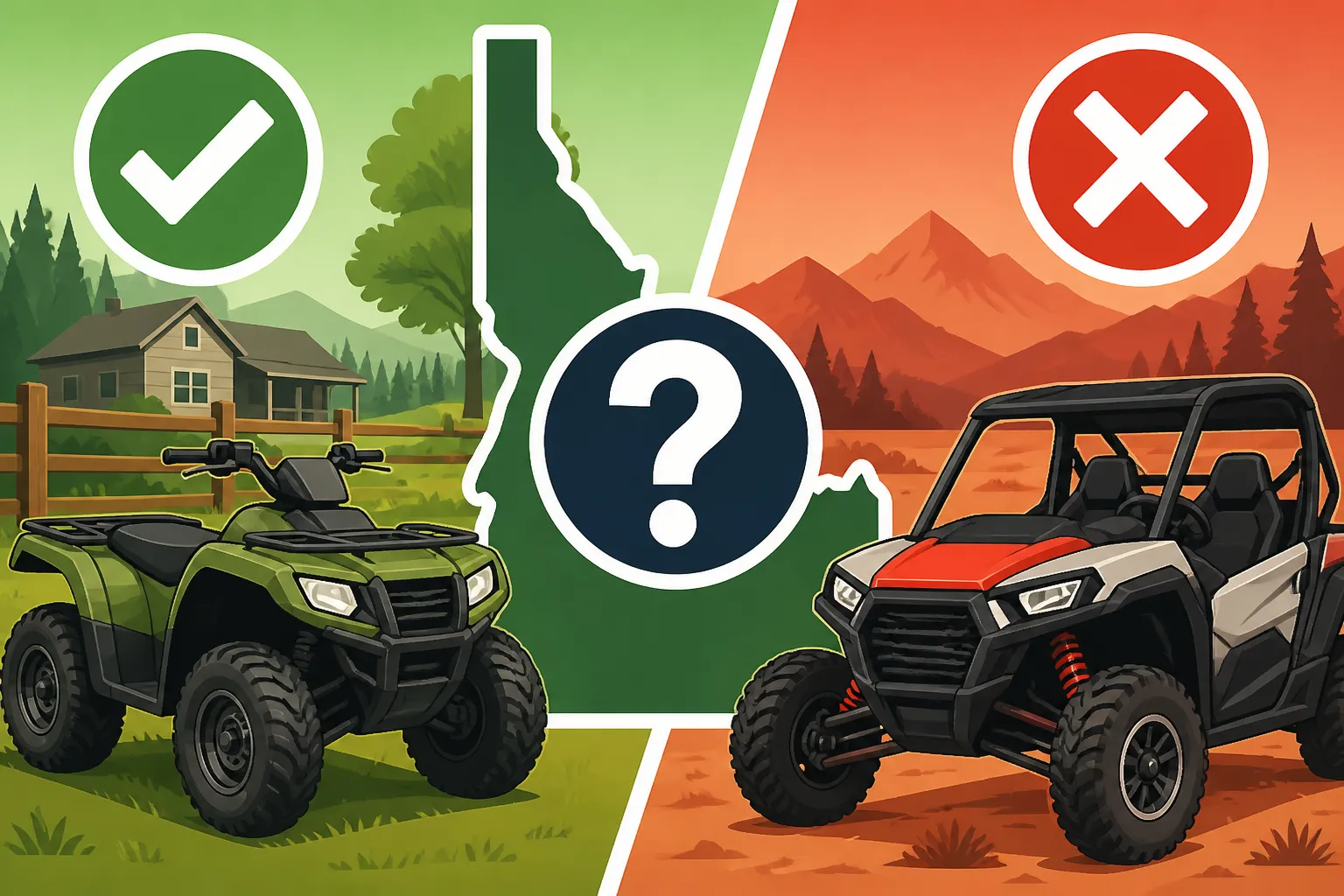
Do You Need a Sticker on Private Land in Idaho?
There's a common point of confusion for many ATV and UTV owners in Idaho, and it often boils down to a simple question: "Do I need to put that annual OHV sticker on my machine if I only ride it on my own property or private land I have permission to use?" It’s a completely valid question because nobody wants to spend money on something they don't need, or worse, face fines for not having something they thought they didn't. This guide is going to clear up that specific dilemma, helping you understand Idaho's requirements for off-highway vehicle stickers when private land is in the picture.
Understanding Idaho's OHV Sticker: Public vs. Private Land Basics
Let's start by looking at the fundamental purpose of the Idaho OHV sticker. It’s not just a random fee; it’s directly tied to maintaining and improving the very trails and staging areas that we all love to ride. When you purchase an OHV sticker, those funds go into things like trail grooming, signage, bridge repairs, and keeping access points open across public lands throughout our beautiful state. Without these stickers, our incredible network of trails would quickly deteriorate, making for less enjoyable—and often unsafe—riding experiences.
What the Idaho OHV Sticker Actually Covers
Idaho's OHV sticker is specifically mandated for any off-highway vehicle (OHV) that operates on public lands, designated OHV trails, or even on public roads that are open to OHVs in Idaho. Think of it as your admission ticket to the vast network of forest service roads, BLM trails, and state recreation areas that crisscross Idaho. This includes quads, side-by-sides, dirt bikes, and even some snowmobiles if they're being used as OHVs in the non-snow months. The sticker acts as proof that you've contributed to the system that supports this access. It’s also often necessary for any road use where OHVs are permitted, regardless of how short the distance. If you're wondering [Idaho OHV Sticker Cost This Year], you'll find it’s a relatively small investment for the access it provides.
This requirement is strictly enforced by Idaho Parks and Recreation, local sheriff's departments, and forest service rangers. If you're caught riding on public land or an OHV-designated road without a current sticker, you could face penalties that are far more expensive than the sticker itself. The intent behind the sticker is to ensure that everyone who benefits from the public riding opportunities contributes a small share to their upkeep. It’s a collective effort, and the sticker is the mechanism to make that happen.
When Private Property Means No Sticker Required
Here’s the good news: if your ATV or UTV never leaves private property and never touches any public access point, including a public road, county road, state highway, or designated trail, then you generally do not need an Idaho OHV sticker. This is a common scenario for folks who own large plots of land, ranches, or private timber properties where their machines are solely used for work, recreation, or property maintenance within their own boundaries. For example, if you have a 40-acre parcel in the mountains and you just putter around your own land, hauling firewood, maintaining fences, or simply enjoying rides on your own trails, the state doesn't require you to have an OHV sticker. You're not using the public infrastructure the sticker funds. This also applies if you’re riding on a family ranch without a sticker, provided you stay exclusively on that private land.
The key here is "exclusively." There’s no gray area when it comes to briefly crossing a public road, even if it's just to get from one section of your private property to another. If your tires touch asphalt, dirt, or gravel maintained by any public entity, you're technically on public access, and the sticker (and often a restricted use plate) becomes necessary. Many private landowners run into trouble when their property is bisected by a county road, or when they need to cross a short stretch of road to get to a different part of their acreage. While the intent might be entirely private, the actual act of driving on public access triggers the state's requirements.
When Private Use Gets Complicated: Shared Access and Leased Ground
The clear line between "private" and "public" can sometimes feel like it blurs, especially in Idaho's vast landscapes where private parcels often adjoin or are even surrounded by public lands. This is where many riders inadvertently find themselves on the wrong side of the law, not out of malicious intent, but simply due to a misunderstanding of the rules. The moment your wheels leave purely private ground and touch anything managed by the public—even for a second—the rules shift.
The Slippery Slope of Public Road Access
This is perhaps the biggest pitfall for private land riders. Imagine your hunting cabin is on private land, but to get to the main gate, you have to drive your side-by-side a quarter-mile down a gravel county road. Or maybe you have two parcels of private land, and the only way between them is to cross a paved state highway. In these situations, even if your machine never leaves your property for recreational trail riding, that brief contact with a public road means your OHV is operating where the sticker is required.
To legally operate an OHV on roads designated open to OHV traffic, you not only need an Idaho OHV sticker but often also a restricted use plate. This plate, commonly called an "R-plate," allows you to traverse certain county roads. However, there are strict rules about [What Idaho Requires Before You Ride a County Road], including specific equipment requirements like mirrors, turn signals, and a horn, in addition to having the appropriate sticker and plate. Without both the sticker and, if applicable, the restricted plate for road use, even the shortest public road crossing can lead to a citation for [Penalties for an Unstickered OHV in Idaho] or for operating an unplated OHV on a public thoroughfare. It's crucial to consult local ordinances and maps, as not all county roads are open to OHVs.
Riding on Someone Else's Land: Leases, Farms, and Permissions
Using an OHV on private land that you don't own, such as leased hunting ground, a friend's ranch, or timber company property, adds another layer of complexity. While you are on private land, the landowner still needs to grant you explicit permission. However, the sticker requirement typically remains linked to whether the land has any public access points, or if your route to or from that land involves public roads or trails. If you're riding on private timber roads, for instance, you'll need to know if those roads are considered public access or if you're truly on private, permitted ground that doesn't intersect with any public routes.
There are specific [Farm Exemptions From Idaho OHV Rules] for machines used exclusively for agricultural purposes on legitimate farm or ranch properties. This means if you're driving your UTV to check irrigation lines, haul feed, or repair fences on your working farm, it generally doesn't need an OHV sticker. However, this exemption is strictly for agricultural work. If that same UTV is then used for joyriding on the weekend, even on the farm, it might blur the lines. For those leasing land, it's vital to have clear, written permission from the landowner outlining the scope of your access and OHV use. Services like LawDepot can provide templates for land use agreements or permission forms, ensuring both parties understand the terms and providing you with a legal document to carry should questions arise. This type of documentation can be critical if you're ever questioned about your presence on [Riding Posted Ground in Idaho] or private timber roads.
Essential Safeguards: Documentation, Liability, and Local Rules
Even when you're confident your ATV or UTV is exclusively on private land and doesn't require an Idaho OHV sticker, there are still some fundamental safeguards you should put in place. These aren't just about avoiding trouble with the law, but also about protecting yourself, your property, and your relationships with neighbors and landowners. A little preparation goes a long way in ensuring your private land riding remains hassle-free and enjoyable.
Proving Your Right to Ride: The Importance of Written Permission
If you're riding on private land that you don't own, carrying proof of permission is absolutely non-negotiable. Whether it's a family ranch, a friend's acreage, or leased hunting ground, a simple verbal "sure, go ahead" isn't enough if a sheriff's deputy or game warden stops you. They need to know you have legitimate access and aren't trespassing. This proof could be a copy of a lease agreement, a notarized letter from the landowner, or even a simple, signed permission form. The document should clearly state the dates you're allowed to ride, the specific property, and ideally, the contact information for the landowner.
Having this paperwork on hand, perhaps in a waterproof bag stored securely on your machine, shows that you are a responsible rider and have taken the necessary steps to ensure you're legally on the property. This is part of the broader advice to always be [Keeping Paperwork on the Machine]. For more formal arrangements, like a hunting lease or a long-term agreement for accessing private roads, consider using a legal document service. LawDepot, for example, offers various customizable templates for land use agreements, leases, or even simple permission slips that can make this process straightforward and legally sound. It prevents misunderstandings and demonstrates due diligence, especially if there are concerns about [Idaho Trespass Rules Along Forest Roads] where boundaries can be unclear.
Beyond the Sticker: Insurance and Neighborly Etiquette
Even if you're riding solely on private land and don't need a sticker, don't overlook liability. Accidents can happen anywhere, and an OHV accident on your private property could still result in significant medical bills or property damage. While your homeowner's insurance might offer some limited coverage for recreational vehicles, it's often not comprehensive enough for serious incidents involving ATVs or UTVs. Dedicated ATV/UTV insurance provides crucial liability coverage, which protects you if someone is injured on your machine or property, and often covers damage to your own vehicle. It's smart to review [Idaho Liability Insurance Minimums for Riders] even if you think you’re exempt, to understand the general expectations for liability coverage.
Beyond legal requirements and insurance, remember that good neighborly etiquette goes a long way. Even if you're on your own property, excessive noise or dust can be a major source of friction with adjacent landowners. [Idaho Noise Rules Near Mountain Towns] are a real concern, and while they primarily apply to public areas, being a respectful neighbor helps maintain a positive image for all OHV enthusiasts. Consider the time of day you're riding, especially if your property is close to residential areas, and be mindful of your exhaust system. A little consideration can prevent complaints and ensure everyone in the community can enjoy their property in peace.
Here's a quick summary to help clarify the sticker situation on various land types:
| Type of Land / Use Scenario | Idaho OHV Sticker Required? | Notes |
|---|---|---|
| Your Own Private Property (no public access) | No | If the machine never leaves your property and never touches public roads or trails. |
| Leased or Friend's Private Property (no public access) | No | Same as above, but strong recommendation for written permission from the landowner. LawDepot offers templates for this. |
| Farm/Ranch Land (for agricultural work only) | No | Specific [Farm Exemptions From Idaho OHV Rules] apply strictly to agricultural operations. |
| Any Public Land (trails, forest roads, BLM) | Yes | This is the primary purpose of the sticker. Covers recreational riding on all state, federal, and county public lands open to OHVs. |
| Crossing or Riding on Public Roads (even briefly to access private land) | Yes | Regardless of duration, any use of a public road (county, state) open to OHVs requires a sticker and often a restricted use plate. |
| Private Land Adjacent to Public Trails (if you ride onto the trail) | Yes | If you leave your private land and enter a designated public trail, even inadvertently, the sticker is required. |
| Private Timber Land (with public access easements) | Yes | Many private timber roads have public access easements; assume a sticker is needed unless explicitly confirmed as fully private and non-access. |
This article is for general informational purposes only and does not constitute professional advice. Laws, prices and regulations vary by location and change over time. Consult a qualified professional for guidance on your specific situation.