Replacing a Lost Idaho OHV Title
It's incredibly frustrating when you go to sell your beloved ATV or UTV, or maybe you're trying to prove ownership for an insurance claim, and you suddenly realize the physical title document is just… gone. Whether it vanished in a move, got misplaced in a stack of papers, or was damaged in an unexpected incident, a missing Idaho OHV title can throw a real wrench in your plans. This guide is here to walk you through the precise steps to replace that lost title, ensuring you can quickly get your paperwork back in order and continue enjoying your Idaho off-road adventures.
The Initial Panic and Why an OHV Title Matters
That sinking feeling when you realize a crucial document like your OHV title is missing is something many of us have experienced. It's not just a piece of paper; it's the legal proof of your ownership, and without it, many essential transactions become impossible or at least incredibly difficult.
Why a Title is So Crucial for Idaho OHV Owners
Your ATV or UTV title in Idaho isn't just a formality; it's the legal bedrock of your ownership. Think of it as the deed to your home or the title to your car, specifically for your off-highway vehicle. Without a valid, physical title in hand, you'll hit significant roadblocks if you ever need to sell your machine, use it as collateral for a loan, or even if you just need to prove to law enforcement that it’s yours. Imagine trying to sell your side-by-side to a buyer, and they ask for the title, only for you to come up empty-handed. Most legitimate buyers won't proceed without it, and frankly, they shouldn't.
Beyond sales, the title is your primary proof of ownership for things like insurance claims, particularly if your machine is ever stolen or significantly damaged. If you borrow against your OHV, the lender will require the title to place a lien on it, and without it, securing that financing will be impossible. It’s also important if you ever need to transfer the machine's ownership due to a gift or inheritance. While an Idaho OHV sticker proves your machine is registered to operate on public lands, it absolutely does not substitute for the title, which establishes legal ownership. For a deeper dive into this distinction, check out [Why an Idaho Plate Is Not a Registration on Its Own].
Common Scenarios Leading to a Missing Title
Titles don't just sprout legs and walk away, but they certainly can disappear in a variety of common, often chaotic, life events. One of the most frequent culprits is moving. Boxes get packed, things get misplaced, and suddenly that crucial envelope from the Idaho Transportation Department or County Assessor is nowhere to be found among the unpacked items. It’s easy for it to get mixed in with old utility bills or school papers, only to be accidentally tossed or filed away incorrectly.
Another common scenario involves simple filing errors at home. Maybe you meant to put it in your "important documents" folder but inadvertently slipped it into a stack of old magazines or tax documents. Over time, these mistakes lead to a lost document. Natural disasters, though less frequent, can also cause a title to go missing. A house fire, a flood, or even significant water damage from a burst pipe can destroy physical documents stored in your home. Theft, while less common for just a title, can occur if important documents are stolen as part of a larger burglary, or if someone specifically targets your identity. Regardless of how it happened, the key is to understand that it's a fixable problem, even if it feels overwhelming at first.
Gathering Your Information for a Duplicate Title
Before you can even think about filling out forms, you need to arm yourself with all the correct information about both yourself and your off-highway vehicle. Having these details ready makes the application process much smoother and reduces the chances of errors or delays.
Essential Owner and Machine Details You'll Need
When applying for a duplicate title in Idaho, you'll need to provide accurate and up-to-date personal information. This includes your full legal name, as it appears on your driver's license or other government-issued ID, your current residential address, and your contact information, including a phone number and email address. The county assessor's office needs to confirm your identity and ensure the new title is mailed to the correct location. It's a simple step, but one that can cause delays if any information is outdated or mistyped.
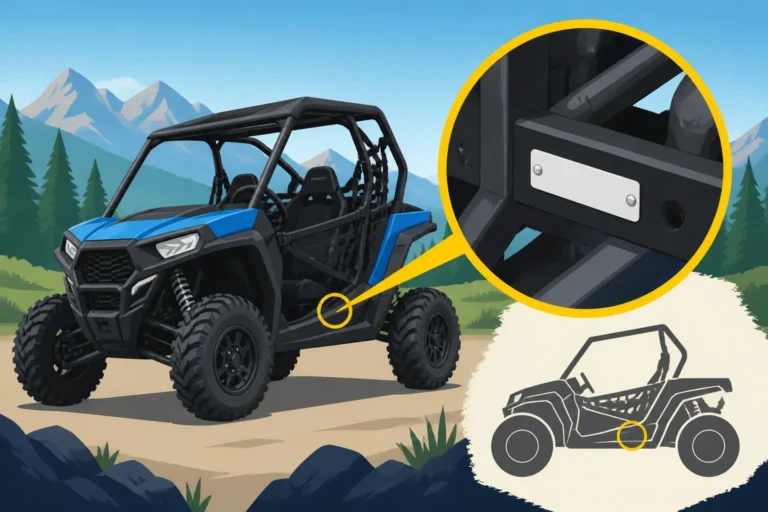
Equally critical is having all the specific details about your ATV or UTV at your fingertips. This includes the Vehicle Identification Number (VIN), which is arguably the most important piece of information as it uniquely identifies your machine. You'll also need the make (e.g., Polaris, Honda, Can-Am), model (e.g., RZR, Foreman, Maverick), and the exact model year of the OHV. Having a previous registration card, an old insurance policy, or even just a clear photograph of the VIN plate can be incredibly helpful here. If you've been consistent with your annual OHV sticker renewals, your Idaho Parks and Recreation renewal notice might also contain some of this information. For more on the initial titling process, you can refer to [Idaho OHV Title Application at the County Assessor].
Proving Your Ownership Without the Original Title
This is often where the real headache begins for people. If you've lost your title, how exactly do you prove you own the machine without the primary document that says you own it? Thankfully, the Idaho Transportation Department (ITD) understands that life happens, and they have provisions for establishing ownership through secondary means. The most straightforward alternative is a copy of the bill of sale from when you purchased the machine. This document, ideally notarized or witnessed, clearly outlines the transaction and your acquisition of the OHV. If you bought it from a dealer, they might have a copy on file. If it was a private sale, hopefully, you kept a copy.
Beyond the bill of sale, other documents can help corroborate your claim. Old registration documents, like previous Idaho OHV sticker receipts, prove the machine was registered in your name. Insurance records, particularly if you've had the OHV insured for a while, will list you as the owner. Loan documents, if you financed the purchase and have since paid it off, can also serve as strong evidence. You'll also want to bring your personal identification, like your driver's license, to match against the names on these documents. Even old receipts for maintenance, parts purchases, or accessories that are clearly for your specific machine (matching VIN or description) can add weight to your claim. Essentially, you're trying to build a compelling paper trail that demonstrates continuous ownership in the absence of the original title. More specific guidance on what counts can be found in [Proof of Ownership for an Idaho OHV Title].
The Step-by-Step Process for a Duplicate Idaho OHV Title
Once you've gathered all your information, it's time to dive into the formal process of applying for a duplicate title. This involves a specific form and a visit to your local county assessor's office.
The Idaho Transportation Department Form ITD 3367
The core of your application for a duplicate Idaho OHV title is the Idaho Transportation Department's "Application for Duplicate Certificate of Title" form, officially known as ITD 3367. This form is universally used for various vehicles, including off-highway vehicles, and it's essential to complete it accurately. You can usually find this form on the ITD website, or you can pick up a physical copy at your local county assessor's office.
When filling out ITD 3367, pay close attention to each section. You'll need to clearly mark that you are applying for a "Duplicate Title." The form asks for your full legal name and current mailing address, as well as the OHV's VIN, make, model, and year. Crucially, there's a section where you must state the reason for requesting a duplicate – in your case, "Lost" would be the appropriate selection. It’s also wise to ensure that any lienholder information is correctly noted, or clearly marked as "None" if the machine is fully paid off. If you're dealing with a private sale and need a more formal bill of sale to back up your claim of ownership for the duplicate title application, resources like LawDepot offer templates for various legal documents, which can be useful in ensuring your supporting paperwork is robust. Take your time, double-check every field, and consider printing a blank copy to practice on before filling out the final version.
Submitting Your Application to the County Assessor's Office
After meticulously completing ITD 3367 and assembling all your supporting documentation, the next step is to submit everything to your local Idaho County Assessor's office. This is the government entity responsible for processing vehicle titles at the county level. While some preliminary inquiries can be made over the phone, the actual submission of the application typically needs to be done in person, or in some cases, by mail.
If you choose to submit in person, which is often recommended for such important documents, bring all your original supporting documents (bill of sale, past registrations, ID) along with a completed ITD 3367. The clerk will review your application, verify your identity, and ensure all required fields are filled out. Be prepared to pay a fee for the duplicate title. This fee covers the administrative cost of processing and issuing your new title. Always check with your specific county assessor's office beforehand to confirm their accepted payment methods and the exact fee amount. Submitting in person also gives you the opportunity to ask any clarifying questions you might have. If you live in a major population center, your experience might be similar to [Titling an ATV in Ada County] or [Titling an OHV in Kootenai County]. Remember, the goal is to leave the office knowing that your application is complete and correctly filed.
What to Expect After Application and Waiting Times
Once you've successfully submitted your application for a duplicate Idaho OHV title, the waiting game begins. The processing time can vary depending on the volume of applications at the Idaho Transportation Department and your specific county assessor's office. Generally, you can expect it to take several weeks for the new title to be processed and mailed to the address you provided on your application.
During this waiting period, it's a good idea to keep a copy of your submitted application and any receipt you received from the county assessor's office. While this won't serve as a legal title, it can act as temporary proof that you've applied for a duplicate, which might be useful if you encounter any unexpected situations, though it won't suffice for selling or major transactions. The new title will be printed and then mailed to you via standard postal service. It's crucial to ensure your mailing address on the application is correct and current to avoid any further delays or the title getting lost in transit again. If you haven't received your title within a reasonable timeframe (e.g., 6-8 weeks), don't hesitate to contact the county assessor's office to inquire about the status of your application. You can find more details on general title processing times in [How Long an Idaho OHV Title Takes].
Addressing Special Circumstances and Common Hurdles
While the standard process for replacing a lost title is relatively straightforward, certain situations can complicate matters. It's important to be aware of these potential hurdles and how to navigate them.
When There's a Lienholder on the Title
A common situation that adds a layer of complexity to replacing a lost OHV title is when there's an active lien on the machine. This means you still owe money on the ATV or UTV, and the lender (the lienholder) legally holds an interest in your title. In Idaho, the original title is typically sent to the lienholder or is held electronically by the ITD with the lien noted. If you've lost your copy of the title (which would usually be a copy or a notice that the lienholder has the original), or if the lienholder themselves has lost the original, the process changes slightly.
You will still need to complete Form ITD 3367, but you'll also need to involve your lienholder. The application often requires the lienholder's signature or a letter from them authorizing the issuance of a duplicate title. This is because they have a financial stake in the vehicle. If you've paid off your loan but never received a clear title or lost the lien release, you'll need to contact your former lender to obtain a "lien release" document. This document, signed by the lender, states that the loan has been satisfied and their interest in the vehicle is nullified. You would then submit this lien release along with your duplicate title application to the county assessor's office. This ensures the new title is issued directly to you without the lien noted. Understanding [Liens on an OHV Title] is critical in these situations.
Dealing with Deceased Owners or Inherited Machines
Losing an OHV title can be particularly challenging when the original owner has passed away. The process of transferring ownership from a deceased person's estate to a new owner, even if it's a family member, requires specific legal steps that go beyond a simple duplicate title application. The person legally authorized to act on behalf of the deceased's estate – typically an executor named in a will or an administrator appointed by a court – must initiate the title transfer.
This usually involves providing certified copies of the death certificate, the will (if one exists), and court documents proving their authority to manage the estate. In Idaho, if the estate is small and meets certain criteria, a "Small Estate Affidavit" might be an option to transfer the asset without a full probate process. The specific documents required can vary based on the value of the estate and the relationships involved. Once ownership is legally established through the estate, then the new owner can apply for a duplicate title in their name, often by submitting the appropriate transfer paperwork along with the duplicate title request form. This can be a complex area, and it's always advisable to consult with the county assessor's office or even legal counsel for guidance. For more information on this, see [Transferring an Idaho Machine After an Owner Dies].
Lost Titles and Out-of-State Machines Moved to Idaho
If you've recently moved to Idaho with an OHV from another state and subsequently lost its out-of-state title, the process to get an Idaho title will be a bit different than simply replacing a lost Idaho title. You're essentially starting fresh to establish Idaho ownership. The Idaho Transportation Department needs to confirm legitimate ownership from the previous state before issuing a new Idaho title.
You'll need to provide proof of prior ownership from the state where the OHV was last titled. This could be an old registration card, an expired title (if you have a copy or the original from before it was lost), or a verification letter from the previous state's DMV or equivalent agency. You'll complete the standard Idaho title application, but instead of marking "duplicate," you'll indicate that you're applying for an "Original Idaho Title" with an out-of-state transfer. The vehicle will likely need to be inspected to verify the VIN. It's crucial to bring as much documentation as possible from the previous state, including your bill of sale and any other ownership records. This process is similar to what's described in [Registering an Out-of-State Machine in Idaho] and [Titling a Washington Quad After Moving to Idaho]. The goal is to provide a clear chain of ownership that allows Idaho to confidently issue a new title in your name.
When You Suspect Your Title Was Stolen
While less common, there's always a possibility that your OHV title wasn't just misplaced but actually stolen. This can happen during a home burglary or even through identity theft schemes where important documents are targeted. If you have any reason to suspect your title was stolen, your first step should be to file a police report with your local law enforcement agency. This creates an official record of the theft, which can be important for several reasons.
When you go to apply for your duplicate title, having a police report can provide additional context and legitimacy to your claim of a lost document. While it might not change the application form itself, it adds an extra layer of protection against potential fraud. For instance, if someone else were to try and fraudulently transfer the title using the stolen document, your police report would be critical evidence. It's also a good idea to monitor your credit reports and other financial accounts for any suspicious activity if you believe your identity might have been compromised. While the ITD primarily focuses on issuing a new title, being proactive about a stolen document can save you significant headaches down the road. For broader concerns, understanding [Recovering a Stolen ATV] might offer peace of mind.
Beyond the Duplicate Title – Related Paperwork and Best Practices
Once you've successfully obtained your duplicate Idaho OHV title, it's a good time to review your practices for document management and understand how this new title impacts other aspects of your OHV ownership.
Keeping Your New Title Safe and Accessible
Congratulations, you have your new, shiny duplicate Idaho OHV title in hand! Now, the crucial step is to ensure this one doesn't meet the same fate as its predecessor. Thoughtful storage is key. Avoid keeping the physical title inside the ATV or UTV itself, or even in the glove box of your truck, as these are vulnerable spots for theft or damage. Instead, consider storing it in a secure location within your home, such as a fireproof safe or a safe deposit box at a bank. These options protect against both theft and natural disasters.
It's also a wise practice to make a digital copy of your title. A clear photo or scan saved to a secure cloud storage service or an encrypted hard drive can be a lifesaver. While a digital copy isn't legally binding for transfer of ownership, it contains all the critical information (VIN, title number, issue date) that you might need for quick reference, such as when filling out insurance forms or reporting information to law enforcement. Just remember, a copy is for reference only; for official transactions like selling or registering, the original physical title is almost always required. Never carry your actual title on your machine while riding; typically, only your registration and proof of insurance are needed, as detailed in [Do You Carry the Title on an Idaho Trail?].
Understanding the Broader Implications for Registration and Sales
Receiving your duplicate title solidifies your legal ownership of the OHV. This is particularly important if you plan to sell your machine in the future. A clear, physical title in your name is non-negotiable for most legitimate buyers and ensures a smooth transfer of ownership. Without it, you'd likely face significant challenges, as many buyers would be hesitant to purchase a machine if you couldn't provide the proper paperwork. This is why addressing a lost title promptly is so crucial; you don't want to be scrambling when a good offer comes along.
The duplicate title also streamlines the process for future registration renewals, as it confirms the machine is legally yours. While you only need the current registration sticker to legally ride on Idaho's public lands, the underlying title is the foundation for all other official dealings with your OHV. When you do eventually sell, you'll endorse the back of your new duplicate title and provide it to the buyer, along with a bill of sale. This process is essential for the buyer to then register and title the machine in their name. You can find more comprehensive information on this topic in [Transferring an Idaho OHV Title After a Sale], or if you ever encounter a situation where you're trying to sell without a title, [Selling a Machine in Idaho With No Title].
When a Duplicate Title Isn't Enough: Bonded Titles and Other Solutions
In some rare but challenging scenarios, simply applying for a duplicate title might not be an option. This usually occurs when you never had a title in your name to begin with, or you lack sufficient documentation to prove ownership through conventional means. Perhaps you inherited a very old ATV from a family member who never titled it, or you bought a machine from a private seller years ago with just a handwritten receipt, and now that seller is unreachable. In these situations, Idaho offers alternative pathways to establish legal ownership, one of the most common being a "bonded title."
A bonded title is essentially a title backed by a surety bond. You would purchase a bond for a certain value (often 1.5 times the value of the OHV), which protects the state and any previous owners from potential claims of ownership. To get a bonded title, you typically need to apply through the county assessor's office, provide all available documentation, and sign an affidavit explaining how you acquired the vehicle and why you don't have a traditional title. The process can be more involved, often requiring a VIN inspection and sometimes even an advertisement period to ensure no other party claims ownership. This is a complex solution reserved for situations where standard title replacement isn't possible. Details on this specific process are outlined in [Bonded Title for an ATV in Idaho]. While it's more work, it offers a legal path to ownership when traditional documents are entirely missing.
Here's a quick summary of the key information and documents you'll likely need:
| Document/Information | Purpose | Notes |
|---|---|---|
| Idaho ITD Form 3367 (Application for Duplicate) | Official request for a new title | Obtain from ITD website or County Assessor's office |
| Valid Photo ID | Proof of applicant's identity | Driver's License, State ID |
| OHV's VIN, Make, Model, Year | Essential machine identification | Crucial for accurate title issuance |
| Proof of Ownership (if no old title) | Establish legal right to machine | Bill of Sale, previous registration, insurance docs |
| Lien Release (if applicable) | Confirms loan payoff, removes lender's claim | Required if a lien was noted on the lost title |
| Death Certificate/Estate Docs (if applicable) | For inherited machines or deceased owners | Certified copies, court orders, small estate affidavits |
| Application Fee | Covers processing and issuance | Check with County Assessor for current amount and payment methods |
| Police Report (if stolen) | Official record of theft | Useful if title was stolen, not just misplaced |
Disclaimer
This article is for general informational purposes only and does not constitute professional advice. Laws, prices and regulations vary by location and change over time. Consult a qualified professional for guidance on your specific situation.