Fixing a Wrong VIN on an Idaho Title
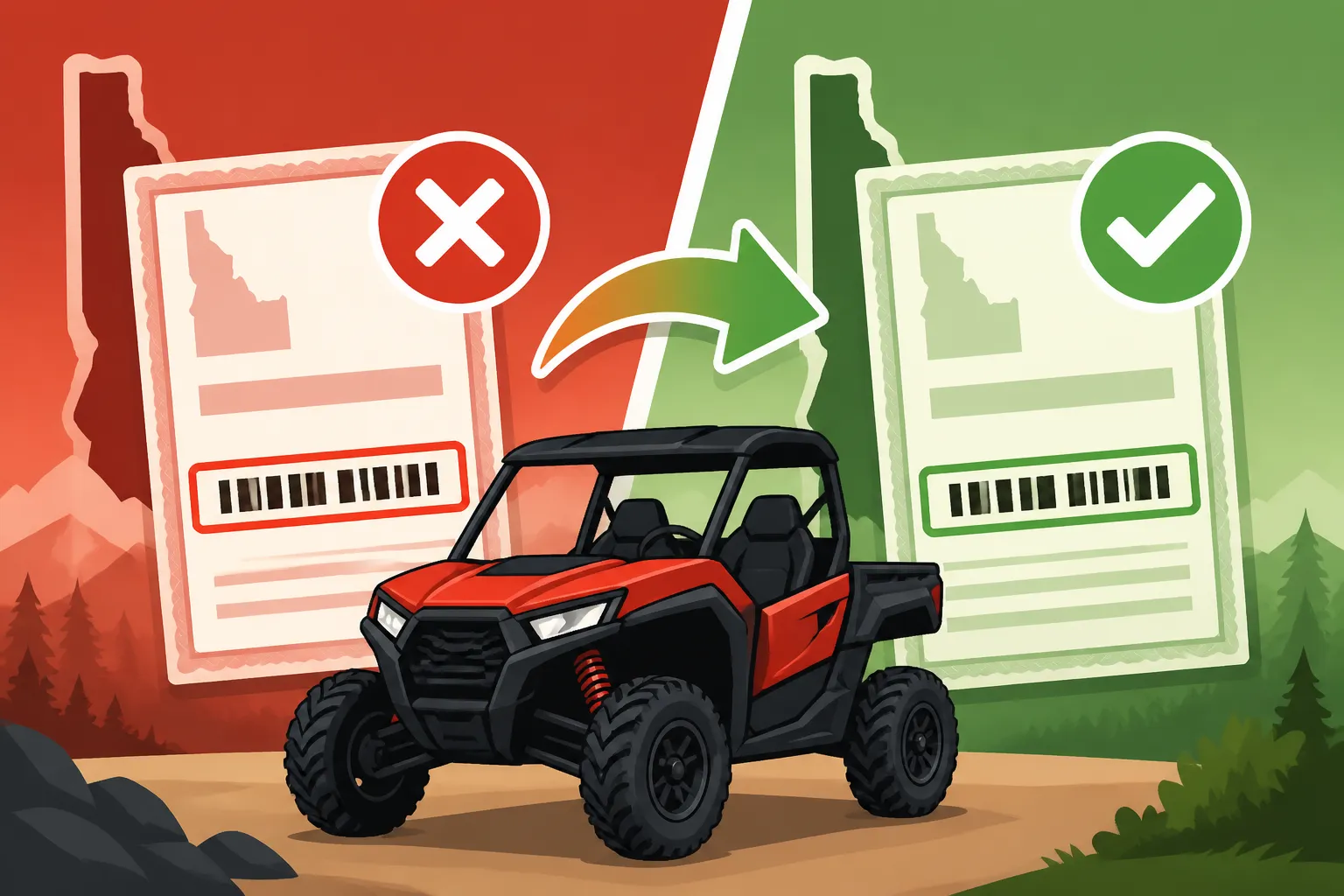
There are few things more frustrating than going through the entire process of buying an ATV or UTV, getting your title in the mail, and realizing there's a glaring mistake—the Vehicle Identification Number (VIN) is wrong. This isn't just a minor typo; an incorrect VIN can cause serious headaches down the road, from registration issues to selling your machine. This guide will walk you through exactly what to do when you find a wrong VIN on your Idaho title, helping you navigate the correction process with confidence.
The Frustration of a VIN Error on Your Idaho Title
Imagine finally getting your dream side-by-side, hitting the trails around Bogus Basin or the St. Joe River, only to later find out the very document proving your ownership is flawed. A wrong VIN on your title isn't just an annoyance; it's a fundamental problem that undermines your legal ownership and ability to enjoy your machine freely. Riders often feel a knot in their stomach when they realize this, fearing a bureaucratic nightmare, and rightly so—it can be a bit of a maze if you don't know where to start.
Why VIN Accuracy is Non-Negotiable
The VIN is the unique fingerprint of your off-highway vehicle (OHV). It's a 17-character code that identifies everything from the manufacturer and model year to the specific production sequence of your ATV or UTV. Without an accurate VIN on your title, the state of Idaho essentially has no official record that the machine you own is your machine. This discrepancy can lead to a host of problems. For instance, when you go to renew your [Idaho OHV Sticker Cost This Year], the VIN on your sticker application must match the title precisely. If it doesn't, you could be denied registration, leaving your machine legally unusable on public lands.
Furthermore, accurate VINs are crucial for law enforcement. In the unfortunate event your ATV is stolen, the VIN is the primary identifier used to recover and return it to you. A title with an incorrect VIN makes this process incredibly difficult, potentially leaving you without recourse. It also plays a vital role in consumer safety recalls; manufacturers use VINs to identify specific batches of vehicles that might have defects, so if your title has the wrong number, you might miss out on critical safety information or repairs.
Common Scenarios Leading to VIN Mistakes
You might wonder how a VIN could possibly be incorrect on an official document like a title. Unfortunately, it happens more often than you'd think, stemming from various points in the ownership transfer or titling process. One common scenario is a simple clerical error at the county assessor's office when the initial title application is processed. Perhaps a number was transposed, or a letter misread during data entry. We've all been there, rushing through paperwork, and these things can slip through.
Another frequent cause is human error during a private sale. When you purchase an ATV from an individual, they might inaccurately transcribe the VIN onto the bill of sale, or even misread it when filling out the title transfer section. Sometimes, the VIN on the machine itself might be hard to read due to dirt, wear, or even a previous owner's modifications, leading to an honest mistake by either the buyer or seller. When you’re excited about a new machine, small details like checking the VIN against multiple documents can sometimes be overlooked.
The Ripple Effect of an Incorrect VIN
An incorrect VIN on your Idaho title isn't just a piece of paper problem; it creates a cascade of real-world issues. The most immediate impact is on your ability to legally operate your OHV. You might have trouble getting an [Idaho OHV Sticker] if the VIN on your application doesn't match the state's records, which are based on your title. Without that sticker, you risk penalties for an [Unstickered OHV in Idaho] if you ride on designated trails or public lands. Imagine planning a big trip to the Sawtooths, only to discover you can't ride because of a paper error!
Beyond registration, consider the resale value. When it comes time to sell your ATV or UTV, a buyer performing a VIN check will find a discrepancy between the machine's actual VIN and the one on the title. This immediately raises red flags, making your machine incredibly difficult to sell and potentially leading to significant financial loss. A buyer might assume the machine is stolen or that you're trying to hide something, even if it's an innocent mistake. Lenders, too, will refuse to finance a purchase if the VIN on the collateral (your OHV) doesn't match the title accurately, making it impossible to transfer a lien or secure a loan against it.
Initial Steps When You Discover a VIN Discrepancy
Finding an error on your title can feel overwhelming, but taking a methodical approach will save you a lot of grief. The key is to act quickly and gather all your information before reaching out to anyone. Don't panic and just show up at the DMV; a little preparation goes a long way.
Gathering Your Documentation
The very first thing you need to do is become an expert on your own paperwork. Collect every single document related to your ATV or UTV purchase and title. This includes:
- Your current Idaho title: This is the primary document with the incorrect VIN.
- Bill of Sale: If you purchased the machine from a private party, this is critical. Look for the VIN written on it. If you used a generic form, or one from a service like LawDepot, ensure the VIN was correctly entered there.
- Dealer purchase agreement: If you bought from a dealership, you'll have a detailed contract.
- Previous owner's title (if applicable): Sometimes the error originates from an earlier transfer.
- Any registration documents or temporary permits: These might also contain the VIN.
- Proof of insurance: Even this document might list the VIN.
Once you have everything, carefully compare the VIN on each document to the actual VIN stamped on your ATV or UTV's frame. Take a clear photo of the VIN on your machine. This photo will serve as undeniable proof of the correct VIN. Where is the VIN located? Typically, it's stamped on the frame near the steering head, on the left-hand side, or on a sticker near the engine or transmission. For side-by-sides, it can often be found on the frame near one of the wheel wells or under the driver's seat. Make sure you're reading it accurately, as some characters can look similar (e.g., "0" and "O," "1" and "I").
Identifying Where the Error Occurred
Once you've gathered your documents and confirmed the correct VIN on your machine, you need to pinpoint where the error first crept in. Did the mistake happen when you, the seller, or the dealer initially filled out the paperwork? Or was it a clerical error by the county assessor's office when they processed your [Idaho OHV Title Application at the County Assessor]?
Here's how to figure it out:
-
Compare your current title to your bill of sale/dealer contract:
- If the title has a VIN error, but your bill of sale (or dealer contract) has the correct VIN, it suggests the error likely occurred at the county assessor's office. This is often the easiest type of error to fix because it's a state-level administrative mistake.
- If the title and your bill of sale both have the incorrect VIN, then the error originated with the seller (private or dealer) or yourself during the initial paperwork. This scenario might require more effort, as you'll need to involve the party who made the initial mistake.
-
Examine the previous owner's title (if you have it): If you received a signed-over title from a private seller, check if the error was already present on that title or if it appeared when you transferred it. Sometimes, an older mistake just propagates.
Understanding the source of the error helps you know who to contact first and what kind of approach to take. It's much simpler to ask a government office to fix their own error than to track down a private seller from months ago.
Contacting the Seller or Dealer
If you've determined that the error originated with the seller (either a private individual or a dealership), your next step is to reach out to them. This can sometimes be the trickiest part, especially with private sales.
- For private sales: Try to contact the individual immediately. Explain the situation calmly and clearly, stating that there's a VIN discrepancy between the machine and the title/bill of sale. You'll likely need their cooperation to correct the original bill of sale or sign an affidavit. Having the original [ATV Bill of Sale Wording Buyers Should Insist On] is critical here, as a well-written one will clearly identify the machine by its correct VIN. If the seller is reluctant, remind them that an incorrect title impacts your legal ownership and could potentially reflect poorly on their past transaction as well. Sometimes, they just need to understand the seriousness of the issue.
- For dealer sales: Contact the dealership's finance or titling department. Dealers have a professional obligation to ensure correct documentation. They are usually more familiar with these situations and can guide you on their internal process for correcting the error. They'll typically have their own forms or procedures for submitting a correction to the county. Insist on a clear plan of action and a timeline for resolution.
Always keep meticulous records of your communication: dates, times, names of people you spoke with, and a summary of the conversation. This paper trail can be invaluable if the process becomes complicated.
The Correction Process: Who to Contact and What to Bring
Once you've identified the source of the error and gathered your documents, it's time to tackle the correction process itself. This typically involves a visit to your local Idaho County Assessor's office, which handles [Titling an ATV in Ada County], [Titling an OHV in Kootenai County], and all other counties.
Correcting Errors Made by the Idaho County Assessor
If your initial investigation points to a clerical error made by the county assessor's office, you're in a relatively good position. This is considered an administrative fix.
- Gather your evidence: You'll need your current incorrect title, your original bill of sale or dealer purchase agreement showing the correct VIN, and clear photos of the VIN on your machine.
- Visit your local County Assessor's office: Go to the same office where you originally applied for the title. Explain that there's a VIN error on the title and that it was likely a clerical mistake.
- Fill out an affidavit or correction form: The assessor's office will likely have a specific form for title corrections or an affidavit you'll need to complete. You'll state the incorrect VIN on the title and provide the correct VIN, along with supporting documentation.
- Expect a review: They will compare your documentation with their records. If it's a clear clerical error, they can often initiate the correction process without much fuss.
- A new title: Once approved, a corrected title will be issued to you. There might be a small fee for the re-issuance, similar to the [Idaho Title Fee at the County Assessor].
It's always best to call ahead and ask what specific forms or documents they require for a VIN correction. This saves you a trip and ensures you have everything needed.
Correcting Errors from a Private Seller or Out-of-State Transaction
This scenario can be a bit more involved, as the error originated outside the county assessor's immediate control.
-
If the private seller is cooperative:
- The best-case scenario is that the seller acknowledges the mistake. You'll need them to sign an affidavit stating the correct VIN and affirming that the machine sold was the one identified by that VIN. You may also need to amend the original bill of sale.
- Bring the original (incorrect) title, the corrected bill of sale, the seller's affidavit, and photos of your machine's VIN to the county assessor's office. They will then process a new title with the correct information.
- If the original title already had the wrong VIN when you received it, and the seller has since moved or is uncooperative, this becomes much harder. You might then be looking at a bonded title process, similar to what you'd do if you were [Titling a Machine Without the Previous Owner].
-
If the error happened during an out-of-state purchase or move:
- When you're [Registering an Out-of-State Machine in Idaho], the VIN is verified during the initial application. If an error was made on the out-of-state title you brought in, or if it was mistranscribed, the process is similar to correcting a private sale error.
- You'll need the original out-of-state title (even with its error), proof of the correct VIN (like the bill of sale from the original purchase, or manufacturer's statement of origin), and a photo of the VIN on the machine.
- The Idaho County Assessor's office will review these documents to ensure the machine you own matches the correct VIN, and then issue an Idaho title with the accurate information. Be prepared for them to take extra time to verify the out-of-state documents.
Dealing with More Complex VIN Discrepancies (e.g., typos vs. wrong machine)
Not all VIN errors are created equal. A simple transposed digit is one thing, but a VIN that's entirely different, or one that belongs to a different make and model, is a much larger issue.
- Simple Typo (e.g., one or two digits off): These are generally straightforward to fix with supporting documentation. The county assessor's office or the dealer can typically verify the true VIN against manufacturer records or your sales paperwork and issue a correction. This is the most common and least problematic scenario.
- Significantly Different VIN: If the VIN on your title is drastically different from your machine's actual VIN, this raises bigger questions. It could still be a clerical error, but it could also mean the title you received belongs to a completely different vehicle. This is particularly concerning in private sales. You might need to involve the seller more heavily to prove that the machine you bought is indeed the one intended for transfer. They may need to sign an affidavit of error or even re-do the transfer with the correct title for the correct machine.
- The "Wrong Machine" Scenario: In rare, but incredibly serious cases, the VIN on your title might perfectly match another machine, meaning you were accidentally given a title for a different vehicle than the one you purchased. This is a nightmare scenario and often requires legal counsel if the seller is uncooperative. It could be an honest mistake, or it could be a sign of fraud. You'll need robust proof of purchase for your specific machine, matching its VIN. This is where a detailed bill of sale, perhaps generated using a template from a service like LawDepot, becomes invaluable, as it should clearly link your payment to the specific machine's VIN. If you suspect fraud, you might also need to involve law enforcement.
Required Paperwork and Potential Hurdles
Navigating the bureaucratic side of VIN corrections can be tricky, and being prepared with all the necessary documents is your best defense against delays and frustration. It's not just about having a paper; it's about having the right papers.
Essential Documents for a VIN Correction
When you head to the County Assessor's office, you'll need more than just your incorrect title. Think of it as building a rock-solid case for your correction.
- The Original (Incorrect) Idaho Title: This is what you're trying to fix, so bring it.
- Proof of Correct VIN: This is the most crucial piece.
- Manufacturer's Statement of Origin (MSO) or Certificate of Origin (MCO): If the machine is relatively new and you're the first owner, this document will have the correct VIN directly from the manufacturer.
- Original Bill of Sale or Dealer Purchase Agreement: This document, ideally, should list the correct VIN. If it also has the wrong VIN, it complicates things, but is still needed.
- Photos of the VIN on the machine: Clear, unambiguous photos of the VIN stamped on your ATV or UTV are invaluable.
- Registration Card or Old Stickers: Sometimes these also have the VIN and can corroborate the correct number.
- Government-Issued Photo ID: Your driver's license or state ID will be required for identification.
- Any Correspondence with the Seller/Dealer: If you've communicated with the seller or dealer about the error, bring copies of emails, texts, or notes from phone calls.
- Affidavit of Correction/Error: The assessor's office might provide a specific form, or you might need a sworn statement (affidavit) explaining the error and providing the correct VIN, especially if the mistake was from a private seller. A general affidavit template from a legal document service like LawDepot can be a good starting point if you need to draft one, but always confirm with the Assessor's office if they have a specific form they prefer.
Be prepared to present all these documents and patiently explain your situation. The more organized and thorough you are, the smoother the process will be.
When You Might Need Additional Proof
Sometimes, the standard documents aren't enough, particularly if the VIN discrepancy is significant or if the history of the machine is murky.
- Uncooperative Seller: If a private seller is unwilling to help or can't be found, the county assessor might require a "Bonded Title" process. This is typically reserved for situations where proof of ownership is questionable, such as when you're [Titling a Machine Without the Previous Owner]. A surety bond protects the state and any potential previous owners if the machine turns out to be stolen or another party claims ownership. This can add significant cost and time to the process.
- Very Old Machines or Homemade Builds: For older ATVs or UTVs where original paperwork is lost, or for unique machines like a [Homemade Buggy in Idaho], proving the VIN can be harder. The county might require a VIN inspection by law enforcement to physically verify the number on the frame and ensure it hasn't been tampered with.
- Theft Check: If the VIN on your machine appears suspicious or has been altered, the county assessor might automatically initiate a theft check through law enforcement. This is standard procedure to protect against stolen vehicles, and while it might delay your correction, it's a necessary step. It highlights why [Checking a Used Machine for Theft] and running its serial number before purchase is so important.
The key here is patience and cooperation. Understand that the assessor's office needs to ensure legal ownership and prevent fraud. Providing as much verifiable information as possible will help them help you.
Addressing Sales Tax and Use Tax Implications
Correcting a VIN on your title generally doesn't trigger new sales tax or use tax liabilities, assuming the original transaction was already properly taxed. However, there are nuances:
- Original Purchase Taxed: If you paid [Idaho Sales Tax on an ATV Purchase] at the time of sale (either through a dealer or directly to the county for a private sale), the VIN correction is just that—a correction of an existing record. No new tax should be owed.
- Unpaid Tax: If, for some reason, the sales tax or use tax was not properly assessed on the original transaction (perhaps due to the VIN error causing confusion, or an oversight), correcting the VIN might bring this oversight to light. In Idaho, if you [Buy From a Seller With No Paperwork] or from an out-of-state seller and bring the machine into Idaho, you're responsible for [Use Tax When a Machine Comes Into Idaho]. If the original filing didn't include this, the correction process might prompt the county to collect it.
- Correcting Value: In rare cases where the VIN error led to the machine being misidentified (e.g., recorded as a cheaper model), correcting the VIN might also correct the assessed value. If this leads to a higher value, there's a slim chance it could impact any outstanding use tax if it wasn't paid based on the correct value. However, this is quite uncommon for a simple VIN correction.
Always be honest about the original transaction. The county assessor's office is primarily interested in ensuring accurate records and proper taxation. If you have any concerns about past tax payments, it's best to address them proactively rather than hoping they go unnoticed.
What Happens After the Correction is Filed?
You've done the hard work of gathering documents, identifying the error, and submitting your paperwork. Now comes the waiting game, which can sometimes be the most nerve-wracking part.
Processing Times and What to Expect
Once you've submitted all the necessary forms and documentation for a VIN correction, the county assessor's office will need time to process it. The processing time can vary significantly depending on several factors:
- Workload of the Office: Just like any government agency, county assessor offices can get busy, especially during peak registration or tax seasons. A small, rural county in Idaho might process corrections faster than a bustling office in Ada County or Kootenai County.
- Complexity of the Error: A simple typo correction with clear supporting documents will typically be processed much faster than a complex case involving an uncooperative seller or a questionable VIN history. Cases requiring a VIN inspection by law enforcement will naturally take longer.
- Verification Steps: The office might need to contact the original seller, dealer, or even the manufacturer to verify information, especially if your documentation isn't entirely conclusive. This adds to the processing time.
Generally, you can expect anywhere from a few days to several weeks for a simple correction. For more complex cases, it could extend to a month or more. When you submit your paperwork, always ask for an estimated processing time. Don't be afraid to follow up politely if you haven't heard anything by their stated timeline. Keeping a copy of everything you submitted, along with the date, will be helpful for any follow-up inquiries.
Receiving Your Corrected Idaho Title
Once the correction is approved and processed, the county assessor's office will issue a new, corrected Idaho title for your ATV or UTV. This new title will reflect the accurate VIN, finally matching your machine's unique identifier.
- Delivery Method: Most county offices will mail the new title to the address on file. Make sure your mailing address is current and correct when you submit your correction request. Some offices might offer an option for in-person pickup, but mail is more common.
- Review Immediately: As soon as you receive the new title, open it and carefully review every single detail. Double-check the VIN, your name, the machine's make and model, and any other relevant information. While it's unlikely to have another error, it's always best to verify. If there are any new mistakes, you'll need to contact the office immediately.
- Safeguard Your Title: Once confirmed correct, store your new title in a safe, secure place, away from your machine. Remember, [Do You Carry the Title on an Idaho Trail]? No, you don't. It's a critical document that proves ownership, so treat it like you would your house deed.
Finally having that correct title in hand is a huge relief, signaling the end of the bureaucratic headache and ensuring your machine is fully legal.
Riding Your OHV While You Wait
This is a common question and a valid concern for any rider. Can you still hit the trails around Lake Coeur d'Alene or the Idaho Panhandle while your title correction is being processed?
The answer depends on whether your machine is currently registered and stickered:
- If your machine is currently registered and has a valid OHV sticker: If the VIN error hasn't prevented you from getting your current sticker, then technically, your machine is legally registered for the time being. However, you should still carry all documentation related to the pending title correction (copies of your submission, any receipts, and a letter from the assessor's office if they provided one). If a deputy or Forest Service ranger checks your paperwork, the discrepancy might still raise questions, but having proof that you're actively correcting it will show good faith.
- If your machine is NOT currently registered or the VIN error prevented registration: In this scenario, it's generally not advisable to ride on public lands or designated trails. An incorrect VIN on your title means your machine isn't properly identifiable or legally registered. Riding an [Unstickered OHV in Idaho] can result in fines and other penalties. It's best to wait until you receive your corrected title and can obtain a valid OHV sticker that matches your machine's correct VIN. You wouldn't want to receive a citation for riding illegally while you're trying to fix a separate legal issue.
Always err on the side of caution. If there's any doubt about your machine's legality due to the VIN discrepancy, it's better to hold off on public land riding until your corrected title and new sticker are in hand.
Preventing Future VIN Errors
While fixing a VIN error is manageable, preventing it in the first place is always the best approach. A few simple steps during the buying and titling process can save you immense frustration later on.
Double-Checking Before You Buy
The best time to catch a VIN error is before money changes hands and paperwork is signed. This proactive approach applies whether you're buying from a dealer or a private seller.
- Physical Verification: Always, always, always physically locate the VIN on the machine itself. Do not just rely on what's written on a piece of paper the seller hands you. Compare the VIN stamped on the frame with the VIN on the title, the bill of sale, and any registration documents. Take a picture of the VIN on the machine for your records. If the VIN on the machine is illegible or appears tampered with, walk away from the deal. This could indicate a stolen vehicle or a major problem.
- VIN Check: Before you finalize the purchase of a used machine, run the VIN through an online VIN check service. These services can sometimes reveal if the machine has been reported stolen, has a salvage title, or has previous damage. This is a crucial step for [Checking a Used Machine for Theft] and its history.
- Detailed Bill of Sale: Insist on a comprehensive bill of sale that clearly lists the correct VIN, make, model, year, purchase price, and the full names and contact information of both buyer and seller. A robust bill of sale, such as one you could generate from a trusted source like LawDepot, can be your first line of defense if an error arises later. It provides a clear record of the transaction.
Verifying Information During Title Application
Once you've purchased your machine, the next critical juncture is when you apply for your Idaho title at the county assessor's office. This is where a clerical error can easily occur.
- Review Forms Thoroughly: Whether you're filling out the application yourself or the clerk is doing it, take your time to review every piece of information before signing. This includes the VIN, your name, address, and the machine's details. Don't feel rushed, even if there's a line behind you. It's your responsibility to ensure accuracy.
- Bring All Documents: Have your bill of sale, the seller's signed-over title (if applicable), and your photo ID ready. Cross-reference the VIN on these documents with what is being entered on the application form.
- Ask for a Copy: Request a copy of the completed title application form for your records. This can be crucial if you need to prove what information was submitted if an error appears on the mailed title.
Importance of a Detailed Bill of Sale
We've mentioned it a few times, but a detailed bill of sale is your best friend in preventing and fixing VIN errors. It's not just a receipt; it's a legal document.
- Clear Identification: A good bill of sale should explicitly state the full 17-character VIN, matching the machine precisely. It should also include the make, model, and year. This establishes an undeniable link between the physical machine and the sales transaction.
- Protection for Both Parties: It protects the buyer by proving what machine they purchased and from whom. It protects the seller by documenting the sale and the transfer of ownership.
- Foundation for Title Application: The bill of sale often serves as primary supporting documentation for your title application. If the bill of sale has an error, that error is likely to propagate to the title.
- Dispute Resolution: In the event of a dispute over the VIN or any other aspect of the sale, a detailed bill of sale is your most important piece of evidence. Using a standard template from a reputable service, even one you customize from LawDepot, provides a professional and legally sound framework for your private sale.
Taking these preventive steps might seem like extra effort upfront, but trust me, it's far less effort than trying to untangle a VIN error after the fact. Happy riding, and make sure your paperwork is as solid as your machine!
Disclaimer
This article is for general informational purposes only and does not constitute professional advice. Laws, prices and regulations vary by location and change over time. Consult a qualified professional for guidance on your specific situation.