When the Seller Never Signed the Title
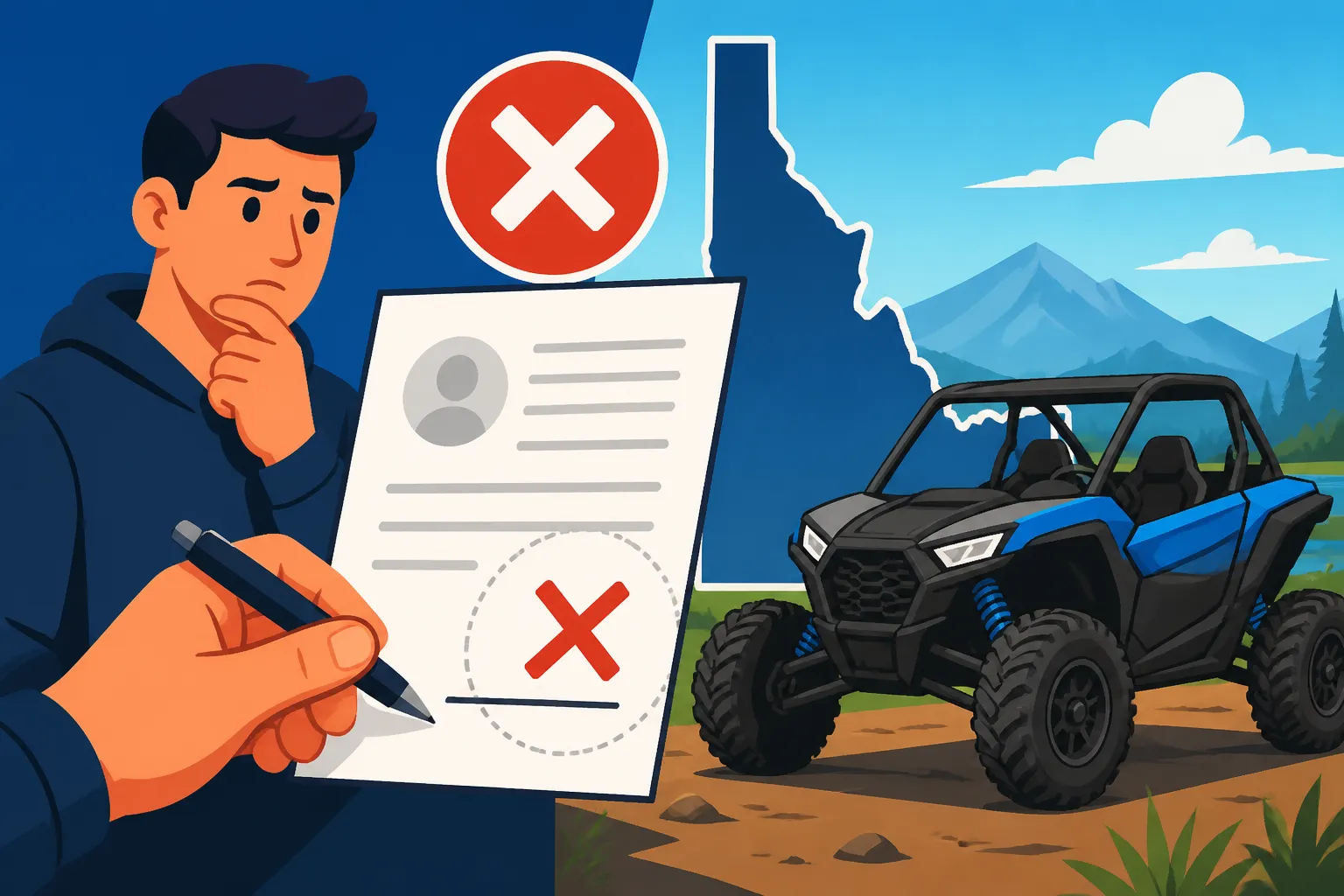
You just bought that sweet ATV or side-by-side you've been dreaming about, shelled out your hard-earned cash, and you're ready to hit the Idaho trails. But then you get home, look at the paperwork, and a cold dread washes over you: the seller never actually signed the title over to you. It's a frustrating, all-too-common scenario that can leave you feeling stuck, unable to legally claim your new machine. This guide is here to walk you through exactly what to do when you find yourself in this tricky spot, helping you navigate the steps to finally get that title in your name so you can ride without worry.
The Frustrating Reality of an Unsigned Title in Idaho
Finding out your newly purchased off-highway vehicle (OHV) title isn't signed by the previous owner is like hitting a dead end before you even leave your driveway. You’ve done your part by paying for the machine, but without that critical signature, the Idaho Transportation Department (ITD) and your local County Assessor's office simply won't recognize you as the legal owner. This isn't just a minor inconvenience; it's a significant roadblock that can prevent you from registering, insuring, or even legally selling your OHV down the line. It's truly one of those moments that makes you wish you had a time machine to go back and double-check everything at the point of sale.
Why a Signed Title is Non-Negotiable
In Idaho, the title is the ultimate proof of ownership for ATVs and UTVs that meet certain criteria – generally, machines over 50cc. Think of it like the deed to a house or the pink slip for your car; it's the legal document that states who officially owns the property. When you purchase an OHV, the seller must sign the "assignment of title" section, effectively transferring their ownership rights to you. Without this signature, the title remains in their name, and from the state's perspective, they still own the machine.
This signature isn't just a formality; it's a legal safeguard. It confirms that the original owner willingly transferred the machine to you and that you are now responsible for it. Without it, there's no clear chain of ownership, which raises red flags for the state. They need to ensure that the transaction was legitimate and that the machine isn't stolen or subject to other claims. It’s a protection for both buyers and sellers, even if it feels like a hurdle when that signature is missing.
The Immediate Problems You'll Face
An unsigned title creates a cascade of problems that can quickly turn your excitement into a headache. First and foremost, you won't be able to title the machine in your name at the County Assessor's office. This means you can't get an Idaho OHV sticker, which is required for riding on public lands and designated trails. Imagine pulling up to your favorite trailhead, ready for an epic day, only to realize you can't legally ride because your machine isn't properly registered.
Beyond that, you might run into issues with insurance companies. While some might offer a policy based on a bill of sale, many prefer to see a properly titled machine. If the worst happens and your OHV is stolen or involved in an accident, proving ownership for an insurance claim can become a bureaucratic nightmare without a clean, signed title. And if you ever decide to sell the machine, you'll be in the same position as your original seller, unable to provide clear proof of ownership, which will significantly devalue your machine or make it impossible to sell to an informed buyer. It's a loop you absolutely want to avoid.
Initial Steps When You Realize the Issue
The moment you discover the missing signature, don't panic, but do act quickly. Your first step is to gather all the paperwork you do have. This includes the unsigned title itself, any bill of sale, receipts, text messages, emails, or even online listings related to the purchase. Any document that links you to the seller and the machine will be crucial. Take photos of the machine, especially if there are any unique identifiers or customizations, and jot down the Vehicle Identification Number (VIN) if you haven't already.
Next, try to pinpoint exactly where the signature is missing. Is it just the seller's signature, or are other sections incomplete? Understanding the specific gap in the paperwork will help you formulate your approach. This initial information-gathering phase is vital, as it provides the foundation for any further action you might need to take, whether it's simply reaching out to the seller or exploring more complex legal avenues. For more details on what should be in order, check out our guide on [Documents to Bring to an Idaho Assessor's Office].
Tracking Down the Seller: Your First and Best Bet
When you realize the title isn't signed, your absolute best course of action is to try and contact the seller. This might seem obvious, but it's often overlooked in favor of immediately thinking about complex legal solutions. Sometimes, it's an honest oversight, a simple mistake made during a hurried transaction. Getting that signature directly from the seller is by far the easiest, quickest, and cheapest way to resolve the problem. Don't jump to conclusions about malicious intent just yet; give them a chance to fix it.
Gathering Information About the Seller
Before you reach out, organize all the contact information you have for the seller. This includes phone numbers, email addresses, physical addresses, and even social media profiles if you found the listing there. Review your bill of sale carefully; a good bill of sale should include the full names and addresses of both buyer and seller, which is invaluable in a situation like this. If you met them in person, try to recall any details about where you met or anything they mentioned about their location or work.
Did you buy the machine through an online marketplace like Craigslist or Facebook Marketplace? Go back and check the original listing and your message history. Sometimes, those platforms retain more information than you might realize, offering additional contact points or identifying details. The more information you have, the better your chances of successfully reaching them. This detective work upfront can save you a lot of grief down the road.
Strategies for Contacting a Reluctant Seller
Once you have their contact information, your approach is key. Start with a polite, friendly message or call. Assume it was an oversight. Explain clearly and calmly that you've discovered the title was not signed and that you need their signature to complete the transfer of ownership. Offer to meet them at their convenience, even if it means driving a bit, or suggest mailing the title to them with a return envelope. Make it as easy as possible for them to help you.
If your initial attempts are met with silence or reluctance, don't give up immediately. Try different methods of contact. Send a text, then an email, then call. Sometimes people are busy, or they might not recognize your number. If you have a physical address, a certified letter, return receipt requested, can be a good way to get their attention and create a paper trail. In this letter, clearly state the issue, reiterate your need for their signature, and propose a simple solution. You can find templates for such letters on sites like LawDepot, which can help ensure your communication is professional and legally sound. Remember, you're looking for a signature, not a confrontation.
What to Do If the Seller is Unreachable or Uncooperative
This is where things get tougher, and your options start to narrow. If you've exhausted all reasonable attempts to contact the seller—multiple calls, emails, texts, certified letters—and they remain unreachable or outright refuse to cooperate, you'll need to explore other avenues. It's important to document every single attempt you made: dates, times, method of contact, and any responses (or lack thereof). This documentation will be crucial if you have to pursue more formal or legal solutions.
At this point, you're essentially dealing with a machine that, in the state's eyes, isn't truly yours, even though you paid for it. This can feel incredibly unfair, but Idaho's titling laws are designed to prevent fraud and ensure clear ownership. While frustrating, understanding this helps you prepare for the next steps. This is often the point where buyers begin to feel truly stuck, but there are still paths forward, albeit more involved ones. This is a situation where you might wish you had reviewed our guide on [Buying From a Seller With No Paperwork] before the sale.
When the Seller is Gone: Exploring Alternative Solutions
When direct contact with the seller fails, you're looking at options that require more effort and involvement from state agencies or the legal system. These paths are designed for situations where the standard title transfer process has broken down, but they come with their own requirements and complexities. It’s not ideal, but it’s often the only way to gain legal ownership of your ATV or UTV.
Understanding Idaho's Bonded Title Process
One of the most common solutions for a missing or improperly signed title in Idaho is to apply for a bonded title. A bonded title is a title issued by the state when the original title is missing, defective, or unobtainable. It basically means you’re providing a surety bond, which is a guarantee (backed by a third-party company) that if someone else comes forward claiming ownership of the vehicle during a specified period (usually three years), they can be compensated from the bond. After that period, if no claims are made, the bonded title can often be converted into a regular title.
The process for a [Bonded Title for an ATV in Idaho] involves several steps:
- Contact the County Assessor: Start by talking to your local County Assessor's office. They will provide you with the specific forms and requirements for a bonded title application. They'll also tell you if your machine even qualifies for one, as not all situations do.
- Vehicle Inspection: You may need to have your OHV inspected by law enforcement to verify the VIN and ensure it's not stolen. This helps prevent fraudulent title applications.
- Appraisal: The state will often require an appraisal of the OHV to determine its value. This value directly impacts the amount of the surety bond you'll need to purchase.
- Purchase a Surety Bond: You'll need to work with a surety bond company (often found through insurance agents) to purchase a bond. The cost of the bond is typically a small percentage of the OHV's appraised value.
- Submit Application: Once you have all the necessary documentation—the completed application, inspection report, appraisal, and the surety bond—you submit it to the County Assessor. They will then process your request, and if approved, issue you a bonded title.
This process adds an extra cost and takes time, but it’s a legitimate pathway to gain proper ownership when the seller has vanished.
Small Claims Court: A Last Resort
If the seller is simply uncooperative rather than unreachable, and especially if you're out significant money, small claims court might be an option. This isn't about getting the title signed directly, but rather seeking a judgment that legally compels the seller to provide the signed title or to compensate you for your losses if they can't. Small claims court is designed for disputes involving relatively small amounts of money and typically doesn't require an attorney, making it more accessible to the average person.
However, pursuing this route comes with its own set of challenges:
- You need to locate the seller: You can't sue someone if you can't find them to serve them with court papers.
- Proof is essential: You'll need strong evidence of the sale, the payment made, and the seller's failure to provide a properly signed title. This is where your detailed bill of sale and documented attempts to contact them become vital.
- Time and Effort: Court proceedings take time, and there's no guarantee of a favorable outcome. Even if you win, collecting the judgment can be another challenge.
Small claims court should genuinely be considered a last resort after all other attempts to resolve the issue directly or through a bonded title have failed or aren't applicable. For most OHV owners, the bonded title process is usually a more direct route to gaining legal ownership of the machine itself.
What If the Machine Has No Title at All?
Sometimes, you might discover not just an unsigned title, but that the machine never had one to begin with. This is particularly common with older ATVs or UTVs, or machines that were purchased from states with different titling requirements than Idaho. In Idaho, OHVs over 50cc generally need a title, but rules can vary by age of the machine.
If your machine truly has no previous title, your path will again typically involve the County Assessor’s office. You'll need to prove you are the rightful owner through a comprehensive bill of sale, often supported by other evidence like previous registration records (if any existed). In many cases, you might still need to go through a similar process to the bonded title, where you apply for an initial title in your name and may need to post a bond. The key here is proving to the state that this machine is rightfully yours and is not stolen. You’ll want to review resources like [Proof of Ownership for an Idaho OHV Title] for more specific details.
| Situation | Best First Action | Next Steps If Stuck | Final Resort / Alternative |
|---|---|---|---|
| Seller Forgot to Sign | Politely contact seller, offer to meet | Mail title with return envelope, certified letter | If unreachable: Bonded Title |
| Seller is Unreachable | Document all contact attempts | Apply for a Bonded Title (inspection, appraisal, bond) | Small Claims Court (if you can locate them and have strong proof) |
| Seller Refuses to Cooperate | Send formal letter (e.g., via LawDepot) | Small Claims Court to compel action or seek damages | Bonded Title (if applicable and preferred over court) |
| Machine Has No Prior Title (Idaho) | Gather bill of sale, any purchase history | Contact County Assessor for initial titling requirements; may need a bonded title process | N/A |
Preventing Future Headaches: Lessons Learned
Navigating the complexities of an unsigned title is a frustrating ordeal that no buyer wants to experience. While hindsight is 20/20, understanding how to prevent this situation in the first place is invaluable for any future OHV purchases you might make. A little diligence on the front end can save you massive headaches and potential financial losses down the road.
The Importance of a Detailed Bill of Sale
A robust, comprehensive bill of sale is your absolute best friend in any private sale of an OHV. It's not just a receipt; it's a legal contract that documents the transaction and protects both parties. Many people just scribble something on a piece of paper, but a good bill of sale should include:
- Full legal names and addresses: Of both the buyer and the seller. This is crucial for contact purposes if issues arise.
- Detailed machine description: Make, model, year, color, and most importantly, the full Vehicle Identification Number (VIN). Ensure the VIN on the bill of sale matches the VIN on the machine and the title.
- Purchase price: Clearly state the amount paid.
- Date of sale: Essential for establishing when ownership transferred.
- "As-is" clause: For sellers, this protects them from post-sale complaints. For buyers, it signifies you accept the machine's current condition.
- Signatures: Both the buyer and seller must sign and date the bill of sale.
- Witness (optional but recommended): Having a third party witness the signing adds an extra layer of validity.
You can find excellent, customizable templates for bills of sale on platforms like LawDepot, which guide you through including all necessary legal language. Never settle for a handshake or a vague receipt. Insist on a thorough bill of sale every single time. It's foundational to [Proof of Ownership for an Idaho OHV Title].
Verifying Paperwork Before You Pay
This is the golden rule that could prevent almost all unsigned title issues. Before you hand over any money, and especially before the seller leaves, thoroughly inspect all the paperwork.
- Examine the Title: Get your hands on the physical title certificate. Look for any signs of alteration, liquid damage, or missing information.
- Match VINs: Compare the VIN on the title certificate exactly to the VIN stamped on the OHV's frame. Any discrepancy is a massive red flag.
- Check for Liens: Look at the title for any recorded liens (e.g., from a bank). If there's a lien, the seller doesn't have full ownership until it's satisfied. Never buy a machine with an active lien unless you're absolutely certain the lienholder will release their interest at the time of sale.
- Confirm Seller's Identity: Verify the seller's identity against the name on the title. Ask to see their driver's license. If the name on the title doesn't match the person selling it, there's a problem. They might be selling on behalf of someone else, which requires a power of attorney, or it could indicate a stolen machine.
- Get the Signature: Watch the seller sign the title over to you. Do not let them say they'll mail it, or that they signed it already. Physically witness their signature in the "Assignment of Title" or "Seller's Signature" section. If there's more than one owner listed on the title (e.g., "John AND Jane Doe"), both individuals must sign.
- Take Photos: Take clear photos of the signed title, the bill of sale, and the seller's ID (if they agree).
It might feel awkward to be so meticulous, but think of it as protecting your significant investment. A moment of awkwardness at the sale is far better than weeks or months of stress trying to fix an unsigned title problem. Always review our guide on [ATV Bill of Sale Wording Buyers Should Insist On] before a purchase.
Dealer vs. Private Sale Protections
It's also worth understanding the inherent differences in protection between buying from a licensed dealer and a private individual.
- Licensed Dealers: When you buy from a licensed Idaho powersports dealer, they are legally obligated to provide you with a clear title, free of liens, and often handle all the titling and registration paperwork for you directly with the state. This peace of mind comes at a price, as dealer prices are typically higher due to overhead and services. If an issue arises with the title from a dealer, you have a direct legal recourse against a business.
- Private Sales: Private sales often offer lower prices because you're cutting out the middleman. However, they come with significantly fewer protections. The burden of due diligence falls almost entirely on you, the buyer. You are responsible for verifying the title, ensuring all signatures are present, and checking for liens or other issues. If problems arise, your recourse might be limited to trying to contact a private individual, or pursuing complex legal options like those described above.
For these reasons, many buyers prefer the security of a dealer, especially if they are new to OHV ownership or uncomfortable with the intricacies of private party paperwork. However, if you are diligent and follow the steps outlined, a private sale can be a great way to find a good deal, but always be cautious. To properly finalize the transfer after a sale, read about [Transferring an Idaho OHV Title After a Sale].
Disclaimer
This article is for general informational purposes only and does not constitute professional advice. Laws, prices and regulations vary by location and change over time. Consult a qualified professional for guidance on your specific situation.