Sales Tax on a Private Machine Sale in Idaho
So, you've finally found that perfect used ATV or UTV you've been dreaming of, maybe scrolling through Facebook Marketplace or chatting with a neighbor. The deal is struck, the handshake is firm, but then a question pops into your head: what about sales tax? It's a common point of confusion, and frankly, it can feel like a maze trying to figure out what you owe when you're buying privately. This guide is here to clear up exactly how sales tax works on those private machine sales in Idaho, specifically for off-highway vehicles, and help you navigate the paperwork so you don't run into any surprises down the road.
Understanding Idaho Sales Tax on Private OHV Sales
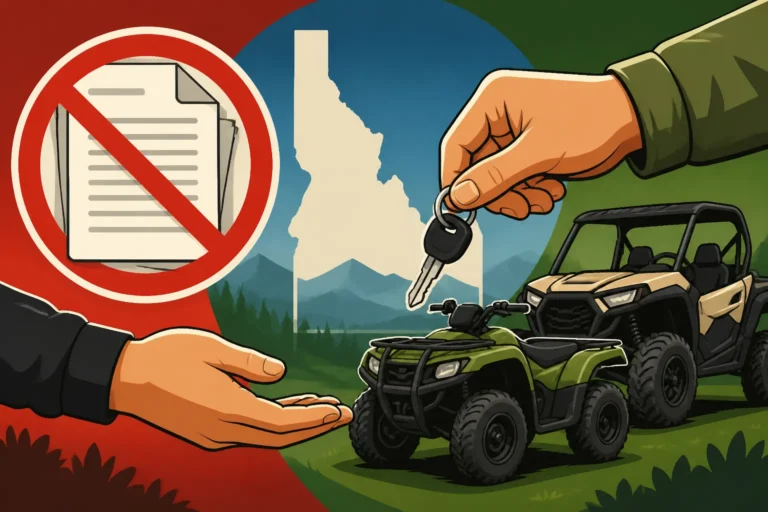
When you buy a used ATV or UTV from a private individual here in Idaho, it’s not quite the same as walking into a dealership. A licensed dealer is legally obligated to collect sales tax from you at the point of sale. That's pretty straightforward. However, in a private transaction, the seller isn't collecting that tax. This often leads people to assume that no tax is due at all, which, unfortunately, isn't the case in Idaho.
What you're actually paying in a private sale is generally referred to as "use tax," but for all intents and purposes, it functions very much like sales tax and is calculated at the same rate. The state views it this way: if you purchased a taxable item outside of Idaho and brought it in for use, or if you purchased a taxable item within Idaho from a seller who didn't collect sales tax, you, the buyer, are responsible for remitting that tax directly to the Idaho State Tax Commission. For most folks, this comes as a bit of a shock, especially if they've moved from states where private vehicle sales are indeed tax-exempt. But here in the Gem State, that off-road machine you just bought, whether it's a quad or a side-by-side, is subject to this use tax. The intent is to level the playing field between buying from a dealer and buying privately, ensuring everyone contributes their fair share to state services.
This tax applies to pretty much any motorized off-highway vehicle (OHV) over 50cc that you plan to use in Idaho, whether that's on trails, for ranch work, or just cruising around your property. It’s not just for machines you title and register. Even if you're buying an older machine that might be exempt from titling requirements, the sales/use tax generally still applies to the purchase price. Ignorance of the law, as they say, is no excuse, and the state does have ways of catching up if you try to skirt the rules. When you go to get your [Idaho OHV Sticker Fee and the Vendor Charge] or [Titling and Registering an ATV in Idaho], that's often when the questions about purchase price and tax come up.
The Buyer's Responsibility for Paying Sales Tax
Let's make this crystal clear: in a private sale of an ATV or UTV in Idaho, the responsibility for paying the sales (use) tax falls squarely on the buyer's shoulders. This is a crucial distinction that often gets overlooked and can lead to problems down the road. Unlike a dealership, where they handle all the calculations and collections, when you buy from an individual, you become the one accountable for declaring the purchase and remitting the tax.
You can't just assume the seller will somehow take care of it or that because they didn't ask for tax, it doesn't exist. That's a common misconception. The state requires you to report the purchase price and pay the tax. This usually happens when you go to [Transferring an Idaho OHV Title After a Sale] at your county assessor's office, or if you're not titling but need an OHV sticker, it can come up then too. The officials at the county office are accustomed to asking for this information and will ensure the tax is collected before they process your paperwork. They're not just being nosy; they're fulfilling their duty to the state.
Imagine this scenario: you buy a sharp-looking side-by-side from a guy you met on Craigslist for a great cash price. You shake hands, get the signed title, and off you go, thinking you got a steal with no tax. A few weeks later, you head to the county assessor's office to get the title transferred into your name. The clerk asks about the purchase price, and then informs you of the use tax due. Suddenly, that "great deal" has an unexpected chunk added to it. This is why understanding your obligation before you finalize the purchase is so important. Make sure to factor this tax into your budget when you're negotiating the price of a used machine, so you're not caught off guard. You also need a solid [ATV Bill of Sale Wording Buyers Should Insist On] to properly document the transaction, protecting both parties and providing the necessary information for tax calculation. Many riders find useful templates on sites like LawDepot to ensure all the essential details are captured correctly.
How to Calculate and Pay Idaho Sales Tax
Calculating the sales (use) tax on your private ATV or UTV purchase in Idaho is pretty straightforward, but knowing the steps and what documentation you'll need is key. It's essentially a percentage of the purchase price.
Determining the Purchase Price
The first step is to establish the actual purchase price. This is the amount of money you paid the seller for the machine. It's incredibly important to document this accurately on a bill of sale. Don't be tempted to write a lower price on the bill of sale to reduce the tax amount. This is illegal and can lead to penalties, fines, and interest if the state discovers the discrepancy. The county assessor's office, when processing your [Idaho OHV Title Application at the County Assessor] or [Documents to Bring to an Idaho Assessor's Office], can often spot significantly under-reported values based on the machine's make, model, and year, and they may require you to pay tax on a fair market value instead.
For instance, if you bought a 2018 Polaris RZR for $12,000, that's your purchase price. Even if the seller says, "Just write $5,000 on the bill of sale to save some cash," resist that urge. It's not worth the potential trouble. A clear, legally sound bill of sale is your best friend here, and resources like LawDepot can provide templates that help you capture all the necessary details, including the full purchase price and any trade-in values. If you're trading in another machine as part of the deal, the sales tax is generally only applied to the difference between the trade-in value and the new machine's price, similar to how it works at a dealership. Ensure that any trade-in is also clearly documented on your bill of sale.
Applying the Idaho Sales Tax Rate
Once you have your accurate purchase price, you'll apply Idaho's state sales tax rate. This rate applies uniformly across the state, regardless of which county you live in or where the transaction took place.
Let's use an example:
If the Idaho state sales tax rate is 6% (check the Idaho State Tax Commission for the current exact rate), and your ATV or UTV had a purchase price of $10,000:
$10,000 (Purchase Price) x 0.06 (Sales Tax Rate) = $600 (Tax Due)
So, in this scenario, you would owe $600 in sales tax. This is an additional cost that needs to be factored into your overall budget for the machine.
Paying the Tax
You generally pay this use tax when you complete the title transfer process at your local county assessor's office. When you bring in your signed-over title and bill of sale, the clerk will calculate the tax amount based on the purchase price you've declared. They will then collect this amount from you directly. This is often the most convenient way to handle it, as it ensures everything is taken care of at once, and your [Proof of Ownership for an Idaho OHV Title] is properly recorded.
In some rarer cases, if you purchase a machine and somehow don't get it titled immediately but still need to register it for an OHV sticker, the tax might be collected by the Idaho Department of Parks and Recreation (IDPR) vendor, or you might need to remit it directly to the Idaho State Tax Commission. However, for most private OHV sales, the county assessor's office is the primary collection point for this use tax, especially when [Buying a Used Side-by-Side in Idaho: The Paperwork] is being finalized.
Here’s a quick summary of the documentation and steps:
| Item/Step | Description | Importance |
|---|---|---|
| Bill of Sale | A written agreement detailing the sale, purchase price, buyer/seller info, VIN, date, and signatures. Consider using a template from a service like LawDepot. | Essential legal record, proves ownership, and provides the exact purchase price for tax calculation. |
| Signed-Over Title | The original title certificate, signed by the seller, transferring ownership to you. | Required by the county assessor to legally transfer ownership. |
| ID State Tax Commission Form | While often handled by the county office, you might need to fill out a Use Tax Return form (Form 850) if remitting directly. | Ensures proper reporting of the tax owed if the county doesn't collect it at the time of title transfer. |
| Payment Method | Cash, check, or card (depending on the county office's accepted methods). | You'll need to pay the calculated tax amount at the time of title transfer. |
Common Questions and Misconceptions About Private Sale Tax
It’s completely normal to have questions and even some lingering confusion about sales tax in private OHV sales. Many people do, and that's often because the rules aren't always immediately obvious or differ from what they might expect from other states or types of purchases. Let's tackle some of the most frequently asked questions and clear up a few common misconceptions.
"What if the seller tells me there's no sales tax on private sales?"
This is a common misconception, as we've discussed. While it's true the seller doesn't collect the sales tax, the state of Idaho still expects the buyer to pay use tax on the purchase. The seller might genuinely not know this, or they might be trying to make the sale more appealing. However, the legal obligation remains with you, the buyer. You are responsible for [Idaho Sales Tax on an ATV Purchase], regardless of what the seller says. It's always best to assume the tax is due and budget for it accordingly. When you head to the county assessor to complete your [Transferring an Idaho OHV Title After a Sale], this tax will be assessed.
"Can I avoid paying sales tax if I don't get a title or sticker?"
Attempting to avoid paying the use tax by not titling or registering your machine is not only illegal but also incredibly problematic. First, most machines over 50cc are required to be titled in Idaho. Without a title in your name, you don't have clear legal proof of ownership, which can create a host of issues if the machine is ever stolen, in an accident, or if you decide to sell it later. Second, if you plan to ride on any public lands or designated OHV trails, you absolutely need an Idaho OHV sticker, and often a title in your name is required for that process. Law enforcement can issue penalties for an unstickered OHV, and if your ownership is unclear, that adds another layer of trouble. [Penalties for an Unstickered OHV in Idaho] can include fines that far outweigh the sales tax you might have tried to avoid.
Moreover, Idaho does have a [Use Tax When a Machine Comes Into Idaho] rule. If you buy a machine out of state from a private party and bring it into Idaho, you are still responsible for paying Idaho use tax, just as if you had bought it from a private party within the state. The tax applies based on where the machine will be used, not necessarily where it was purchased.
"What if I write a low price on the bill of sale?"
As mentioned earlier, intentionally misrepresenting the purchase price on a bill of sale to reduce the amount of tax owed is considered tax fraud. The county assessor's office and the Idaho State Tax Commission are aware of typical market values for various machines. If the declared price is suspiciously low for the type and condition of the ATV or UTV, they have the authority to assess the tax based on the machine's fair market value, not your stated purchase price. In addition, you could face penalties, interest charges, and potentially legal repercussions. It’s always best to be honest and transparent with your paperwork. Using a reliable template from a provider like LawDepot can help ensure your bill of sale is complete and accurate, reducing the chance of disputes or questions down the line.
"Does sales tax contribute to trail maintenance or OHV programs?"
While the sales tax you pay on an OHV purchase goes into the state's general fund, it's distinct from other fees like the [What an Idaho OHV Sticker Costs Each Year]. The revenue generated from OHV stickers and other specific fees often does directly contribute to the Idaho Department of Parks and Recreation's OHV program, which funds trail development, maintenance, and educational initiatives. So, while your sales tax payment isn't directly earmarked for trails, it's still part of your contribution to the state's overall infrastructure and services, which indirectly benefits everyone, including those who enjoy Idaho's incredible outdoor opportunities. Supporting agencies like the Idaho Department of Parks and Recreation helps maintain and expand our riding opportunities, ensuring there’s a place to ride that machine you just bought.
Disclaimer
This article is for general informational purposes only and does not constitute professional advice. Laws, prices and regulations vary by location and change over time. Consult a qualified professional for guidance on your specific situation.