Registering Several Machines at Once
Anyone who owns more than one ATV or UTV in Idaho knows the struggle: keeping track of all the paperwork for each machine can feel like a part-time job. You’ve got your quad, your side-by-side, maybe a dirt bike or two for the kids, and suddenly the pile of titles, bills of sale, and registration reminders feels overwhelming. This guide is here to help you navigate the process of registering several off-highway vehicles (OHVs) at once in Idaho, simplifying what often feels like a complicated chore.
Understanding Idaho's OHV Registration Basics for Multiple Machines
It’s easy to think of your OHVs as a single "fleet," but when it comes to Idaho registration, each machine stands on its own. Understanding this fundamental principle is the first step to streamlining your multi-machine management.
Why Each Machine Needs Its Own Sticker
The Idaho Parks and Recreation (IDPR) system treats every single OHV as an individual unit. This means that whether you own a nimble ATV, a family-friendly side-by-side, or a youth dirt bike, each one requires its own unique OHV sticker if you plan to ride it on designated public lands or open county roads. You can’t just buy one sticker and move it between machines; that’s a surefire way to run into issues with law enforcement.
Each sticker is linked to a specific Vehicle Identification Number (VIN), which acts like the machine's fingerprint. This VIN is what the state uses to identify your specific quad or side-by-side. So, if your family has a Polaris RZR, a Honda FourTrax, and a Yamaha TTR, you’ll need three separate stickers, each affixed to its respective machine. It’s not about how many riders you have, but how many machines you're putting on the trail. This individual machine tracking ensures that trail maintenance funds, which are largely supported by sticker fees, are fairly allocated based on the number of vehicles utilizing the system.
The Annual Renewal Cycle for All Your OHVs
One of the biggest frustrations for multi-machine owners is the annual renewal process. In Idaho, all OHV registrations run on a calendar year, meaning they’re valid from January 1st to December 31st. This is incredibly important because it means that no matter when you bought or registered any of your machines – whether it was in January, June, or November – its registration sticker will still expire on December 31st of that year.
This can be a blessing and a curse. On one hand, it simplifies things because you only have one general period to remember for all your renewals. You don't have to juggle a dozen different expiration dates throughout the year. On the other hand, it means that if you own several machines, you're likely going to be paying for all of their sticker renewals around the same time each winter. Imagine having five machines, and suddenly you’re looking at renewing all five stickers in December or January. It can feel like a significant lump sum expense, even if the per-sticker cost is relatively low. This is why many experienced riders recommend setting a reminder for late November or early December to ensure you’re ready for the rush. The sticker fees go directly to maintaining Idaho's incredible trail system, so while it can sting to pay for several at once, it's for a good cause! [Idaho OHV Registration Runs January to December] covers this in more detail.
Streamlining the Registration Process for Your Fleet
Registering multiple machines doesn't have to involve endless trips to the DMV or mountains of paperwork. With a little organization and understanding of your options, you can make the process much smoother.
Gathering Your Documents for Each Machine
The key to efficiently registering multiple OHVs, especially if some are new purchases or you're doing it for the first time, is meticulous organization. Before you even think about stepping out the door or logging online, take the time to gather all the necessary documentation for each individual machine.
For every ATV or UTV you own, you’ll typically need:
- Proof of Ownership: This is usually the vehicle's title, properly signed and transferred to your name. If you're registering a brand-new machine, the dealer will typically handle the initial titling. For a used machine, you'll need the original title from the seller. If you don't have a title for an older machine, you might need a bill of sale and other supporting documents, which can sometimes complicate things. [Proof of Ownership for an Idaho OHV Title] provides more insight into what qualifies.
- Vehicle Identification Number (VIN): This 17-digit number is crucial. Double-check it against your title and the machine itself. Any discrepancy can cause delays.
- Previous Registration Information: If you're renewing a sticker, having the previous registration card or sticker number can speed up the process.
- Bill of Sale: Especially for new-to-you used machines, a clear, dated bill of sale with the seller's information, your information, the machine's VIN, and the purchase price is essential. This is critical for calculating sales tax and proving ownership. [ATV Bill of Sale Wording Buyers Should Insist On] dives into the specifics here.
A pro tip for multi-machine owners is to create a dedicated folder, either physical or digital, for each OHV. Label it clearly with the machine's make, model, and VIN. Inside, keep copies of the title, bill of sale, current registration, and any insurance documents. This way, when renewal time comes around or you need to sell one, all your paperwork is neatly organized and readily accessible, saving you countless headaches.
Options for Registering Multiple OHVs: Online vs. In-Person
Once your documents are in order, you have a couple of primary avenues for registering your OHV fleet. Each has its pros and cons, especially when dealing with several machines.
Online Registration for Your Fleet
Idaho Parks and Recreation offers an online portal for renewing OHV stickers. This can be an incredibly convenient option if you're comfortable with online transactions and primarily dealing with renewals for machines you already have registered.
Pros of Online Renewal:
- Convenience: You can complete the process from the comfort of your home, any time of day or night. No need to take time off work or wait in lines.
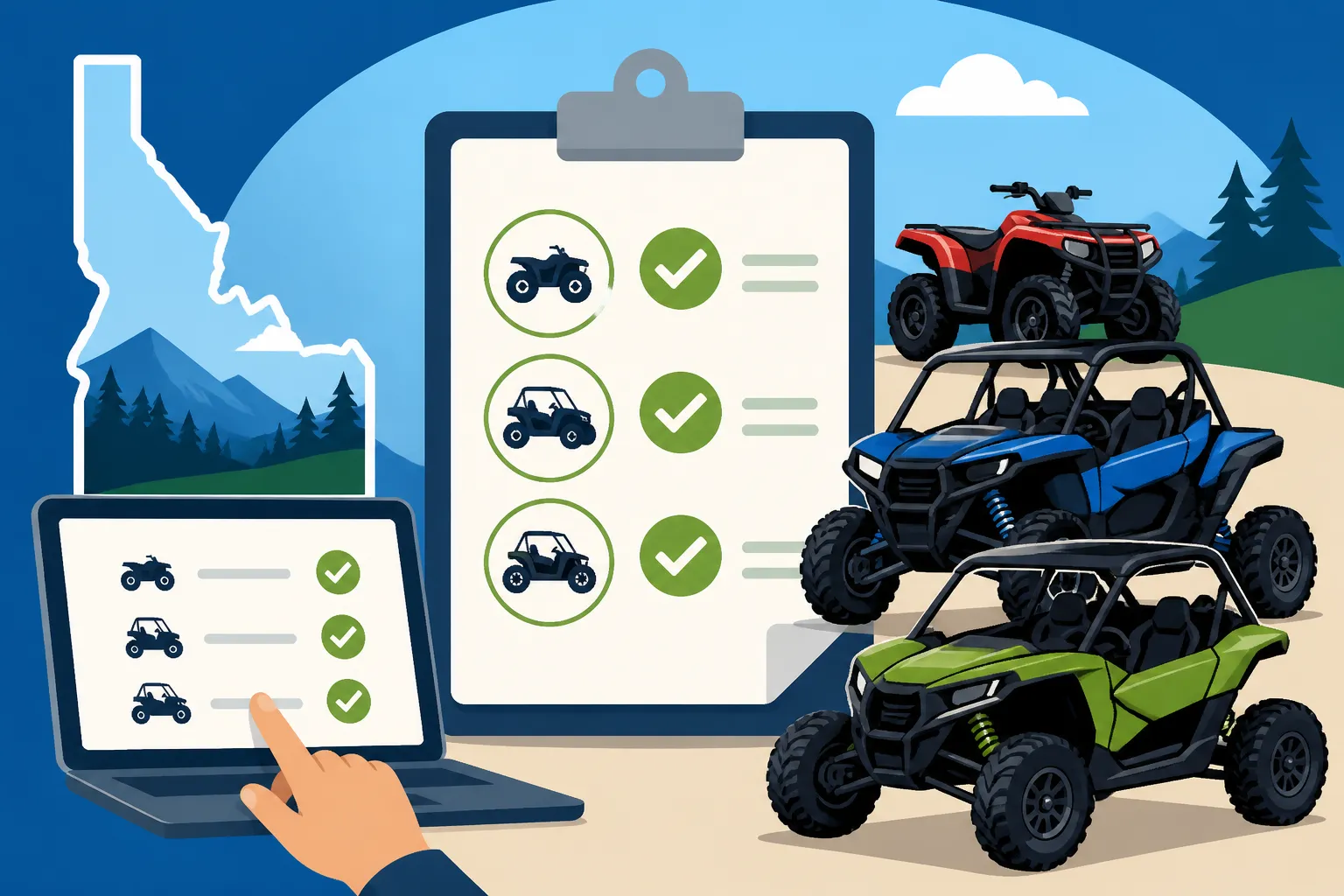
- Multiple Renewals in One Session: The IDPR system is generally designed to allow you to renew several machines in a single transaction, assuming you have all the necessary information for each (VIN, last sticker number, etc.). This can save a lot of time compared to separate in-person visits.
- Reduced Paperwork Handling: You typically only need to input information, rather than physically presenting documents.
Cons of Online Renewal:
- Not Ideal for New Registrations: While you might be able to register a newly titled machine online, the process for first-time registrations, especially if there are any title complexities, is often smoother in person where you can get direct assistance.
- Waiting for Stickers: Stickers are mailed to you, which means there's a waiting period. If you plan to ride immediately, this can be an issue.
- Technical Glitches: As with any online system, occasional technical issues or confusion with the interface can arise.
- Accuracy is Key: You are responsible for accurately entering all information. Any mistakes could lead to delays or incorrect stickers.
If you’re renewing for your well-established fleet, [Renewing an Idaho OHV Sticker Online] will walk you through the specifics.
In-Person Registration for Your Fleet
For new registrations, complex title issues, or if you simply prefer face-to-face interaction, visiting a county assessor's office, DMV, or an authorized vendor is your best bet.
Pros of In-Person Registration:
- Direct Assistance: You can speak directly with staff who can answer questions, clarify requirements, and help you navigate any unique situations. This is invaluable when you're registering multiple machines, some of which might have different ownership histories.
- Immediate Stickers: In most cases, you'll walk out with your new stickers in hand, allowing you to ride immediately (assuming all other requirements are met).
- Handling New Titles and Sales Tax: Staff can often process new titles, collect sales tax on recent purchases, and issue registrations all in one visit. This is particularly helpful if you've just bought a couple of new machines. [Idaho OHV Title Application at the County Assessor] details the county office process.
- Error Correction on the Spot: If there's an issue with your paperwork or an error in data entry, it can often be corrected during your visit, preventing future headaches.
Cons of In-Person Registration:
- Time-Consuming: This is the biggest drawback. You’ll need to travel to the office, wait in line (which can be substantial, especially during peak seasons like December or January), and then spend time with the clerk for each machine. Registering three or four machines can easily take a good chunk of your day.
- Limited Hours: Government offices and vendors have set business hours, requiring you to plan your visit accordingly.
- Physical Documents Required: You'll need to bring all your physical titles, bills of sale, and identification.
When you're dealing with multiple machines, whether you choose online or in-person depends on your specific situation. For pure renewals, online is often faster. For new purchases, title transfers, or if you prefer the peace of mind of speaking to someone, an in-person visit, perhaps to a county assessor's office or even a vendor listed in [Buying an Idaho Sticker at a County DMV], is usually the better route.
Here’s a quick comparison to help you decide:
| Feature | Online Registration (IDPR Portal) | In-Person Registration (County Assessor/Vendor) |
|---|---|---|
| Convenience | High – do it from home, any time. | Moderate – requires travel, limited office hours. |
| Documentation Needed | Digital copies, VINs, previous sticker info. | Physical copies (title, bill of sale), VINs. |
| Immediate Sticker | No, mailed to you. | Yes, often printed on the spot. |
| Payment Options | Credit/debit card (online fees may apply). | Cash, check, card (may vary by location). |
| Assistance Available | Limited to FAQs, email/phone support. | Direct help from staff, question answering. |
| New Registrations | Possible for titled machines, but can be complex. | Straightforward with proper paperwork. |
| Time Investment | Minimal per machine once system is understood. | Potentially significant due to travel and wait times. |
| Error Correction | Requires follow-up if errors occur. | Can be corrected on the spot with staff help. |
Common Challenges and Best Practices for Multiple OHV Owners
Owning several off-highway vehicles in Idaho brings a lot of fun, but also some specific organizational and legal responsibilities. Here’s how to manage them effectively.
Keeping Track of Your Stickers and Renewals
One of the most common pitfalls for multi-machine owners is simply losing track. You might have three machines parked in different spots, and suddenly you realize one of them is missing its current sticker. This is where a system truly pays off.
Consider creating a simple spreadsheet or using a digital calendar with reminders for each OHV. Include details like the make, model, VIN, and the current sticker number and expiration date. Set up a recurring alert for early December to remind you that renewals are due. This small step can prevent the frustration of realizing on a beautiful January day that half your machines are unregistered.
Beyond just renewing, it's vital to ensure your stickers are properly displayed on each machine. For quads, the sticker typically goes on the left side of the machine, visible on the fender. For side-by-sides, it’s usually on the restricted use plate. Make sure the sticker is clean, securely attached, and not peeling. A missing or improperly displayed sticker can lead to a citation, even if you’ve technically paid for it. [Sticker Placement on a Quad's Fender] and [Where the Idaho Sticker Goes on the Plate] offer visual guidance.
Handling New Purchases and Transfers When You Already Own OHVs
Adding a new machine to your collection, or selling one off, requires careful attention to detail, even if you’re already an experienced OHV owner. Each transaction is a distinct event, and it’s important to handle the paperwork properly every time.
When you buy a new ATV or UTV, whether from a dealer or a private seller, you’ll need to ensure the title is correctly transferred into your name. If buying from a dealer, they’ll generally handle the title application for you, along with collecting sales tax. If it’s a private sale, you’ll be responsible for submitting the signed-over title to your county assessor’s office and paying any applicable [Idaho Sales Tax on an ATV Purchase]. Remember, this process is separate for each machine. [Transferring an Idaho OHV Title After a Sale] provides a comprehensive walkthrough.
Similarly, when you sell a machine, you must properly sign over the title to the new owner and provide a bill of sale. Clear documentation protects both you and the buyer. This becomes even more critical if you're frequently buying and selling machines, as a paper trail is essential for tax purposes and to prove you no longer own a particular vehicle.
Legal Considerations for Your OHV Fleet
Beyond stickers and titles, there are broader legal aspects to consider when you have multiple OHVs, especially if they see diverse uses.
Liability Insurance: If you plan to ride any of your machines on public roads or highways (where permitted by county ordinance), Idaho law requires liability insurance. While trail riding generally doesn’t mandate insurance, having it is always a smart move to protect yourself financially in case of an accident. If you have several machines, you might consider a multi-vehicle policy through your insurer to simplify coverage and potentially save on premiums. [Insuring an ATV in Idaho] details the requirements.
Proof of Ownership and Agreements: For every machine, having solid proof of ownership is paramount. A properly executed bill of sale is your first line of defense against disputes or questions of ownership. For families or groups who might co-own machines, a written agreement outlining responsibilities, use, and financial contributions can prevent future disagreements. For situations like this, tools like LawDepot can be incredibly helpful. You can use their customizable templates to create a legally sound bill of sale for each machine you buy or sell, ensuring all essential details like VIN, purchase price, and condition are clearly documented.
Additionally, if you’re entering into a co-ownership agreement for a side-by-side with a friend for shared backcountry adventures, LawDepot offers templates for general agreements that can be adapted to specify things like who pays for maintenance, storage, and registration, providing clarity and peace of mind for all parties involved. Having these documents in place for each of your machines, readily accessible, simplifies management and protects your investments. Using LawDepot's services can make sure you're covered for any private sale of your machines, or even if you're loaning one out and want to ensure the terms are clearly understood, offering easily adaptable legal documents.
This article is for general informational purposes only and does not constitute professional advice. Laws, prices and regulations vary by location and change over time. Consult a qualified professional for guidance on your specific situation.