Trade-In Credit at an Idaho Powersports Dealer
When you're ready to upgrade your ride to a newer, shinier ATV or UTV, one of the biggest questions that often pops up is what to do with your current machine. For many Idaho riders, the idea of a private sale can feel like a massive undertaking, filled with strangers, endless texts, and a lot of waiting. That's where exploring trade-in credit at an Idaho powersports dealer can be a game-changer, simplifying the process and often saving you money and headaches in the long run.
The Appeal of Trading In Your OHV
Let's face it, selling anything privately takes effort. You have to clean it up, take good pictures, write a compelling ad, answer a hundred questions, and then schedule test rides with folks who may or may not show up. It can be exhausting, and for many, that hassle just isn't worth the potential extra cash from a private sale. Trading in offers a streamlined path to your next adventure machine.
Convenience Over Private Sale Hassle
Imagine you've found the perfect new side-by-side at an Idaho dealer – maybe a nimble Polaris RZR or a tough Can-Am Defender – and you're eager to get out on the trails. Now picture having to spend weeks, or even months, trying to sell your old quad. You'll be vetting potential buyers, dealing with no-shows, and perhaps explaining the machine's quirks repeatedly. There's the security aspect too; inviting strangers to your home to look at a valuable piece of equipment can be unsettling.
When you opt for a trade-in, all of that disappears. You bring your machine to the dealership, they inspect it, give you an offer, and if you accept, it's done. No listing fees, no late-night messages, no haggling over a few hundred dollars with a buyer who might try to nickel-and-dime you on every scratch. The dealer takes on the responsibility of reselling your old machine, freeing you up to focus on enjoying your new one. This convenience is often the primary driver for many riders, especially those who value their time and peace of mind over squeezing every last dollar out of an older machine. It's a single transaction for both buying and selling, and that simplicity is incredibly appealing.
Avoiding Sales Tax Double-Whammy
Here's a hidden benefit that many riders don't immediately consider, but it can make a significant difference in the final cost of your new machine: sales tax. In Idaho, when you purchase a new ATV or UTV from a dealer, you pay sales tax on the purchase price. However, if you trade in your old machine, the value of that trade-in is deducted from the new machine's price before sales tax is calculated. This means you're only paying sales tax on the difference between your new machine's price and your trade-in's value, not the full price of the new machine.
For example, if you're buying a $20,000 side-by-side and trade in your old ATV for $5,000, you'll only pay sales tax on $15,000. That's a substantial saving right off the bat, often offsetting some of the difference you might have gained through a private sale. If you sold privately, you'd pay sales tax on the full $20,000 for your new machine, and then potentially deal with the intricacies of [Idaho Sales Tax on an ATV Purchase] from the private sale, if applicable. This tax advantage makes the trade-in option financially attractive for many Idaho residents looking to upgrade their off-highway vehicle.
How Dealers Evaluate Your Trade-In
Understanding how a dealer arrives at their trade-in offer can help you set realistic expectations and feel more confident in the process. They're not just pulling a number out of thin air; there's a method to their madness, driven by market realities and their own business model.
Condition and Maintenance
When you roll your machine onto a dealer's lot, the first thing they'll look at is its overall condition. This isn't just cosmetic; it's about mechanical integrity and how well the machine has been cared for. They'll check the engine hours – a higher number generally means more wear and tear. They'll scrutinize the tires for tread depth and uneven wear, which can indicate suspension issues. They'll look for dents, scratches, cracked plastics, and rips in the seat. Major damage or signs of neglect will significantly devalue the machine.
Beyond the visible, dealers want to see a history of regular maintenance. Do you have service records? Have the oil changes been consistent? Are there any warning lights on the dash? A well-maintained machine that starts easily, idles smoothly, and drives without major issues will always fetch a better trade-in value. Conversely, a machine that needs significant work before it can be resold will naturally be valued lower, as the dealer will factor in their costs for parts and labor to get it retail-ready.
Market Demand and Seasonality
Just like any other vehicle, the value of your ATV or UTV is heavily influenced by current market demand. Is your machine a popular model that sells quickly? Or is it an older, less sought-after model that might sit on the lot for a while? Dealers need to move inventory, so high-demand machines are more appealing for trade-in. They'll also consider the time of year. Spring and early summer, when people are gearing up for riding season, often see higher demand for used OHVs, potentially leading to better trade-in offers. In the late fall or winter, when demand cools down, so might trade-in values.
A dealer's existing inventory also plays a role. If they already have three identical used models sitting on their lot, they might not be as eager to take on another one, and their offer might reflect that. Conversely, if they're low on a particular type of machine that's currently popular, they might be more aggressive with their offer. It's a dynamic market, and knowing generally where your machine stands in terms of popularity can help manage your expectations.
What the Dealer Will Check
Dealers are thorough when evaluating a trade-in, and for good reason – they need to ensure they're not taking on a problem. They'll start with a physical inspection, looking at the frame, engine, suspension, and all major components. They'll check the Vehicle Identification Number (VIN) to ensure it matches the title and to run a history report. This helps confirm the machine's legitimacy and identify any red flags like a salvage title or a history of being stolen. For more information, you might find articles like [Checking a Used Machine for Theft] helpful for understanding what they're looking for.
They'll also review your title paperwork. Is the title clear? Are there any [Liens on an OHV Title]? Is your name accurately reflected as the owner, and is the VIN correct on the title? A clean, properly transferred title is essential for a smooth transaction. They'll also test drive the machine, paying close attention to engine performance, transmission, brakes, and any unusual noises. This comprehensive check ensures they understand exactly what they're acquiring and what it will take to prepare it for resale.
Maximizing Your Trade-In Value
While you might not get private-sale prices from a dealer, there are definite steps you can take to make your trade-in more attractive and potentially increase the offer you receive. A little effort can go a long way.
Pre-Trade-In Prep
First impressions matter, even for an ATV or UTV. Before you even think about driving your machine to the dealer, give it a thorough cleaning. Wash off all the mud, dirt, and dust. Detail the plastics, shine the tires, and vacuum out the footwells if it's a side-by-side. A clean machine suggests that you've taken good care of it, even if it's got some miles on it.
Beyond aesthetics, address any minor repairs you can easily handle. Replace a burnt-out headlight, tighten a loose mirror, or fix a small tear in the seat. These small fixes prevent the dealer from having to do them, which they'll factor into their offer. Gather all your maintenance records, receipts for parts, and any original manuals. Having a clear paper trail of your machine's history demonstrates responsible ownership and can add perceived value. This includes ensuring you have a clean and signed [Titling and Registering an ATV in Idaho] in your name, ready for a seamless transfer.
Researching Your Machine's Value
Don't go into the dealership blind. Do your homework to understand what your specific make, model, and year of ATV or UTV is generally selling for in the current market. Check online classifieds for similar machines in your area and beyond. Look at auction sites and industry valuation guides if you can access them. While dealer trade-in values will typically be lower than private sale prices, knowing the range gives you a baseline.
This research helps you set a realistic expectation for the trade-in value. If you know your machine is generally selling for $7,000 privately, don't expect a dealer to offer you $6,500. They need to buy it at a price where they can recondition it, market it, and still make a profit. Having a ballpark figure in mind allows you to assess the dealer's offer with confidence and know when to negotiate.
Being Prepared to Negotiate
Negotiating a trade-in can sometimes feel intimidating, but it's a standard part of the process. Remember, the dealer's first offer might not be their absolute best. Come prepared with your research and be ready to discuss why you believe your machine is worth a certain amount. Highlight its positive attributes: low hours, recent maintenance, new tires, or desirable accessories. If you've addressed common issues or replaced wear-and-tear parts, point that out.
The negotiation isn't just about the trade-in value; it's about the overall deal. Sometimes, a dealer might have less flexibility on the trade-in value itself, but more room to maneuver on the price of the new machine, or they might throw in accessories or extended warranties. Consider the total cost of the transaction rather than just focusing on one number. Be polite but firm, and don't be afraid to walk away if the offer doesn't meet your reasonable expectations. Just as you might draft a private sale agreement using resources like LawDepot if you were selling to an individual, understanding the value proposition for both parties is key in a dealer transaction.
The Trade-In Process at an Idaho Powersports Dealer
Once you've done your prep work and found the new machine you want, the actual trade-in process at the dealership is usually straightforward. Knowing what to expect can help it go even smoother.
Initial Assessment and Offer
When you visit an Idaho powersports dealer, you'll typically work with a sales representative who will guide you through the process. They'll have you fill out some basic paperwork about your trade-in, including its make, model, year, and VIN. Then, a service technician or a dedicated used vehicle appraiser will thoroughly inspect your machine. This can take anywhere from a few minutes to an hour, depending on how busy they are and the complexity of your machine.
They'll check everything we discussed earlier: condition, fluids, engine, tires, and overall functionality. After their assessment, the sales manager or appraiser will present you with a trade-in offer. This offer is typically good for a limited time, reflecting the fluctuating market. This is your chance to discuss their valuation, present your research, and negotiate if you feel their initial offer is too low.
The Paperwork Trail
Once you and the dealer agree on a trade-in value and the price of your new machine, it's time for the paperwork. This usually involves signing a bill of sale for the trade-in and signing over the title to the dealer. Make sure your [Idaho OHV Title Application at the County Assessor] is ready and that the title is free of any encumbrances. The dealer will handle the necessary steps to transfer ownership of your old machine and title your new one.
They'll also prepare all the purchase documents for your new ATV or UTV, detailing the sale price, the trade-in credit, the remaining balance, and the applicable sales tax. Be sure to review every document carefully to ensure all figures match what you agreed upon. The dealer will also typically handle the submission of sales tax and new title applications to the state on your behalf, taking another load off your mind. It's a significant advantage of buying from an established business, as covered in [Buying From an Idaho Dealer: What They File].
Understanding the Final Numbers
When you're looking at the final purchase agreement, pay close attention to how the trade-in credit is applied. It should be clearly itemized as a deduction from the price of the new machine. This reduction is what generates the sales tax savings we talked about earlier. The remaining balance, after the trade-in credit and any down payment, is the amount you'll finance or pay in full.
It's common for dealers to break down the transaction into separate components: the sale price of the new machine, the value of your trade-in, and the sales tax calculation. This transparency helps you understand exactly where your money is going and how your trade-in benefits the overall deal. Don't hesitate to ask questions if any number isn't clear or doesn't seem right. Ensuring you understand the final financial breakdown will help you leave the dealership feeling confident in your purchase.
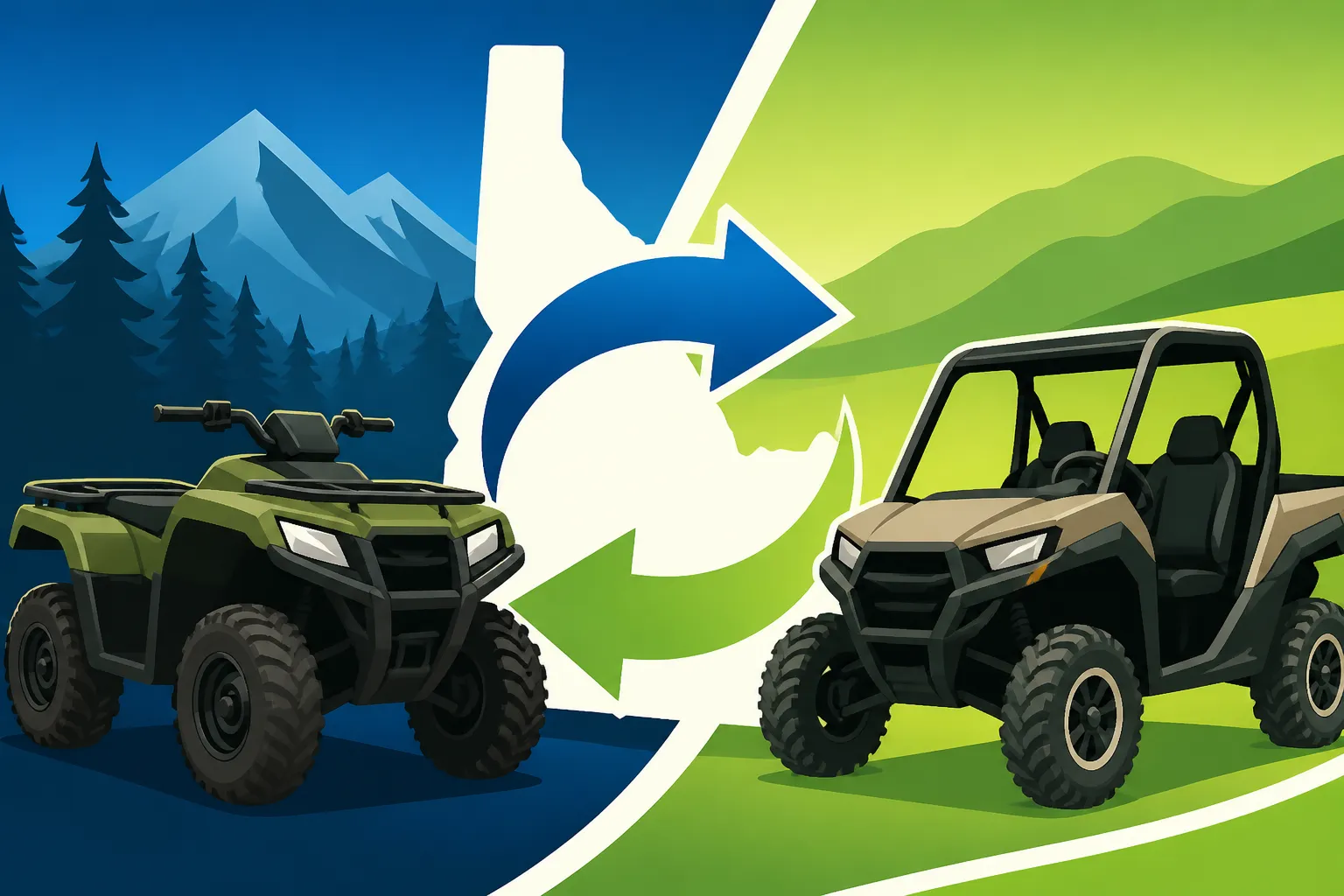
Here's a quick comparison of trading in versus selling privately:
| Feature | Trade-In at Dealer | Private Sale |
|---|---|---|
| Convenience | High: One stop, quick transaction, no marketing. | Low: Requires advertising, showings, negotiations, time. |
| Sales Tax Benefit | Yes: Reduces taxable amount of new purchase. | No: Pay full sales tax on new purchase. |
| Paperwork Effort | Low: Dealer handles most title/registration. | High: Buyer/seller responsible for all documentation ([ATV Bill of Sale Wording Buyers Should Insist On], [Transferring an Idaho OHV Title After a Sale]). |
| Value Potential | Generally lower than private sale. | Potentially higher, but not guaranteed. |
| Time to Sell | Immediate (if deal is made). | Can take weeks or months. |
| Security | High: Dealing with established business. | Lower: Dealing with unknown individuals. |
| Reconditioning Cost | Dealer assumes cost. | Seller may incur costs for repairs to attract buyers. |
| Payment Handling | Integrated into new purchase. | Seller responsible for collecting payment, ensuring funds clear. |
Trading in your ATV or UTV to an Idaho powersports dealer can be a remarkably smooth and beneficial way to transition into your next off-road adventure machine. While the raw dollar amount for your trade might be slightly less than a top-dollar private sale, the convenience, time savings, and significant sales tax advantage often make it the smarter choice for many riders.
Disclaimer
This article is for general informational purposes only and does not constitute professional advice. Laws, prices and regulations vary by location and change over time. Consult a qualified professional for guidance on your specific situation.