Direct Supervision on Idaho Roads
It can feel like a real puzzle trying to figure out all the rules when you've got a young rider eager to hit the trails, especially when those trails involve a short hop down a county road. Parents often worry about their kids riding legally and safely, balancing the joy of the ride with the serious responsibilities that come with it. This guide is here to untangle the specifics of direct supervision for young ATV and UTV operators on Idaho's open roads, making sure you understand exactly what's required to keep everyone safe and compliant.
Understanding Idaho's Supervision Rules for Young Riders
Bringing up the next generation of riders is one of the joys of the powersports lifestyle, but it also comes with a big responsibility, especially when you're transitioning from private property to public roads. Idaho has specific rules in place to ensure that these young adventurers are protected and properly guided when they share the road, even if it's just for a short stretch. These regulations aren't there to stifle fun, but to foster safe habits and prevent accidents, which is something every parent can get behind.
What "Direct Supervision" Actually Means
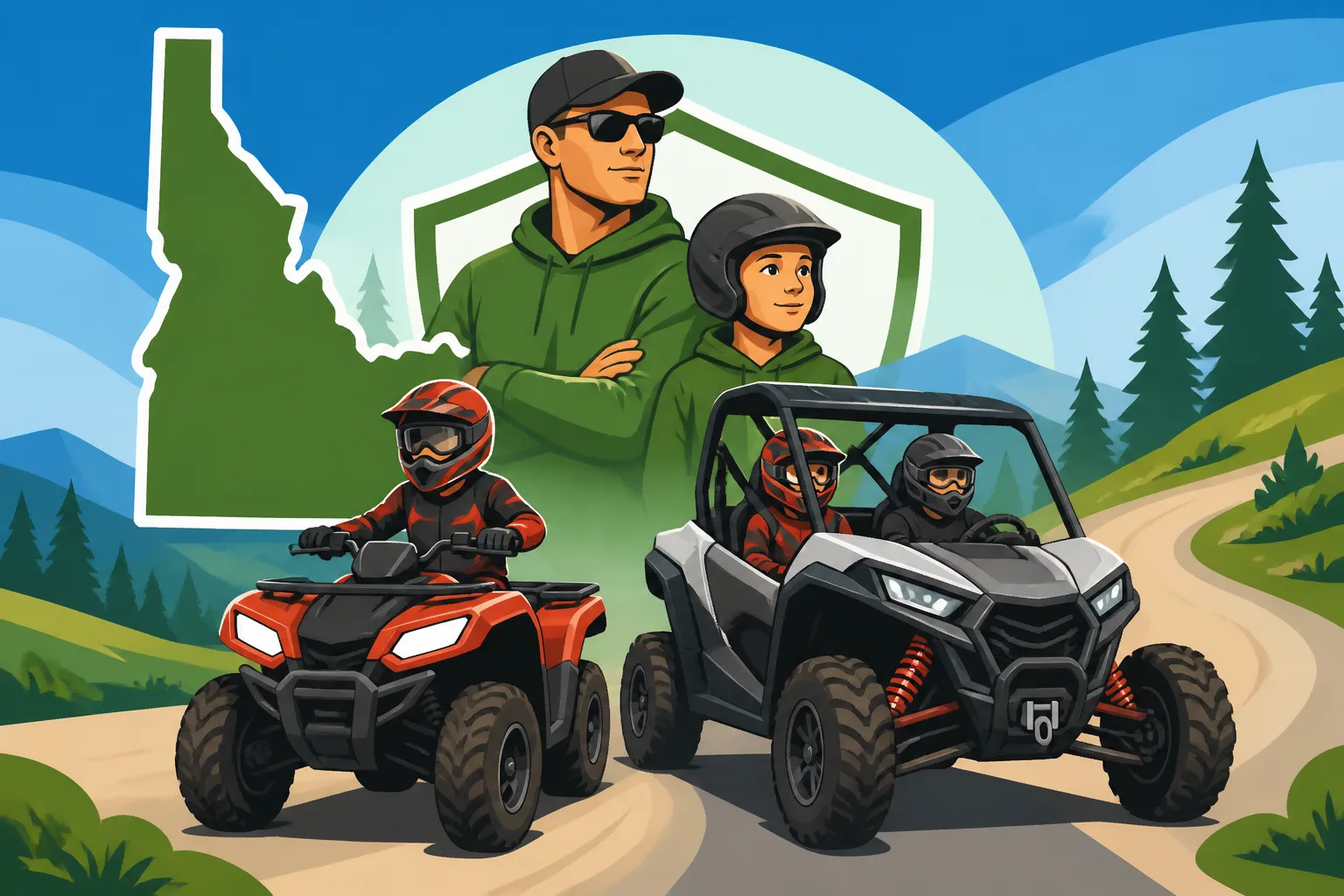
When Idaho law talks about "direct supervision" for young riders on designated roads, it's not just a vague suggestion to "keep an eye on them." It's a very clear, actionable requirement. Essentially, it means an adult, specifically someone 18 years of age or older, must be physically present and actively overseeing the young rider. This isn't about letting them ride off into the distance while you catch up later. It implies an immediate ability to intervene, to guide, and to ensure the child is operating their machine safely and legally. Think of it less as a casual observation and more like being a co-pilot, even if you're not in the same seat. This level of engagement is crucial for teaching road etiquette and responding to unexpected situations that might arise on a county road. It's about demonstrating the correct way to merge, how to signal, and how to maintain appropriate speeds, reinforcing good habits from the start.
The 300-Foot Rule: Keeping Them Close
The practical application of "direct supervision" in Idaho is often boiled down to what we call the "300-foot rule." This regulation states that the supervising adult must remain within 300 feet of the young rider. This isn't just about visual contact; it's about proximity. Whether you're riding your own ATV, a UTV, or even driving a truck on the same road, that 300-foot distance is the maximum allowable separation. This proximity allows for quick communication, immediate assistance if there's a mechanical issue or a fall, and constant reinforcement of safe riding practices. Imagine riding a section of a curvy mountain road; even if you can't see them around every bend, being within that 300-foot range means you can likely hear them, and certainly reach them quickly if needed. It’s a measure designed to keep the lines of communication open and the ability to respond swift, particularly important on roads where other traffic, wildlife, or unexpected obstacles might appear suddenly. [Supervising on Foot Within 300 Feet] or from another machine, the distance is key.
Why These Rules Exist: Safety First
The underlying reason for these strict supervision rules is unequivocally safety. Young riders, by their very nature, may lack the experience, judgment, and physical development to navigate the complexities of public roads independently. They might not fully grasp the speed of approaching vehicles, the nuances of road signs, or the importance of staying to the right. These rules are a preventative measure, designed to protect them from accidents and injuries. Beyond personal safety, they also protect other road users and reinforce the responsible image of the OHV community. A well-supervised young rider is less likely to cause an incident or create a negative impression, ensuring that access to these roads remains open for everyone. It's about fostering a culture of responsibility from a young age, helping them develop into capable, considerate riders who respect the rules of the road and the safety of others.
Age and Machine Restrictions on Idaho Roads
Idaho’s commitment to safety for its younger riders extends beyond just supervision; it also includes clear guidelines on who can ride what and where. This can sometimes feel a bit restrictive when your child is itching to join the group ride on a connecting road, but these rules are in place for very good reasons. They account for developmental differences, physical capabilities, and the inherent risks of mixing off-road vehicles with traditional road traffic. Understanding these specific age and machine limitations is paramount for parents planning any ride that involves even a short stretch of public roadway.
Minimum Age for Road Riding with Supervision
In Idaho, a young rider must be at least 8 years old to operate an ATV or UTV. However, when it comes to riding on a public road designated as open to OHVs, the rules tighten considerably. To ride on an Idaho county road, even with direct supervision, the operator must be at least 10 years old. This is a crucial distinction that often catches parents off guard. So, while your 8-year-old might be perfectly capable and safe on private property or within a closed OHV park, they cannot legally operate their machine on a county road until they reach the age of 10. This age threshold is intended to ensure a certain level of cognitive development and maturity that is necessary for navigating traffic, understanding road signs, and reacting appropriately to changing road conditions. It’s not just about being able to reach the pedals and handlebars; it’s about making sound judgments in a dynamic environment.
Machine Size and Type Limitations for Young Riders
Beyond age, Idaho law also has specific regulations regarding the size and type of OHV a young rider can operate, especially on roads. For instance, riders under 16 have [Engine Size Limits for Idaho Riders Under 16]. This means you can't just put a 10-year-old on a full-size side-by-side or a powerful utility ATV and head down the road. The machine must be appropriate for their age and size, typically meaning a machine under 90cc for children under 16, or specifically designed youth models. These limitations are critical because an oversized or overpowered machine can be incredibly difficult for a young rider to control, especially in an emergency braking or swerving situation on a road surface. Imagine trying to handle a heavy, high-horsepower machine when you only weigh 80 pounds; it's a recipe for disaster. Manufacturers like Polaris and Can-Am offer youth-specific models that are designed with lower power outputs, lighter frames, and appropriate ergonomics, making them much safer for younger operators. Always check the machine's recommended age range and ensure it aligns with Idaho's regulations for road use. [Idaho Road Rules for Young Riders] are very clear on this.
Driver's License Requirements and Young Riders
This is where things can get a little complex, but it's vital to understand. While a young rider doesn't need a full driver's license to operate an OHV on a designated public road in Idaho, there are specific requirements if they are under 16. If a rider is 10 years old but under 16, and they are operating an OHV on a designated public road, they must have successfully completed an Idaho-approved OHV safety course. This certificate acts as their "license" for road-legal operation. Once they turn 16, the safety course is still highly recommended, but the requirement for it on roads, if they possess a valid driver's license, changes. However, if they have a learner's permit, they still fall under stricter rules regarding supervision and accompanying adults. The overarching point is that an adult driver's license is not automatically a substitute for the safety course for riders under 16, nor does it negate the direct supervision rule for those under a certain age. It's about ensuring they have the specialized knowledge of OHV operation, not just general car driving skills. Always carry the safety certificate with you, or at least a copy, when your child is riding on public roads. [Driver's License Requirements on Idaho Roads] are very important for all riders.
Practical Scenarios for Supervising on Idaho Roads
Navigating the nuances of direct supervision on Idaho's public roads isn't always straightforward. It often comes down to understanding how the rules apply in real-world situations, especially when you're out with a group or covering different types of terrain. Knowing how to maintain that critical 300-foot distance, whether you're in a separate machine or the same one, and how to handle common road features like intersections, is crucial for both safety and compliance.
Riding From Trailhead to Town: Group Dynamics
One of the most common reasons riders find themselves on Idaho roads is to connect trails or access services in a small town. This often involves a group of riders, potentially including younger, supervised operators. In these scenarios, maintaining direct supervision and the 300-foot rule becomes a choreography challenge. The supervising adult must position themselves either directly in front of or directly behind the young rider, ensuring they stay within the mandated distance. If there are multiple young riders, you might need multiple supervisors, each assigned to a specific child, or you might need to structure the group so that all supervised minors are clustered together with an adult acting as the primary supervisor for that mini-group.
For example, if you have two 12-year-olds in your group, one adult might ride directly behind the first child, and another adult might ride directly behind the second, or the two kids might ride consecutively with one adult positioned closely behind both. Communication within the group is key here. Using hand signals, helmet communicators, or even just frequent checks in your rearview mirror (if equipped) can help keep everyone together and within legal limits. Remember, the goal isn't just to avoid a ticket; it's to provide real-time guidance and support. If the group spreads out too much, or if the terrain makes it difficult to maintain visibility, it's the supervisor's responsibility to slow down or even stop to re-establish proper proximity. This often means sacrificing a bit of speed or rhythm for the sake of safety and legal compliance, which is always the right call.
Supervising From Another Machine or Vehicle
Idaho law allows the supervising adult to be in a separate OHV or even a street-legal vehicle, as long as the 300-foot proximity is maintained. This is a practical allowance, as many families might have a mixed fleet of machines or prefer to have a primary vehicle lead the pack. If you're leading in a UTV, for example, your young rider on their ATV can follow you, provided they stay within 300 feet. The same applies if you're in a regular car, though this is less common on the types of backcountry roads OHVs typically use. The key is that the supervising adult must be actively paying attention to the young rider, not just vaguely aware of their presence somewhere behind them.
Consider a scenario where the supervising adult is in a side-by-side, and the child is on a smaller quad. The side-by-side should maintain a consistent, safe speed that the child can easily match without overexertion or riding beyond their comfort zone. This also means being acutely aware of road hazards that might affect a smaller machine differently, such as potholes, loose gravel, or sudden dips. If the road conditions change, or if you enter a more populated area, the supervisor should adjust their speed and attention accordingly. It’s also crucial that the supervising adult is readily identifiable, perhaps with a high-visibility vest, to other road users, signaling that they are part of a supervised group. [Supervising From Another Machine] can be effective, but requires constant vigilance.
What to Do at Intersections and Crossings
Intersections and crossings are arguably the most critical points on any road for both experienced and novice riders. For young, supervised riders, these spots demand heightened awareness and specific actions from the supervisor. When approaching an intersection, the supervising adult should always slow down, assess traffic, and clearly communicate their intentions to the young rider, either verbally or through pre-arranged hand signals. It's often best for the supervisor to go first, ensuring the path is clear, and then signaling for the young rider to follow. This way, the supervisor acts as a scout, taking the immediate risk assessment.
For example, if you're crossing a major highway, which is generally not allowed for OHVs except at designated crossing points, the supervisor should ensure the young rider understands to come to a complete stop, look both ways multiple times, and wait for a clear gap in traffic before proceeding. If the young rider is struggling with a hill climb right after an intersection, the supervisor needs to be ready to offer immediate assistance. In particularly complex or busy intersections, it might even be prudent for the supervisor to temporarily dismount their own machine and guide the young rider through the intersection on foot, if feasible and safe to do so, while still maintaining that 300-foot proximity. The goal is to minimize risk and teach proper road etiquette in situations that can be overwhelming for a less experienced rider. [What Idaho Requires to Ride a County Road] details broader road use rules too.
Essential Gear and Safety for Supervised Road Riding
Beyond the rules of who can ride and where, there's the critical element of personal protection and machine readiness. Riding an OHV on a public road, even a quiet county road, introduces different hazards than riding on a dedicated trail. The presence of other vehicles, varied road surfaces, and the need for clear visibility all underscore the importance of proper gear and a well-maintained machine. For supervised young riders, these considerations are amplified, as their safety depends directly on these preparations.
Helmets and Eye Protection for Young Riders
Idaho has very clear [Idaho Helmet Rules for Riders Under 18]. Any rider under the age of 18, whether on a trail or a designated road, must wear a safety helmet. This isn't optional; it's a legal requirement designed to protect against head injuries, which are tragically common in OHV accidents. The helmet must be properly fitted, securely fastened, and meet established safety standards, such as those set by the Department of Transportation (DOT). A helmet that's too loose or too small offers minimal protection. As a supervisor, it is your responsibility to ensure the young rider's helmet is correctly worn at all times.
In addition to helmets, eye protection is equally critical. Dust, gravel, insects, and even low-hanging branches can become serious hazards on a road, especially at speed. Goggles or a face shield on a full-face helmet are non-negotiable. Not only do they protect against physical objects, but they also ensure clear vision, which is paramount for safety. Imagine trying to navigate a curve or an unexpected obstacle with a sudden cloud of dust or a bug in your eye – it’s a recipe for disaster. Investing in high-quality, comfortable helmets and goggles for young riders is one of the most important safety decisions a parent can make.
Machine Lighting and Visibility Requirements
When riding on designated public roads in Idaho, even during daylight hours, your OHV must comply with specific lighting and visibility requirements, much like any other vehicle. This is especially important for smaller machines operated by young riders, which might be less noticeable to other traffic. All OHVs must be equipped with at least one headlight and one taillight. If you're riding after sunset, your machine must have its headlight on, capable of illuminating objects at a reasonable distance, and a red taillight that is visible from at least 500 feet.
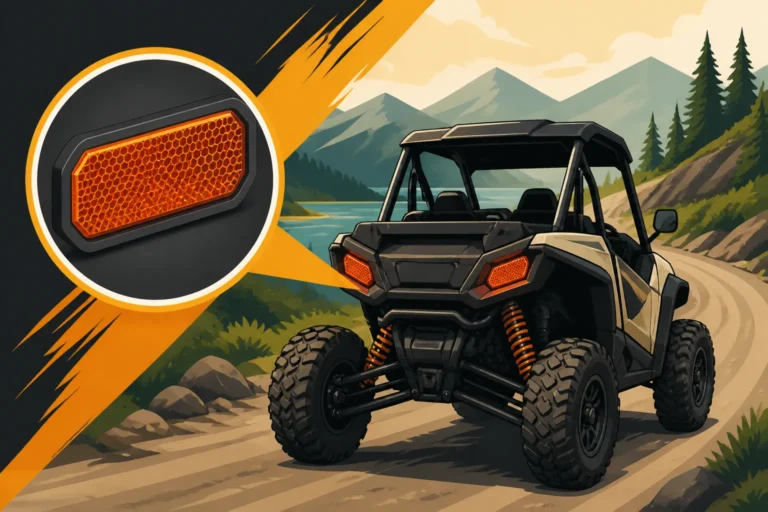
Furthermore, brake lights are essential for communicating your intentions to other vehicles and your supervisor. Ensure all lights are functional and clean before heading out. For added visibility, consider equipping your young rider's machine with a bright flag, especially if they are riding a smaller quad that might sit lower to the ground. Reflective tape on their helmet or machine can also enhance visibility, particularly in changing light conditions or if you encounter shaded sections of road. Brands like SuperATV offer a range of lighting and visibility accessories, from LED light bars to whip flags, that can significantly improve safety and ensure compliance on roads. The goal is to make your young rider as conspicuous as possible to everyone around them.
Carrying Paperwork: The Supervisor's Responsibility
While the young rider is the operator, the responsibility for carrying the necessary documentation often falls to the supervising adult. This includes proof of the OHV's registration (the current Idaho OHV sticker), proof of ownership (like the title or a bill of sale), and, crucially for young riders under 16, their valid OHV safety course certificate. Law enforcement officers have the right to ask for this documentation during a stop, and not having it can lead to citations.
It's also a good idea to carry emergency contact information, a small first-aid kit, and any necessary medications for your group. [What an Idaho Deputy Asks a Rider For] typically includes registration and proof of training. While the title doesn't need to be on the machine, having readily accessible proof of ownership is prudent. Keep these documents in a waterproof bag or pouch in a secure compartment on your machine. Don't forget your own driver's license and proof of insurance, as liability insurance is required for OHV road operation in Idaho. Being prepared with paperwork not only keeps you compliant but also streamlines any interactions with authorities, allowing you to focus on the ride itself.
Common Misconceptions and Legal Considerations
Even with the best intentions, it's easy to misunderstand certain aspects of OHV law, especially when it comes to road use and supervising young riders. Some assumptions can lead to unintentional violations, which can result in fines or, more importantly, put your young rider at risk. Addressing these common misconceptions and understanding the broader legal landscape ensures a safer and more enjoyable experience for everyone.
"Private Road" Loophole: What Idaho Says
One of the most frequent misconceptions is the idea of a "private road" loophole. Riders sometimes assume that if a road looks like a private lane, or if it's unpaved and deep in the forest, then standard OHV rules, including supervision requirements, don't apply. This is a dangerous assumption in Idaho. Unless a road is explicitly and clearly marked as private property with no public access, or is indeed within a private, fenced ranch that you own or have explicit permission to use for off-road purposes, it should be considered a public roadway for the purposes of OHV operation.
Many forest service roads, BLM roads, and unpaved county roads are, in fact, public access roads subject to all state and local OHV laws. The same rules for stickers, supervision, and machine requirements apply on these roads as they would on a paved county road in town. The "feel" of a road doesn't dictate its legal status. Always err on the side of caution. If you're unsure, treat it as a public road. Relying on an unconfirmed "private road" status could lead to significant fines for operating an unregistered or improperly supervised OHV, not to mention potential safety hazards if you encounter unexpected traffic or enforcement.
Penalties for Not Following Supervision Rules
Ignoring Idaho's direct supervision rules for young riders isn't just a minor oversight; it carries legal penalties. Officers from the Idaho Department of Parks and Recreation, county sheriffs, and other law enforcement agencies actively patrol OHV-accessible roads and trails. If a young rider is found operating an OHV on a designated public road without the required direct supervision (i.e., the adult is not within 300 feet or is not present at all), the supervising adult can face a citation.
These citations can range from a warning to a fine, and repeat offenses can lead to more severe penalties. More importantly, if an accident occurs while a young rider is unsupervised, the adult could face civil liability far beyond any simple fine. The legal system takes the protection of minors seriously, and any negligence on the part of the supervising adult can have significant consequences. Beyond the financial and legal ramifications, there's the moral weight of knowing you put a child at undue risk. Adhering to the supervision rules is not just about avoiding a ticket; it's about fulfilling a critical duty of care for young and vulnerable riders. [Idaho Fines for Illegal Road Riding] can add up quickly.
Safety Courses and Their Role
While not directly a supervision rule, the OHV safety course plays an integral role in preparing young riders for the responsibilities of road use, making the supervisor's job easier and the ride safer. As mentioned, riders under 16 must complete an Idaho-approved OHV safety course to operate on designated public roads. This course covers not only basic machine operation but also critical topics like road etiquette, environmental awareness, hazard identification, and emergency procedures.
Think of the safety course as foundational training. It instills good habits and teaches decision-making skills that are vital when sharing the road with other vehicles. A young rider who has completed the course is generally more aware of their surroundings, understands the meaning of stop signs, and knows how to react to unexpected situations. This doesn't replace direct supervision, but it enhances the young rider's capabilities, allowing the supervisor to focus more on broader traffic awareness rather than constantly correcting basic operational errors. Encourage all young riders, even those not required to, to take the course. It's an investment in their safety and skill. [Idaho OHV Safety Course Requirements] are a cornerstone of safe riding for youth in the state, and [Who Must Take the Idaho Safety Course] is clearly defined by law.
By understanding these regulations, preparing properly, and always prioritizing safety, you can ensure that your young riders have memorable and safe experiences exploring Idaho's beautiful backcountry roads. It’s all about creating responsible riders for generations to come.
| Requirement Category | Age 8-9 | Age 10-15 | Age 16+ (No Driver's License) | Age 16+ (with Driver's License) |
|---|---|---|---|---|
| OHV Operation | Permitted on private land only | Permitted on private land and designated roads | Permitted on private land and designated roads | Permitted on private land and designated roads |
| Public Road Access | NOT permitted | Permitted on designated roads | Permitted on designated roads | Permitted on designated roads |
| Direct Supervision | N/A (not permitted on roads) | REQUIRED (adult 18+ within 300 feet) | Recommended, but not legally required | Recommended, but not legally required |
| OHV Safety Course | Not required | REQUIRED | Highly Recommended | Highly Recommended |
| Driver's License | Not applicable | Not applicable | Not required for OHV operation | Required for other vehicle types, but not for OHV operation itself |
| Helmet Requirement | REQUIRED (if riding any OHV) | REQUIRED | If under 18: REQUIRED. If 18+: Recommended | If under 18: REQUIRED. If 18+: Recommended |
| Machine Size Limits | Youth-appropriate machine size | Youth-appropriate machine size | No specific youth limits | No specific youth limits |
Disclaimer
This article is for general informational purposes only and does not constitute professional advice. Laws, prices and regulations vary by location and change over time. Consult a qualified professional for guidance on your specific situation.