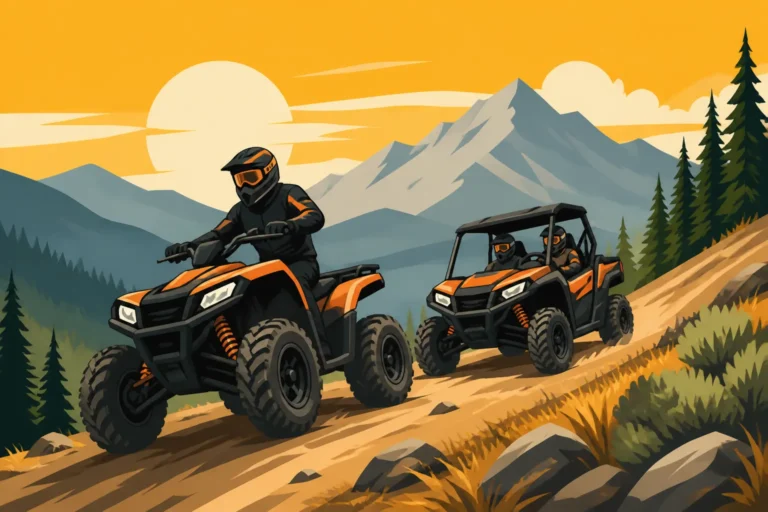
Riding Through McCall, Stanley and Salmon
Navigating Idaho's charming mountain towns like McCall, Stanley, and Salmon on your ATV or side-by-side can feel like a maze of ever-changing rules, leaving many riders confused about what's legal and what's not. It's a real headache trying to figure out which roads are open, what equipment you need, and how to avoid an unexpected citation, especially when all you want to do is grab a burger or fuel up. This guide will cut through the confusion, helping you understand the specific requirements and local nuances for riding your OHV responsibly through these popular Idaho destinations.
Understanding Idaho's OHV Road Laws: The Foundation for Town Riding
Before you even think about rolling your side-by-side down the main street of McCall or grabbing gas in Stanley, it's absolutely crucial to grasp the foundational state laws that govern OHV use on public roads in Idaho. This isn't just about having a sticker; it's a layered set of requirements that dictate whether your machine is even allowed on the pavement. Many riders mistakenly believe that if they're registered and stickered, they can go anywhere, but the reality is far more intricate, especially when city limits are involved.
The Role of the Idaho Restricted Vehicle Plate
The single most important piece of paper (or rather, metal) that unlocks road access for your ATV or UTV in Idaho is the Restricted Vehicle Plate, often simply called an "R-plate." This isn't your standard vehicle registration plate, and it’s distinct from your OHV sticker. The R-plate signifies that your machine has met certain criteria to be considered "street legal" enough for specific public roads. Without this plate, any talk of riding through town is pretty much a non-starter.
Think of the R-plate as your golden ticket to extending your riding from the dirt trails to connecting roads and, in some cases, even town streets. It's the state's way of saying, "Okay, we acknowledge this machine isn't a car, but it's equipped well enough for limited road use." Getting one involves demonstrating that your machine has basic safety features, which we'll delve into in more detail shortly. Many riders assume their [Idaho OHV Sticker Covers Road Use] or that it acts as a registration on its own, but that's a common misconception. The sticker funds trail maintenance, while the plate specifically addresses road legality.
Essential Equipment for Road Legality
Beyond the R-plate, your OHV must be outfitted with specific safety equipment to be legally ridden on designated public roads. This isn't optional; these are the items that bring your off-road machine closer to the safety standards expected of on-road vehicles. Imagine rolling up to a stop sign in town; an officer needs to see that you can stop, signal, and see what's around you, just like any other vehicle.
The list of mandatory items typically includes headlights and taillights that are operational during both day and night, brake lights, a horn, a mirror (or mirrors, depending on the machine type and local interpretation), turn signals, and a spark arrester on the exhaust. Some riders add aftermarket components like full doors or windshields for comfort, but the core safety features are non-negotiable for road travel. Many companies, like SuperATV, offer complete street-legal kits that bundle these required components, making the upgrade process much simpler for riders who want to expand their access. These kits often ensure all necessary lighting and signaling systems are integrated properly. Ensuring your machine has proper [Mounting a Restricted Plate on a Side-by-Side] is also key, as the plate needs to be clearly visible.
Navigating McCall: Gateway to the Payette National Forest
McCall is a bustling resort town, especially in summer, and it sits right on the edge of the vast Payette National Forest. This makes it an incredibly popular hub for OHV enthusiasts, but its popularity also means stricter enforcement and specific rules for riding within city limits. The key here is understanding the balance between accessing amenities and respecting the town's atmosphere.
McCall's Local Ordinances and Open Roads
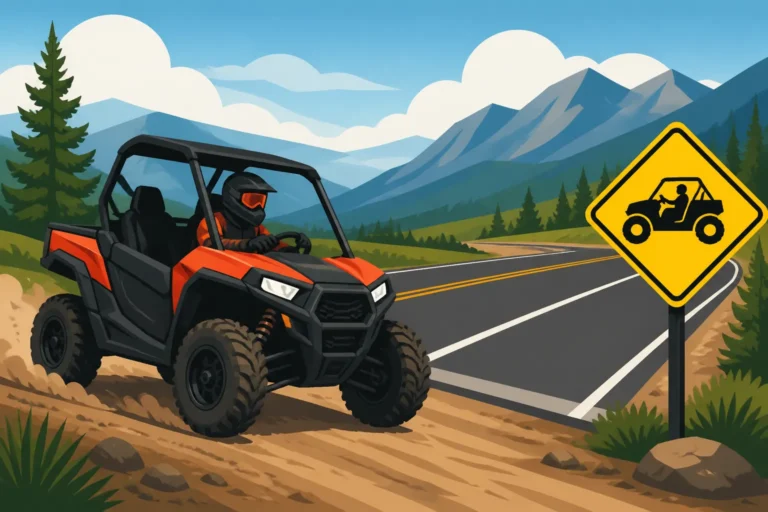
McCall, like many resort communities, has taken steps to manage OHV traffic within its municipal boundaries. While state law may allow R-plated machines on certain county roads, city ordinances often impose additional restrictions or outright prohibitions on specific streets. The common frustration is that riders want to easily get from their lodging or a trailhead directly into town for [Fueling an OHV in an Idaho Trail Town] or a meal.
Generally, McCall allows R-plated OHVs on some paved city streets for the specific purpose of direct access to businesses and lodging, but usually not for cruising recreationally. You might find certain arterial roads open, while residential streets or the main commercial strips could be off-limits. It's not uncommon for cities to use signage to denote open or closed OHV routes. The best practice is to consult the City of McCall's website or check with the local police department for a current map or detailed ordinance explanation. Failing to do so could lead to a fine under [Idaho City and County Ordinances That Close Roads]. Always assume main street access is limited unless explicitly stated otherwise.
Parking and Etiquette in McCall
Once you've navigated the allowed routes into McCall, the next challenge is parking. You can't just pull your side-by-side up onto the sidewalk or block a public thoroughfare. Like any other vehicle, your OHV needs to be parked legally in a designated parking spot. This can be tricky, especially during peak season when parking is at a premium.
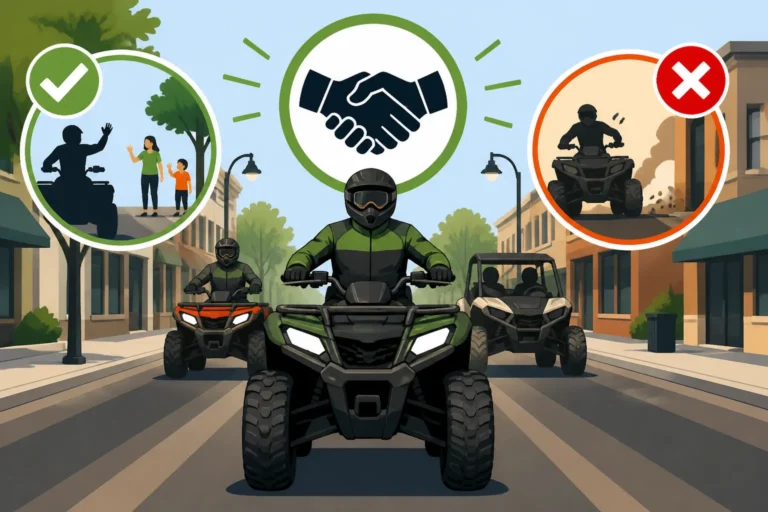
Look for standard parking spaces in public lots or on streets where parking is permitted. Avoid parking in areas that are clearly for cars only, or blocking fire lanes and pedestrian walkways. When you are riding through town, remember that you are sharing the road with pedestrians, bicycles, and traditional vehicles. Maintain a respectful speed, keep noise to a minimum, and yield to pedestrians. Your machine's spark arrester helps keep exhaust noise in check, but aggressive riding or revving an aftermarket exhaust can quickly draw unwanted attention and give OHV riders a bad name. Remember, you're an ambassador for the entire riding community when you're in town.
Stanley: The Heart of the Sawtooths
Stanley is a much smaller, more remote town compared to McCall, nestled deep in the Sawtooth National Recreation Area. Its vibe is much more rustic and geared towards backcountry adventure. For OHV riders, Stanley often serves as a crucial resupply point and a base camp for exploring the surrounding trails. The approach to road use here tends to be a bit more relaxed than in larger towns, but rules still apply.
Stanley's OHV Access and Connecting Trails
Stanley’s position at the crossroads of some of Idaho's most iconic scenic byways and vast trail systems makes it a natural hub for OHV users. Many riders use the town as a jump-off point to access routes into the Sawtooths, Salmon-Challis, and Boise National Forests. The town itself often feels like an extension of the backcountry. Because of this, Stanley is generally more accommodating to R-plated OHVs on its main thoroughfares, allowing riders to easily connect from nearby trails to services like gas stations, restaurants, and lodging.
You'll find it fairly common to see side-by-sides parked outside local businesses. However, this doesn't mean it's a free-for-all. While the local approach might be more forgiving, riders are still expected to adhere to state laws regarding equipment, licensing, and responsible operation. It’s always smart to double-check local signage and, if in doubt, inquire with a local business owner or the sheriff's office. This allows you to plan your route to easily get from [Idaho Trails That Link Two Mountain Towns] directly into town for supplies.
Low-Speed Zones and Pedestrian Awareness in Stanley
Despite the generally welcoming attitude, Stanley is still a small community with pedestrians, especially in the summer months. Main Street can get busy with tourists browsing shops or heading to local eateries. This means that even where OHVs are permitted, riders must exercise extreme caution and adhere strictly to posted speed limits. Expect low-speed zones throughout the town, designed to protect pedestrians and maintain the peaceful mountain atmosphere.
Think of it this way: you're likely going to ride past families walking to the ice cream shop or cyclists enjoying the scenic byway. Your responsibility is to blend in safely and respectfully. Keep your speed down, be alert for sudden pedestrian movements, and avoid creating excessive dust on gravel sections. A little courtesy goes a long way in ensuring these towns remain welcoming to OHV enthusiasts for years to come. Remember your machine's horn isn't just for emergencies, it's for signaling your presence to others politely.
Salmon: The River City's Approach to OHVs
Salmon, located in east-central Idaho, is another important hub for outdoor recreation, particularly known for its access to the Salmon River and vast surrounding national forests. It's a key service point for hunters, anglers, and OHV riders exploring the rugged terrain of the Frank Church River of No Return Wilderness area. Like Stanley, Salmon generally understands the importance of OHV access for its tourism economy, but it still has rules in place.
Road Access and Nearby Trail Systems in Salmon
Salmon sits at the convergence of several major roads and offers access to extensive trail networks within the Salmon-Challis National Forest and beyond. For OHV riders, it's a natural stop for provisions and a base for multi-day excursions. The city generally permits R-plated OHVs on many of its streets, especially those connecting to the main highways or leading directly to trailheads. This allows riders to seamlessly transition from trail to town for essential services.
You’ll often find specific routes designated for OHV use, typically designed to facilitate easy access to businesses while minimizing impact on residential areas or high-traffic zones. Always keep an eye out for city signage that indicates permissible OHV routes or restrictions. The ability to ride [Riding to a Restaurant in Salmon] directly from a trail is a huge convenience, but it comes with the responsibility of knowing where you can and cannot go. It's similar to other towns where [Which Idaho Roads Are Open to OHVs] is usually dictated by local ordinance.
Rider Responsibility and Community Harmony in Salmon
While Salmon is generally OHV-friendly, the onus is always on the rider to operate their machine safely and considerately. This includes following all traffic laws, such as stop signs, speed limits, and yielding to pedestrians. Salmon values its tranquil environment, and excessive noise or reckless driving can quickly erode local goodwill towards OHV riders.
Ensuring your machine is equipped with proper mirrors for visibility, working turn signals, and a functional horn is not just about legality; it's about being a safe and predictable presence on the road. If you've invested in quality accessories from a brand like SuperATV to make your machine road-legal, you're already ahead of the game in terms of safety and compliance. When heading into town, it's also wise to check your exhaust for any damage that might make it louder than necessary. Community harmony is built on mutual respect, and as an OHV rider, demonstrating that respect for the townspeople and their environment is paramount. Always be aware of [Idaho Noise Rules Near Mountain Towns] to avoid disturbing residents.
Critical Considerations for All Idaho Trail Towns
Riding your OHV through any Idaho trail town, be it McCall, Stanley, or Salmon, requires more than just knowing where to go. It demands adherence to a broader set of rules and responsibilities. These critical considerations ensure your ride is not only legal but also safe and respectful of the communities you pass through. Ignoring these aspects can quickly turn a fun trip into a regrettable experience with fines or, worse, accidents.
Driver's License, Insurance, and OHV Sticker
Even with an R-plate, you're not exempt from standard driving requirements when on a public road. First and foremost, you must possess a valid driver's license to operate an OHV on Idaho roads. This isn't just for cars; if you're driving on a street, you need to be a licensed driver. Furthermore, [Idaho Liability Insurance Minimums for Riders] are mandatory for any OHV operating on public roads. This protects you and others in case of an accident.
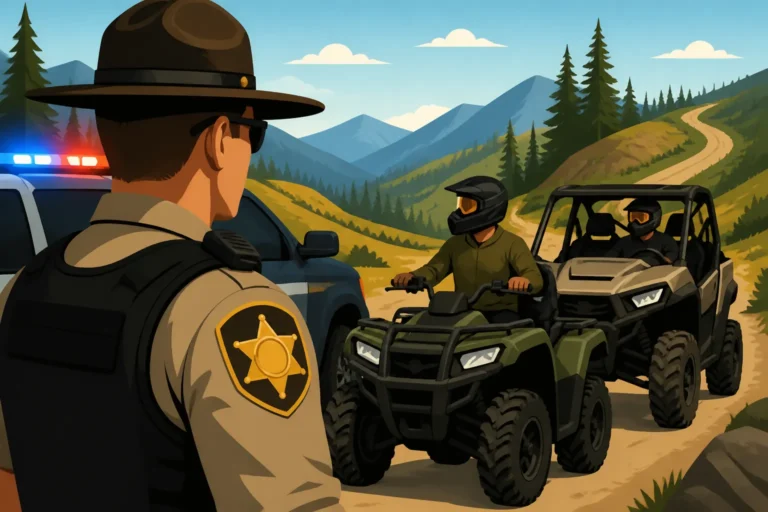
Beyond the license and insurance, your machine must still have its current Idaho OHV sticker displayed correctly. While the R-plate addresses road legality, the OHV sticker funds trail maintenance and is still required for public land access and even on roads in many instances. Make sure your sticker is renewed annually, typically running from January to December, and is properly affixed to your machine or the R-plate as required. An officer will expect to see all of this if you're stopped in town, checking [What an Idaho Deputy Asks a Rider For].
Helmet Laws and Youth Riders
Idaho has specific helmet laws, especially for younger riders, that apply both on trails and on roads. Any rider or passenger under the age of 18 is required to wear a DOT-compliant helmet. This rule is non-negotiable and strictly enforced. Even if you're an adult and not legally required to wear a helmet, it's always a wise safety precaution, especially when sharing roads with heavier traffic.
For youth riders, there are also rules regarding machine size and supervision. If you have a teenager or child riding with you through town, ensure they are of legal age and competence for the machine they're operating and that they adhere to [Idaho Helmet Rules for Riders Under 18]. When on the road, these young riders typically need to be directly supervised by an adult. Always prioritize safety for all occupants of your OHV, particularly when navigating unfamiliar town environments.
Alcohol, Open Containers, and Impaired Operation
Just like operating a car, driving an OHV on public roads under the influence of alcohol or drugs is strictly illegal and extremely dangerous. Idaho's DUI laws apply equally to OHV operators on roads, and the penalties are severe. This includes not just visible impairment, but also open container laws, meaning no open alcoholic beverages are allowed on your machine while operating on public roads.
The allure of a cold beer after a long day on the trails might be strong, but save it for when you're done riding and your machine is parked for the night. Law enforcement in these towns is vigilant, especially during busy seasons. A citation for impaired driving on an OHV can lead to loss of driving privileges, significant fines, and even jail time. Your best bet is to understand [Idaho Alcohol Limits for OHV Operators] and to simply abstain from alcohol until your ride is completely finished.
Preparing for Your Town-to-Trail Journey
A successful and enjoyable OHV trip through Idaho's mountain towns requires more than just knowing the rules; it requires proactive preparation. Thinking ahead about your route, your gear, and how you interact with the environment can make all the difference between a seamless adventure and an unexpected headache.
Mapping Your Route and Understanding Signage
Before you even leave your staging area or campsite, take the time to plan your route, especially the sections that involve town roads. Don't just assume; consult city maps, forest service maps, or reliable GPS apps like onX Offroad which often have layers indicating OHV-friendly routes. Look for signs that specifically welcome or restrict OHV traffic. These signs are there for a reason and are your best guide to staying compliant.
Pay attention to street names and intersections. If you're using a physical map, trace your intended path through town. If you're using a GPS, make sure it's set to account for OHV-specific access, if available. Unexpected detours or getting lost in town can quickly lead you onto restricted streets, increasing your risk of a citation. Knowing the lay of the land, even for a short stretch of pavement, is incredibly valuable. Many resources help with [Finding an Idaho County's OHV Ordinance], which can sometimes be more granular than state law.
Carrying Essential Documents and Gear
When you're riding through town, you should carry the same documents you would if you were driving a car. This means your valid driver's license, proof of insurance, and your OHV registration or title. Keep these documents in a waterproof bag or container, easily accessible but secured on your person or within your machine. While you don't typically need to carry your actual OHV title on the machine itself, having accessible proof of ownership, like a registration card, is important.
In terms of gear, beyond your road-legal equipment, consider carrying a small toolkit, a tire repair kit, and a first-aid kit. Even on paved roads, unexpected mechanical issues can arise. Having basic repair capabilities can save you a long walk or a costly tow. It's also a good idea to have a small trash bag to "pack it in, pack it out," ensuring you leave no trace, even when passing through town. This dedication to responsible riding is crucial for building positive relationships with local communities.
Respecting the Environment and Local Communities
Finally, and perhaps most importantly, is the commitment to respecting both the natural environment and the local communities that welcome you. When you're in town, this means keeping noise down, adhering to speed limits, and being courteous to pedestrians and other drivers. Avoid kicking up excessive dust on unpaved town roads, and never litter.
The longevity of OHV access in these beautiful Idaho towns depends heavily on the collective behavior of riders. Every interaction you have, every trail you ride, and every town street you traverse contributes to the overall perception of the OHV community. By being a responsible, respectful, and prepared rider, you help ensure that McCall, Stanley, and Salmon remain open and welcoming to OHV enthusiasts for years to come. Remember, these towns are home to people who live there year-round, and their quality of life is affected by visitor behavior.
| Requirement for Road-Legal OHV Use in Idaho | Description | Why It Matters for Town Riding |
|---|---|---|
| Idaho OHV Sticker | Annual decal funding trail maintenance. | Required for all public land/road use in Idaho (unless exempt). |
| Idaho Restricted Vehicle Plate (R-Plate) | Specific license plate allowing limited road use. | The key to accessing town streets and connecting roads. |
| Valid Driver's License | State-issued license for operating motor vehicles. | Mandatory for anyone driving on a public road, including OHVs. |
| Liability Insurance | Minimum coverage for accidents. | Protects you and others, required for road use. |
| Headlights & Taillights | Operational lighting systems. | Essential for visibility, especially during dusk/night or bad weather. |
| Brake Lights | Lights indicating braking. | Critical for preventing rear-end collisions. |
| Horn | Audible warning device. | Required for signaling presence or warning others. |
| Mirror(s) | Rear-view mirror for visibility. | Allows you to see traffic behind you, crucial in town. |
| Turn Signals | Indicator lights for turns. | Essential for clearly communicating your intentions to other drivers. |
| Spark Arrester | Device preventing sparks from exhaust. | Required on public lands to prevent fires; helps manage noise. |
| Adherence to Local Ordinances | City-specific rules for OHV access. | These dictate which streets are open and how you can use them. |
| Helmet (Under 18) | DOT-compliant helmet. | Legally required for minors, highly recommended for all. |
| No Impaired Operation | Abstinence from alcohol/drugs while riding. | Illegal and dangerous; DUI laws apply to OHVs on roads. |
Disclaimer
This article is for general informational purposes only and does not constitute professional advice. Laws, prices and regulations vary by location and change over time. Consult a qualified professional for guidance on your specific situation.