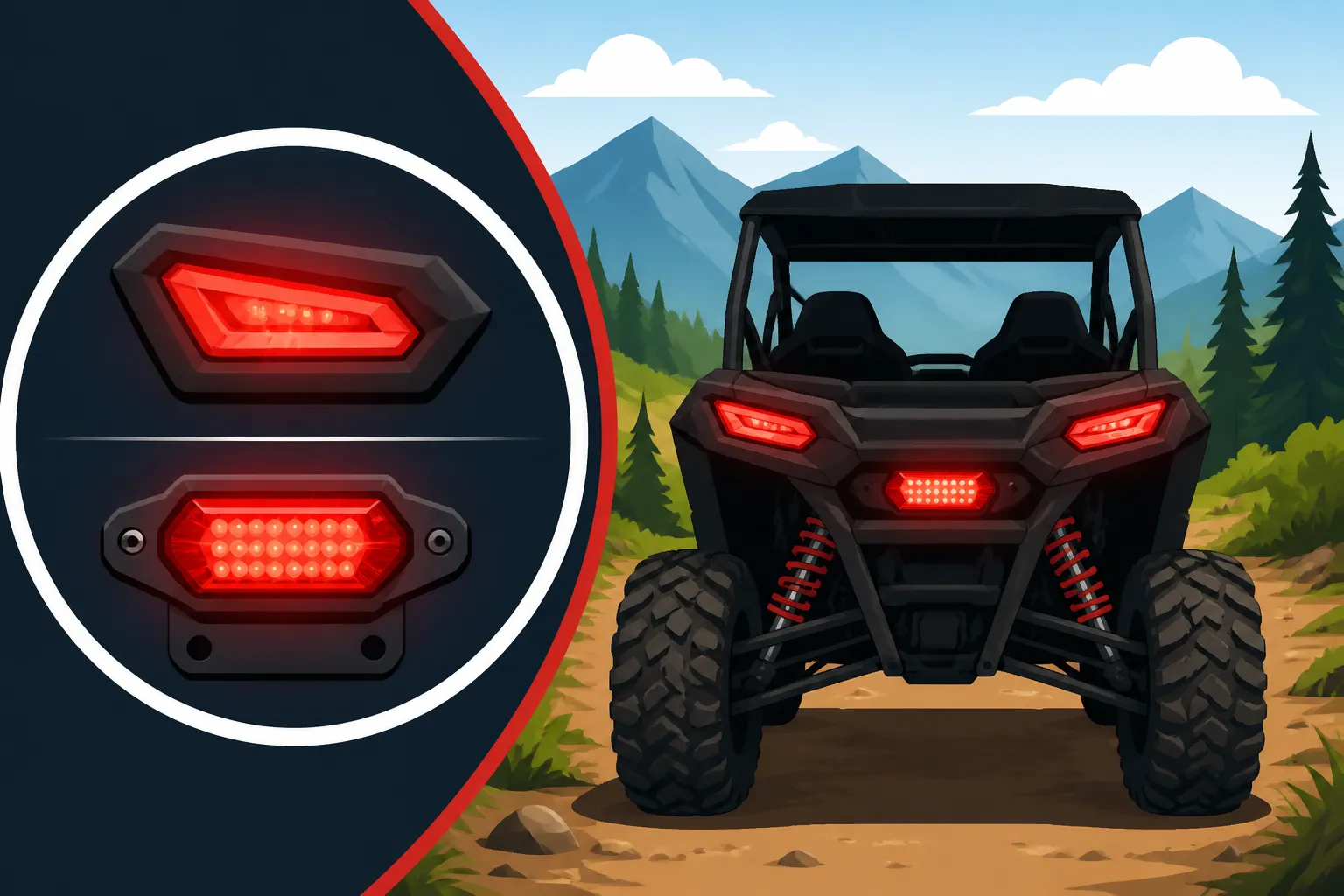
Taillight and Brake Light Requirements
It’s a common scenario for many Idaho ATV and UTV enthusiasts: you’re out on the trails, enjoying the incredible scenery, and then you hit a county road that connects you to the next trail system or maybe even a small town for gas and lunch. Suddenly, you realize your machine might need more than just a sticker to legally navigate paved or graveled public roads. This guide aims to demystify the specific taillight and brake light requirements for operating your off-highway vehicle (OHV) on Idaho’s authorized public roads, helping you stay compliant and safe.
Why Proper Lighting Matters on Idaho Roads
Riding your ATV or UTV on public roads in Idaho offers unparalleled access to more trail systems, scenic routes, and even local services. But with that privilege comes a significant responsibility: ensuring your machine is equipped not just for the rough and tumble of the trail, but for sharing the road safely with other vehicles. Many riders get caught off guard by the specific equipment requirements that kick in the moment tires hit pavement.
The Safety Imperative Beyond Just Legalities
Think about the conditions you encounter on Idaho's backroads. One moment you might be on a dusty gravel road, and the next, you're on a paved section leading into a small town like Stanley or McCall. The sun could be glaring, or dusk might be settling in after a long day of riding. In these varied conditions, your lights aren't just about avoiding a ticket; they are absolutely critical for your safety and the safety of everyone else on the road. A bright, functioning taillight ensures you're seen from behind, especially when visibility is reduced by dust, shadows, or an approaching evening. A reliable brake light, in particular, communicates your intentions to slow down or stop, giving drivers behind you precious seconds to react. Without these essential signals, you become a much greater hazard, particularly to drivers of larger, faster vehicles who might not expect an OHV on the road. This isn't just about protecting yourself; it's about being a responsible member of the road-sharing community.
Navigating the Maze of State and Local Ordinances
Idaho’s laws regarding OHVs on public roads can feel like a bit of a patchwork, with statewide regulations setting a baseline and individual counties or even cities having the authority to open or close certain roads and impose additional requirements. This can be incredibly frustrating for riders who just want to enjoy the outdoors without constantly worrying if they're breaking a rule. Generally, the state requires a [What Idaho Requires Before You Ride a County Road], which includes a range of equipment beyond just lights. Your machine needs to meet these basic standards to qualify for a [Idaho's Restricted Vehicle Plate Explained], which is what truly enables you to legally ride on designated roads. Missing or non-compliant lights are one of the quickest ways to fall foul of these rules. Understanding these foundational requirements is your first step towards legal, worry-free road riding. It's not enough to assume your factory lights are sufficient, as often they are designed for off-road visibility, not the distinct demands of road traffic.
Idaho's Specific Taillight and Brake Light Requirements for OHVs
When it comes to hitting those open county roads in Idaho, your lighting setup is under scrutiny. It's not just about having a light; it's about having the right lights that perform specific functions. The state has clear expectations for both your taillight and your brake light, and understanding these nuances is crucial for any rider aiming for full road legality.
Understanding the "Always On" Taillight Rule
For any ATV or UTV operating on an Idaho public road, you absolutely must have a red taillight that is visible from at least 500 feet to the rear. This isn't an optional extra; it's a mandatory safety feature. Crucially, this taillight needs to be illuminated at all times while the vehicle is in operation on the road, regardless of whether it's day or night. This "always on" requirement might seem simple, but it's where many stock OHV setups fall short. Some factory taillights are only designed to come on when the headlights are activated, or they might be too dim for effective daytime visibility on a bright Idaho afternoon.
Imagine you're cresting a hill on a dusty county road outside Idaho City. If your taillight only illuminates when you hit the brakes or when your headlights are on, drivers approaching from behind, especially in larger vehicles, might not see you until it's too late. The continuous glow of a compliant taillight acts as a constant warning, marking your presence and helping to prevent rear-end collisions. When you're assessing your machine, check your taillight's brightness and its wiring to ensure it activates as soon as the ignition is on, or at least automatically with the engine running. Many riders find that upgrading to brighter, more robust LED taillights, perhaps from a brand like SuperATV, not only meets the legal requirement but significantly enhances their visibility and safety profile on the road.
The Crucial Role of a Functional Brake Light
Separate from the always-on taillight, your OHV also needs a functional brake light that illuminates when you apply the brakes. This red light, again visible from at least 500 feet to the rear, serves a different but equally vital purpose: communicating your deceleration. It tells the driver behind you, "Hey, I'm slowing down or stopping, so you should too."
Consider a scenario where you're riding through a small town, perhaps Salmon, and need to stop for a crosswalk or turn into a gas station. Without a clear, bright brake light, the driver following you has no immediate visual cue that you're hitting the binders. They might assume you're just coasting, leading to a dangerous misunderstanding of your intentions. This is particularly important for OHVs, which can often decelerate more rapidly than a typical car or truck, especially on gravel. Ensure your brake light is wired correctly to both your front and rear brake controls, if applicable, and that it activates crisply and brightly the moment you begin to apply pressure. Test it frequently, perhaps as part of your pre-ride checklist, to ensure it’s working perfectly every time you venture onto a public road. A malfunctioning brake light is not only a safety risk but also an easy way to attract unwanted attention from law enforcement, potentially leading to [Idaho Fines for Illegal Road Riding].
When Aftermarket Lighting Becomes a Necessity
Many factory-equipped ATVs and UTVs are designed primarily for off-road use, where the demands for lighting are different. While they often come with basic taillights and brake lights, these might not be robust enough or designed to meet the specific visibility and "always on" requirements for legal road operation in Idaho. This is where aftermarket lighting solutions often become not just an upgrade, but a necessity.
If your stock taillight only comes on with your headlights, or if it's simply not bright enough to be seen clearly during the day, you'll need to consider an aftermarket replacement. These can range from simple plug-and-play LED taillight assemblies to more comprehensive wiring kits that ensure constant illumination. Brands like SuperATV offer a variety of lighting options, including integrated taillight and brake light units that are designed for durability and high visibility, even in challenging conditions. When choosing aftermarket lights, look for those that explicitly state compliance with DOT (Department of Transportation) standards or high visibility ratings. Pay attention to how they mount and wire into your existing system. A poorly installed light, even a bright one, can fail at the worst possible moment. Investing in quality aftermarket lighting isn't just about meeting the minimum legal threshold; it's about proactively enhancing your safety and ensuring your machine is truly ready for whatever Idaho's diverse riding environment throws at you, from a dusty trail to a busy county road.
Practical Tips for Equipping Your OHV for Road Use
Getting your OHV ready for road use involves more than just bolting on some lights. It's about a holistic approach to safety, legality, and maintenance that ensures you're prepared for the unique challenges of sharing the road with other vehicles.
Choosing Durable and Compliant Lighting Solutions
When you're outfitting your ATV or UTV for road use in Idaho, don't just grab the cheapest lights you can find. Remember, these components are going to be exposed to dust, mud, vibration, and potentially even direct impacts on the trail. Investing in durable lighting is essential. Look for LED lights, as they are generally more robust, energy-efficient, and brighter than traditional incandescent bulbs. Many reputable aftermarket companies, like SuperATV, offer lights specifically designed for the rigors of off-road vehicles, often with sealed housings to prevent water and dust intrusion, and sturdy mounting brackets that can withstand constant vibration.
When selecting lights, confirm they meet visibility requirements – specifically, the 500-foot visibility from the rear. For taillights, consider options that can be wired to be "always on" with your ignition, not just when your headlights are active. For brake lights, ensure they are noticeably brighter than your running taillight when activated, providing a clear signal to trailing vehicles. Remember, while a restricted plate allows you on many county roads, you still need the proper equipment to back it up. [Displaying a Sticker on an Idaho R Plate] is one thing, but making sure your machine is actually legal and safe is another.
Regular Checks and Maintenance for Road Safety
Even the best lights can fail if not properly maintained. Before every ride that includes any public road sections, make it a habit to perform a quick visual inspection of your taillight and brake light. Are they clean? Mud and dust can significantly reduce their effectiveness. Are the lenses cracked or damaged? A small crack can let in moisture, leading to electrical shorts.
Beyond visual checks, test their functionality. Have a friend stand behind your machine while you turn on the ignition (for your taillight) and then press your brake pedal (for your brake light). Confirm both are working, bright, and free of flickering. Also, check the wiring. Vibrations from riding can loosen connections or chafe wires, leading to intermittent failures. Secure any loose wiring with zip ties or electrical tape to prevent damage. A little proactive maintenance goes a long way in preventing an inconvenient (and potentially expensive) stop by law enforcement or, more importantly, a dangerous situation on the road.
Addressing Common Lighting Challenges for Idaho Riders
Riders often face a few common hurdles when trying to make their OHV fully road-legal in terms of lighting. One of the biggest is the "always on" taillight requirement. Many stock setups don't have a dedicated "running light" circuit for the rear that stays on with the ignition. You might need to consult an automotive electrician or a knowledgeable powersports mechanic to properly wire your existing or new taillight to meet this standard without draining your battery when the machine is off.
Another challenge can be integrating turn signals, which are also often required for road use, with your existing brake lights. Some aftermarket kits offer integrated taillight/brake light/turn signal units, simplifying the wiring and mounting. Lastly, ensuring sufficient brightness in broad daylight can be tricky. While the law specifies visibility, personal safety often dictates going brighter than the minimum. If your stock lights look dim compared to a car's, consider an upgrade. Remember, you want to be seen unmistakably. This proactive approach not only helps you avoid [Penalties for an Unstickered OHV in Idaho] or improper equipment but significantly boosts your confidence when venturing onto paved roads.
Beyond Lights: Completing Your OHV's Road-Legal Setup
While proper taillight and brake light functionality are non-negotiable for road use, they are just one piece of a larger puzzle. Idaho’s regulations for operating OHVs on county roads are comprehensive, touching on various aspects of your machine’s equipment and the rider's preparedness.
The Interconnectedness of Idaho's Road Rules
Think of Idaho's OHV road rules as an interconnected web. A functional taillight is great, but it won't matter if you don't have a restricted vehicle plate or if you're missing other crucial equipment. Beyond lights, you'll need working headlights, a horn, a mirror, and often turn signals. Your machine also needs a spark arrester to protect against wildfires, and a muffler that meets noise limits. Furthermore, you'll need to make sure your machine has a current Idaho OHV sticker, which allows you to ride on designated trails. The restricted plate is specifically what allows you on roads, and it's contingent on having all the right safety equipment in place.
It's a lot to keep track of, but neglecting one area can invalidate your entire road-legal setup. For instance, having perfect lights but no [Driver's License and Insurance on an Idaho Road Ride] will still get you into trouble. Every component works together to create a safe, compliant experience. Reviewing the full list of requirements before you hit the road is always a smart move.
Avoiding Citations and Ensuring Peace of Mind
Ultimately, putting in the effort to ensure your ATV or UTV is properly equipped with compliant taillights, brake lights, and all other required gear is about more than just avoiding a citation. It’s about peace of mind. Knowing that you’ve done your due diligence, that your machine is visible and your intentions clear to other drivers, allows you to relax and truly enjoy the ride.
Idaho deputies and rangers are well-versed in OHV laws, and they're out there on those backroads, ensuring everyone is riding safely and legally. Getting pulled over for equipment violations, especially something as fundamental as non-functioning lights, is a hassle and can lead to fines. By proactively outfitting your machine, performing regular checks, and understanding the local ordinances that apply to the roads you plan to ride, you're not just complying with the law; you're contributing to a safer riding environment for everyone. So, take the time, make the necessary upgrades, and then hit those Idaho roads and trails with confidence!
Disclaimer
This article is for general informational purposes only and does not constitute professional advice. Laws, prices and regulations vary by location and change over time. Consult a qualified professional for guidance on your specific situation.