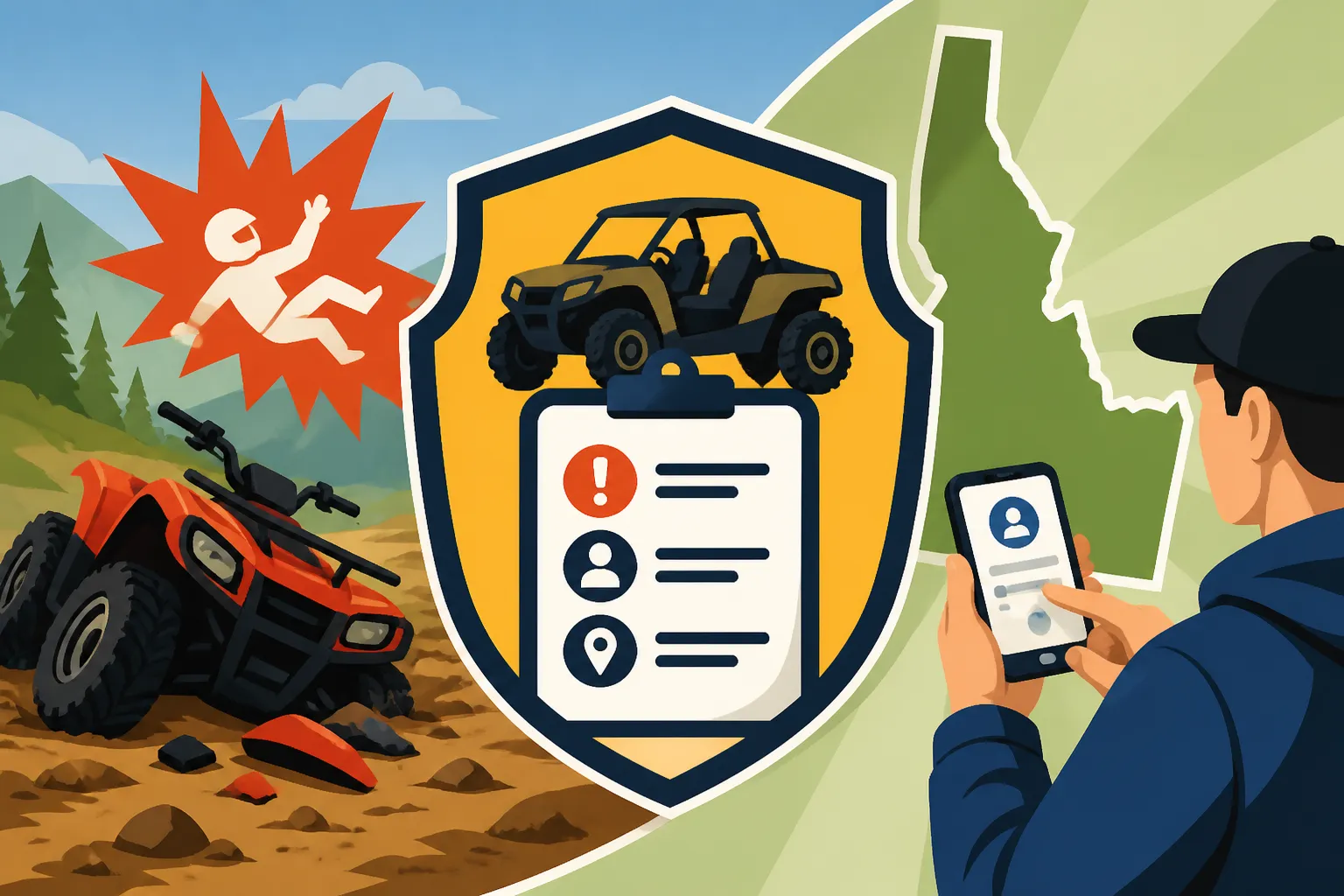
Idaho OHV Accident Reporting Rules
Riding an off-highway vehicle (OHV) in Idaho offers some of the most breathtaking backcountry experiences, but the open road and rugged trails can sometimes lead to unexpected incidents. No one ever plans for an accident, but when one occurs, knowing the correct reporting rules is not just a good idea – it's often a legal requirement that protects you, others involved, and your future riding privileges. This guide is here to walk you through Idaho's specific requirements for reporting OHV accidents, helping you understand your responsibilities when an unforeseen event puts a bump in your adventure.
Understanding Idaho's OHV Accident Reporting Requirements
It's a common misconception that minor bumps or scrapes on the trail don't warrant an official report, especially if you're out in the middle of nowhere. However, Idaho has clear guidelines for when an OHV accident transitions from a minor mishap to a legally reportable incident. Ignoring these rules can lead to bigger headaches down the road, even if everyone seems fine at the time. The state is serious about tracking these incidents, not to punish riders, but to ensure safety and gather data that helps improve trail conditions and regulations for everyone.
When an Accident Becomes Reportable: Defining "Serious Injury" and "Property Damage Thresholds"
So, what exactly triggers the need for an official accident report in Idaho? It boils down to two main criteria: injury and property damage. Not every fender bender or tipped-over quad requires a full report, but once certain thresholds are met, the law steps in.
First, let's talk about injuries. An accident becomes reportable if it results in injury or death to any person. What constitutes an "injury" in this context? Generally, if someone needs medical attention beyond basic first aid, or if they are incapacitated in any way, that counts. This isn't just about broken bones or head trauma; it could be a sprain, a severe cut, or even just feeling disoriented enough to require professional assessment. If an ambulance is called, or if someone goes to an emergency room, you can bet it's a reportable injury. It’s always better to err on the side of caution and report if there’s any doubt about someone’s well-being after a crash.
Secondly, property damage is a key factor. An accident must be reported if it results in damage to property exceeding a certain dollar amount. While I can't give you the exact current figure, this threshold is set by the state and is designed to capture incidents where the cost of repairs or replacement is significant. This could involve damage to the OHVs themselves, another vehicle, personal property like a fence or signpost, or even natural resources if you’ve veered off a trail. For instance, if your side-by-side, even if equipped with robust aftermarket protection like a heavy-duty bumper from SuperATV, still crumbles a significant portion of its front end, or if you take out a section of someone’s private property, that’s almost certainly going to meet the damage threshold. Always check with the Idaho Parks and Recreation Department or a local law enforcement agency for the most up-to-date property damage threshold amount.
The Legal Obligation: Why Reporting Matters
Beyond the immediate concern for those involved, there's a strong legal and ethical obligation to report serious OHV accidents in Idaho. Failing to do so can have significant consequences. For one, it's against the law. You could face fines or other penalties for not reporting an accident that meets the state's criteria. But it's more than just avoiding a ticket.
Proper reporting creates an official record of the incident. This record is absolutely vital for insurance claims. Imagine you're involved in a collision, and the other party initially says they're fine, but a week later they claim a severe injury. Without an official report, it becomes a "he said, she said" situation, making it incredibly difficult for your insurance company to assess the claim fairly. This report provides a factual, unbiased account (as much as possible) from the scene, which helps resolve disputes and ensures that fault is assigned appropriately, preventing further legal entanglements. This ties directly into topics like [Idaho ATV Insurance Cost] and [Who Pays After an OHV Collision].
Furthermore, reporting helps the state identify dangerous sections of trails, common accident types, and areas where safety improvements might be needed. This data informs decisions about trail maintenance, signage, and even rider education programs. Your report, even if it feels like a hassle at the moment, contributes to the overall safety of the OHV community in Idaho. It helps maintain the privileges we all enjoy on the state's incredible trail systems.
Immediate Steps After an OHV Accident in Idaho
When an accident happens, especially in the backcountry, it can be a jarring and confusing experience. Your adrenaline is pumping, and it's easy to forget crucial steps. Having a mental checklist, or even a physical one in your machine's glove box, can make all the difference. Remember, your priority is always safety and then responsible action.
Ensuring Safety and Assessing Injuries
The very first thing you need to do, after ensuring your own safety, is to assess the situation. If your machine is still running or in a dangerous position, turn off the engine and secure it. If possible and safe, move injured individuals to a safer location away from further hazards, such as moving traffic or unstable terrain. However, if there's any suspicion of a head, neck, or spinal injury, it's critical not to move the person unless they are in immediate danger. Stabilize them as best you can and wait for professional medical help.
Check yourself and your passengers for injuries. Even minor aches can become serious later. Then, check on anyone else involved in the accident, whether they were on another OHV, a pedestrian, or in another vehicle. Ask if anyone is hurt and if they need assistance. Administer basic first aid if you are trained and have a first aid kit – which you absolutely should always carry when riding. Be calm, reassuring, and methodical. Panicking helps no one.
Gathering Critical Information at the Scene
Once immediate safety and injury checks are done, it's time to start collecting information. This is where your preparedness really pays off. Even if you think the accident is minor, details can blur quickly.
Here’s a checklist of what you should try to gather:
- Contact Information: Get the full names, addresses, phone numbers, and email addresses of everyone involved, including drivers, passengers, and any witnesses.
- OHV Information: Collect the make, model, year, and Vehicle Identification Number (VIN) of all machines involved. Note the [Idaho OHV Sticker Cost This Year] and any special license plate numbers, like a Restricted Vehicle Plate.
- Insurance Details: Obtain insurance company names and policy numbers for all vehicles involved. This is crucial for filing claims later on.
- Damage Assessment: Document the damage to all vehicles and property. Take clear, well-lit photographs from multiple angles. Include close-ups of specific damage and wider shots showing the position of the vehicles relative to each other and the surroundings. Note any aftermarket parts, like a specialized skid plate or a new windshield from SuperATV, that may have been damaged or helped protect your machine.
- Scene Details: Note the exact location of the accident (mile marker, trail name, GPS coordinates if possible). Observe the weather conditions, time of day, road or trail conditions (e.g., muddy, rocky, gravel), and any contributing factors like visibility or obstructions. Sketch a diagram if it helps clarify the scene.
- Witness Statements: If there are witnesses, ask them what they saw and get their contact information. Their unbiased account can be invaluable.
Remember, honesty is key, but don't admit fault or apologize excessively. Stick to the facts. Just record what happened and the observed details.
Contacting Law Enforcement and Emergency Services
If there are serious injuries or significant property damage, or if there's any dispute about what happened, you must contact law enforcement immediately. In Idaho, this usually means calling 911. They will dispatch the appropriate agency, which could be the county sheriff, Idaho State Police, or a Forest Service Ranger, depending on your location. Knowing [What an Idaho Deputy Asks a Rider For] can help you prepare for their arrival.
Clearly state your location, the nature of the accident, and whether anyone is injured. Provide as much detail as you can to help them respond effectively. Even if you're in a remote area with spotty cell service, try to get a signal, or send someone to the nearest point where they can call for help. Carrying a satellite messenger or a two-way radio is a smart move for backcountry riding precisely for these situations.
When law enforcement arrives, cooperate fully. Provide them with all the information you've gathered. They will typically file an official accident report, which is usually the primary document that Idaho requires for such incidents. They will assess the scene, interview those involved, and determine if any citations are necessary (for example, if someone was riding recklessly, which can incur [Idaho Penalties for Reckless Riding]). It's essential to ensure that the officer's report accurately reflects the facts you observed.
Filling Out the Idaho OHV Accident Report
Once you've dealt with the immediate aftermath and law enforcement has been involved (or if you determine the accident meets reporting thresholds and law enforcement wasn't called), you still have a responsibility to ensure a proper report is filed with the state. This often means completing an Idaho-specific OHV accident report form.
Obtaining the Official Report Form
The official Idaho OHV accident report form is typically available through the Idaho Parks and Recreation Department (IDPR) or sometimes from local law enforcement agencies. You might be able to download it from the IDPR website, or you may need to request a physical copy. Some county assessor's offices, which handle things like [Titling and Registering an ATV in Idaho], might also have information or forms, but IDPR is the primary resource for OHV-specific incident reporting.
It’s a good idea to familiarize yourself with this form before you ever need it. Knowing what information it requires can help you prepare your own personal "emergency kit" of documentation to carry on your rides.
What Information to Include in Your Report
The report form will ask for detailed information, much of which you should have already gathered at the scene. Be as thorough and accurate as possible. This isn't the time to guess or leave blanks.
Expect to provide:
- Your Information: Name, address, contact details, driver's license number (if applicable).
- Machine Information: Make, model, year, VIN, and registration or sticker number for your OHV.
- Accident Details: Date, time, and precise location of the accident.
- Conditions: Weather, trail/road conditions, visibility at the time of the crash.
- Parties Involved: Information on any other drivers, passengers, or pedestrians, including their contact information and OHV details.
- Injuries: A description of any injuries sustained by yourself or others, including the nature of the injury and the body part affected.
- Property Damage: A detailed description of the damage to your OHV, other vehicles, or property, along with estimated repair costs if you have them. Photos help immensely here.
- Narrative: A clear, concise, and factual description of how the accident occurred. Avoid speculation or assigning blame. Just state the sequence of events as you observed them.
- Witnesses: Names and contact information for any witnesses.
This report is crucial for any potential [OHV Injury Claims After a Road Crash] or disputes over who is responsible. Double-check all information for accuracy before submission.
Submitting Your Report to the Right Idaho Authority
Once completed, the accident report needs to be submitted to the proper authority in Idaho, typically the Idaho Parks and Recreation Department. The form itself will usually specify the correct mailing address or online portal for submission. There will also be a deadline for submission, usually a certain number of days after the accident. Do not delay! Missing this deadline could result in penalties or compromise any future insurance claims you might make.
If law enforcement has already filed a report, you might still be required to submit your own, or at least ensure that the official report has been filed and is accurate. Clarify this with the responding officer or the IDPR. [Idaho Parks and Recreation Registration Phone Line] can be a valuable resource if you have questions about the reporting process. Keep a copy of your submitted report for your own records, along with all the photos and information you gathered at the scene. This paperwork is just as important as [Keeping Paperwork on the Machine] for trail riding.
Beyond the Report: What Happens Next?
Filing the accident report isn't the final step; it's often the beginning of a process that can involve insurance adjusters, repair shops, and sometimes even legal proceedings. Being prepared for these next steps can help alleviate stress and ensure a smoother resolution.
Insurance Claims and How the Report Plays a Role
Once the accident report is filed, it becomes a cornerstone for any insurance claims. Your insurance company (and the other party's, if applicable) will use this report to investigate the incident, determine fault, and process claims for damages and injuries. This is why accuracy and detail in the report are so important. Without an official report, proving the circumstances of the accident to your insurer can be incredibly difficult, potentially delaying or even denying your claim.
If you have liability insurance – which is required if you plan on [Riding an ATV on the Road in Idaho] – your policy will likely cover damages and injuries you are responsible for. Collision coverage, if you have it, would help with repairs to your own machine. The accident report helps the adjusters connect the dots, verify the damages, and ensure all parties are compensated fairly according to their policies. This is also where you might learn whether [Does Homeowners Insurance Cover an Idaho ATV?] for certain incidents, although dedicated OHV insurance is usually more comprehensive.
Potential Penalties for Failing to Report
As mentioned earlier, failing to report a reportable OHV accident in Idaho can lead to legal consequences. These can range from fines to more serious penalties, depending on the severity of the accident and the specific circumstances. It’s not just about forgetting to file a form; it's about neglecting a legal duty.
Beyond the direct legal penalties, you could also face civil liabilities. If an injured party decides to sue you for damages or medical expenses, and you failed to file the required report, it could significantly weaken your legal position. It might be interpreted as an attempt to conceal information or avoid responsibility, making it harder to defend yourself. This could also affect your insurance coverage, as many policies require timely reporting of incidents. Avoid these unnecessary complications by understanding and adhering to the reporting rules. While a missing sticker might lead to [Fines for an Unstickered OHV in Idaho], a missing accident report could have far graver financial and legal ramifications.
Seeking Legal Counsel and Further Assistance
In serious accident cases, especially those involving significant injuries, fatalities, or complex legal questions, it's highly advisable to seek legal counsel. An attorney specializing in personal injury or accident law can guide you through the process, help you understand your rights and obligations, and represent your interests. They can help interpret the accident report, gather additional evidence, and negotiate with insurance companies on your behalf.
Organizations like the Idaho Department of Parks and Recreation, local sheriff's offices, and even OHV clubs can also be sources of further assistance or information. They often have resources or contacts that can help you navigate the aftermath of an accident, from finding repair services to understanding specific trail regulations. While no one wants to think about an accident, being prepared with knowledge about Idaho's reporting rules is just as vital as having the right gear, like sturdy protective accessories from SuperATV, for a safe and enjoyable ride.
Disclaimer
This article is for general informational purposes only and does not constitute professional advice. Laws, prices and regulations vary by location and change over time. Consult a qualified professional for guidance on your specific situation.