Spark Arrester Rules on Idaho Public Land
It's incredibly frustrating to just want to head out and enjoy Idaho's stunning backcountry on your ATV or UTV, only to find yourself bogged down in a maze of rules and regulations. You hear whispers about "spark arresters" and "public land," and it leaves you wondering if your machine is even legal to ride where you want to go. Nobody wants to get a fine or, worse, inadvertently cause a wildfire that damages our beautiful state. This guide is here to clear up the confusion about spark arrester requirements on Idaho's public lands, so you can ride with confidence and peace of mind.
What Exactly is a Spark Arrester and Why Does Idaho Care So Much?
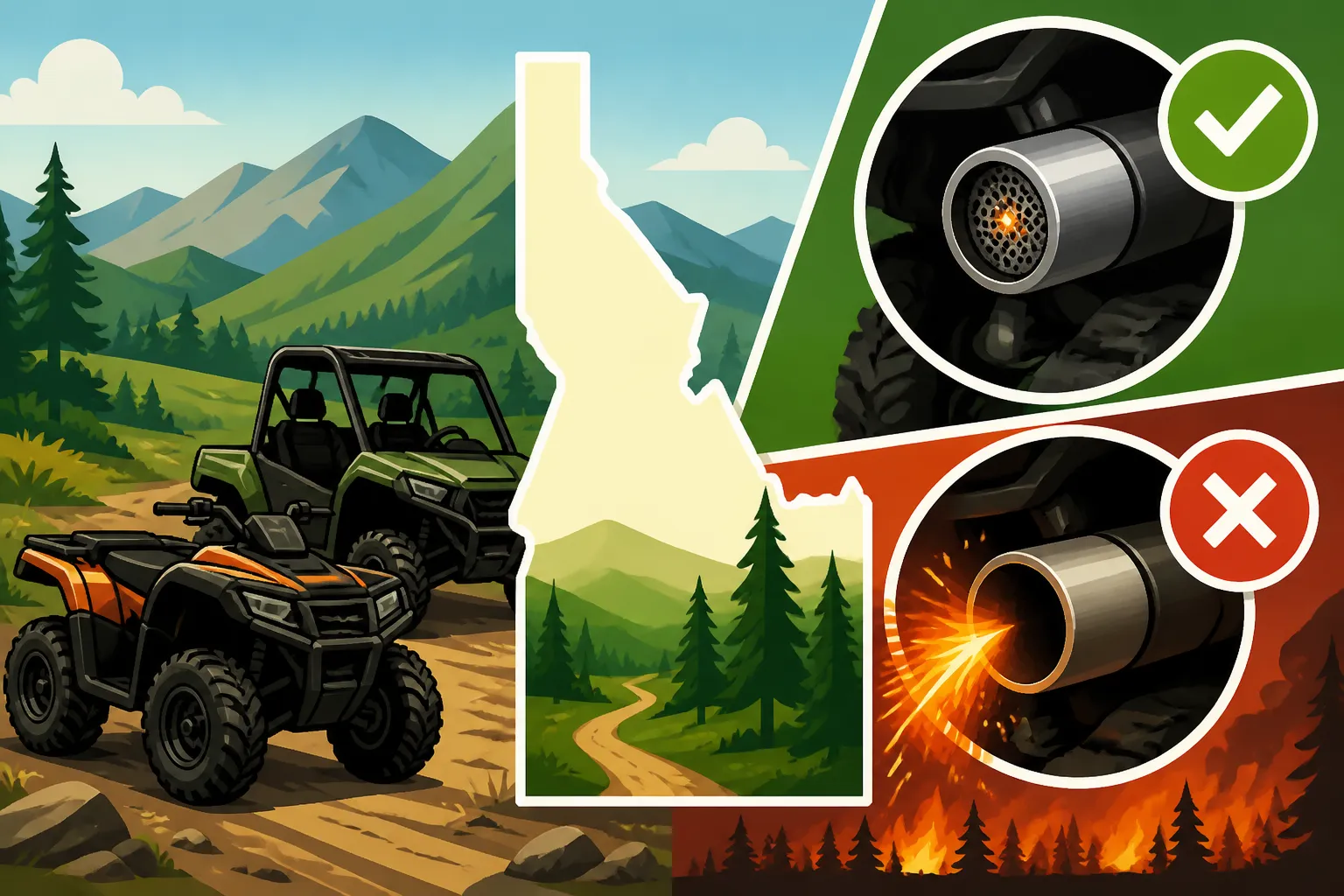
Let's start with the basics, because it's not always obvious what this little device actually is or why it's such a big deal. A spark arrester is a mesh screen or a series of baffles installed in the exhaust system of an internal combustion engine – in our case, your ATV or UTV. Its primary job is to cool down and trap hot carbon particles (sparks) that are expelled from the engine along with the exhaust gases. Without one, these tiny, glowing embers could fly out of your muffler and, especially during dry conditions, ignite dry grass, leaves, or pine needles.
Idaho cares deeply about spark arresters because our state is particularly susceptible to wildfires. We've all seen the devastating impact these fires can have on our forests, our communities, and our air quality. A single spark, no matter how small, can quickly escalate into a massive blaze, destroying thousands of acres of precious public land, wildlife habitats, and even homes. It’s not just about protecting nature; it’s about protecting the safety and livelihood of everyone who lives in or visits our beautiful state. The rules around spark arresters are a direct response to this very real, very dangerous threat. It's a small component, but it plays a huge role in fire prevention.
The Science Behind Spark Prevention
It might sound overly technical, but the way a spark arrester works is pretty clever. As exhaust gases rush through your muffler, they carry tiny particles of unburnt fuel and carbon. When these particles are hot enough, they glow and can ignite flammable materials. A spark arrester forces these hot gases and particles through a labyrinth of screens or chambers. This process causes the heavier, glowing particles to cool down and settle within the arrester, preventing them from exiting the exhaust pipe. Think of it like a miniature chimney screen, but for your ATV.
The design is often certified by the U.S. Forest Service (USFS), which is why you'll often see "USFS Approved" stamped on compliant aftermarket parts. This certification means the device has been tested and proven effective at trapping 100% of carbon particles larger than 0.023 inches. It's a standard developed to minimize fire risk, especially when you’re riding on federal lands managed by agencies like the Forest Service or Bureau of Land Management (BLM).
Understanding Idaho's Fire Season and Risk
Idaho's climate, particularly during the late spring, summer, and early fall months, creates ideal conditions for wildfires. We have long periods of dry weather, abundant dry vegetation, and often windy conditions. This is precisely when most people want to be out riding their ATVs and UTVs, exploring the very lands that are at highest risk. The requirement for spark arresters isn't just an arbitrary rule; it's a critical tool in managing this inherent fire risk.
Every year, news reports highlight fires started by various sources, and while OHVs are far from the only cause, they are a potential source of ignition if not properly equipped. State and federal land managers, as well as local fire departments, are constantly on high alert during these seasons. Ensuring your machine has a functional, compliant spark arrester is one of the easiest and most effective ways you can contribute to preventing these devastating events. It’s part of being a responsible rider and protecting the trails we all love.
Where Idaho Requires a Spark Arrester on Public Land
This is where many riders get confused. "Public land" can mean a lot of things in Idaho, from state parks to vast national forests. The short answer is: if you're riding an OHV on any designated public land in Idaho, you almost certainly need a compliant spark arrester. This includes land managed by the U.S. Forest Service (USFS), the Bureau of Land Management (BLM), Idaho State Parks and Recreation, and many county or state-owned parcels designated for OHV use.
The rationale is consistent across these agencies: fire prevention. When you're driving your machine on a remote trail in the Boise National Forest or exploring a wide-open expanse on BLM land, a small spark could quickly become a huge problem. This requirement is non-negotiable for anyone who wants to enjoy our incredible network of trails and backcountry routes. You'll also find that many areas, like those designated as [Idaho's Sawtooth National Forest Trails] or the [Danskin Mountains OHV Area Near Boise], explicitly enforce these rules as part of their riding regulations.
Federal Lands: Forest Service and BLM
These are the big ones. The vast majority of Idaho's iconic riding areas fall under the jurisdiction of the U.S. Forest Service or the Bureau of Land Management. Both federal agencies have strict regulations requiring all internal combustion engines operating on their lands to be equipped with a functional, USFS-approved spark arrester. This isn't unique to Idaho; it's a federal standard applied across the country.
When you're out riding on a forest road in the Panhandle National Forest or traversing an open desert trail managed by the BLM, assume a spark arrester is mandatory. Law enforcement and land management officers regularly check for compliance, especially during peak riding seasons and dry periods. If you're planning a multi-day trip, perhaps exploring the [Lolo Motorway in Idaho], you'll be spending days deep in federal land, making spark arrester compliance absolutely essential. It's not just a suggestion; it's a legal requirement designed to protect our shared resources.
Idaho State Parks and Recreation Areas
While less extensive than federal lands, Idaho also has a number of state parks and recreation areas that permit OHV use, sometimes on specific trails or designated zones. Just like federal lands, any motorized off-highway vehicle operating within these state-managed areas must have a spark arrester. Idaho Parks and Recreation views fire prevention with the same seriousness as federal agencies, understanding the risks to natural habitats and visitor safety.
If you're curious about specific rules for a state park you plan to visit, always check their individual regulations or visit the Idaho Parks and Recreation website. Sometimes, specific local conditions might lead to further restrictions or even temporary closures during extreme fire danger, but the spark arrester requirement remains constant. Think of it as standard operating procedure for any responsible rider on public ground.
County Roads and Restricted Use Plates
This is where things can get a little nuanced, but generally, if a county road allows OHV travel and connects to public lands, the spark arrester rule will apply. Many [Which Idaho Roads Are Open to OHVs] link directly to federal or state trails, and the expectation is that your machine is properly equipped for the entire journey. Even if you're just riding a legal county road section to get to a trailhead, your machine should be compliant.
Idaho's "restricted use" plates (often referred to as an [Idaho's Restricted Vehicle Plate Explained]) allow OHVs to travel on certain county roads. While the primary focus for these plates is often about things like mirrors, lights, and turn signals for road safety, the underlying requirement for a spark arrester from public land use carries over. The state's general OHV laws concerning equipment are broad enough to cover these scenarios, reinforcing the importance of fire safety wherever your machine takes you.
Checking Your Machine's Spark Arrester Compliance
So, how do you actually know if your ATV or UTV is compliant? This is a crucial step before you ever load up your machine and head for the mountains. Most modern, factory-built ATVs and UTVs come equipped with USFS-approved spark arresters right off the showroom floor. However, issues can arise if you've installed an aftermarket exhaust system, if the arrester has been removed for maintenance and not properly reinstalled, or if it's simply worn out.
The first thing you should do is visually inspect your muffler. Look for a small stamp or etching on the muffler itself, or sometimes on the end cap. This stamp will typically say "USFS Approved," "USDA Forest Service," or similar wording, often accompanied by a specific model number or code. If you see this, you're usually good to go! If you don't see a stamp, or if you have an aftermarket exhaust, you'll need to dig a little deeper.
Locating and Inspecting the Spark Arrester
For most machines, the spark arrester is located at the very end of the exhaust pipe, inside the muffler. It's usually a small screen or a series of baffles. To inspect it, you might need a flashlight and sometimes a simple tool to remove a retaining screw or clip. Over time, these screens can become clogged with carbon buildup, which reduces their effectiveness and can even restrict exhaust flow, impacting performance. It's a good idea to clean it periodically, following your owner's manual instructions.
If you have an older machine, or one that’s seen a lot of miles, the arrester screen can sometimes get damaged or burn through. A damaged screen means it's no longer effective, and you’ll need to replace it. A quick visual check can often reveal if the screen is intact and free of holes or excessive carbon.
Aftermarket Exhaust Systems and Compliance
This is a common pitfall. Many riders, myself included, love the sound or performance boost that an aftermarket exhaust system can provide. However, not all aftermarket exhausts are designed with a USFS-approved spark arrester built-in, or they might offer different end-cap options, some with and some without an arrester.
If you've installed an aftermarket exhaust, it is your responsibility to ensure it is compliant. Look for the USFS stamp on the aftermarket muffler. If it doesn't have one, or if you're unsure, contact the manufacturer of the exhaust system directly or consult their product specifications. Brands like SuperATV offer a wide range of accessories, including exhaust components. If you're considering an aftermarket exhaust from SuperATV or any other reputable brand, make sure to verify that the specific model you choose is clearly advertised as USFS-approved and includes a spark arrester for public land use. Don't assume; always confirm. If it's not compliant, you might need to purchase a separate spark arrester insert if one is available for your system, or revert to a compliant stock muffler.
What if My Machine Isn't Compliant?
If you discover your machine isn't equipped with a proper spark arrester, or if yours is damaged, you have a few options:
- Replace the Spark Arrester: For many stock mufflers, you can purchase a replacement spark arrester insert from your local powersports dealer or an online parts supplier.
- Install a Compliant Aftermarket Solution: If you have an aftermarket exhaust that lacks an arrester, research if that manufacturer, or a third party, offers a USFS-approved spark arrester insert specifically designed for your system. Many manufacturers understand the importance of these regulations. For example, some exhaust systems from SuperATV will have these details clearly outlined in their product descriptions.
- Replace the Entire Exhaust System: If finding a compliant arrester or insert isn't possible, you might need to consider replacing your entire exhaust system with one that is USFS-approved.
The cost of a replacement spark arrester is typically much lower than the fines you could face for non-compliance, not to mention the potential liability if your machine were to start a fire. It's a small investment for peace of mind and legal riding.
Consequences of Non-Compliance on Idaho Public Land
Riding an OHV on Idaho's public lands without a compliant spark arrester isn't just a minor technicality; it carries significant risks and penalties. Law enforcement and land management agencies take these violations very seriously, especially during dry conditions or fire season. The consequences can range from fines to impoundment of your machine, and in the most severe cases, even liability for fire suppression costs if your non-compliant machine is proven to have caused a wildfire.
It's a stark reminder that these rules are in place for a reason. While an officer might first issue a warning, repeat offenses or egregious violations are likely to result in citations. Furthermore, non-compliance contributes to a negative perception of OHV riders as a whole, which can lead to stricter regulations, trail closures, and reduced access for everyone. We all have a role to play in protecting our riding privileges and the beautiful landscapes we get to enjoy.
Fines and Citations
The most immediate consequence of being caught without a compliant spark arrester is a citation and a fine. The exact amount can vary depending on the specific jurisdiction (e.g., federal vs. state land, or a county ordinance), the severity of the fire danger, and whether it's your first offense. However, you can expect these fines to be substantial enough to make you wish you had checked your machine beforehand. It's far more costly than simply buying a new spark arrester.
In addition to state and county penalties, federal agencies like the USFS and BLM have their own fine schedules for equipment violations. These fines are designed to be a deterrent, emphasizing the seriousness of operating potentially unsafe equipment in fire-prone areas. You might also receive a citation for [Mufflers and Spark Arresters] if your system is too loud or modified beyond legal limits, often alongside the spark arrester violation.
Impoundment and Liability
In some cases, particularly if you're a repeat offender or if the conditions are extremely dry and the fire danger is high, an officer might have the authority to impound your machine until it can be brought into compliance. This means your day (or trip) is over, and you'll face additional costs for towing and storage, on top of any fines. Nobody wants to deal with the headache and expense of recovering an impounded ATV or UTV.
Even more severe is the potential for liability. If your non-compliant machine is found to be the cause of a wildfire, you could be held financially responsible for the immense costs of fire suppression, property damage, and resource restoration. These costs can easily run into hundreds of thousands or even millions of dollars, a burden no individual rider could reasonably bear. While such cases are rare, the risk is real, and it underscores the critical importance of simple compliance.
Impacts on Riding Access and Community Relations
Beyond personal penalties, non-compliance collectively harms the OHV community. Every fire started by an OHV, or even the perception of widespread disregard for safety regulations, makes it harder for land managers to keep trails open. It can lead to closures, restrictions, and increased public opposition to OHV recreation. When riders consistently demonstrate responsible behavior, including spark arrester compliance, it helps maintain and even expand access to our beloved trails.
Think about it this way: the more we show we can self-regulate and adhere to safety standards, the more trust we build with land managers and the general public. This trust is vital for advocating for new trail development, maintaining existing routes, and ensuring that future generations can continue to enjoy Idaho's unparalleled OHV opportunities. So, making sure your machine is up to snuff isn't just about avoiding a ticket; it's about being a good steward of the land and a responsible member of the riding community. [Where the Idaho Trail Fund and Sticker Revenue] goes is often tied to these efforts.
To help summarize some of these crucial points, here's a quick reference:
| Factor | Spark Arrester Required? | Typical Enforcement | Primary Reason |
|---|---|---|---|
| Federal Public Land | Yes | Strict | Fire Prevention |
| State Public Land | Yes | Moderate to Strict | Fire Prevention |
| Designated County Roads | Yes | Moderate | Fire & General OHV Law |
| Private Property (Your Own) | No (Recommended) | None | Personal Safety |
| Private Property (Others') | No (Unless Owner Requires) | None | Personal Safety & Courtesy |
Ultimately, understanding and adhering to spark arrester rules on Idaho's public lands is about more than just avoiding a fine. It’s about being a responsible rider, protecting our incredible natural resources, and ensuring the continued enjoyment of OHV recreation for everyone. So, before you hit those trails, take a moment to check your machine. A little vigilance goes a long way.
Disclaimer
This article is for general informational purposes only and does not constitute professional advice. Laws, prices and regulations vary by location and change over time. Consult a qualified professional for guidance on your specific situation.