A DUI on an OHV in Idaho
Hitting Idaho's incredible network of trails on your ATV or UTV is one of life's great joys, but that freedom comes with serious responsibilities. Many riders mistakenly believe that DUI laws only apply to cars on paved roads, a dangerous assumption that can lead to severe legal trouble and put lives at risk. This comprehensive guide is here to clear up any confusion, explain Idaho's specific laws regarding operating an Off-Highway Vehicle under the influence, outline the hefty penalties involved, and provide actionable advice to ensure your backcountry adventures remain safe, legal, and truly enjoyable for everyone.
Understanding Idaho's OHV DUI Laws: It's Not Just for Paved Roads
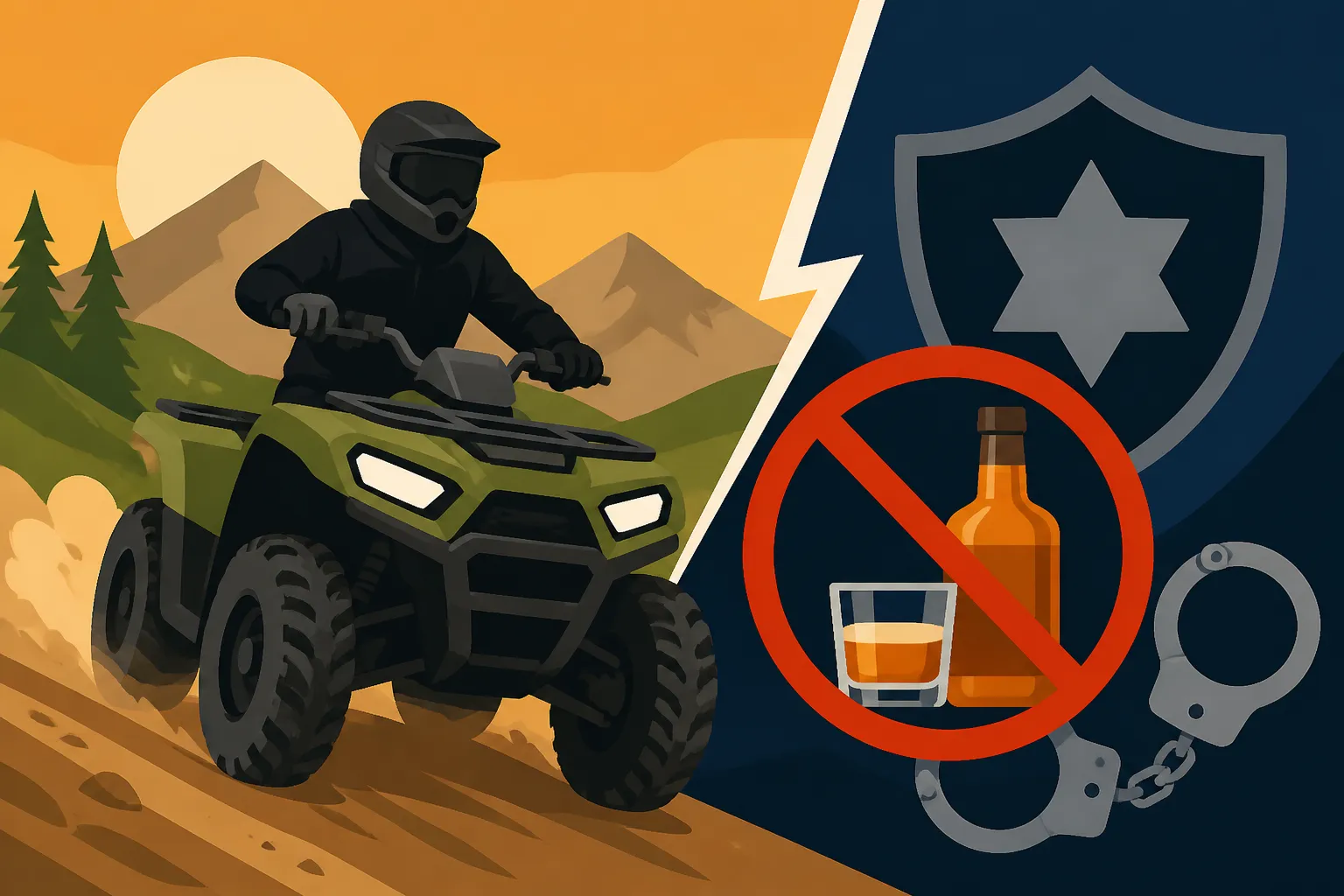
It's a common misconception that because you're off the pavement, perhaps on a remote forest service road or a dedicated OHV trail, the same rules about drinking and driving don't apply. Let me tell you, as someone who loves the Idaho backcountry, this couldn't be further from the truth. Idaho law is crystal clear: operating an Off-Highway Vehicle (OHV) while under the influence of alcohol, drugs, or a combination of both, is just as illegal and carries many of the same serious consequences as a DUI in a passenger car on a city street.
What Constitutes "Under the Influence" for an OHV?
In Idaho, the legal standard for being "under the influence" applies broadly across all motor vehicles, including your ATV or UTV. For adults 21 years or older, if your blood alcohol content (BAC) is 0.08% or higher, you are legally considered intoxicated and can be charged with a DUI. However, it’s crucial to understand that you can still be charged if your BAC is below 0.08% if an officer determines you are impaired to a degree that makes you incapable of safely operating your machine. This "actual physical control" concept means even if you're just sitting in a parked machine with the keys in the ignition, you could potentially be charged. Imagine you're at a remote campsite, enjoying a few beverages after a long day of riding. If you decide to move your UTV just a few feet to adjust it, and a ranger or deputy sees you, you could be facing a DUI. It's about your ability to safely control the machine, not just whether you're actively riding down a trail.
Public Land vs. Private Land: Where Do the Rules Apply?
Idaho's OHV DUI laws apply on any public land where OHVs are permitted. This includes the vast network of Forest Service roads, BLM trails, county roads open to OHVs, and designated OHV parks. Basically, if the public has access, the law applies. This is where many riders get caught out. They might think a remote two-track through the national forest feels like "private" territory, but it's very much public, and law enforcement actively patrols these areas.
What about private land? Generally, if you're on truly private property with the landowner's permission, and you're not accessible to the public, the public DUI laws don't typically apply. However, this is a very narrow exception. If you have guests over and someone rides their ATV around your property after having a few drinks, and an incident occurs, you might not face a public DUI charge, but you could still be liable for damages or injuries. And remember, crossing even a tiny strip of public land to get to that private property puts you back under the state's jurisdiction. Always err on the side of caution.
The Harsh Realities: Penalties and Consequences of an OHV DUI in Idaho
Getting a DUI on an OHV in Idaho isn't just a slap on the wrist. It carries significant penalties that can impact your finances, your freedom, and your ability to enjoy the very sport you love. The legal system doesn't differentiate much between an OHV DUI and a car DUI when it comes to the severity of consequences.
Immediate and Long-Term Legal Repercussions
Let's talk about what happens if you're caught. For a first offense, you're looking at a mandatory jail sentence, often between 24 hours and six months. You'll also face substantial fines, which can easily climb into the thousands of dollars once court costs and other fees are factored in. Beyond that, your driver's license will be suspended, usually for a period of 90 to 180 days, even if you weren't operating a street-legal vehicle. This is a critical point: an OHV DUI can absolutely impact your ability to drive your car to work or pick up groceries. You might also be required to complete an alcohol evaluation and follow through with any recommended treatment or education programs.
Subsequent offenses only make things worse. A second offense within ten years means longer jail time, higher fines, and a longer license suspension, often up to a year. A third offense within ten years can elevate the charge to a felony, leading to state prison time, even steeper fines, and a much longer, possibly permanent, license revocation. These aren't just minor inconveniences; they are life-altering events. Imagine losing your ability to get to work or even being unable to operate your OHV for years. It's a heavy price to pay for a moment of poor judgment.
Financial Burden and Insurance Implications
Beyond the fines, an OHV DUI will hit your wallet hard in other ways. Your insurance rates for all your vehicles—car, truck, and OHV—will almost certainly skyrocket. Many insurance companies consider a DUI a high-risk factor, and you could see your premiums double or even triple for several years. Some insurers might even drop your coverage altogether, making it difficult and expensive to find new policies. [Insuring an ATV in Idaho] is important for any rider, but even more so after a DUI.
There are also legal fees. Hiring an attorney to navigate the complexities of a DUI charge, even for an OHV, can cost thousands of dollars. And don't forget the costs associated with getting your license reinstated, such as fees for an ignition interlock device if required, or for specific courses you might need to take. When you tally up all these expenses, a single OHV DUI can easily cost you tens of thousands of dollars over time. It's a financial hole that's incredibly difficult to dig out of.
Impact on Your Driving and Riding Privileges
One of the most immediate and frustrating consequences for an avid rider is the loss of your driving and riding privileges. If your driver's license is suspended, you cannot operate any motor vehicle, including your OHV, on public lands or roads. This means your beloved quad or side-by-side will sit in the garage, gathering dust, while you're left watching others enjoy the trails.
Moreover, if you are caught riding an OHV while your driver's license is suspended due to a DUI, you're looking at additional, even more severe charges. This isn't just a violation; it's often seen as a blatant disregard for the law and can lead to extended suspensions, higher fines, and further jail time. It's a compounding problem that quickly escalates. For many, riding is a lifestyle, a way to connect with nature and friends. Losing that privilege, even temporarily, is a significant blow. The importance of [Do You Need a Driver's License to Ride an Idaho Road?] becomes clear in these situations, as does [Driver's License Requirements on Idaho Roads].
Staying Safe and Sober: Preventing an OHV DUI on the Trails
The best way to avoid an OHV DUI is simple: don't drink and ride. It sounds obvious, but the temptation can be real, especially when you're out in the wilderness, enjoying a beautiful Idaho day. Planning ahead and making smart choices are your best defenses.
Designate a Sober Rider or Driver
If alcohol is going to be part of your outing, even just at camp after the ride, commit to designating a sober rider before you even leave home. This person will be responsible for operating any machines, whether it's moving them around camp or, heaven forbid, needing to ride out for an emergency. This goes hand-in-hand with designating a sober driver for the truck and trailer, too. The same DUI laws apply when you're hauling your machines home on the highway. Think about setting up a rotation, or perhaps having one person volunteer for the entire trip if they're not interested in drinking. This clear plan eliminates any last-minute temptations or dangerous decisions.
Focus on Hydration and Snacks
Being out on the trails, especially in the summer heat or at higher elevations, can be incredibly dehydrating. This can make the effects of alcohol even more pronounced and dangerous. Instead of cracking open a cold one, focus on staying hydrated with plenty of water, electrolyte drinks, or even non-alcoholic sparkling beverages. Pack plenty of healthy snacks to keep your energy up. Brands like SuperATV offer excellent storage solutions for coolers and gear, making it easy to bring along all the water and food you need for a full day of riding without having to rely on alcohol. Keeping your body fueled and hydrated properly will improve your reaction time, judgment, and overall enjoyment of the ride.
Plan Your Post-Ride Activities Carefully
If your group intends to have alcoholic beverages, make sure it’s done safely and responsibly, far away from any operation of OHVs. This often means returning to your campsite, parking the machines for the night, and enjoying beverages only when there's absolutely no chance anyone will get back on an OHV. Consider setting up a separate "party zone" away from the machines. Maybe it's around the campfire or a designated picnic area. The key is to create a clear separation between riding and drinking. This disciplined approach not only keeps you legal but ensures everyone remains safe and in good spirits.
Know Your Limits and Be Accountable
Even if you’re not planning to ride, it’s vital to know your personal limits if you choose to consume alcohol. Just because you're at camp doesn't mean you should overdo it. The backcountry can be unforgiving, and clearheaded thinking is essential, even off the machine. Be accountable to your riding buddies, and ask them to be accountable to you. If you see someone making a questionable decision, step in and gently remind them of the risks and consequences. A quick conversation can prevent a lifetime of regret. Remember, everyone wants to have a good time, but everyone also wants to get home safely.
What Happens if You're Stopped: Navigating an OHV DUI Stop
While the best advice is always to avoid putting yourself in this situation, it's helpful to understand what might happen if you are stopped by law enforcement while operating an OHV. Knowledge can help you remain calm and act appropriately.
Cooperating with Law Enforcement (Within Limits)
If a Forest Ranger, BLM Officer, or County Sheriff deputy pulls you over on your OHV, the first and most important thing to do is comply with their instructions. Pull over safely, turn off your engine, and keep your hands visible. Be polite and respectful. You are required to provide your identification, any necessary registration or sticker information, and proof of insurance if requested. [What an Idaho Deputy Asks a Rider For] details these requirements.
However, you have rights. You are not required to answer questions that might incriminate you, beyond basic identification. You can politely state, "Officer, I prefer not to answer any questions without an attorney present." They may ask you to perform field sobriety tests (FSTs) or to take a Portable Breath Test (PBT). While refusing these tests often has consequences (like an automatic license suspension, even if you are later found not guilty of DUI), it is your right to refuse them. However, refusal can be used against you in court as evidence of guilt. This is a complex area, and the best advice often comes from an attorney immediately after a stop.
Understanding Implied Consent
Idaho has an "implied consent" law. This means that by choosing to operate a motor vehicle (including an OHV) on public lands or roads in Idaho, you automatically consent to chemical tests (blood, breath, or urine) if an officer has probable cause to believe you are under the influence. If you refuse these tests, your driver's license will be automatically suspended, regardless of whether you are ultimately convicted of a DUI. This administrative license suspension is separate from any court-imposed penalties.
It’s a tough situation, but it's important to know that refusing a chemical test will likely lead to an immediate loss of your driving privileges for a certain period, which can be extended if you also get convicted of the DUI. It's a consequence you face even before a judge hears your case.
After the Stop: What to Expect Next
If you are arrested for an OHV DUI, you will be transported to a local law enforcement facility for processing. Your OHV will likely be impounded, adding another layer of cost and inconvenience. You'll be booked, fingerprinted, and may be held until you can post bail or are released on your own recognizance.
The very next step should be to contact an attorney specializing in DUI cases. They can advise you on your rights, explain the charges, and help you navigate the legal process. Do not try to go it alone. The legal system is complex, and the stakes are high, impacting your driver's license, your finances, and your freedom. Getting an [Idaho OHV Title Application at the County Assessor] or understanding [Idaho Sales Tax on an ATV Purchase] are straightforward processes compared to the complexities of a DUI defense. The immediate focus after an arrest should be legal representation.
Summary of Potential OHV DUI Consequences in Idaho
Here's a quick overview of what you could face, but remember, these are minimums and can increase significantly with prior offenses or aggravating circumstances:
| Consequence | First Offense (Adult) | Second Offense (Within 10 Years) | Third Offense (Within 10 Years) |
|---|---|---|---|
| Jail Time | 24 hours to 6 months | 10 days to 1 year | Felony: 30 days to 5 years state prison |
| Fines | $400 – $1,000 (plus court costs/fees) | $800 – $2,000 (plus court costs/fees) | $2,000 – $5,000 (plus court costs/fees) |
| Driver's License | 90 to 180-day suspension | 1-year suspension | Revocation (often 1-5 years, potentially longer) |
| Ignition Interlock | May be required after reinstatement | Likely required after reinstatement | Mandated after reinstatement |
| Alcohol Evaluation | Required | Required | Required |
| OHV Impoundment | Likely | Likely | Likely |
| Insurance Rates | Significant increase for several years | Even more significant increase; potential policy cancellation | Extremely high increase; extreme difficulty finding coverage |
| Felony Record | No (unless aggravating factors) | No (unless aggravating factors) | Yes |
These penalties are severe and are designed to deter intoxicated driving on all vehicles. The best way to avoid them is to make the responsible choice: separate drinking from riding entirely. Enjoy Idaho's trails responsibly, and ensure that every trip ends safely for you, your friends, and the beautiful landscapes you enjoy. [Idaho Alcohol Limits for OHV Operators] exist for a reason – to keep everyone safe.
Disclaimer
This article is for general informational purposes only and does not constitute professional advice. Laws, prices and regulations vary by location and change over time. Consult a qualified professional for guidance on your specific situation.