Seat Belts and Nets in a Side-by-Side
Riding a side-by-side in Idaho, especially when you venture onto designated county roads, brings a unique set of responsibilities. One common worry many riders share revolves around safety – specifically, what's truly required and what's just a good idea when it comes to seat belts, harnesses, and protective nets in their UTVs. This guide will walk you through Idaho's expectations for these crucial safety features, helping you understand both the legal necessities and the practical benefits for a safer, more enjoyable ride.
Understanding Idaho's Stance on Side-by-Side Safety Features
When you're out exploring Idaho's incredible backcountry or just heading down a county road to the next trailhead, the last thing you want to worry about is whether your machine is safe or legally compliant. Side-by-sides are designed with robust safety features, and understanding them is key to peace of mind. Idaho takes safety seriously, and while some rules are explicit, others are implied by the very nature of operating a vehicle on public thoroughfares.
The Core Requirement: Seat Belts Are Non-Negotiable
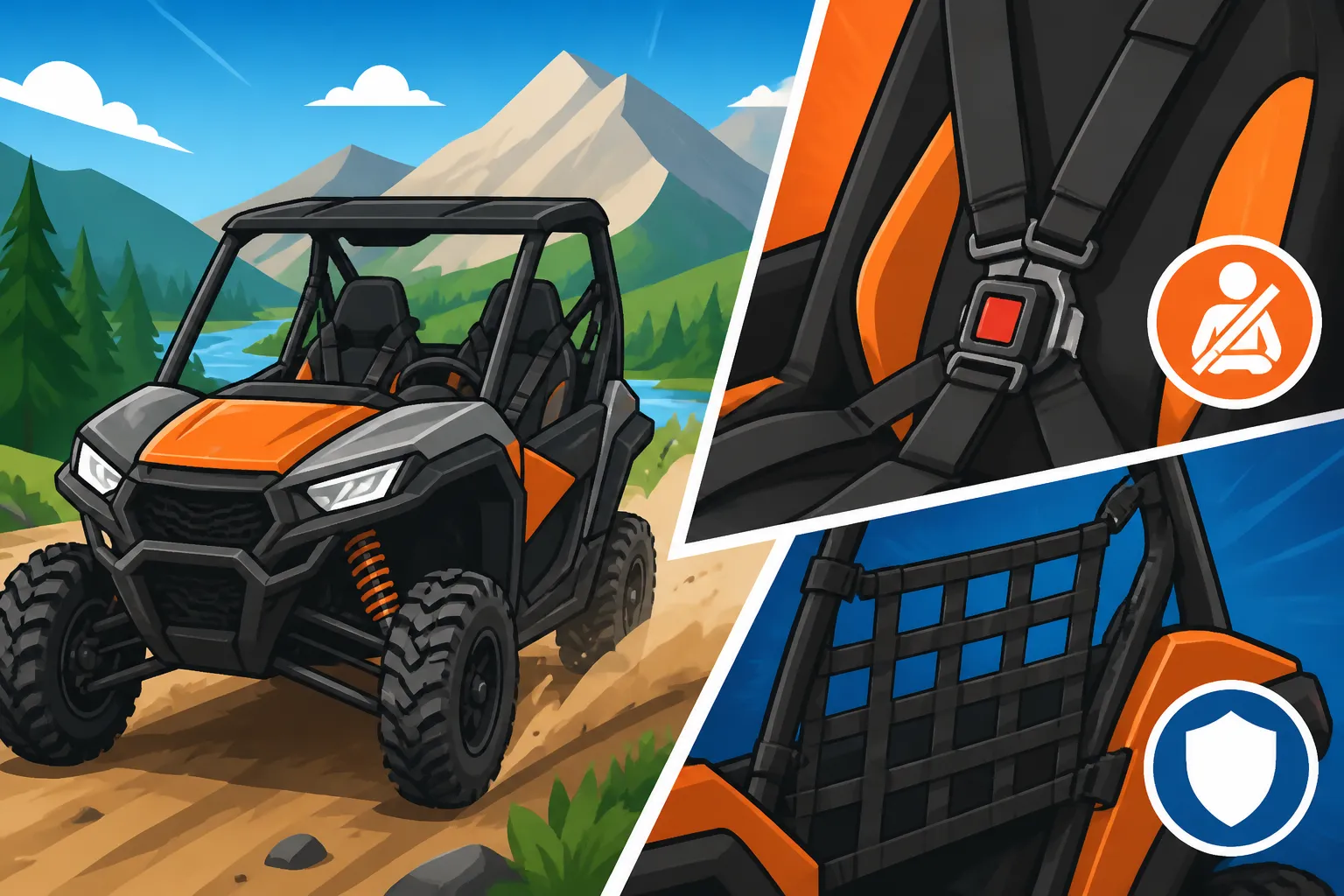
Let's get straight to it: seat belts in a side-by-side are not an option; they are a fundamental safety device. From the moment you purchase a new UTV, it comes equipped with seat belts, usually three-point retractable belts similar to what you'd find in a car. These aren't just for show; they're your primary restraint system. On the trail, they keep you securely planted in your seat over rough terrain, preventing you from being jostled around or, worse, ejected during a sudden bump or roll. When you transition to a county road, these belts become even more critical. You're now sharing the road with other vehicles, often traveling at higher speeds, and the risks of a collision increase.
Idaho's regulations for operating off-highway vehicles (OHVs) on public roads often defer to the equipment installed by the manufacturer and general safe operation principles. While the law might not always scream "wear your seat belt!" specifically for OHVs, it's an expectation tied to safe vehicle operation, just as it is in any other motor vehicle. Failing to use an available and functioning seat belt isn't just a safety hazard; it can also be a significant factor if you're involved in an accident, potentially impacting liability or injury claims. Many riders initially find them a bit restrictive compared to the open-air feel of an ATV, but that momentary discomfort is a small price to pay for genuine protection. It’s a habit worth forming, every single time you buckle up.
Distinguishing Between Factory and Aftermarket Systems
The seat belts that come with your side-by-side from the factory are designed to meet certain safety standards. These Original Equipment Manufacturer (OEM) belts are typically three-point systems, which means they secure you across the lap and diagonally across the torso. They're reliable, comfortable for most casual riding, and generally sufficient for meeting basic legal expectations. However, many avid riders, especially those who tackle more aggressive terrain or participate in competitive events, look to aftermarket solutions for enhanced safety.
Aftermarket systems often include 4-point, 5-point, or even 6-point harnesses. These harnesses offer a much higher degree of containment, strapping you firmly into your seat across your shoulders, hips, and sometimes even between your legs. Companies like SuperATV offer a wide range of these upgraded harnesses, often featuring quick-release buckles and padded straps for comfort. The benefit here is significantly improved security, preventing your body from moving excessively within the cabin during violent jolts, rolls, or impacts. For side-by-sides modified for high-performance use or heavy trail work, these aftermarket harnesses become almost essential. While Idaho doesn't typically require a 4-point harness for road use, upgrading to one can provide a substantial safety boost, especially if your UTV is lifted or you frequently encounter challenging conditions. It’s about taking proactive steps to protect yourself and your passengers beyond the minimum.
Roll Cages, Nets, and Supplemental Restraints for Road Use
Beyond just what holds you in your seat, the structural integrity of your side-by-side plays a massive role in occupant protection. The entire design of a UTV is built around providing a protective shell, and understanding the nuances of roll cages and various nets can significantly enhance your safety strategy, especially when riding on Idaho's public roads.
The Role of Roll Cages in Overall Safety
The roll cage is arguably the most critical safety component of any side-by-side. It's the steel framework that surrounds the occupants, designed to maintain a survival space in the event of a rollover or impact. Every factory UTV comes with a roll cage, built to engineering specifications to offer a degree of protection. However, much like seat belts, there's a spectrum of protection available. Some riders, particularly those pushing their machines to extreme limits or modifying them extensively, choose to upgrade their factory cages.
Aftermarket roll cages are often constructed from stronger, thicker tubing and feature more robust designs with additional bracing. These enhanced cages significantly increase the odds of a positive outcome in a serious accident. For side-by-sides that are street-legal and frequently driven on county roads, the integrity of the roll cage is paramount. While a direct collision with a full-size vehicle might overwhelm any UTV cage, a strong cage can prevent catastrophic crushing in rollovers and provide crucial protection against flying debris from the trail or road. Investing in a high-quality roll cage, whether an upgraded factory unit or a custom build, is a testament to prioritizing occupant safety.
Window Nets and Door Inserts: Added Protection or Obstacle?
When you see a side-by-side with window nets or solid door inserts, it usually signals a machine built for serious off-roading or racing. These accessories serve a vital purpose: to keep limbs, particularly arms and legs, inside the protective confines of the roll cage in the event of a rollover or side impact. They also help prevent loose debris from entering the cabin, which can be a real issue on dusty trails or gravel roads. But are they a legal requirement for road use in Idaho? Generally, no. Idaho law doesn't typically mandate window nets or full doors for OHVs operating on county roads.
However, just because they're not legally required doesn't mean they don't offer significant benefits. For instance, if you're frequently riding through brushy areas or on roads where other vehicles kick up a lot of rocks, nets or door inserts provide an extra layer of defense. They can also enhance the feeling of security for passengers, especially children. Some riders, for instance, choose to install lower door panels to prevent mud and water splash, which can also offer some containment. When considering such additions, think about your primary use. If most of your riding is sedate street cruising, they might feel like an unnecessary hindrance. If you're tackling aggressive trails and then connecting those trails via open roads, the added protection might be a wise investment. You can find robust window nets and door inserts from manufacturers like SuperATV, designed to integrate seamlessly with various UTV models. This topic touches on [Roll Cages and Nets on a Road Ride], which explores these considerations in more detail.
Legalities and Practicalities: What Idaho Expects for Road Riding
Taking your side-by-side from the dirt onto Idaho's county roads is a privilege that comes with specific responsibilities. It's not just about having the right plate and sticker; it's about operating a safe, road-worthy vehicle. Understanding the specific legal framework ensures you enjoy your ride without unexpected fines or safety compromises.
Idaho's Specific Requirements for Operating on Public Roads
Idaho has specific regulations for off-highway vehicles that venture onto public roads. The goal is to ensure OHVs are equipped similarly to other motor vehicles, enhancing safety for everyone. Beyond the obvious need for an [Idaho's Restricted Vehicle Plate Explained] and a valid [What an Idaho OHV Sticker Costs Each Year], your machine needs to have operational headlights, taillights, brake lights, a horn, and mirrors. These items are fundamental for signaling, visibility, and awareness of your surroundings, just as they are for a car or truck. You'll also need a valid driver's license and proof of liability insurance, as covered in [Driver's License and Insurance on an Idaho Road Ride].
When it comes to seat belts, while Idaho law might not explicitly state "all OHV occupants must wear a seat belt on a public road," the implicit expectation is that if a vehicle is equipped with seat belts, they must be used. Think of it this way: your side-by-side is now functioning as a motor vehicle on a public road. The general safety principles for operating any motor vehicle, including the use of available restraint systems, apply. For passengers, especially children, there are additional considerations, similar to those for a conventional vehicle, though specific child seat laws may differ for OHVs. The bottom line is that your side-by-side must be deemed "properly equipped" to handle road conditions, and functioning, worn seat belts are a significant part of that equation. This directly relates to [What Idaho Requires to Ride a County Road], which outlines the broader scope of equipment needed.
Ensuring Compliance and Avoiding Citations
Riding legally on Idaho's county roads means being prepared for an encounter with law enforcement. A sheriff's deputy or Idaho State Police trooper isn't just looking for a plate and sticker; they're assessing the overall safety and compliance of your vehicle. During a traffic stop, they'll likely check your driver's license, registration, and insurance. They'll also quickly scan your machine for basic safety equipment: are your lights working? Do you have mirrors? Is your horn audible? And crucially, are you and your passengers properly restrained? If an officer sees an occupant not wearing an available seat belt, it can absolutely lead to a citation for an unsafe operation or even a specific seat belt violation, depending on how local ordinances are structured.
The consequences of non-compliance can range from a warning to a substantial fine, and repeated offenses can impact your riding privileges. For example, riding without an OHV sticker or a restricted plate can lead to fines, as detailed in articles like [Fines for an Unstickered OHV in Idaho] or [Idaho Penalties for a Missing Restricted Plate]. Similarly, violations related to safety equipment can incur penalties. Beyond the legal ramifications, there's the far more serious consequence of injury. A working seat belt is your best defense against serious injury in an accident. Regularly inspect your seat belts for fraying, cuts, or damaged buckles. Ensure they retract properly and are easily adjustable for every rider. It’s not just about avoiding a ticket; it’s about making sure your day out doesn’t end in the emergency room.
Choosing and Maintaining Your Side-by-Side's Safety Gear
Making informed decisions about your side-by-side's safety equipment and keeping it in top condition is paramount for every ride. It's an ongoing commitment that pays dividends in peace of mind and, potentially, in personal safety.
Making Smart Choices for Your Riding Style
When it comes to safety gear, one size doesn't fit all. Your choice of seat belts, harnesses, and supplementary restraints should be dictated by your primary riding style. If you primarily use your side-by-side for casual cruising on smooth gravel roads and connecting trails, the factory three-point seat belts, properly maintained, might be perfectly adequate. They offer a good balance of safety and ease of use, allowing occupants to move slightly more freely while still providing essential protection.
However, if you're the type of rider who seeks out challenging rock crawling, aggressive dune riding, or high-speed trail runs that push the limits of your machine, then upgrading to a 4-point or 5-point harness is a very smart move. These multi-point harnesses provide superior body containment, preventing you from being slammed against the roll cage or ejected during extreme maneuvers or impacts. Consider what aftermarket options offer: more secure mounting points, stronger webbing, and perhaps a wider range of adjustability for different body types. Brands like SuperATV offer robust harnesses designed for serious off-road use, often with features like padded shoulder straps for comfort during long rides. When choosing, think about the trade-off: higher containment often means slightly more effort to buckle in, but the increased safety margin is well worth it for aggressive riding. This choice also extends to your passengers, especially if you carry children or less experienced riders, ensuring everyone is as secure as possible.
Inspection and Maintenance for Longevity and Safety
Just like any other component on your side-by-side, your safety gear requires regular inspection and maintenance. Seat belts and harnesses are exposed to the elements – sun, dust, mud, and moisture – all of which can degrade their integrity over time. Make it a habit to check your seat belts before every ride, or at least before every major trip. Look for fraying, cuts, tears, or excessive wear on the webbing. Test the buckles to ensure they latch and release smoothly, and check that retractable belts fully retract without sticking. Any signs of damage mean it's time for a replacement. A compromised seat belt is a dangerous seat belt.
Similarly, if you have door inserts or window nets, inspect their mounting points, the integrity of the nets themselves (look for holes or tears), and ensure any latches or zippers are functioning correctly. The roll cage, while incredibly sturdy, should also be visually inspected for any cracks in welds, bends in the tubing, or signs of impact damage. If your machine has been involved in a rollover or serious impact, even if it looks okay, it's crucial to have the roll cage professionally inspected. Hidden damage can compromise its structural integrity. Regular cleaning, especially after muddy rides, helps prevent grime from accumulating in buckles and mechanisms, ensuring smooth operation. Proper maintenance not only extends the life of your safety equipment but, most importantly, ensures it performs as intended when you need it most.
Here's a quick comparison of typical OEM vs. Aftermarket seat belt systems:
| Feature | OEM (Factory) Seat Belt System | Aftermarket Harness System (e.g., 4 or 5-point) |
|---|---|---|
| Type | Usually 3-point retractable | 4-point, 5-point, or 6-point fixed/adjustable |
| Containment | Good for general use, allows some upper body movement | Excellent, minimizes body movement within the cabin |
| Ease of Use | Very easy to buckle/unbuckle, similar to a car | Slightly more involved to buckle, but quick-release options exist |
| Comfort | Designed for general comfort, often padded | Can be more restrictive; high-quality options include heavy padding |
| Installation | Factory installed | Typically bolt-in, requires specific mounting points/hardware |
| Cost | Included with vehicle; replacements can be moderate | Varies widely by brand and points, generally a significant upgrade investment |
| Primary Benefit | Meets basic safety standards for casual riding | Superior security for aggressive riding, competition, and enhanced safety |
| Typical User | Casual trail riders, road connectors, general utility | Enthusiasts, racers, aggressive off-roaders, those seeking maximum safety |
Ultimately, being informed and proactive about your side-by-side's safety features is part of being a responsible rider. Whether you stick with factory equipment or upgrade to advanced systems, making sure everything is in top working order is the best way to enjoy all that Idaho's trails and roads have to offer.
Disclaimer
This article is for general informational purposes only and does not constitute professional advice. Laws, prices and regulations vary by location and change over time. Consult a qualified professional for guidance on your specific situation.