Riding to a Hunting Camp in Idaho
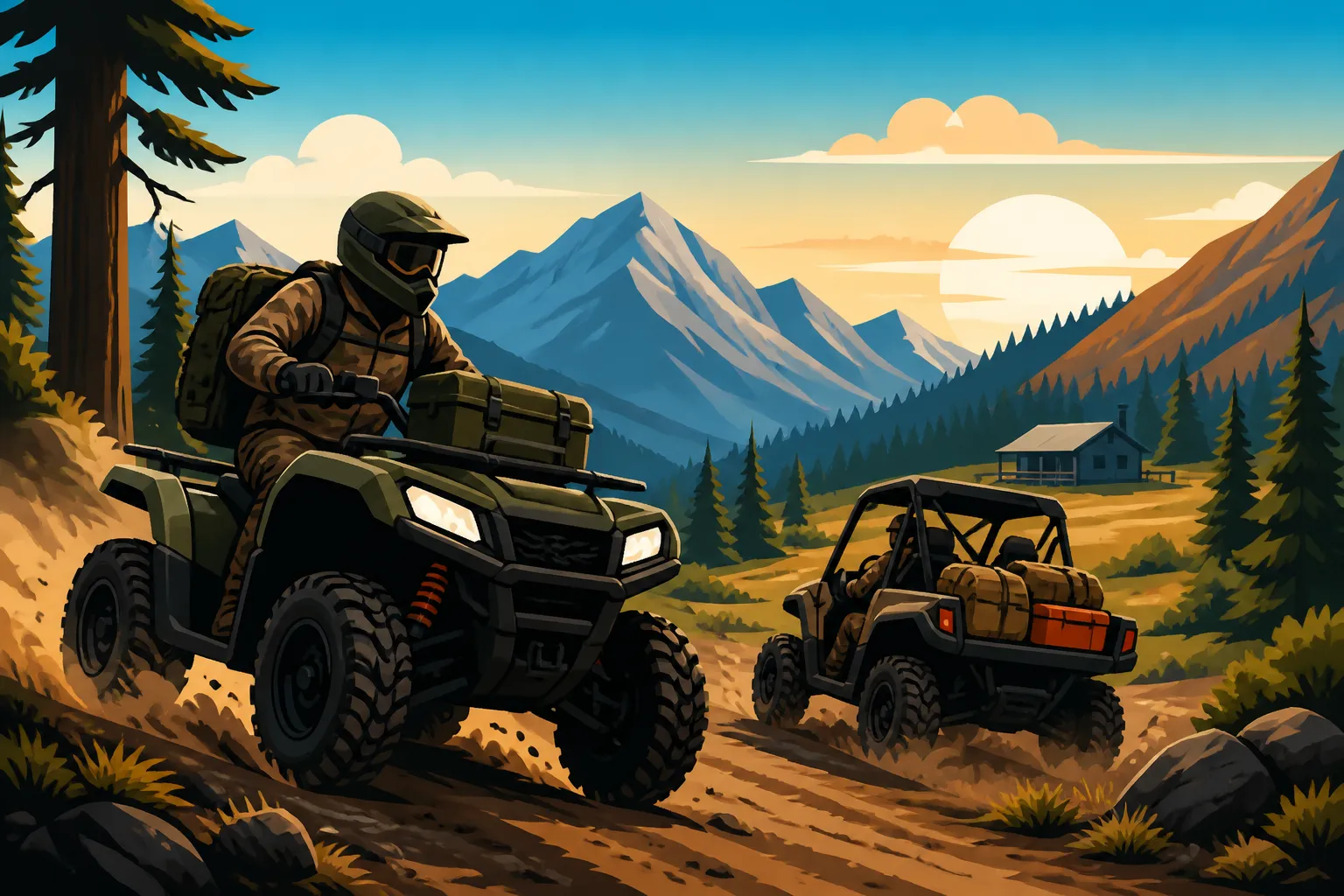
For many of us who cherish Idaho's wild landscapes, the thought of pointing our ATV or UTV toward a remote hunting camp is the stuff of dreams. Yet, the reality of navigating public lands with your machine and hunting gear can quickly turn into a bureaucratic headache if you're not prepared. This comprehensive guide will untangle the complexities, helping you understand the rules, prepare your machine, and ride safely and legally to your Idaho hunting camp.
Understanding Idaho's OHV Rules for Hunting Access
Heading into Idaho's backcountry on your ATV or UTV for hunting means you’re operating a motorized vehicle on public lands, and that comes with a specific set of responsibilities and regulations. Ignorance of these rules can lead to hefty fines, or worse, losing access to critical hunting areas. It's not just about getting to camp; it's about staying legal and ensuring future access for everyone.
Sticker and Plate Requirements for Public Land Access
Before your tires even touch an Idaho trail, your machine needs to be properly marked. Every ATV and UTV operating on designated public OHV trails or roads in Idaho must display a valid Idaho OHV sticker. This isn't optional; it's the state's way of funding trail maintenance and enforcement, directly impacting the quality of your riding experience. Even if you're only using Forest Service or BLM routes to get to your hunting area, that sticker is non-negotiable. You can read more about [What an Idaho OHV Sticker Costs Each Year].
Now, if your journey to hunting camp involves traversing any paved county roads, you'll likely need more than just the OHV sticker. That's where Idaho's Restricted Vehicle Plate comes into play. This special "R" plate allows you to legally operate your OHV on certain county roads and, in some cases, designated city streets to connect trails or access services. It’s crucial to understand that this plate isn't a free pass for all paved roads, but it's often essential for bridging gaps between trail systems and reaching those remote staging areas that lead to your hunting grounds. Familiarize yourself with [Idaho's Restricted Vehicle Plate Explained] to avoid an unwelcome conversation with a local sheriff.
While there are some farm and ranch exemptions for OHV use in Idaho, these typically apply to specific agricultural activities on private or designated farm lands, not generally for accessing public hunting areas. Don't assume your "ranch machine" status automatically exempts you from sticker and plate requirements when you venture onto state or federal lands for your hunt. Always err on the side of caution and ensure your machine is fully compliant before you load up your rifle and head out.
Road Riding and Public Access Limitations
Idaho's vast network of roads can be a bit of a maze when it comes to OHV legality. Not every road you encounter is open to your ATV or UTV, and knowing the difference is critical. State highways (like US-95 or Idaho State Highway 55) are generally off-limits for OHVs, regardless of whether you have a restricted plate or not. Crossing these highways is usually permissible at designated intersections, but riding along them for any distance is typically prohibited. It's frustrating when a short section of highway connects two great trail systems, but rules are rules.
Your primary access routes to hunting camps will likely be a combination of county roads, Forest Service (FS) roads, and Bureau of Land Management (BLM) routes. Many county roads, particularly those gravel or dirt roads leading into the mountains, are open to restricted-plate OHVs. However, it’s vital to check local ordinances, as individual counties or even specific towns can impose stricter rules or close certain roads. For FS and BLM lands, you absolutely need to consult Motor Vehicle Use Maps (MVUMs). These maps, available at ranger stations or online, are the definitive guide for which routes are open, which are closed, and what vehicle types are allowed. Relying on an outdated map or a hunch can easily land you in trouble. Learn more about [Which Idaho Roads Are Open to OHVs] and [What Idaho Requires Before You Ride a County Road].
If you plan to use those restricted-plate-friendly county roads, remember that you’re essentially sharing the road with regular vehicle traffic. This means you need a valid driver’s license, and your machine must be insured with at least the state’s minimum liability coverage. These are standard expectations for any vehicle operating on public roadways, even if it's a side-by-side. Don't overlook these details, as a traffic stop for a minor infraction could quickly compound if you're lacking the proper credentials. Understanding [Driver's License and Insurance on an Idaho Road Ride] is crucial for a stress-free journey to your hunting spot.
Wilderness Boundaries and Respecting Closed Areas
Idaho is home to some of the most pristine and protected wilderness in the Lower 48, and these areas are, by federal law, strictly off-limits to motorized vehicles. This includes ATVs, UTVs, motorcycles, and even e-bikes. Designated Wilderness Areas are managed for their primitive character, and vehicle noise and tracks are considered intrusions. It’s absolutely paramount that you know exactly where these boundaries lie. Imagine the heartbreak of finally reaching your hunting camp, only to find out you've inadvertently ridden into a Wilderness Area and face severe penalties.
The problem isn't always obvious signs; sometimes, boundaries are subtle or only marked on maps. This is another reason why those MVUMs and good GPS navigation are non-negotiable for hunting trips. You need to be able to identify Wilderness boundaries, designated non-motorized trails, and areas closed for seasonal wildlife protection or habitat restoration. These closures are in place for a reason—to protect the very resources and wildlife that draw us to these areas for hunting. Understanding [Idaho Wilderness Boundaries and OHVs] is key to being a responsible backcountry user.
The consequences of riding off-trail, creating new routes, or entering closed areas can be severe. Aside from the environmental damage, which affects everyone, you could face significant fines, confiscation of your machine, and even losing your hunting privileges. These aren't just minor tickets; they're serious infractions that land you in court. It’s a stark reminder that responsible land stewardship is part of the hunting tradition. Always stay on designated routes and respect all posted signs and boundaries. Know that [Penalties for Riding Off the Trail] are very real in Idaho.
Preparing Your Machine and Gear for the Hunt
Getting to your hunting camp successfully isn't just about knowing the rules; it's also about having a machine that's up to the task and gear that ensures your safety and success. The Idaho backcountry can be unforgiving, and a breakdown miles from civilization is a serious problem, especially when you're loaded with hunting equipment.
Essential Machine Checks and Modifications
Before you even think about loading your rifle, your ATV or UTV needs a thorough pre-trip inspection. Start with the basics: check your tire pressure and inspect for any cuts or excessive wear, as flats are common on rocky trails. Test your brakes—front and rear—and ensure they're responsive. Check all fluid levels: oil, coolant, and brake fluid. A small leak at home can become a major problem deep in the woods. Ensure all your lights are working, especially if you plan to be out around dawn or dusk, or riding on any roads. Headlights, taillights, and brake lights are not just for visibility; they're often legal requirements. You can learn more about [Lighting Rules for Riding After Dark in Idaho].
Hunting trips often demand more from your machine than a casual joyride. Consider modifications that enhance utility and durability. Heavy-duty cargo racks, front and rear, can make a huge difference in carrying camp supplies, game bags, and extra fuel. A good winch is almost a necessity for self-recovery or assisting a hunting buddy, especially on muddy trails or when retrieving a downed animal from a tough spot. Brands like SuperATV offer robust solutions, from cargo beds to powerful winches, designed to withstand the rigors of backcountry use. Investing in quality aftermarket accessories can save you a lot of grief in the field.
Don’t forget the exhaust system. All OHVs operating on public lands in Idaho must be equipped with a U.S. Forest Service-approved spark arrester to prevent wildfires. This is a critical piece of equipment during dry hunting seasons. Beyond the spark arrester, ensure your muffler is in good condition and your machine isn’t excessively loud. Local noise ordinances or simply respecting other hunters and wildlife means keeping your machine as quiet as possible. A noisy machine not only alerts game to your presence but can also draw negative attention from other outdoor enthusiasts or even law enforcement. Always ensure your setup adheres to [Mufflers and Spark Arresters] regulations.
Packing for the Backcountry: Beyond the Basics
Packing for an Idaho hunting camp trip on an OHV requires strategic planning. You’re not just bringing your hunting gear (rifle, ammo, optics); you're also packing for camp life, potentially several days away from resupply. This includes a tent, sleeping bag, cooking equipment, food, water, and emergency supplies. Maximize your machine’s cargo capacity with secure strapping systems. Bungee cords might work for a quick trip around the farm, but for bumpy, high-mileage backcountry travel, you need heavy-duty straps and potentially cargo nets to ensure everything stays put. Proper weight distribution is also key to maintaining your machine’s stability and handling on uneven terrain.
Beyond the hunting and camping essentials, consider items vital for backcountry safety and emergency preparedness. A well-stocked first-aid kit, suitable for trauma and minor injuries, is paramount. Navigation tools are a must: a reliable GPS unit (with downloaded maps), a compass, and a paper map of your specific hunting unit and trail system. Cell service is spotty to nonexistent in much of Idaho’s backcountry, so a satellite messenger or personal locator beacon (PLB) can be a literal lifesaver in an emergency. Extra fuel, a tire repair kit, and basic tools should also be on your packing list.
Retrieving harvested game is another major consideration. For deer-sized animals, a game cart might be feasible, but for elk or larger game, especially in steep terrain, your OHV is likely your primary method of transport. This means you need appropriate game bags to keep meat clean and cool, and you might consider a small, robust trailer designed for OHV towing if you anticipate large hauls. Again, products from companies like SuperATV, known for their durable recovery and hauling accessories, could be invaluable. Plan your extraction route as carefully as you plan your hunting strategy.
Fire Season and Other Seasonal Considerations
Hunting season in Idaho often coincides with prime wildfire season, particularly in the early fall. This means riders must be exceptionally vigilant about fire prevention. Your spark arrester is just the beginning. Avoid parking your hot machine in tall, dry grass. Carry a small shovel and a fire extinguisher. Be aware of any fire restrictions in place—these can range from partial bans on campfires to full closures of public lands. A single spark from an improperly maintained machine or a careless campfire could devastate vast tracts of land and jeopardize hunting opportunities for years to come. Staying informed about [Idaho Road Closures During Fire Season] is essential before heading out.
Idaho’s mountains present unique challenges depending on the time of year. Early season hunts might contend with lingering spring runoff, making trails muddy and water crossings treacherous. Late season hunts bring the risk of early snowfalls, especially at higher elevations, which can quickly turn a clear trail into an impassable whiteout. Always check weather forecasts for your specific hunting area, not just the nearest town. Mountain weather can change rapidly and dramatically. What starts as a sunny morning can quickly become a cold, rainy, or even snowy afternoon.
Preparation means not only checking the forecast but also having the gear to match. Waterproof outer layers, insulated clothing, and sturdy footwear are critical. Be mindful of how [Smoke and Visibility in Idaho Fire Season] can impact your ride and your hunt. Poor visibility due to smoke can be disorienting and make navigation difficult. Always err on the side of caution. If conditions are questionable, it’s always better to delay your trip or choose a less remote location than to risk getting stranded or caught in dangerous weather.
Navigating the Hunt: Rules and Etiquette
Riding your OHV to hunting camp isn't just about transportation; it's an integral part of the hunting experience. However, with that privilege comes a responsibility to adhere to specific regulations and demonstrate good etiquette toward fellow hunters, other recreationists, and the wildlife you pursue.
Carrying Firearms and Game on Your OHV
Idaho has specific laws regarding the transport of firearms on ATVs and UTVs, and it's critical to understand them to avoid legal issues. Generally, it is illegal to transport a loaded firearm on an OHV on public land, regardless of whether it’s cased or uncased. "Loaded" typically means a round in the chamber. The intent is to prevent "road hunting" or shooting directly from a motorized vehicle. Always transport firearms uncased with the action open or in a secured, fully enclosed case. Ensure that all ammunition is stored separately. Breaking these rules can lead to significant fines and potential loss of hunting privileges. Consult [Carrying a Rifle on an OHV in Idaho] for detailed regulations.
Once you’ve successfully harvested an animal, the challenge shifts to safely and legally transporting your game out of the backcountry. Field dressing your animal properly is the first step, both for meat preservation and to reduce weight. Use quality game bags to keep the meat clean and free from debris. Secure the carcass or quarters firmly to your OHV’s racks or within a trailer. You don’t want your hard-earned game bouncing around or falling off on a rough trail.
Meat care is paramount. Depending on ambient temperatures, you might need to find ways to cool the meat quickly to prevent spoilage. This could involve packing snow around it (if available) or ensuring it's exposed to circulating air. Plan your return trip carefully to minimize travel time and exposure to heat. It’s a sad reality to lose meat due to improper handling. Remember that proper tag validation and attachment are also crucial before moving the animal. Read up on [Packing Out Game by OHV] to ensure a legal and ethical retrieval.
Respecting Other Users and Wildlife
When you're riding your OHV to a hunting camp, you're not typically alone in the Idaho backcountry. You'll share trails and roads with other hunters (some on foot, some on horses), hikers, mountain bikers, and even other OHV enthusiasts who may not be hunting. Your actions can significantly impact their experience, so courtesy and respect are vital. Slow down when approaching other users, especially horses, and give them a wide berth. Turn off your engine if necessary to avoid startling pack animals. A friendly nod or wave goes a long way.
Noise is another major factor. While your machine needs to meet muffler and spark arrester requirements, excessive noise can still disturb wildlife and annoy other outdoor enthusiasts. Try to be mindful of noise, particularly near established campsites, trailheads, or known wildlife areas. This is especially true near small mountain towns where [Idaho Noise Rules Near Mountain Towns] might be in effect. Avoid unnecessary revving or speeding. Part of the hunting ethos is a respect for the environment and its tranquility, and minimizing your impact on soundscapes is part of that.
During hunting season, especially for big game, visibility is a safety concern. While not always mandated for OHV riders themselves (unless they are also actively hunting on foot), it's a very good idea to wear blaze orange or other highly visible colors, particularly if you’re parking your machine and walking into the woods. This helps distinguish you from game animals and makes you more visible to other hunters who might be in the area. Remember, safety always comes first. Consider [Blaze Orange on a Fall Trail Ride] as an essential part of your hunting camp ensemble.
Accessing Specific Hunting Units and Trail Systems
Idaho’s hunting regulations are structured around Game Management Units (GMUs), and understanding the specific rules for your GMU is non-negotiable. These rules dictate what you can hunt, when, and with what weapon. When planning your OHV route to your camp, you need to overlay your GMU map with Motor Vehicle Use Maps (MVUMs) for the area. MVUMs show specifically which roads and trails are open to motorized vehicles, which are restricted, and which are completely closed. This information is dynamic, so always ensure you have the most current versions.
Many popular hunting areas in Idaho are accessible via extensive networks of Forest Service or BLM roads and trails. For example, parts of the Boise National Forest offer numerous routes suitable for OHV access to high country hunting camps. Similarly, regions in the Caribou-Targhee National Forest in southeast Idaho provide vast opportunities. However, the exact rules for OHV travel, camping, and game retrieval can vary even within the same forest or district. It's not just about getting there; it's about making sure your entire hunting trip, including travel, aligns with the specific regulations of your chosen GMU and public land management area. Understanding [Reading an Idaho Motor Vehicle Use Map] is a vital skill.
Ultimately, successfully riding to your hunting camp in Idaho requires a blend of meticulous planning, adherence to regulations, and a deep respect for the backcountry environment. The effort you put into understanding the rules and preparing your machine and gear will pay off in a safer, more enjoyable, and more successful hunting experience. Happy hunting! Make sure you’re ready for [Planning an Idaho Riding Trip].
| Category | Required for Hunting Camp Access | Best Practices / Considerations |
|---|---|---|
| OHV Sticker | Yes, for all public lands | Annual renewal, display clearly. Funds trail maintenance. |
| Restricted Plate (R Plate) | Yes, if using county roads | Required for legal road riding; check local ordinances. Needs driver's license & insurance. |
| Motor Vehicle Use Map (MVUM) | Yes, always carry | Essential for identifying open roads/trails and wilderness boundaries. |
| Spark Arrester | Yes, USFS-approved | Mandatory on public lands to prevent wildfires. Check condition regularly. |
| Loaded Firearms | No | Firearms must be unloaded and uncased (or in a secured case) on an OHV. |
| Game Retrieval | Check rules per GMU | Use game bags, secure load, know weight limits, plan extraction route. |
| First Aid Kit | Highly Recommended | Comprehensive kit for trauma, basic injuries. |
| Navigation | Highly Recommended | GPS (downloaded maps), paper map, compass, satellite messenger. Cell service unreliable. |
| Blaze Orange | Recommended (especially if walking) | Enhances visibility to other hunters. |
| Respect | Yes, always | Slow down for others, minimize noise, stay on designated routes, avoid disturbing wildlife. |
Disclaimer
This article is for general informational purposes only and does not constitute professional advice. Laws, prices and regulations vary by location and change over time. Consult a qualified professional for guidance on your specific situation.