Snow-Covered Forest Roads in Spring
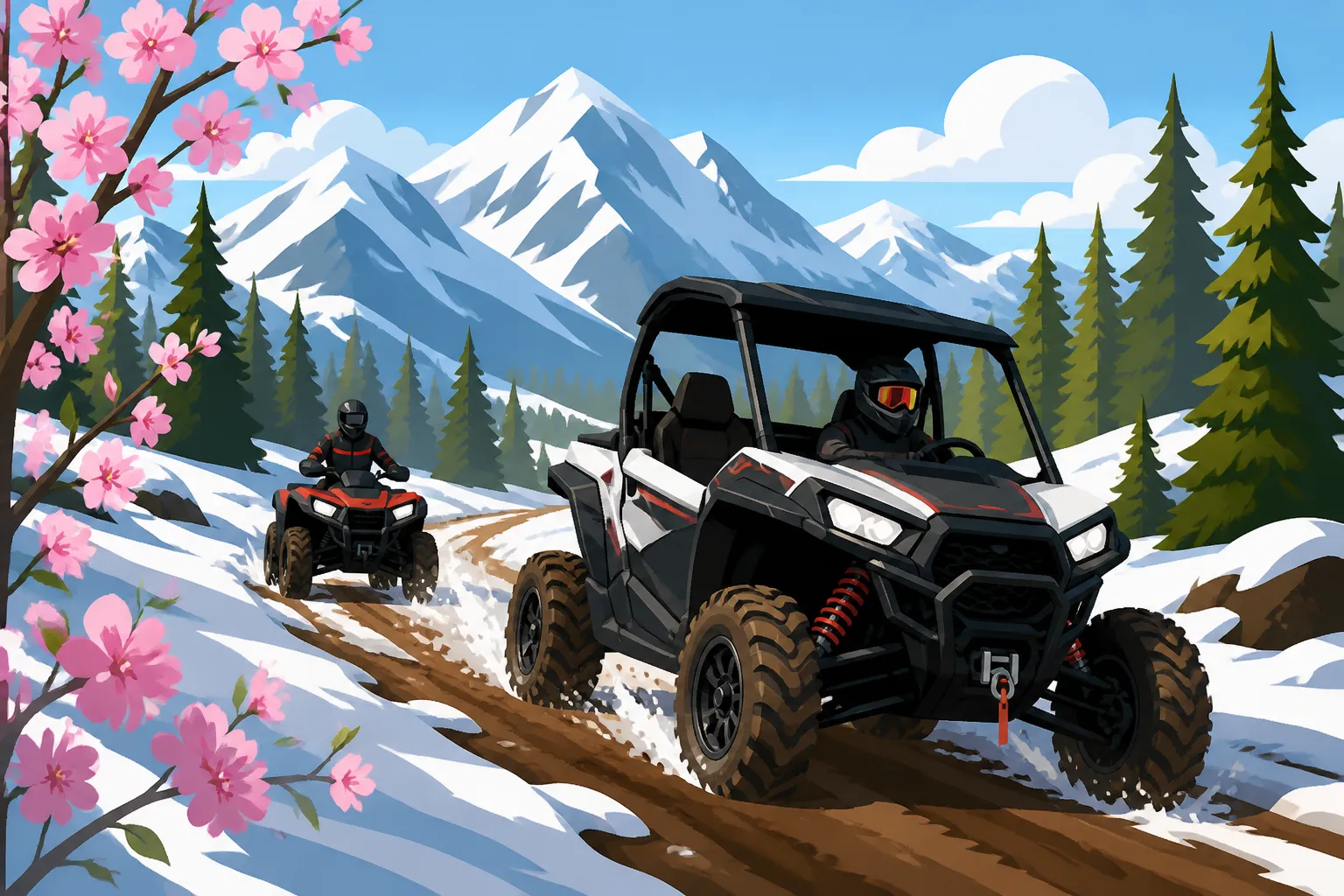
Ah, spring in Idaho! It's a time when the days get longer, the sun feels warmer, and the call of the mountains grows louder. For many ATV and UTV enthusiasts, this means eagerly planning those first rides of the season. But here's the thing – while the valley floors might be greening up, those higher elevation forest roads, where some of the best riding is, can still be deceptively covered in snow, creating unique challenges and even dangers that can quickly turn an exciting outing into a cold, wet, and stranded nightmare. This guide is here to help you understand the realities of spring snow riding in Idaho and prepare you to tackle those transitional conditions safely and successfully.
The Deceptive Nature of Spring Snow on Idaho Forest Roads
You've probably been there: it's a beautiful sunny day, the air is crisp but not freezing, and you figure, "Hey, it's May, that snow must be gone!" Then you drive up a forest service road, and suddenly, patches of snow appear, quickly turning into long, deep drifts that block the trail. The frustration is real, especially when you've loaded up the rig and driven hours to get to your favorite staging area, only to find access blocked or conditions far more treacherous than anticipated. This isn't just a minor inconvenience; it can be downright dangerous if you're not prepared for what lies beneath and within that melting snowpack.
Why Spring Snow is Different (and More Dangerous)
Spring snow isn't the fluffy, stable powder you might encounter in winter. It's a whole different beast, and it often lulls riders into a false sense of security. As temperatures fluctuate, this snow undergoes a freeze-thaw cycle, making it incredibly unpredictable. What might be solid and supportive in the morning can become slushy, heavy, and trap-like by afternoon. The snowpack becomes isothermal, meaning it's all at or near melting point, losing its structural integrity. You might hit a patch that looks firm, only for your machine to suddenly break through into deep, soupy slush or even a hidden water pocket, sinking your rig to the frame.
Another significant factor is the presence of underlying water. As the snow melts, it creates rivulets and streams beneath the surface. These can carve out hidden channels or create soft spots where the snow is barely supported. You could be riding along what appears to be a solid snow bridge over a small creek, only for it to collapse under the weight of your side-by-side. The snow itself is also incredibly heavy once it's saturated with water, making it much harder to push through or dig out of if you get stuck.
Common Pitfalls and Misconceptions
One of the biggest misconceptions is underestimating the depth and persistence of snow, especially in shaded areas or at higher elevations. Even when the sun is blasting, north-facing slopes and deep canyons can hold many feet of snow well into June, sometimes even July. What looks like a shallow drift from a distance can easily be several feet deep, ready to swallow your tires. People often assume that if a road is "open" on a forest service website, it means it's entirely clear. Unfortunately, this isn't always the case; "open" might just mean accessible to the lowest-elevation point, with higher sections still impassable.
Another common pitfall is the belief that a powerful machine can just "power through" anything. While a high-horsepower ATV or UTV certainly helps, brute force can often get you stuck deeper and faster in heavy, wet spring snow. Wheel spin quickly turns the snow into an even slushier, more intractable mess. Riders also tend to overlook the effect of mud underneath the snow. As the snow melts, the ground beneath becomes saturated, turning forest roads into a slippery, tire-grabbing quagmire of mud and slush. This combination makes forward progress challenging and can put immense strain on your drivetrain and suspension.
Essential Gear and Machine Prep for Spring Snow Riding
Being prepared for spring snow isn't just about having the right machine; it's about having the right stuff on and with your machine, and knowing how to use it. A little foresight can save you hours of grueling recovery work, or even a night stranded in the cold. Don't underestimate the potential for things to go sideways when venturing into these conditions.
Must-Have Recovery Equipment
When you know you might encounter snow, a robust recovery kit is non-negotiable. First and foremost, a reliable winch is your best friend. Make sure it's in good working order, with a strong synthetic rope and a fairlead. You'll also need a tree saver strap to protect trees when winching, and a few heavy-duty shackles. A snatch block can effectively double your winch's pulling power or allow you to pull from an angle. Don't forget a shovel – a solid, full-sized shovel, not just a flimsy folding one, is crucial for digging out packed, heavy snow. You'll thank yourself for having one when you're chest-deep in slush.
Beyond the winch, consider recovery boards or traction mats. Brands like SuperATV offer various recovery gear, including high-quality winches and traction boards that can give your tires the grip they need when completely buried. A tow strap or kinetic rope is also essential for a buddy to pull you out if your winch anchor points are limited or your winch fails. Remember, getting stuck in deep snow is rarely a quick fix; it's physically demanding work, so having the right tools makes all the difference. Always ensure your recovery gear is easily accessible, not buried under a pile of camping equipment.
Machine Modifications for Traction and Protection
While you might not go full snow-track conversion for a spring ride, certain modifications can greatly improve your machine's capability and longevity in these conditions. Aggressive mud tires are key; their deep lugs excel at finding traction in soft, wet earth and slop. Make sure they're in good condition, as worn tires offer little bite. Some riders even air down their tires slightly for a larger footprint and better floatation over softer snow, but be cautious not to go too low, especially if you'll be on rocky sections.
For protection, full skid plates are a must. They protect your machine's undercarriage from hidden rocks, stumps, and anything else lurking beneath the snow that could tear a hole in your drivetrain or fuel tank. Mudguards and fender extensions can help keep snow, mud, and water from being flung into your radiator, engine bay, and onto your passengers, which helps with visibility and keeps vital components clear. A good snorkel system, if you expect deep water or snow, can prevent hydrolock, though for most spring snow, keeping water out of the airbox is the primary concern. Don't forget to check your coolant levels and ensure your cooling system is clean and efficient, as slogging through heavy snow can cause machines to run hotter.
Personal Gear for Changing Conditions
Spring in Idaho is notorious for its fickle weather. You might start the day in sunshine and end it in a snow squall. Layering is critical. Begin with a moisture-wicking base layer, add an insulating mid-layer (fleece or down), and top it with a waterproof and windproof outer shell. This allows you to adjust to temperature swings and stay dry, which is paramount in cold, wet conditions. Waterproof gloves, socks, and boots are also essential. There's nothing worse than cold, wet feet or hands when trying to recover a stuck machine.
Carry extra dry clothes, especially socks, in a waterproof bag. A small backpack with water, high-energy snacks, a first-aid kit, a headlamp, and a fire starter are basic backcountry essentials. Don't forget communication devices. Cell service is spotty at best in many Idaho forest roads, so a satellite messenger like a Garmin InReach or a two-way radio can be a lifesaver if you need to call for help. A fully charged power bank for your phone is also a good idea. Remember, [What to Carry on a Remote Ride] is always more than you think.
Navigating Snow-Covered Roads Safely in Idaho
Riding snow-covered forest roads isn't just about having the right gear; it's about technique, awareness, and knowing when to turn back. Impatience or overconfidence can lead to serious trouble. The goal is to have an enjoyable, safe adventure, not to test your recovery skills at every turn.
Reading the Snow and Terrain
Before you charge into a snow drift, take a moment to assess it. Look for clues:
- Sun exposure: South-facing slopes will melt faster and likely have softer, slushier snow. North-facing slopes or shaded areas will hold deeper, firmer, and colder snow.
- Color and texture: Darker, granular snow is usually wet and heavy. Bright, fluffy snow is generally colder and less saturated. Icy patches will be slick and reflective.
- Tracks: Are there existing tracks? How deep are they? Did the previous machine get stuck? Be cautious of old tracks, as they can refreeze and become solid ruts, or they might hide deep slush. Fresh tracks give a better indication of current conditions.
- Underlying terrain: Are you on a flat, open road, or is there a steep drop-off or a creek running alongside? Don't forget that a [Checking an Idaho Motor Vehicle Use Map] can help you understand the terrain. Try to visualize what might be beneath the snow.
If you decide to proceed, go slowly and steadily. Maintain momentum, but don't just mash the throttle. Gentle, consistent throttle input is often more effective than bursts of power, which can lead to excessive wheel spin and digging in deeper. Look far ahead to anticipate changes in snow depth and terrain. If a section looks particularly dicey, consider scouting it on foot first, if it's safe to do so.
Group Riding Strategies for Spring Conditions
Riding alone in spring snow is generally not recommended due to the inherent risks. If you do go, make sure someone knows your route and expected return time. Riding with a group, ideally with at least two machines, provides a crucial safety net. When encountering deeper snow, have one machine go ahead to test the waters. This lead machine can break trail, and if they get stuck, the others are positioned to assist with recovery.
Communication within the group is vital. Use hand signals or two-way radios to share information about snow depth, hidden obstacles, and hazards. Maintain a safe following distance, especially in visibility-limiting conditions like heavy snow or fog. If one machine gets stuck, everyone should participate in the recovery effort. Work together, keep warm, and stay hydrated. Remember, the slowest person sets the pace, and the goal is to get everyone through safely, not to race. Sometimes, the best strategy is to simply turn around if conditions become too dangerous or beyond your group's capabilities.
What to Do When You Get Stuck
Okay, it happens to the best of us. You're riding along, and suddenly, you're high-centered or buried to the frame. The first thing to do is not to panic and not to just keep mashing the throttle. Excessive wheel spin will only melt the snow around your tires, creating an icy pit that's even harder to get out of.
- Assess the situation: How deep are you? What's the angle? Are there any anchor points nearby for your winch?
- Dig it out: Use your shovel to clear snow from around the tires and under the chassis. Focus on getting the high-centered parts clear.
- Use traction aids: If you have recovery boards or tree branches, place them strategically under the drive tires to give them something to grip.
- Winch it: If you have a winch and a solid anchor, use it. Always use a tree saver strap around trees. Spool out enough rope, attach your shackles securely, and pull slowly and steadily. If you're really stuck, a snatch block can double your pulling power. Brands like SuperATV offer heavy-duty winches that are perfect for these challenging situations.
- Get a pull: If you're with a group, a kinetic rope can be incredibly effective. The elasticity of the rope allows the towing vehicle to build momentum, providing a powerful, smooth tug that often frees a stuck machine without a jarring jerk.
- Take a break: Recovery is exhausting. If you're getting frustrated, take a breather, rehydrate, and re-evaluate. Sometimes a fresh perspective is all it takes. Never put yourself or others in harm's way during a recovery.
Legalities, Etiquette, and Environmental Responsibility
Spring riding isn't just about personal safety; it's also about being a responsible steward of Idaho's incredible natural resources. Understanding the rules and minimizing your impact ensures these beautiful trails remain open for everyone to enjoy for years to come. Getting caught violating rules can result in penalties for an [Fines for an Unstickered OHV in Idaho] or other violations.
Understanding Seasonal Closures and Thawing Roads
Many forest roads and trails in Idaho have seasonal closures, often referred to as "wet-weather closures" or "seasonal gate closures." These are put in place to protect the thawing roadbeds from damage by motorized vehicles. When the ground is saturated with meltwater, driving on it can quickly create deep ruts, erode the surface, and damage the integrity of the road, leading to costly repairs and long-term environmental degradation. These closures are not just suggestions; they are legally enforced, and you can be fined for violating them.
Always check with the local land management agency (Forest Service, BLM, Idaho Department of Parks and Recreation) for current road and trail conditions and closure information before heading out. Their websites are usually up-to-date, or you can call their local offices. Respecting these closures is crucial. Even if a road looks clear of snow, if it's closed, it's for a reason. [Checking Idaho Trail Status Before You Drive] is always a smart move. Riding on saturated, thawing ground is destructive, and it gives all ATV/UTV riders a bad name.
Minimizing Impact on Soft Trails
When you are riding on open trails that might still be soft from meltwater, take extra precautions to minimize your impact.
- Stay on designated trails: Never go off-trail to avoid a muddy section. This widens the trail, damages vegetation, and can create new unauthorized routes. The temptation to bypass a deep puddle can be strong, but resist it.
- Go through, not around: If you encounter a puddle or mud bog, drive through the center rather than around the edges. Going around widens the trail and creates braiding, which is detrimental to the ecosystem. If it looks too deep or too risky, turn back.
- Reduce speed: Slowing down on soft sections reduces wheel spin and minimizes rutting. It also helps prevent throwing mud and rocks into the surrounding environment.
- Avoid creating new ruts: If you feel your tires beginning to dig in, try to gently back out and find a different line, or reassess if this section is passable at all. Sometimes, it's better to get out and scout on foot.
- Pack it in, pack it out: This old adage holds true. Don't leave trash, broken machine parts, or recovery gear behind. Your efforts to minimize impact ensure that [Where Idaho Sticker Money Goes] continues to fund trail maintenance and keeps these areas beautiful.
| Item Type | Must-Have Gear | Purpose |
|---|---|---|
| Recovery | Winch (with synthetic rope) | Self-recovery from deep snow or mud |
| Tree Saver Strap & Shackles | Protects trees, secure attachment points | |
| Snatch Block | Doubles winch power, allows angled pulls | |
| Full-sized Shovel | Digging out buried tires, clearing snow | |
| Recovery Boards/Traction Mats | Provides grip on slick surfaces, helps in deep snow | |
| Kinetic Rope/Tow Strap | For peer-to-peer recovery with another machine | |
| Safety | First-Aid Kit | Treating injuries |
| Satellite Messenger (e.g., InReach) | Emergency communication where cell service is absent | |
| Two-Way Radios | Group communication on the trail | |
| Headlamp/Flashlight | Navigation and work in low light or darkness | |
| Fire Starter (waterproof matches/lighter) | Emergency heat source, signaling | |
| Navigation (GPS/paper map/compass) | Staying on course, finding your way back if lost | |
| Personal | Layered Clothing (waterproof outer shell) | Adapting to changing temperatures, staying dry |
| Waterproof Boots, Socks, & Gloves | Keeping feet and hands warm and dry | |
| Extra Dry Clothes (especially socks) | Essential for comfort and preventing hypothermia | |
| Water & High-Energy Snacks | Hydration and sustenance for long days or unexpected delays | |
| Power Bank for Phone | Keeping communication devices charged | |
| Machine Prep | Aggressive Mud Tires | Enhanced traction in soft, wet conditions |
| Full Skid Plates | Protecting undercarriage from hidden obstacles | |
| Fender Flares/Mud Guards | Reduces flung snow/mud, keeps radiator clear |
Respecting Other Users and Wildlife
Idaho's forest roads and trails are multi-use, meaning you'll likely encounter hikers, mountain bikers, horseback riders, and even early-season campers. Always yield to non-motorized users and be courteous. Slow down when passing, give them a wide berth, and turn off your engine if they have horses. Remember that your machine can be noisy, so be mindful of your impact on their experience. Early spring is also a sensitive time for wildlife. Many animals are emerging from hibernation, migrating, or nesting. Be extra vigilant for wildlife on the trails and roads. Give animals plenty of space, avoid disturbing nesting areas, and never chase or harass wildlife. Keeping an eye out for [Wildlife You Meet on a Forest Trail] makes your ride richer.
Finally, remember that you are an ambassador for the entire ATV/UTV community. By riding responsibly, respecting closures, minimizing your impact, and showing courtesy to others, you help ensure that Idaho's incredible backcountry remains accessible and enjoyable for all. Spring riding on snow-covered forest roads can be an incredibly rewarding experience, offering unique views and challenges. But it demands respect, preparation, and a commitment to responsible riding.
Disclaimer
This article is for general informational purposes only and does not constitute professional advice. Laws, prices and regulations vary by location and change over time. Consult a qualified professional for guidance on your specific situation.