Who Pays After an OHV Collision
An off-highway vehicle (OHV) collision, whether it involves another machine, a stationary object, or even another type of vehicle, can be an incredibly jarring and confusing experience. Beyond the immediate shock and any potential injuries, a wave of questions often hits: Who pays for this? What happens to my machine? Am I responsible for the other person's damages? This guide is designed to cut through that confusion, offering a realistic look at how fault, insurance, and Idaho's specific laws determine financial responsibility after an OHV collision. We'll explore the complexities of property damage, personal injury, and the steps you need to take to protect yourself financially and legally in the Gem State.
Understanding Fault and Liability in Idaho OHV Collisions
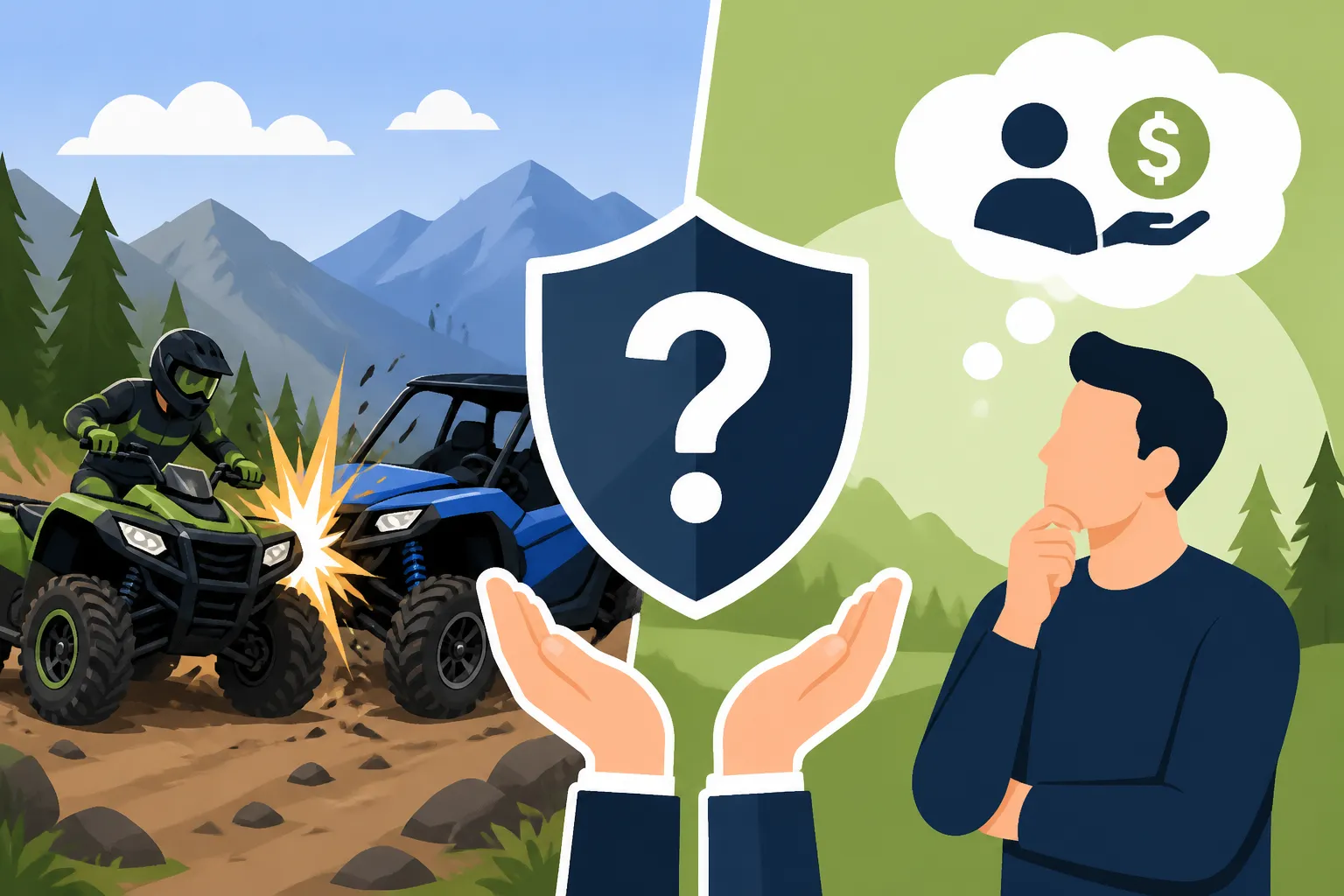
When two OHVs collide on a dusty Idaho trail, or a single machine takes an unexpected tumble, the question of "who pays" almost always boils down to one critical factor: fault. Idaho operates under a modified comparative negligence system. This means that if you are found to be partially at fault for an accident, your ability to recover damages from another party might be reduced, or even eliminated, depending on the degree of your fault. It’s not as simple as one person being 100% to blame; sometimes, both parties share some responsibility.
Determining Who is At Fault
Determining fault after an OHV collision involves looking at a variety of factors, much like a regular car accident. Was one rider speeding into a blind turn? Did someone fail to yield the right-of-way on a shared trail? Were there clear trail rules that were ignored? Law enforcement, if called to the scene, will gather evidence, take statements, and sometimes issue citations, which can be strong indicators of fault.
Consider a scenario where two side-by-sides meet at an unmarked intersection on a forest service road. One driver, perhaps distracted by the stunning Idaho scenery, fails to slow down and T-bones the other machine that was already halfway through the intersection. In this case, the distracted driver would likely be found primarily at fault due to their inattention and failure to observe appropriate trail etiquette. However, if the other driver was also exceeding the recommended speed for the area, they might bear a small percentage of comparative fault, even if they had the right-of-way. It's a nuanced process, and often, insurance adjusters will reconstruct the incident based on available evidence, including witness statements, skid marks, and damage patterns to both machines. This careful examination is crucial, especially when significant repairs or medical expenses are on the line, potentially for specialized components like those you might get from SuperATV.
Liability for Property Damage and Injuries
Once fault is established, liability for damages follows. This means the person (or people) found at fault are generally responsible for covering the costs associated with the collision. This responsibility typically falls into two main categories: property damage and personal injury. Property damage refers to the cost of repairing or replacing the damaged OHV, any gear, or even other property involved, such as a fence if you veered off the trail. Personal injury, on the other hand, covers medical expenses, lost wages, pain and suffering, and other costs related to injuries sustained in the collision.
Imagine a situation where a rider, let's call him Mark, misjudges a turn on a gravel road and collides with another rider, Sarah, coming the other way. Mark is found to be 80% at fault because he was riding too fast for the conditions, while Sarah is deemed 20% at fault for not maintaining a watchful eye on a potentially hazardous stretch. Sarah's machine, a newer model with various aftermarket parts, including some rugged protection from SuperATV, sustains significant front-end damage. She also suffers a broken arm. If Sarah's total damages are estimated at $15,000 (combining machine repairs and medical bills), Mark's insurance would typically be liable for 80% of that cost, or $12,000. Sarah, being 20% at fault, would theoretically be responsible for the remaining $3,000, which her own insurance might cover, depending on her policy. This kind of apportionment of fault and damages is a very real aspect of the claims process and why understanding it is so vital.
The Critical Role of Insurance After an Idaho OHV Crash
Insurance is your primary line of defense when it comes to financial responsibility after an OHV collision. While Idaho does not mandate liability insurance for all OHVs, it's a completely different story if you plan to operate your machine on roads designated for OHV use. For any road-legal riding, liability insurance is an absolute must, and it's a smart idea even for pure trail riders. Without it, you could find yourself personally responsible for astronomical costs.
What Your OHV Insurance Covers
Most dedicated OHV insurance policies offer several types of coverage, similar to auto insurance. The most common and essential is liability coverage. This protects you financially if you are at fault for an accident and cause bodily injury or property damage to someone else. It covers their medical bills, lost wages, and repair costs for their machine or property. If you've just invested in high-performance parts from SuperATV or another premium brand, you definitely want to ensure your machine is protected.
Beyond liability, many riders also opt for collision coverage, which pays for damage to your own OHV if you collide with another vehicle or object, regardless of who is at fault. Then there's comprehensive coverage, which covers non-collision events like theft, vandalism, fire, or damage from natural disasters. Lastly, uninsured/underinsured motorist (UM/UIM) coverage is incredibly valuable. This protects you if you are hit by another rider who doesn't have insurance or doesn't have enough insurance to cover your damages. Given that not all OHVs are required to carry liability insurance in Idaho, [Liability Insurance Idaho Road Riding Requires] this coverage can be a lifesaver. Without UM/UIM, if an uninsured rider wrecks your custom rig, you might be left holding the bag for all the repair bills and medical costs yourself.
When Homeowners or Auto Insurance Might Step In
A common question riders have is whether their existing homeowners or auto insurance policies will cover an OHV collision. The answer is often "it depends," and usually, "not enough." While some homeowners policies might offer very limited coverage for OHVs, it's typically restricted to theft or damage that occurs on your own property. As soon as you take your machine off your land, onto trails or roads, most homeowners policies offer little to no protection for collision liability or damage. [Does Homeowners Insurance Cover an Idaho ATV?]
Similarly, your auto insurance policy is designed for your car or truck, not your ATV or UTV. While some auto policies might extend some liability coverage if you're briefly operating an OHV on a public road where it's legally permitted, this coverage is often minimal and rarely extends to full collision or comprehensive coverage for the OHV itself. Relying solely on these policies for OHV use is a risky gamble. It's always best to have a dedicated OHV policy that explicitly covers your machine and its specific uses. This way, if you have a mishap after installing a new lift kit or set of tires from SuperATV, you know you're fully covered.
The Problem of No Insurance
Facing a collision without any insurance can be financially devastating. If you are at fault and uninsured, you are personally responsible for all damages and injuries you cause to others. This could mean paying out of pocket for medical bills, property repairs, and potentially legal fees if the injured party sues you. This is why understanding [Idaho ATV Insurance Cost] is so important. Similarly, if you're the victim of an accident caused by an uninsured rider and you don't have UM/UIM coverage, you might have to pay for your own repairs and medical expenses, or pursue a lawsuit against the at-fault individual, which can be a long, costly, and uncertain process.
Consider a rider who, trying to save a few bucks, foregoes a dedicated OHV insurance policy. They're out on a popular Idaho trail and accidentally swerve, hitting another rider who is gravely injured and whose machine is totaled. If the first rider is found entirely at fault, they could be looking at hundreds of thousands of dollars in medical bills, lost wages for the injured party, and replacement costs for the damaged machine. Without insurance, that financial burden falls directly on them, potentially leading to garnished wages, liens on property, or even bankruptcy. It's a stark reminder that the relatively small cost of an insurance premium pales in comparison to the potential costs of an uninsured accident.
Navigating Collisions with Uninsured Riders or Hit-and-Runs
One of the most frustrating and challenging situations after an OHV collision is dealing with an uninsured rider or, even worse, a hit-and-run incident. These scenarios add layers of complexity to the question of "who pays," often leaving the victim feeling helpless and financially vulnerable.
When the At-Fault Rider Has No Insurance
As mentioned earlier, if the rider who caused the collision is uninsured, your options can become significantly more complicated. This is precisely where your uninsured/underinsured motorist (UM/UIM) coverage on your own OHV policy becomes your best friend. If you have this coverage, your own insurance company will step in to cover your medical expenses and property damage up to your policy limits, essentially acting as if the at-fault driver did have insurance.
However, if you don't have UM/UIM coverage, your path to recovery is much harder. You would then be left with a few less-than-ideal choices. You could try to pay for your damages out-of-pocket, which for significant repairs or injuries can be a substantial burden. You could also pursue legal action against the uninsured rider personally. This involves filing a lawsuit, going through court proceedings, and if you win, attempting to collect on a judgment. The challenge here is that individuals who don't carry insurance often don't have significant assets or income to pay a large judgment, making collection a difficult and often unrewarding endeavor. It's a harsh reality that many people face after an [OHV Injury Claims After a Road Crash] involving an uninsured party.
Dealing with Hit-and-Run Incidents
A hit-and-run collision introduces another layer of difficulty: the at-fault party is unknown. This is a terrifying prospect for any rider, leaving them not only with damages but also with the frustration of an anonymous perpetrator. In these situations, your own insurance policy is almost always your only recourse.
If you have collision coverage, it will typically pay for the damage to your OHV, minus your deductible, regardless of who caused the damage. For your medical bills, your personal injury protection (PIP) or medical payments (MedPay) coverage (if you have it) would kick in. Again, uninsured/underinsured motorist coverage can also play a role here, as it often extends to hit-and-run situations, treating the unknown driver as an uninsured one. Without these coverages, you're looking at paying out of pocket for everything. This underscores why it's so vital to not only have insurance but to understand what your policy actually covers. After all, if you've invested in quality accessories from a brand like SuperATV, you want to ensure those investments are protected, even from the unknown. [What to Do After a Crash on a Back Road]
Gathering Evidence in Challenging Situations
Even in these difficult scenarios, any evidence you can gather at the scene is critical. This includes photographs of the damage, the location, any debris, and even tire marks. If there were any witnesses, getting their contact information immediately is paramount. Even a partial license plate number, a description of the other machine, or the direction they fled can be incredibly helpful for law enforcement and your insurance company. Remember, [Idaho OHV Crash Reporting] mandates certain actions, and reporting the incident promptly, even a hit-and-run, is essential for any chance of recovery. Even if you think there's little hope, detailed documentation can sometimes lead to breakthroughs or strengthen your claim with your own insurer.
Steps to Take Immediately After an Idaho OHV Collision
Knowing what to do in the immediate aftermath of an OHV collision can make a significant difference in how smoothly your insurance claim proceeds and how effectively your rights are protected. In the chaos of the moment, it's easy to forget crucial steps, but a systematic approach can save you a lot of grief and expense down the line.
Prioritize Safety and Assess Injuries
Your absolute first priority after any collision is the safety and well-being of everyone involved. Even if you feel fine, take a moment to assess yourself and any passengers for injuries. Check on the other riders or parties involved. If anyone is injured, especially seriously, call 911 immediately. Do not move anyone with suspected head, neck, or back injuries unless absolutely necessary for their immediate safety (e.g., if there's a risk of fire). Move to a safe location if possible, away from traffic or other hazards on the trail, but only if it's safe to do so.
It's natural to feel a rush of adrenaline, which can mask pain. Sometimes injuries, like whiplash or internal bruising, don't manifest until hours or even days later. Seek medical attention promptly, even if it's just a check-up, to document any potential injuries. This creates a critical record that can link your injuries directly to the collision, which is vital for any personal injury claim later on. Your health and safety come first, always.
Contact Law Enforcement and Document the Scene
Even if the collision seems minor and no one appears seriously hurt, contacting local law enforcement (Sheriff, Forest Service, or State Police, depending on the location) is generally a good idea, especially if there's significant property damage or any dispute over fault. An official accident report provides an objective account of the incident, which can be invaluable for insurance claims and legal proceedings. When they arrive, cooperate fully with the officers. [What an Idaho Deputy Asks a Rider For] will include things like your identification, proof of ownership, and potentially proof of insurance if you were on a road-legal section.
While waiting for authorities, or if they don't respond to a minor incident, you need to become your own investigator. Use your phone to take comprehensive photos and videos of everything:
- Damage to all vehicles involved: Get close-ups and wider shots from multiple angles.
- The collision scene: Show the position of the machines, tire marks, debris, and any relevant trail markers or road signs.
- Environmental factors: Weather conditions, lighting, visibility, and road/trail surface conditions.
- Injuries: Any visible cuts, bruises, or blood.
- Identification of other parties: Take photos of their driver's license, insurance card, and license plate (if applicable).
- Witnesses: Get names and contact information for anyone who saw the incident.
Do not admit fault or make assumptions. Simply gather facts.
Exchange Information and Notify Your Insurer
After ensuring safety and documenting the scene, exchange information with all other parties involved. This should include:
- Full name and contact information (phone, email, address).
- Driver's license number.
- Insurance company name and policy number.
- Vehicle information: Make, model, year, VIN (Vehicle Identification Number), and license plate (if applicable).
If there are witnesses, collect their names and phone numbers as well. Once you're in a safe place, notify your own insurance company as soon as possible, ideally within 24 hours. Even if you're not at fault, your insurer needs to be aware of the incident. They can guide you through the claims process, help arrange for damage assessment for your machine (perhaps that custom-built cage you got from SuperATV), and activate any relevant coverages you might have, such as medical payments or uninsured motorist coverage. Delaying notification can sometimes complicate your claim.
Legal Recourse and Seeking Professional Help After an Idaho OHV Collision
Even with insurance, the aftermath of an OHV collision can be complex. There might be disputes over fault, issues with coverage, or injuries that require extensive and ongoing care. In these situations, understanding your legal options and knowing when to seek professional help is paramount.
When to Consider a Personal Injury Attorney
If you or a passenger suffered significant injuries, incurred substantial medical bills, or experienced lost wages due to the collision, consulting a personal injury attorney is highly advisable. An attorney specializing in accident claims can help you navigate the intricacies of Idaho's modified comparative negligence laws, deal with aggressive insurance adjusters, and ensure you receive fair compensation for all your damages. They can also help if the other party is uninsured or underinsured, explaining your options for recovery.
For example, if you sustained a serious back injury requiring surgery, the medical bills alone could be tens of thousands of dollars. An attorney can help calculate not only your current medical costs but also future medical expenses, lost earning capacity, and compensation for pain and suffering. Trying to negotiate these complex claims on your own against an insurance company that has experienced legal teams can put you at a significant disadvantage. An attorney acts as your advocate, protecting your interests and fighting for the maximum compensation you deserve. They understand the nuances of [Idaho Alcohol Limits for OHV Operators] or [Idaho Penalties for Reckless Riding], which can heavily influence liability.
What a Lawyer Can Do for You
A personal injury attorney can provide several critical services after an OHV collision:
- Investigate the Accident: They will independently investigate the collision, gather evidence, interview witnesses, and potentially hire accident reconstruction experts to strengthen your case and establish fault.
- Handle Communication: They will manage all communication with the at-fault party's insurance company, protecting you from common tactics used to minimize payouts. This allows you to focus on your recovery without the stress of constant calls and paperwork.
- Negotiate Settlements: Attorneys are skilled negotiators. They will calculate the full extent of your damages—including medical bills, lost wages, pain and suffering, and property damage (like the cost to repair your high-performance OHV, including parts from SuperATV)—and negotiate with the insurance company for a fair settlement.
- Represent You in Court: If a fair settlement cannot be reached, your attorney will be prepared to file a lawsuit and represent you in court, arguing your case before a judge and jury.
Even if you're unsure about pursuing legal action, most personal injury attorneys offer a free initial consultation. This allows you to discuss the specifics of your collision, understand your legal rights, and explore your options without any obligation. It’s a good way to get an expert opinion on the strength of your case and whether legal representation would be beneficial.
Protecting Your Rights and Financial Future
The decisions you make immediately after an OHV collision, and in the weeks and months that follow, can profoundly impact your financial future. Without proper guidance, you might inadvertently compromise your claim or accept a settlement that doesn't fully cover your losses. This is particularly true when dealing with injuries that have long-term implications or damage to specialized machines that require expensive parts and repairs.
By understanding the basics of fault, leveraging your insurance coverages, and knowing when to seek expert legal advice, you can navigate the challenging aftermath of an OHV collision with confidence. Remember, the goal is not just to get back on the trails, but to ensure that you are made whole—financially, medically, and emotionally—after such an unsettling event.
Summary of OHV Collision Responsibilities
| Scenario | Primary Payer(s) (Typically) | Key Considerations |
|---|---|---|
| You are at fault, insured | Your liability insurance for other party's damages; Your collision coverage for your damages (if purchased) | Deductibles apply. Insurance handles negotiations. You must report promptly. |
| Other party at fault, insured | Other party's liability insurance | You will file a claim against their policy. Be prepared for negotiations. Your attorney can help. |
| You are at fault, uninsured | You, personally, for all damages to others. Your costs for your machine. | High financial risk. Potential for personal lawsuit, asset seizure, or wage garnishment. |
| Other party at fault, uninsured | Your Uninsured Motorist (UM) coverage (if purchased); You, personally. | If no UM, you may need to sue the at-fault party, but collection can be difficult. Your collision coverage can pay for your machine repairs. |
| Hit-and-Run | Your collision coverage for your machine; Your UM/UIM or Medical Payments for injuries (if purchased) | Law enforcement report is crucial. Evidence gathering (photos, witness info) is vital. |
| Single-Vehicle Accident | Your collision coverage (if purchased); Your health insurance for injuries | If no collision coverage, you pay for your machine repairs. |
| Shared Fault (Idaho Modified Comparative Negligence) | Each party's liability insurance pays a percentage of the other's damages, based on fault apportionment. | If your fault is 50% or more, you may not recover any damages from the other party. Damages you can recover are reduced by your percentage of fault. |
Disclaimer
This article is for general informational purposes only and does not constitute professional advice. Laws, prices and regulations vary by location and change over time. Consult a qualified professional for guidance on your specific situation.