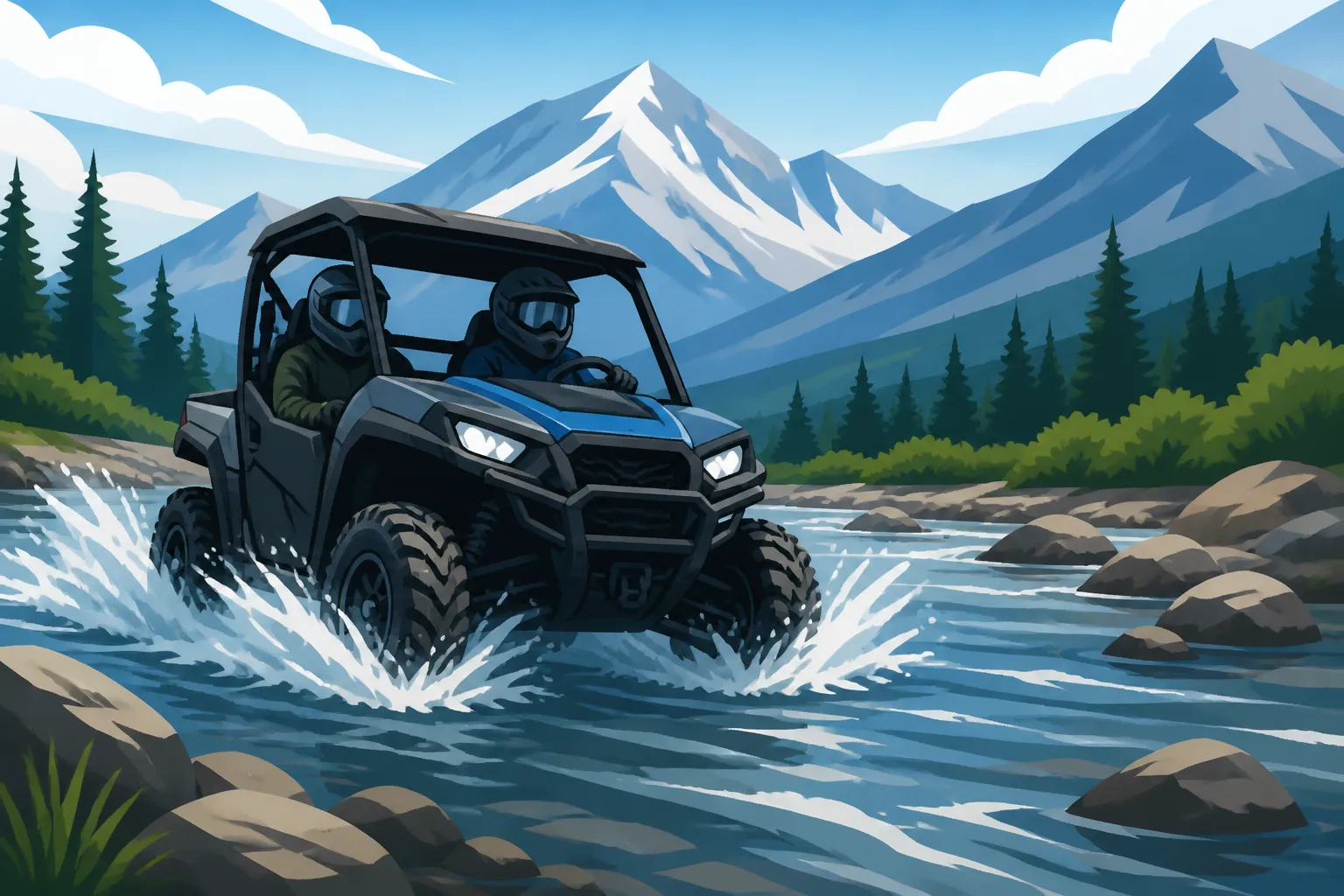
Fords and High Water After Runoff
Idaho’s backcountry offers some of the most breathtaking riding experiences you can imagine, but those serene landscapes can quickly turn treacherous when spring runoff swells creeks into raging rivers and transforms minor dips into deep, murky fords. Dealing with high water after runoff is a reality every Idaho ATV and UTV rider faces, and misunderstanding these conditions can lead to serious mechanical issues, costly recoveries, or even dangerous situations. This guide is all about helping you navigate those unpredictable water crossings safely, keeping both you and your machine out of trouble.
The Annual Challenge of Spring Runoff on Idaho Trails and Roads
Ah, spring in Idaho! The snow starts to melt, the trees bud, and the trails beckon. But for those of us who love to explore on our ATVs and UTVs, spring also brings a unique challenge: water. Lots of it. What was a dusty, dry creek bed in late summer can become a significant, fast-moving obstacle after winter’s snowpack decides to make its grand exit.
Why Spring Brings High Water: Snowmelt and Rain
The primary culprit behind Idaho's high water challenges is the melting of our massive winter snowpack. Picture vast blankets of snow, often several feet deep in the high country, just waiting for warmer temperatures to turn them into liquid. When spring arrives, with its longer, warmer days, that snow begins to melt. Add to this the sometimes torrential spring rains that are common across the state, and you have a recipe for rapidly rising water levels. This isn't just a slow trickle; it can be a sudden, dramatic influx of water that turns small streams into formidable rivers overnight. We've all seen those pictures or heard stories of bridges being washed out, and that same power impacts our riding areas. It's a natural process, but one that demands respect and careful planning. You might check [Checking Snowpack Before a Mountain Trip] before you head out.
This combination of melting snow and rain means that even seemingly insignificant waterways can swell beyond recognition. Normally dry washes can become rushing torrents, carrying debris, rocks, and even entire trees. It's a dynamic environment where conditions can change hour by hour, leaving riders unprepared for what they might encounter around the next bend. The water isn't just deeper; it's often colder, faster, and carries a lot more force than many riders realize.
Where You'll Encounter Fords and High Water
When you're out riding in Idaho, water crossings are an inevitable part of the experience, especially in the spring. You'll find them almost everywhere: on designated OHV trails snaking through forested canyons, along remote Forest Service roads that connect different parts of the backcountry, and even on certain BLM roads that traverse open sagebrush country. These are often places where natural drainage patterns dictate that streams, creeks, and rivers must be crossed.
Low-lying areas and canyon bottoms are particular hotbeds for high water. Water naturally seeks the path of least resistance, so it funnels into these valleys, concentrating its power. A dip in a road that barely registers in August might be a deep, fast-moving ford in May. It’s also crucial to remember that even paved roads can suddenly become submerged in flood-prone areas, leading to unexpected closures. Many local ordinances might specify [Idaho Roads Closed by Local Ordinance] during these high water events, so it’s always good to stay informed. Never assume that a familiar route will be passable just because it was last season. The landscape truly transforms with the seasons, and high water is one of spring's most significant transformations.
Assessing the Crossing: What to Know Before You Go (or Go Deeper)
Before you even think about putting a tire into a water crossing, you need to become an expert at observation and assessment. Rushing into an unknown ford is one of the quickest ways to ruin your day, or worse. The water might look inviting, or perhaps just a minor inconvenience, but its true nature can be dangerously deceptive.
Visual Cues and Water Dynamics
The first and most critical step is to visually assess the water. Don't just glance; really look.
- Turbidity: Is the water clear or muddy? Muddy, turbid water is a giant red flag. It completely hides the bottom, obscuring rocks, logs, deep holes, and other hazards that could easily stop your machine or cause severe damage. If you can't see the bottom, you have no idea what you're driving into.
- Current Strength: Watch for how fast the water is moving. Is it a gentle flow or a swift current? Look for floating debris – leaves, branches, or even larger logs. If these items are moving quickly, the current is strong enough to potentially push your ATV or UTV downstream, especially if you lose traction or get stuck. Standing waves or strong ripples are also indicators of powerful currents and potentially deep, turbulent water.
- Depth Indicators: Try to gauge the depth. Look at the banks – how high is the water against them? Are there rocks or submerged vegetation that give you a clue? If you see water flowing over the tops of smaller rocks that were previously exposed, you know it's deeper than usual. If it’s safe, and the water isn't too cold or fast, scouting on foot with a sturdy stick can provide invaluable information about the true depth and bottom conditions. This is where the buddy system really shines; one person can assess while the other stays ready with a recovery plan. Remember, your eyes can be deceiving, especially with reflections on the water's surface.
Understanding Your Machine's Limits
Even if you’re riding a beast of a machine, every ATV and UTV has its limits when it comes to water. Pushing past these can lead to catastrophic engine damage, electrical failures, and expensive repairs.
- Vital Components: Know exactly where your engine air intake, exhaust, and critical electrical components (like the ECU, fuse box, and spark plugs) are located. Water in the air intake will hydrolock your engine, which is almost always a death sentence for the motor. Water in the exhaust can cause back pressure issues and potentially damage exhaust valves if the engine stalls submerged. Electrical components can short out, leaving you stranded.
- Vent Lines: Many components on your machine, such as differentials, transmissions, and the fuel tank, have vent lines. These are small hoses that allow air to enter and exit as temperatures and pressures change. If these lines become submerged, water can be sucked into these crucial systems, contaminating the oil and leading to severe internal corrosion and wear. Checking these fluids after a deep crossing is critical.
- Manufacturer's Depth: Most manufacturers provide a "water fording depth." This is typically the maximum recommended depth your machine can safely traverse. However, always treat this number as an absolute maximum, not a target. Factors like current, hidden obstacles, and wake from other machines can quickly push you beyond this limit. It’s better to err on the side of caution.
- Modifications: Many riders enhance their machines for water crossings. Snorkel kits, like those from SuperATV, redirect the engine's air intake and vent lines to a higher point, significantly increasing your safe fording depth. Lift kits can also add precious inches of ground clearance, allowing you to clear obstacles and keep more of your machine out of the water. However, even with modifications, respect for the water remains paramount. Never assume a snorkel makes you amphibious!
Strategies for Safe and Successful Water Fording
Once you've assessed the crossing and determined it's safe to proceed, having a solid strategy is key. This isn't about speed; it's about control, understanding, and technique. Without a thoughtful approach, even a seemingly easy ford can turn into a nightmare. You'll want to have [What to Carry on a Remote Ride] with you.
The Approach and Entry
The way you enter the water sets the tone for the entire crossing.
- Slow and Steady: The golden rule of water crossings is to maintain a slow, consistent speed. This creates a "bow wave" in front of your machine, which effectively lowers the water level around your engine and intake. Too fast, and you'll push water over your hood and directly into sensitive areas. Too slow, and the water will just wash over your machine. Find that sweet spot where you're just pushing a wave in front of you.
- Consistent Momentum: While you want to be slow, you don't want to stop. Maintaining consistent momentum helps prevent your tires from digging in and getting stuck, especially on soft or muddy bottoms. Engage your 4WD or AWD before entering the water. This gives you maximum traction and control from the start.
- Choosing Your Line: Look for the most stable-looking path. This often means aiming slightly upstream, which can help your machine stay on course against the current. Avoid the deepest parts if possible, and steer clear of large rocks, submerged logs, or sudden drops. Sometimes, a wider, shallower path is better than a direct, deep one.
During the Crossing and Exit
The middle of the crossing is where your focus needs to be sharp.
- Constant Throttle: Maintain that consistent, moderate throttle input. Avoid sudden acceleration or deceleration, as this can cause your bow wave to collapse or your tires to lose traction. Your goal is a smooth, continuous movement through the water.
- Steering Against the Current: If there's a current, it will try to push your machine downstream. You'll need to steer slightly into the current, counteracting its force, to keep your machine headed in the desired direction. It's a bit like crabbing, maintaining a slight angle to stay on course.
- Engine Sputter: If your engine starts to sputter or bog down, resist the urge to stomp on the throttle. This can force water into the engine. Instead, try to maintain just enough power to keep moving. If the engine completely dies, do not attempt to restart it while submerged. Get recovered and assessed before trying to fire it up again. Attempting to start a hydrolocked engine will cause severe damage.
- Gentle Exit: As you approach the opposite bank, maintain your momentum but don't blast out of the water. A gentle exit helps prevent damage to your skid plates or suspension from hitting the bank too hard, and also avoids spraying mud and water everywhere. Once out, keep moving slowly to allow any remaining water to drain.
Essential Gear for Water Crossings
Being prepared isn't just about technique; it's about having the right tools. [Recovery Gear for a Narrow Shelf Road] is often the same gear you need for water crossings.
- Winch: This is probably the single most important piece of recovery gear for water crossings. A good winch, like those durable options from SuperATV, can pull you out of a sticky situation or retrieve a buddy who got stuck. Ensure it's properly rated for your machine's weight and that you know how to use it safely.
- Recovery Strap and Tree Saver: Essential for winching or being pulled out. A tree saver protects the anchor point (like a tree or large rock) from being damaged by the winch cable.
- Waterproof Bags: Keep your electronics, wallet, phone, and any essential documents in waterproof bags. Even a splash can ruin sensitive gear.
- Buddy System: Never cross high water alone. Having another rider or two with you provides an extra set of eyes for assessment and someone to help with recovery if things go south. [Riding Alone in the Idaho Backcountry] dramatically increases your risk.
- Shovel: For digging out tires stuck in mud or soft banks.
- Navigation Tools: A reliable GPS system (like a handheld unit or a dedicated app on a waterproof device) is crucial, as well as a good old-fashioned paper map. Water can obscure trails and landmarks, and it's easy to get disoriented. [Why a Paper Map Still Earns Its Weight] remains true in the age of GPS.
Post-Crossing Protocol and Machine Care
Making it through the water is a win, but the work isn't over. Neglecting post-crossing checks and maintenance can lead to long-term problems and diminished performance. Think of it as cooling down after a strenuous workout for your machine.
Immediate Checks After Emerging
As soon as you're safely on dry ground, take a moment for these vital checks:
- Brakes: Your brakes will be wet and significantly less effective. Pump them repeatedly at low speed to generate heat and help them dry out. Do this until you feel they are operating normally again. It's terrifying to suddenly realize your brakes are compromised when you need them most.
- Steering and Suspension: Turn your handlebars or steering wheel lock-to-lock a few times. Listen for any new grinding or clunking noises. Check for any debris, like sticks or rocks, that might have gotten lodged in your suspension components, control arms, or CV boots. These can cause damage or restrict movement.
- Engine: Is the engine idling smoothly? Are there any new warning lights on your dash? Listen for any unusual sounds. If it sounds rough, investigate. Water can find its way into surprising places.
- Under the Machine: Take a quick visual inspection under your ATV or UTV. Look for any new dents, scrapes, or bent components, especially on your skid plates, A-arms, and tie rods. Make sure nothing is leaking. A quick check now can prevent a major issue later.
Long-Term Maintenance Considerations
Once you're home or back at camp, deeper maintenance is essential, especially after multiple or particularly deep water crossings.
- Greasing Fittings: Your machine has numerous grease zerks on its suspension and driveline components. Water can wash away grease, leaving bearings vulnerable to rust and wear. Take the time to re-grease all fittings to ensure proper lubrication and extend component life.
- Checking Fluids for Contamination: This is critical. Check your differential, transmission, and engine oil for water contamination. Water mixed with oil often creates a milky, opaque appearance. If you see this, you need to change the fluid immediately. Contaminated oil loses its lubricating properties and can cause rapid wear and failure of internal components. This is especially true for differential and transmission fluids, which are often overlooked. [Storing a Quad Through a Long Winter] provides good general maintenance tips that apply here too.
- Cleaning Mud and Debris: Mud and debris can get packed into every nook and cranny of your machine. Use a pressure washer to thoroughly clean out your radiator fins (being careful not to bend them), skid plates, wheel wells, and frame. Caked-on mud can hold moisture, leading to corrosion, and can also add significant weight, affecting performance and fuel economy. It also acts as an insulator, potentially causing your machine to run hotter.
- Corrosion Prevention: After cleaning, consider applying a corrosion inhibitor, especially to exposed metal components, electrical connections, and fasteners. This is particularly important in areas where water tends to sit or collect. A little preventative spray can save you a lot of headache down the road by preventing rust from eating away at your machine. Remember, water and metal are not long-term friends.
By understanding the nature of spring runoff, carefully assessing each crossing, employing safe fording techniques, and performing diligent post-ride maintenance, you can ensure that your Idaho ATV and UTV adventures remain thrilling and safe, even when the water runs high.
Disclaimer
This article is for general informational purposes only and does not constitute professional advice. Laws, prices and regulations vary by location and change over time. Consult a qualified professional for guidance on your specific situation.