Smoke and Visibility in Idaho Fire Season
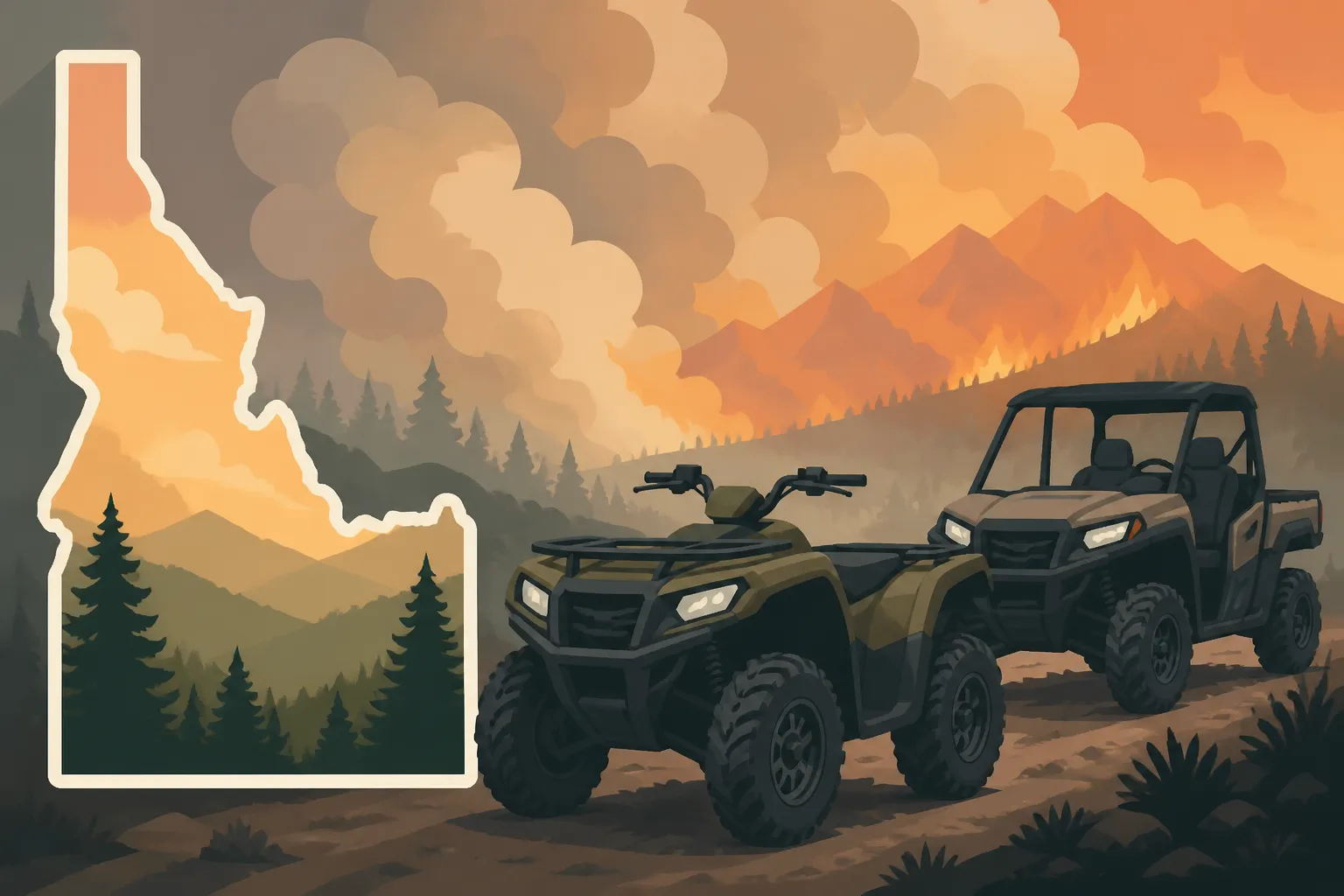
There's nothing quite like the excitement of planning an ATV or UTV ride through Idaho's stunning backcountry. You picture crisp mountain air, expansive views, and the thrill of the trail. But then, as summer heats up, a hazy pall can descend, sometimes subtle, sometimes thick enough to obscure even the closest peaks. This is the reality of Idaho's fire season, and dealing with smoke and reduced visibility isn't just an inconvenience; it can be a serious safety concern for riders. This guide is here to help you understand the risks, navigate the challenges, and make informed decisions to keep your rides safe and enjoyable, even when the air gets a little hazy.
Understanding Idaho's Fire Season and Its Impact on Riding
Idaho's landscape, with its vast forests, dry grasslands, and often remote terrain, is particularly susceptible to wildfires. Every year, as temperatures climb and precipitation becomes scarce, the risk of fire escalates, bringing with it smoke that can travel hundreds of miles from its source. This isn't just an issue for those directly near a fire; it's a statewide concern that every rider needs to take seriously.
When Idaho's Fire Season Typically Starts and Ends
Generally, Idaho's fire season kicks into gear in late spring or early summer, often around June, and can persist well into the fall, sometimes even through October. However, this isn't a hard and fast rule. A particularly dry spring, combined with early heatwaves, can push the start date even earlier. Conversely, a wet fall might bring an early end to the worst of it. The peak usually hits in July and August, when conditions are driest and temperatures are at their highest. During these months, lightning storms can spark multiple fires simultaneously across remote areas, making containment incredibly challenging. It's a dynamic situation that can change week by week, or even day by day, which means your riding plans need to be flexible.
The Unpredictability of Wildfires
One of the most frustrating aspects of wildfire season is its inherent unpredictability. A small, controlled burn can suddenly flare up due to unexpected wind shifts. A lightning strike miles from any road can smolder for days before erupting into a full-blown blaze. Human activity, unfortunately, also accounts for a significant number of ignitions, from unattended campfires to sparks from equipment. This means that even if a trail was perfectly clear yesterday, today it could be shrouded in smoke or, worse, dangerously close to an active fire. You can't just assume conditions will remain stable, especially during the height of summer. Being prepared for rapid changes is key to staying safe on the trails.
Why Visibility Becomes a Major Concern
When wildfires burn, they release a complex mix of gases and fine particulate matter into the atmosphere, creating smoke. This smoke doesn't just hang low; it can travel high into the jet stream and then settle back down miles away, blanketing entire valleys and mountain ranges. For an ATV or UTV rider, this reduced visibility isn't merely an aesthetic issue – it's a significant safety hazard. Distant mountains disappear, the horizon blurs, and even objects a few hundred feet away can become indistinct.
On trails, this can mean not seeing that sharp turn until you're right on it, missing an oncoming rider, or failing to spot a fallen log or a rock garden in time to react. If you're riding on roads, even those open to OHVs, reduced visibility dramatically increases the risk of collision with other vehicles, cyclists, or pedestrians. It's not uncommon to hear stories of riders misjudging turns or losing their way on familiar trails because the usual visual cues are simply gone. [Idaho Road Rules Riders Get Wrong] often include assumptions about visibility, but fire season adds another layer of complexity to these common challenges.
How Wildfire Smoke Affects Your Ride
Beyond just making the scenery disappear, wildfire smoke presents several direct challenges and risks to both you and your machine. It's not just about what you can't see; it's also about what you are breathing and how your machine performs under these conditions.
Reduced Visibility: A Rider's Worst Nightmare
Imagine riding a familiar mountain trail, one you know like the back of your hand. Suddenly, the towering pines that usually guide your path are ghostly outlines, and the expansive valley view you look forward to at the overlook is swallowed by a gray haze. This isn't just disappointing; it's genuinely dangerous. Poor visibility can drastically shorten your reaction time, making it harder to spot unexpected obstacles like rocks, ruts, or downed trees that may have fallen since your last ride.
On narrow trails, it becomes a guessing game as to what's around the next bend. Are there other riders? Hikers? Wildlife? Your depth perception can be severely compromised, turning what should be a fun and engaging ride into a stressful, high-risk endeavor. This risk is amplified when riding on county roads that might be open to OHVs, where you're sharing the space with larger vehicles or even logging trucks. Seeing approaching traffic, or being seen by them, becomes critically important, and smoke undermines that fundamental safety principle.
Air Quality and Health Risks
Wildfire smoke is more than just visible particles; it's a potent cocktail of tiny, breathable particles and various gases that can be incredibly harmful to your respiratory system. When you're actively riding an ATV or UTV, you're often exerting yourself, breathing harder, and thus inhaling more of this polluted air. Even if you're generally healthy, extended exposure to smoky conditions can cause irritation to your eyes, nose, and throat, leading to coughing, wheezing, and shortness of breath.
For individuals with pre-existing respiratory conditions like asthma, COPD, or heart disease, riding in smoky air can trigger severe health episodes. The fine particulate matter can penetrate deep into your lungs, leading to inflammation and reduced lung function. This isn't just about discomfort; it can be genuinely life-threatening in extreme conditions. Always check air quality reports in addition to visibility forecasts, and consider postponing your ride if the air quality index (AQI) is in the "unhealthy" or "very unhealthy" range. Your health is far more important than a day on the trails.
Impact on Machine Performance and Maintenance
It's not just your lungs that suffer during fire season; your ATV or UTV can take a beating too. The fine ash and dust from wildfires are incredibly abrasive. These microscopic particles can easily bypass poorly sealed air filters, leading to accelerated wear on internal engine components. Over time, this can reduce engine performance, decrease fuel efficiency, and even lead to costly repairs. Regularly checking and cleaning or replacing your air filter becomes even more critical during smoky periods.
Additionally, the ash can settle on radiators, blocking airflow and causing your engine to run hotter, increasing the risk of overheating, especially on challenging climbs. While not a direct fire safety item, having a well-maintained machine with robust accessories can also contribute to a safer ride. For instance, enhanced lighting kits – something SuperATV is known for – can cut through hazy conditions better, and even more durable tires or suspension components can help you navigate unexpected obstacles that might be obscured by smoke. Investing in quality components and performing diligent maintenance is always a good idea, but it's essential when fire season arrives.
Navigating Smoke and Road Closures
When the smoke rolls in, making decisions about riding can feel overwhelming. Is it safe? Is it even allowed? Understanding official closure orders and knowing when to simply turn back are crucial skills for any Idaho rider during fire season. These aren't just suggestions; they're in place for your safety and the safety of emergency responders.
Understanding Official Closure Orders
During fire season, land management agencies like the U.S. Forest Service, Bureau of Land Management (BLM), and even county and state authorities have the power to issue closure orders. These orders aren't taken lightly; they're implemented when fire danger is extreme, when an active fire poses an immediate threat, or when firefighting operations require unimpeded access to specific areas. A closure order can range from a single trail or road to an entire national forest district.
These orders are legally binding. Riding in a closed area, even if you don't see immediate fire, can result in hefty fines, vehicle impoundment, and even criminal charges if your actions impede firefighters. More importantly, you could inadvertently put yourself, and search and rescue teams, in extreme danger. Always check official sources for the latest information on closures. [Idaho Road Closures During Fire Season] and [Where Idaho Closure Orders Are Posted] are excellent resources for understanding how and where these critical updates are communicated. Do not rely solely on hearsay or social media; go straight to the official channels.
Riding in Smoky Conditions: Is It Worth the Risk?
This is a personal decision, but one that should be approached with extreme caution and realism. If the smoke is light, creating a distant haze but with good visibility for several miles, your ride might still be feasible. However, even a light haze can diminish the vibrancy of the landscape and subtly impact depth perception. If you absolutely must ride in a light haze, ensuring your machine is in top condition and equipped for lower visibility is crucial. Upgraded lighting from brands like SuperATV can be a real asset, helping you see and be seen when the world gets a bit blurry.
However, if the smoke is thick enough to visibly reduce visibility within a mile, or if you can smell a strong burning odor, it's almost certainly not worth the risk. Your safety, and the safety of others, should always be the top priority. Consider the health impacts, the reduced visibility, and the possibility that conditions could worsen rapidly. A smoky ride is rarely as enjoyable as a clear one, and pushing through can turn an adventure into a nightmare. Sometimes, the best decision is to postpone, find an alternative location, or just enjoy another activity until the air clears.
Encountering Active Fire Zones
This is the most critical and non-negotiable point: if you encounter an active fire, or signs of one (such as rising smoke plumes, falling ash, or the smell of burning timber becoming intense), your immediate and only course of action is to turn back. Do not attempt to investigate, do not try to ride through, and do not put yourself in a position where you might become trapped. Wildfires move incredibly fast and can change direction with unpredictable wind shifts, turning a seemingly safe area into a death trap in minutes.
If you see emergency vehicles or personnel, give them ample space and follow any instructions they provide. Their focus is on fighting the fire and protecting lives and property, and you do not want to become a distraction or an additional rescue effort. Remember, the Idaho backcountry is vast, and emergency services can be hours away. Getting caught in an active fire zone could have catastrophic consequences for you and anyone riding with you.
Planning Ahead: Staying Informed and Prepared
Navigating Idaho's fire season successfully means being proactive and prepared. You can't control the fires, but you can control how you react to them. This involves diligent research before you leave, packing the right gear, and always having a backup plan.
Leveraging Real-Time Information Sources
The days of simply heading out and hoping for the best are long gone, especially during fire season. Before you even load up your machines, dedicate time to checking multiple, reliable sources for current fire and smoke conditions. The U.S. Forest Service and BLM websites are indispensable for their interactive maps showing active fires and closure orders. The Idaho Department of Parks and Recreation (IDPR) also provides updates specific to OHV areas and state parks.
Local sheriff's offices and county emergency management websites often have real-time alerts. For air quality, websites like AirNow.gov offer detailed Air Quality Index (AQI) readings, which are crucial for understanding health risks. Don't just check the morning of your ride; check a few days in advance and then again immediately before you depart. Conditions, especially wind directions, can shift rapidly. [Checking Idaho Trail Status Before You Drive] is an absolute must, and combining it with air quality reports will give you the most comprehensive picture.
Essential Gear for Fire Season Riding
Your usual riding kit is a good start, but fire season calls for a few specific additions to ensure your safety and comfort. First and foremost, consider carrying N95 or P100 masks. These aren't perfect, but they can offer significant protection from inhaling fine particulate matter if you find yourself in unexpectedly smoky conditions. Always have extra water – more than you think you'll need – as smoke can be dehydrating.
Beyond personal safety, think about communication. Many parts of Idaho's backcountry are cell service dead zones, making it impossible to get updates or call for help if conditions deteriorate. [Cell Dead Zones in Central Idaho] are a serious reality. This is where a satellite messenger device (like a Garmin InReach or Spot device) becomes invaluable. These devices allow you to send and receive text messages, track your location, and trigger an SOS signal even without cell service. [Carrying a Satellite Messenger Into Dead Zones] could literally be a lifesaver. A well-stocked first aid kit, as detailed in [First Aid Hours From Help], should always be with you, especially if the air quality could exacerbate respiratory issues. Finally, an extra fuel can is wise, as rerouting due to closures could mean longer distances between gas stops.
Having a Backup Plan
The best defense against a ruined or dangerous ride during fire season is a solid backup plan. Don't put all your eggs in one basket with a single trail or area. Before you leave home, identify at least two or three alternative riding locations that are far enough apart that they might not be affected by the same fire or smoke plume. This could mean having a completely different region in mind, or even a different type of terrain (e.g., lower elevation trails if high country is smoky). [Planning an Idaho Riding Trip] should always include contingency routes during summer and fall.
Be prepared to pivot at the last minute. If you arrive at your planned trailhead and find the air thick with smoke or, worse, a closure sign, you need to be able to shift gears calmly and safely. This means having maps or GPS routes for your alternative spots pre-loaded and easily accessible. Remember, [Riding Alone in the Idaho Backcountry] adds another layer of risk, so always communicate your plans, primary and backup, with someone reliable who isn't riding with you. Their knowledge of your route could be critical if you need assistance.
Fire Season Riding Considerations
| Factor | Low Smoke/Haze | Moderate Smoke | Heavy Smoke/Closures |
|---|---|---|---|
| Visibility | Reduced distant views, clear within a few miles | Visibility reduced to 1-3 miles, hazy nearby | Visibility less than 1 mile, objects appear ghostly |
| Air Quality | May be elevated, but generally acceptable for most | Unhealthy for sensitive groups, mild irritation for others | Unhealthy to hazardous for everyone, strong burning odor |
| Health Risks | Minimal for healthy individuals | Possible irritation, risk for those with respiratory issues | Significant risk of respiratory issues, dangerous for all |
| Trail Conditions | Likely open, dust may be worse due to dry conditions | Trails may be open but difficult to navigate safely | Likely closed, active fire danger |
| Recommendation | Proceed with caution, check for local alerts | Reconsider ride, carry masks, check air quality often | DO NOT RIDE, seek alternative locations, obey all closures |
| Gear Priority | Standard kit, extra water | N95 mask, extra water, satellite messenger | N/A – stay home or find a clear area |
Disclaimer
This article is for general informational purposes only and does not constitute professional advice. Laws, prices and regulations vary by location and change over time. Consult a qualified professional for guidance on your specific situation.