Where an Idaho Trail Meets a County Road
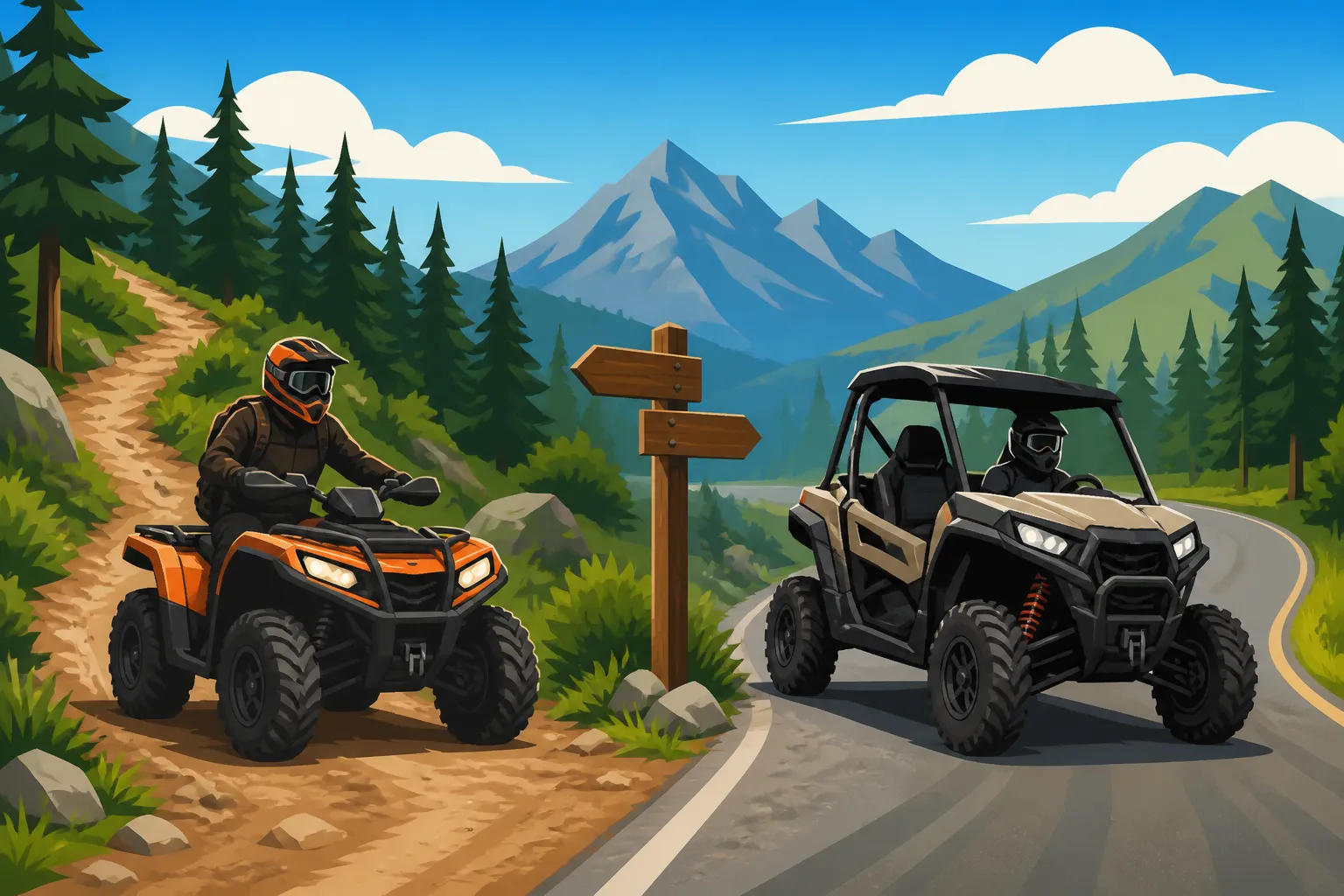
There's nothing quite like exploring Idaho's incredible backcountry on your ATV or UTV. You're out there, miles from the hustle, enjoying the crisp mountain air and stunning scenery. Then, you see it: a sign indicating that the trail you're on is about to intersect with, or even become, a county road. Suddenly, that sense of freedom can quickly turn into a knot of anxiety. What are the rules here? Can you even ride on this road? This guide is here to untangle the confusion and make sure your transition from dirt trail to county pavement is smooth, legal, and safe, wherever an Idaho trail meets a county road.
Understanding Idaho's OHV Road Access Rules
Idaho offers an amazing network of trails, but knowing where those trails connect to public roads, and what the rules are for those connections, can feel like a maze. It’s crucial to understand the distinct types of roads and the permissions they grant (or don’t grant) to OHV riders.
The "Restricted Use" Plate and Its Purpose
Many riders find themselves wondering about the "Restricted Use" plate, often referred to as an "R" plate. This special license plate, which starts with an "R", is a game-changer for Idaho OHV enthusiasts, but it's not a golden ticket to every paved surface. Its primary purpose is to allow your off-highway vehicle (OHV) to legally travel on designated county and Forest Service roads, primarily to connect trails or access services. It bridges the gap between strictly off-road use and full street legality. [Idaho's Restricted Vehicle Plate Explained]
Think of it this way: your ATV or UTV might be perfectly suited for the rugged terrain of the Boise National Forest, but without this plate, even a short hop down a paved county road to the next trailhead or to grab gas in a small town could land you a ticket. The R plate acknowledges the practical need for OHVs to use these connectors. It’s not about making your side-by-side a substitute for a car on State Street in Boise, but rather enabling you to navigate the rural fabric of Idaho’s trail systems more freely. However, it comes with specific responsibilities and equipment requirements that we'll dive into shortly. Just getting the plate is the first step; understanding its limitations is equally important. [Idaho Plates That Begin With R]
Distinguishing Between Open and Closed County Roads
This is where many riders trip up. Just because a road looks like a gravel lane or a quiet two-track doesn't automatically mean it's open to OHV traffic, even if you have that restricted use plate. Idaho law allows counties and other jurisdictions to designate certain roads as open or closed to OHVs. This means a road that's open in Valley County might be strictly off-limits just across the line in Adams County. Local ordinances are the key here, and they're not always intuitively obvious.
It’s often frustrating to be out enjoying a ride, only to pull up to a sign you don't understand, or worse, no sign at all, leaving you guessing. You might encounter signs that explicitly state "OHV Route" or, conversely, "No OHV Traffic Beyond This Point." Sometimes, it’s a matter of checking local county websites or contacting the county sheriff’s office or highway district directly before your trip. Motor Vehicle Use Maps (MVUMs) provided by the Forest Service and BLM are also invaluable for federal lands, but they don't always cover county roads comprehensively. The rule of thumb is: if you don't know for sure, assume it's closed, or better yet, plan your route meticulously to avoid ambiguity. Nothing ruins a peaceful ride faster than an unexpected conversation with a sheriff's deputy. [Which Idaho County Roads Allow OHVs]
State Highways and Interstates: A Firm No
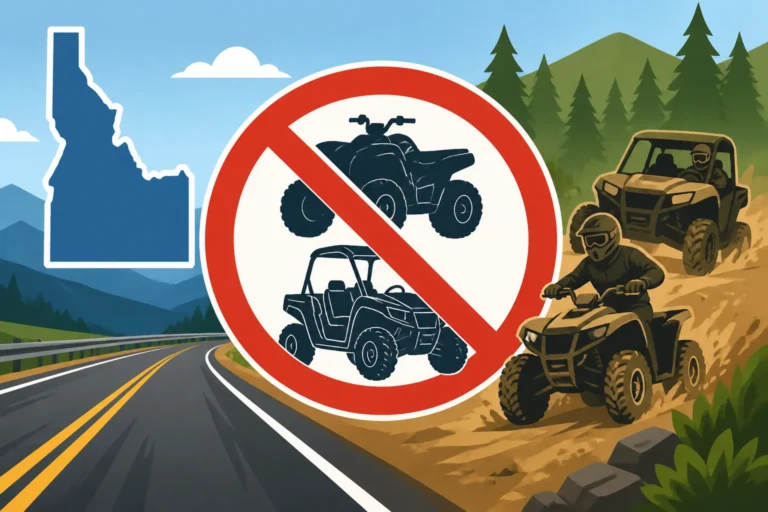
Let's get this straight from the start: generally, you cannot ride your OHV, even with an Idaho restricted use plate, on state highways or interstates. These are high-speed, high-traffic thoroughfares not designed for the characteristics of an ATV or UTV, and they pose significant safety risks. Imagine trying to keep pace or safely maneuver a side-by-side alongside semi-trucks going 75 mph—it's just not safe or legal.
There are, however, very specific and limited exceptions. You might be allowed to cross a state highway directly at a designated intersection, usually for the sole purpose of getting from one open county road or trail segment to another. This isn't permission to ride down the highway for a mile or two, but merely to traverse it safely and quickly. Even these crossings require extreme caution, proper signaling, and absolute adherence to traffic laws. It’s critical to understand that these rules are in place for everyone’s safety, and violations can lead to hefty fines and dangerous situations. Always err on the side of caution and plan your route to minimize or completely avoid state highway interactions. [Can You Ride an OHV on an Idaho State Highway?]
Essential Gear and Documents for Road Transitions
So, you’ve identified an open county road that connects two of your favorite trails. Fantastic! But before you roll onto that pavement, you need to ensure both your machine and your paperwork are in order. Ignoring these requirements is a surefire way to turn a pleasant day into a costly one.
What Idaho Requires for Road Use
When you move from a dedicated trail to a county road, your OHV suddenly needs to meet certain minimum safety and visibility standards that are often overlooked when you're just kicking up dust in the backcountry. Idaho law is specific about what's required for road-legal operation, even with a restricted use plate. You’ll need:
- Headlights: Must be on when operating on roads, especially if visibility is reduced or after dark. They need to be bright enough to illuminate the path ahead effectively.
- Taillights and Brake Lights: Just like a car, your machine needs a functioning taillight that's visible from behind, and a brake light that illuminates when you apply the brakes. This is critical for preventing rear-end collisions.
- Horn: A working horn is necessary to alert other drivers or pedestrians to your presence.
- Mirrors: You must have at least one rearview mirror, typically mounted to provide a clear view of traffic approaching from behind. Many riders choose two for better visibility. SuperATV, for instance, offers a range of durable mirrors designed for OHVs that can withstand the rigors of off-road use while providing excellent road visibility.
- Spark Arrester: While often required for trail use anyway to prevent wildfires, it's also a standard requirement for road use.
- Turn Signals (Recommended, and often legally required): While the Idaho code might seem a little vague on turn signals for all restricted vehicles, the spirit of the law and practical safety dictates that if you're mixing with road traffic, turn signals are essential for clearly communicating your intentions. Many aftermarket kits, including those you can find from companies like SuperATV, provide comprehensive lighting solutions that include turn signals, making your machine much safer and compliant. These kits are often designed for easy installation and durability. [Turn Signals on an Idaho Restricted Vehicle]
Missing any of these components not only makes your ride less safe but can also result in fines during a traffic stop. It's not just about avoiding a ticket; it's about being a responsible road user and ensuring you're seen and understood by other drivers. Taking the time to properly equip your machine before venturing onto county roads is a smart investment in your safety and peace of mind. [Lighting Rules for Riding After Dark in Idaho]
Carrying Your Papers: What to Have on Hand
Just like driving your car, operating an OHV on a public road in Idaho means you need to have your essential documentation with you. If a sheriff's deputy or Forest Service ranger pulls you over, they'll want to see proof that you're legally allowed to be there.
The absolute must-haves are:
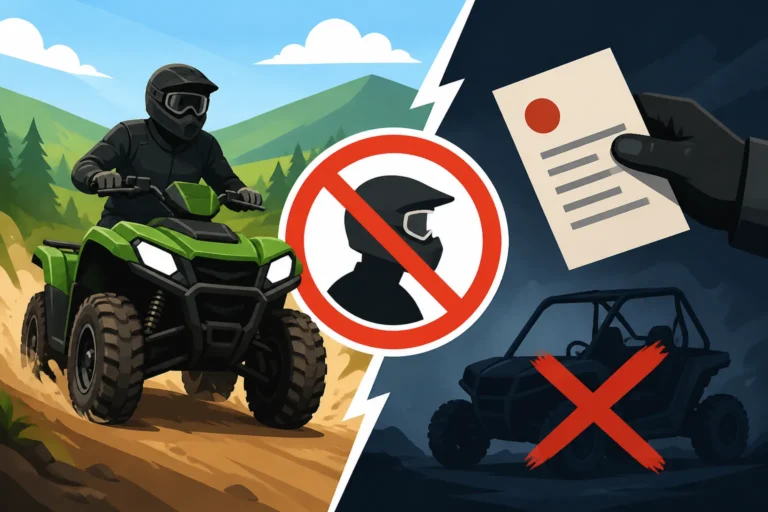
- Your Driver's License: This is non-negotiable. If you're old enough and licensed to drive a car, you're generally good to go. For younger riders, specific age and supervision rules apply. [Driver's License Requirements on Idaho Roads]
- Proof of OHV Registration/Sticker: This proves your machine is registered with the state for off-highway use.
- Proof of Insurance: For operation on Idaho roads, you are required to have liability insurance. This is a critical piece of protection, not just for you but for others in case of an accident. Keep your insurance card or declaration page easily accessible.
It's tempting to leave these documents at home when you're heading out for a dusty trail ride, but when that trail connects to a county road, you're entering a different legal sphere. I always recommend carrying these documents in a waterproof bag or pouch secured to your machine, or in your riding pack. Having them readily available makes any interaction with law enforcement quick and painless. [Four Things Idaho Riders Must Carry on a Road]
Rider Requirements: License, Age, and Helmets
Beyond your machine's equipment, Idaho also has rules about who can ride and what protective gear they must wear, especially on roads.
- Driver's License: To operate an OHV on a public road in Idaho, you generally need a valid driver's license. This means you must meet the state's age requirements and have passed the necessary tests to be considered a competent driver.
- Youth Riders: For riders under 16, the rules are more stringent. They might need to complete an approved OHV safety course and often require direct adult supervision within 300 feet. While they can ride on many trails without a driver's license, the moment they hit a county road, the requirements tighten significantly. It's crucial for parents to understand these distinctions to avoid putting their children or themselves at risk.
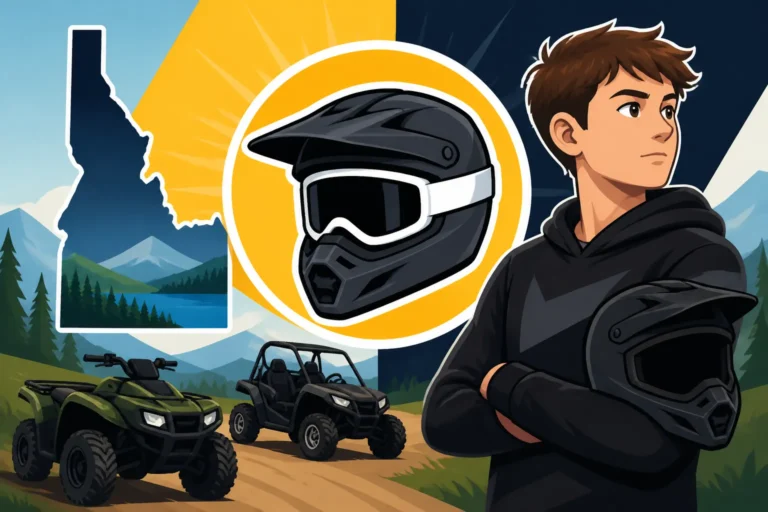
- Helmets: Idaho law requires all OHV riders and passengers under the age of 18 to wear a helmet that meets federal safety standards (like DOT approval) whenever they are operating or riding on public lands, which includes county roads open to OHVs. While adults 18 and over are not legally required to wear a helmet on these roads, it is always a wise safety choice, given the inherent risks of OHV riding. Many an experienced rider will tell you that a helmet has saved them from a serious injury, regardless of age. [Idaho Helmet Rules for Riders Under 18]
Navigating the Intersection: Best Practices and Safety
The point where an Idaho trail meets a county road isn't just a legal transition; it's also a significant change in riding environment. Safety is paramount, and understanding best practices can help prevent accidents and ensure a smooth journey.
Approaching the Pavement: Slow Down and Observe
You’ve been riding on dirt, perhaps at a decent clip, enjoying the bumps and turns. Suddenly, you see asphalt. This isn't the time to maintain trail speed. As you approach the paved or well-maintained gravel surface of a county road:
- Reduce Your Speed Significantly: Pavement offers different traction characteristics than dirt or gravel. Your tires will grip differently, and sudden braking or turning can lead to a loss of control.
- Scan for Traffic: Treat every intersection with a public road as you would in a car. Look left, right, and left again for approaching vehicles. Don't assume the road is empty just because it's rural. Ranchers, loggers, and other recreationalists use these roads too, often at higher speeds.
- Check for Signs: Always look for stop signs, yield signs, or any posted speed limits. These apply to OHVs just as they do to cars.
- Engage Road-Appropriate Gear: If your machine has different drive modes, switch to a 2WD mode suitable for pavement to reduce wear and tear and improve handling.
Making this deliberate, cautious transition helps you adjust to the new conditions and gives you time to react to any unexpected traffic.
Sharing the Road with Other Vehicles
Once you're on a county road, you're sharing it with a variety of other users: cars, trucks, logging rigs, farm equipment, cyclists, and even pedestrians. The rules of the road apply, and courtesy goes a long way.
- Stay to the Right: Keep as far right as safely possible within your lane, allowing faster vehicles ample room to pass.
- Use Signals: If you have turn signals (and you should for road use!), use them clearly and well in advance of turns. If you don't, use clear, unambiguous hand signals.
- Maintain Predictable Movements: Avoid sudden swerving or rapid changes in speed. Other drivers might not expect to encounter an OHV, so make your intentions obvious.
- Be Mindful of Dust: On gravel county roads, OHVs can kick up a significant amount of dust. If you see another vehicle approaching from behind, consider pulling over momentarily to let the dust settle as they pass, especially if you’re using an aftermarket dust-reduction rear panel from a company like SuperATV. This small act of courtesy can prevent visibility issues and frustration for other drivers.
- Respect Speed Limits: County roads often have posted speed limits, and you must adhere to them. Even if there isn't a sign, exercise good judgment and don't operate at speeds that are unsafe for conditions or your machine.
Sharing the road safely means being hyper-aware of your surroundings and actively working to integrate smoothly with other traffic.
Designated Crossing Points and Exceptions
As mentioned earlier, state highways and interstates are largely off-limits, but direct crossings are sometimes permitted. These are not opportunities to joyride across the highway; they are specific, controlled maneuvers.
- Direct Crossing Only: This means going straight across the highway at a perpendicular angle, from one open county road or trail to another, at a legal intersection. You cannot drive along the highway, even for a short distance, to reach a crossing point.
- Yield to All Traffic: Just like any intersection, you must yield to all traffic on the highway. Wait for a clear, safe break in traffic before proceeding.
- Minimize Exposure: Get across the highway as quickly and efficiently as possible.
- No Interstates: Idaho interstates (I-84, I-15, I-90) are generally completely off-limits to OHVs, even for crossing. Always assume interstates are forbidden territory.
Planning your route to avoid state highway crossings entirely is the safest bet. However, if a crossing is absolutely necessary, treat it with the utmost seriousness and never assume other drivers see you. [Crossing an Idaho Highway on an OHV]
Planning Your Route: Avoiding Pitfalls
The best defense against confusion and potential tickets at trail-to-road intersections is thorough planning. You wouldn't embark on a multi-day backcountry ride without a map, and you shouldn't tackle unknown road sections without one either.
- Utilize MVUMs and Online Resources: For federal lands (Forest Service, BLM), Motor Vehicle Use Maps (MVUMs) are your bible. They clearly delineate which roads and trails are open to which types of vehicles. For county roads, check the specific county's website for OHV ordinances. Many counties now publish maps or lists of approved roads.
- Invest in GPS Apps: Apps like Gaia GPS or onX Offroad often have layers that show legal OHV routes and can be invaluable in real-time. Just remember that cell service is spotty in many parts of Idaho, so download offline maps.
- Ask Locals: Don't hesitate to inquire at local gas stations, ranger stations, or powersports dealerships. Locals often have the most current information about specific road closures or nuances that aren't always on official maps.
- Identify Connection Points: Before you even leave home, trace your intended route and identify every point where a trail meets a county road. Confirm the legality of each segment. This proactive approach ensures you spend more time riding and less time worrying or getting lost. [What Idaho Requires Before You Ride a County Road]
Common Mistakes and Enforcement
Even with the best intentions, riders can sometimes make mistakes when navigating Idaho's trail-to-road transitions. Understanding these common pitfalls and how enforcement works can help you avoid problems.
Misinterpreting "Open" Roads
One of the most frequent errors riders make is assuming that any unpaved or lightly-traveled road is automatically open to OHVs. This is a dangerous assumption that can quickly lead to citations. As we discussed, each county in Idaho has the authority to designate its roads, and that designation isn't always obvious. A gravel road that seems perfectly suited for a side-by-side might be closed by local ordinance for safety, noise, or environmental reasons.
Sometimes, the signage is sparse or missing altogether in remote areas. This is why advance planning and consulting county-specific regulations are so vital. Don't rely solely on the appearance of the road. A citation for riding on a closed county road can carry a significant fine, and repeated offenses could lead to more serious penalties. It's frustrating when the rules aren't perfectly clear on the ground, but the responsibility ultimately falls to the rider to know where they can legally operate.
Inadequate Equipment and Its Consequences
Another common mistake is rolling onto a county road without all the required equipment. Maybe you forgot to install mirrors, your turn signals aren't working, or your horn decided to quit that morning. While these might seem like minor issues on a trail, they become legal requirements on a public road.
Law enforcement officers, whether it's a county sheriff's deputy or a Forest Service ranger, are well within their rights to pull you over for equipment violations. They're looking for machines that are clearly not set up for safe road interaction. Missing a brake light, for example, puts you and everyone behind you at risk. These violations aren't just minor annoyances; they're about public safety. Investing in reliable, compliant parts—perhaps a sturdy set of mirrors or an integrated lighting kit from SuperATV—is a small price to pay for avoiding fines and ensuring your safety. The consequences can range from a warning to a significant fine for each missing or non-functioning piece of equipment.
Enforcement on Idaho's Back Roads
It's a common misconception that because you're "way out there," law enforcement won't bother with OHV riders. This is simply not true. Idaho's county sheriffs, Forest Service law enforcement, and Idaho State Police all patrol the roads and trails, especially during peak riding seasons. They are often specifically looking for OHV compliance.
If you encounter law enforcement on a county road while riding your OHV, here’s what to expect and how to handle it:
- Remain Calm and Compliant: Just like any traffic stop, pull over safely, turn off your engine, and keep your hands visible.
- Have Documents Ready: Hand over your driver's license, proof of registration/sticker, and proof of insurance promptly. [Sheriff Enforcement on Idaho Back Roads]
- Answer Questions Respectfully: Officers may ask about your destination, your route, or if you understand the local regulations. Respond honestly and politely.
- Understand Your Rights: You have the right to remain silent regarding questions that might incriminate you, but you must provide identifying documents.
Enforcement is there to ensure safety and uphold the law. By being prepared, understanding the rules, and cooperating respectfully, you can make any such interaction quick and stress-free. Remember, riding an OHV on Idaho's beautiful roads and trails is a privilege, and with that comes the responsibility to know and follow the rules.
| Requirement | Purpose | Notes |
|---|---|---|
| Idaho OHV Sticker | Legal operation on public lands & roads | Annual renewal, display clearly |
| Idaho R Plate | Allows access to designated county roads | Requires OHV sticker, specific display rules |
| Driver's License | Legal to operate on public roads | Minimum age and supervision for minors |
| Liability Insurance | Financial protection for accidents | Required for road use, carry proof |
| Headlights/Taillights | Visibility, especially at dusk/dawn | Always on when operating |
| Brake Light | Signifies deceleration | Essential for safety in traffic |
| Mirrors | Rearward visibility | Required for road use, check specific rules |
| Horn | Alerting others | Essential safety device |
| Spark Arrester | Prevents wildfires | Required on all public lands |
Disclaimer
This article is for general informational purposes only and does not constitute professional advice. Laws, prices and regulations vary by location and change over time. Consult a qualified professional for guidance on your specific situation.