Driving the Magruder Corridor in One Day
The Magruder Corridor can look like a manageable line between Elk City and Darby on a map, but a long, rough backcountry road is very different from a quick highway drive. This guide explains how to plan the route in one day, what can slow you down, and how to decide whether your vehicle, schedule, and experience are a good fit.
Can You Drive the Magruder Corridor in One Day?
Why a one-day crossing takes more than mileage suggests
The Magruder Corridor is a remote route through the Idaho and Montana backcountry, not a fast shortcut between towns. Although maps make the trip seem straightforward, travel can be slow on a narrow, winding road with rough surfaces, steep grades, and limited places to turn around. Your actual pace depends on road conditions, vehicle type, weather, and how often you stop.
A one-day crossing is most realistic when you start early, have a capable vehicle, and treat the journey as a full-day commitment rather than a short scenic detour. A passenger car may not be appropriate for the conditions you encounter; even in a suitable vehicle, a rough stretch or a slow-moving vehicle ahead can change your plans. Leave room in the schedule for breaks and unexpected delays instead of calculating arrival time from distance alone.
The route also offers plenty of reasons to stop. Viewpoints, trail junctions, historic features, and campsites can make a steady drive feel rushed. If your main goal is to take photographs, explore side routes, or enjoy a long lunch, consider staying overnight rather than trying to cover the whole corridor in one push. For background on the route’s length, see [Magruder Corridor Mileage End to End].
When a one-day itinerary is a poor fit
A single-day crossing is a poor fit if you would need to arrive near dark, if your vehicle is not suited to rough roads, or if you are unfamiliar with remote travel. It is also risky to build a plan around optimistic driving times when you have a firm commitment at the other end. A flat tire, a road obstruction, worsening weather, or a longer-than-expected stop can use up the time you thought you had.
Think about the people travelling with you, too. Children, passengers who need frequent breaks, and anyone uncomfortable with long stretches away from services may be happier with an overnight plan. If the corridor is part of a larger trip, avoid scheduling a demanding drive immediately before or after it. A relaxed margin is more useful than squeezing in another destination.
Before setting out, check the route’s current access and surface information with the relevant land managers. A route that was passable on a previous trip may be affected by maintenance, weather, fire activity, or seasonal conditions. [Magruder Road Corridor Trail Conditions] is a useful related topic to review while planning, but confirm the latest notices before you go.
Plan the Route and Timing Before You Leave
Choose your direction and set a realistic start
Decide whether you will travel from Elk City toward Darby or in the opposite direction. Your choice may depend on where you are staying, where you need to end the day, and what current access conditions allow. Do not assume that one direction is automatically faster or easier: both require attention to road conditions and the time available.
Set a start time that gives you daylight to spare. Starting early is especially helpful if you need to buy fuel, make a last-minute gear check, or travel to the corridor entrance first. Build in time for a proper meal, short breaks, and stops where it is safe to pull over. Avoid making your plan depend on driving continuously at a pace that may not be comfortable or appropriate.
A simple itinerary should include your planned start, expected check-in time, fuel plan, and a latest point at which you would turn back or revise the plan if conditions are slower than expected. Share that outline with someone who is not travelling with you. Because cell service can be limited in remote areas, agree on what they should do if you miss your expected check-in rather than relying on a text message to go through.
Check access, maps, and overnight options
Use an up-to-date map and confirm that the route you plan to follow is open to your type of vehicle. Forest roads, trails, and connecting routes can have different restrictions. A line on a consumer map does not establish that a road is legally open to every vehicle or that it is passable. Review the applicable Motor Vehicle Use Map and land-manager notices; [Reading an Idaho Motor Vehicle Use Map] explains why map details matter when planning motorized travel.
Digital mapping can be helpful for orientation, but download what you need before entering areas with weak reception. Some riders use onX Offroad to review routes and save maps for offline use. Treat it as a navigation aid, not the final authority on closures, legal access, or changing conditions. Carrying a paper map as a backup is sensible on a remote trip.
Decide in advance what you will do if the one-day schedule no longer makes sense. Research possible overnight stops and understand that a campsite shown on a map may not be available, suitable, or open when you arrive. [Campsites Along the Magruder Corridor] can help you think through overnight planning, but do not count on finding a specific site open without checking current conditions.
Prepare Your Vehicle, Fuel, and Safety Gear
Choose a vehicle that matches the road
A vehicle suitable for the corridor should be in sound mechanical condition and appropriate for rough, remote travel. Check tires, spare tire, jack, battery, fluids, lights, brakes, and cooling system before leaving. If your vehicle has a low clearance point, a questionable tire, or a known mechanical issue, a long backcountry crossing is not the place to test it.
For an ATV or UTV, confirm that your machine is permitted on the roads you intend to use, including any roads near the corridor’s state boundary. Regulations and access can differ by jurisdiction, road designation, and land manager. Do not assume that a machine allowed on one trail is automatically allowed on every connecting road. Review [Idaho Rules on Forest Service Roads] and verify the rules that apply to your exact route and vehicle.
A UTV’s width, turning ability, and ability to carry passengers and gear can affect how comfortable the trip feels. A machine designed for narrow trails may not suit every road segment, and a wider machine may be awkward where the road is tight. Be considerate when meeting other traffic: slow down, use a safe pullout where appropriate, and avoid stopping where you block the travel way.
Carry more than you expect to need
There may be long stretches without fuel, food, repair services, or dependable communication. Start with enough fuel for the planned route and a sensible reserve for slow travel, detours, or idling. Do not build a fuel plan around an unconfirmed pump or store being open. [Fuel Between Elk City and Darby] is a useful planning topic, but check the specific services you expect to use before departure.
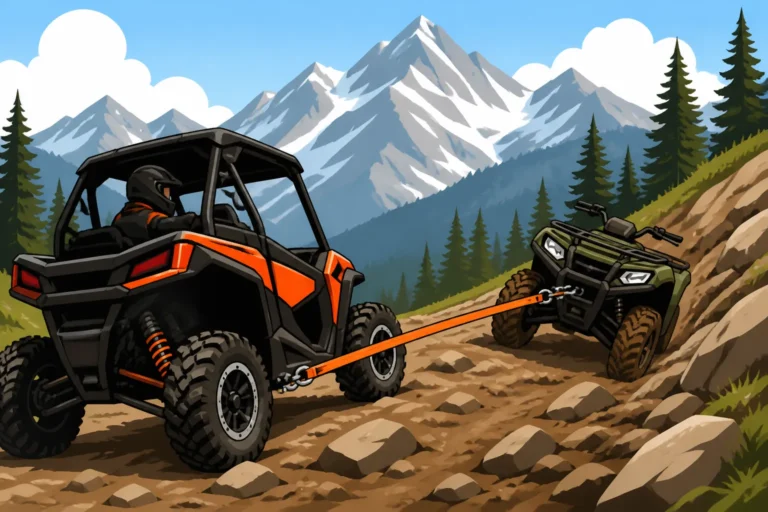
Pack water, food, warm and rain layers, a first-aid kit, basic tools, a tire repair kit, and any equipment needed to change or manage a tire. Bring a flashlight or headlamp, a power bank, and a way to navigate if your phone loses reception. For a remote route, a satellite messenger can provide a way to communicate when cellular service is unavailable. Make sure everyone knows how to use the equipment rather than leaving it packed away for an emergency.
Keep your load secure and accessible. A jacket, water, or first-aid kit buried beneath luggage is much less useful than one you can reach quickly. If you travel by OHV, carry required documents and safety equipment for the machine and riders. Requirements vary with the route and rider; [What Idaho Riders Need Before They Ride] is a helpful starting point for checking the Idaho side of the trip.
Make Good Decisions Along the Corridor
Adjust the plan to the conditions you find
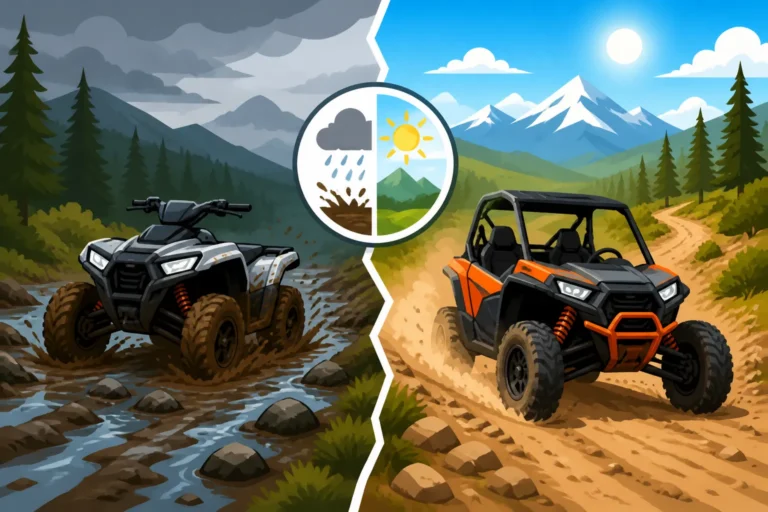
Once you are on the route, watch for changing surfaces, loose rock, washouts, standing water, dust, and reduced visibility. Drive or ride at a speed that lets you react to what is ahead, especially around blind corners and narrow sections. Leave space between vehicles so dust does not obscure the view, and avoid following so closely that a sudden stop becomes difficult.
If you encounter road work, a closure sign, a blocked section, or conditions that feel beyond your vehicle or experience, stop somewhere safe and reassess. Do not drive around barriers or assume a closure does not apply because another vehicle went through. Turning back can be frustrating after you have invested hours in the trip, but continuing into unsafe or restricted conditions is not a good way to protect your group.
Be prepared to share the road with other users, including local traffic, service vehicles, and people travelling at different speeds. Pull over only where doing so is safe and does not damage the roadside. Pack out rubbish, respect posted restrictions, and avoid creating new tracks around muddy or damaged sections. A cautious approach helps protect both your group and the corridor.
Know when to stop for the day
Keep checking your remaining daylight and energy rather than focusing only on how close the map says you are to the destination. Fatigue makes rough-road driving harder, and late-day conditions can bring colder temperatures or reduced visibility. If you are behind schedule, choose a safe, legal place to pause or revise your route rather than trying to recover lost time by driving faster.
For riders using an ATV or UTV, confirm that required registration, stickers, equipment, and road-use rules apply to every section of the trip. Idaho requirements do not automatically settle what is required after crossing into Montana. If your vehicle is not allowed on a particular segment, find a legal alternative before leaving, not after reaching a junction.
One-day travel can be rewarding when the group is prepared and the schedule is flexible. The best plan is not necessarily the one that reaches the far end fastest; it is the one that leaves enough time to travel carefully, respond to changing conditions, and enjoy the route without turning every stop into a race against sunset.
Disclaimer
This article is for general informational purposes only and does not constitute professional advice. Laws, prices and regulations vary by location and change over time. Consult a qualified professional for guidance on your specific situation.