Idaho Sand Dune Riding
Idaho’s open sand can look inviting from the highway, but the wrong access road, an unprepared machine, or a dune that changes shape in the wind can turn a fun ride into a frustrating day. This guide explains where to ride, how to plan, what to bring, and how to handle Idaho’s dunes with care—especially around the St. Anthony Sand Dunes.
Choose the right Idaho sand dune area
St. Anthony Sand Dunes are the main OHV destination
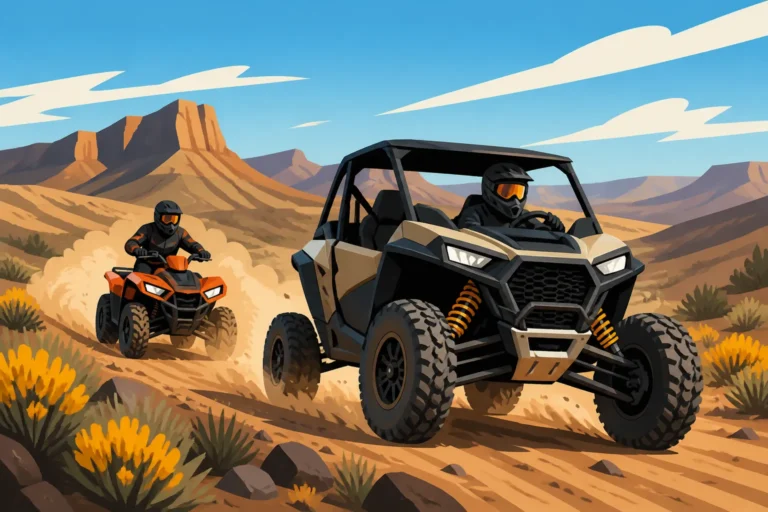
The St. Anthony Sand Dunes in eastern Idaho are the state’s best-known destination for riding on open sand. The dunes sit near St. Anthony and Egin, within reach of Rexburg and Idaho Falls, making the area a popular base for day rides and longer camping trips. The broad, shifting landscape offers a very different experience from the forest roads and mountain trails many Idaho riders know.
The area is managed for public use, but “open dunes” does not mean every patch of sand is open to every machine at all times. Boundaries, seasonal conditions, posted closures, and designated access routes matter. Before unloading, check the current land-manager information and signs at your access point. A route-planning app such as onX Offroad can help you orient yourself, but compare its map with official information rather than treating an app track as permission to ride.
The area’s size and open sightlines can also make distances deceptive. A dune that looks close from a staging area may take longer to reach than expected, and the sand can hide dips or sharp transitions. For an overview of riding destinations across the state, see [Where to Ride an ATV in Idaho].
Do not confuse Bruneau Dunes State Park with an OHV riding area
Bruneau Dunes State Park is a well-known Idaho destination, but it is not the place to take an ATV or UTV onto the dunes. The park is intended for activities such as hiking, stargazing, and wildlife viewing, not motorized dune riding. If you are planning a motorized sand trip, confirm that your destination specifically allows OHV use before you load the trailer.
This distinction matters because “Idaho dunes” can refer to more than one place. A search result, campground listing, or social post may mention sand dunes without making the riding rules clear. Check the exact location, access road, and land manager—not just the name of the nearest town.
If Bruneau is part of your broader itinerary, plan it as a separate, non-motorized stop. That avoids arriving with a trailer full of machines only to discover that the area you chose does not allow riding.
Plan the trip before you leave home
Check access, weather, and seasonal conditions
Sand conditions can change quickly. Recent wind may reshape a ridge, while rain or a cold snap can leave the surface firmer or more difficult than you expected. The condition of the access road can matter just as much: a route that is easy in dry weather may be rough, muddy, or unsuitable for a trailer after a storm.
Before setting out, check access information, closures, and local conditions. Look at a current map, note your intended staging area, and identify a backup plan if your preferred access is unavailable. [Checking Idaho Trail Status Before You Drive] is useful even for a dune trip, because access roads and nearby recreation areas can have restrictions that change independently of the sand itself.
Use onX Offroad or another mapping tool to save your destination and the route back to your staging area before you lose cell service. Download maps for offline use if the app supports it. A phone map is convenient, but it should not be your only navigation plan; carry a paper map or another backup and make sure someone in your group knows where you intend to ride.
Sort out stickers, safety requirements, and machine readiness
Before riding on public land, confirm that your machine and each rider meet the applicable Idaho requirements. Rules can depend on where you ride, what type of machine you have, and whether you are a resident or visitor. Start with [What Idaho Riders Need Before They Ride] and, if you are visiting from another state, review [Idaho's Non-Resident OHV Sticker].
Youth riders need extra planning. Idaho has specific requirements that may apply to riders under 16, including safety-course and supervision rules. Read [Idaho's OHV Safety Course for Young Riders] and [Idaho Helmet Requirements Under 18] before you head out, rather than trying to sort it out at the staging area.
A quick machine check can prevent a minor problem from becoming a long walk back through deep sand. Inspect tires, belts, fluids, lights, brakes, and steering. Check that the battery is secure and that recovery points are accessible. Bring the owner’s manual or know where to find the manufacturer’s recommended tire pressures and operating guidance.
| Before you go | What to check |
|---|---|
| Access | Current closures, allowed routes, staging locations, and posted signs |
| Paperwork | Applicable Idaho sticker or permit requirements and any required documents |
| Machine | Tires, belts, fluids, brakes, steering, lights, and recovery points |
| Navigation | Offline map, saved route, backup map, and a plan for weak cell service |
| Group safety | Meeting point, communication plan, first-aid supplies, and a turnaround time |
Ride sand with control and space
Read the dune before you climb it
A dune is not a smooth hill with a predictable top. Wind can build steep faces, cover tracks, and conceal the terrain on the far side. A ridge that looks manageable from below may drop sharply out of sight, or another rider may be approaching from the opposite side. Never climb blind simply because a set of tracks leads upward.
Approach unfamiliar slopes slowly and look for a clear line. If you cannot see what lies beyond the crest, do not charge over it. Choose a route that lets you see the landing area, and leave plenty of space between machines. In a group, riders should take turns on a slope rather than following closely behind one another. That gives each person room to stop or change direction if the sand shifts or the line becomes unsafe.
Avoid abrupt steering, hard braking, and sudden throttle changes when you can. Sand can feel soft and forgiving, but a fast correction may make a machine dig in or slide sideways. If the machine begins to bog down, ease off and reassess instead of repeatedly spinning the tires. Spinning can dig a deeper hole and make recovery harder.
Adjust your riding style to the machine and the group
An ATV and a side-by-side may both travel over sand, but their handling and visibility differ. A UTV is wider and heavier, so it needs more room to turn and stop. Its roof, doors, and occupants can also make it harder to see nearby riders. Keep speeds conservative in busy areas and make sure passengers remain seated and secured as the manufacturer directs.
Do not assume that a larger machine can safely go everywhere a smaller one can. Width, ground clearance, tire setup, load, and driver experience all affect which lines are appropriate. If you are comparing routes for a narrower machine, [Idaho Trails That Suit a 50-Inch Machine] can help you think about width-related access questions, but dune conditions and local restrictions still need to be checked separately.
Riding with children or newer operators calls for a slower pace and a clear group plan. Agree on a meeting spot before spreading out, and choose a route that matches the least experienced rider rather than the most confident one. If someone feels uncomfortable on a slope, stop and find another line. There is no prize for reaching the top of every dune.
Make the day safer and easier
Pack for sand, heat, and changing conditions
Sand riding can be physically tiring, even when the machines do most of the work. Bring drinking water, sun protection, eye protection, and clothing that covers exposed skin. Sand gets into eyes and equipment, and a windy afternoon can feel very different from a calm morning. A high-visibility safety flag may be required or recommended in dune areas; check the local rules and fit the right equipment before riding.
Carry a first-aid kit, basic tools, a tire-repair kit suited to your machine, and recovery gear that you know how to use. A tow strap, shovel, and traction aid can help with a stuck machine, but recovery gear is only useful when the group understands how to use it safely. Keep people clear of tensioned straps and follow the equipment manufacturer’s instructions.
Plan fuel with a cushion. Sand can demand more from a machine than an easy gravel road, and a ride that seems short on a map can involve repeated climbs and detours. Use [Fuel Planning for an Idaho Trail Day] as a reminder to calculate for the actual riding conditions, not just the distance between points. Carry enough water and fuel for a delay, not merely the ideal version of your route.
Use staging areas thoughtfully and protect the dunes
At the staging area, unload without blocking traffic or access for other users. Secure your trailer and tow vehicle in the designated space, keep loose gear contained, and make sure everyone knows where the group will regroup. [Idaho Trailhead Parking and Staging] offers useful planning points that apply to dune access as well as forest trailheads.
Once riding, stay within areas open to motorized use. Do not cut across posted closures or use fragile vegetation as a shortcut. Sand landscapes may appear resilient, but repeated traffic in the wrong place can damage plants, disturb wildlife, and create conflicts with other visitors. Pack out food wrappers, broken straps, and any other waste; do not leave broken machine parts or buried trash behind.
Be considerate around campsites, neighboring properties, and other riders. Keep noise under control when you are near developed areas, slow down around people and parked vehicles, and give pedestrians a wide berth. If you are camping, confirm that the site allows the kind of setup you plan to use and that your machine can be parked without blocking access.
Build a realistic itinerary around your group
For a first visit, keep the first ride short and familiar. Start from a known access point, agree on a turnaround time, and explore in a way that leaves daylight and fuel for the return. It is easy to underestimate the time involved when the landscape has few obvious landmarks. Save your starting point in your map and take a moment to confirm your direction before leaving the staging area.
If you are riding with several machines, appoint a lead and sweep rider. The lead watches the route and conditions; the sweep makes sure no one is left behind. Stop periodically to check that everyone is comfortable, machines are running well, and the group remains on the planned route. If the group becomes separated, return to the agreed meeting point rather than creating more routes in search of one another.
Finally, leave room in the plan for an early finish. A sudden weather change, a mechanical issue, or a rider who is tired can make turning back the best decision. Sand riding is most enjoyable when the day ends with enough energy to load safely and drive home—not when everyone is pushing through one more climb after the group has already had enough.
Disclaimer
This article is for general informational purposes only and does not constitute professional advice. Laws, prices and regulations vary by location and change over time. Consult a qualified professional for guidance on your specific situation.