Mechanics Near Idaho Trailheads
A flat tire, broken belt, or overheating UTV is stressful anywhere, but it feels worse when the nearest Idaho town is a long ride away and your phone has no signal. This guide explains how to find repair help near common Idaho riding hubs, what to ask before you haul a machine in, and how to plan for breakdowns beyond shop range.
Finding ATV and UTV mechanics near Idaho trailheads
Start with the nearest service town, not just the trailhead
Many Idaho riding areas sit well outside town, so searching for a mechanic by the trailhead name may turn up little. Instead, identify the nearest community where powersports or small-engine repair may be available, then call ahead to confirm the shop works on your machine type. McCall, Stanley, Idaho City, Mountain Home, Coeur d’Alene, Salmon, and Pocatello can all serve as useful planning points for rides in their broader regions, but that does not mean a suitable shop is open, nearby, or able to take your machine on a particular day.
The difference between “nearby” on a map and nearby in a breakdown can be significant. A shop in a town may be a practical option if your machine is already on a trailer, but a remote trailhead may still be many miles of rough access road away. Before heading out, note the trailhead and route, check the return drive to the nearest service town, and decide how you would get a disabled ATV or UTV off the route. Idaho Trailhead Parking and Staging can help you think through where to meet a recovery vehicle or leave a tow rig.
If your plans include the Boise National Forest, Danskin Mountains, or backcountry near Stanley, do not assume a general automotive garage handles ATVs and side-by-sides. Ask whether the shop services your make and model, whether it can diagnose the specific problem, and whether it has room to accept a trailer. A shop may be able to replace a battery or repair a tire but not have the parts, tools, or schedule for a complicated engine or transmission repair.
Confirm availability before you rely on a shop
A phone call before the ride can save a frustrating drive after it. Ask whether the shop is open on the day you expect to need help, whether it accepts walk-ins, and whether it can work on your machine’s brand and model. Explain the likely issue as clearly as you can. “I have a UTV that may need a tire repair” is more useful than “I need help with my side-by-side,” especially when the shop is busy or has limited equipment.
Also ask what the shop expects you to do with the machine. Some problems can be handled only after the vehicle is delivered to the business; roadside assistance should not be assumed. Find out whether the shop can receive a machine on a trailer, whether you need to arrange towing yourself, and whether it recommends calling back before you start driving. Keep the shop’s number saved, but have another contact option too, since a call from a trail may not go through.
Treat any contact details or online listing as a starting point rather than a guarantee. Hours, staffing, seasonal schedules, and repair capabilities can change. When you are riding in a smaller community such as Stanley or Elk City, it is especially important to have a backup plan in a larger service area. A backup may mean postponing a ride, arranging recovery to a paved road, or transporting the machine to a town with more repair options.
Match the repair plan to the Idaho riding area
Compare service options by the kind of problem
Not every breakdown calls for the same kind of help. A puncture, loose battery connection, or simple belt issue may be manageable with tools and spare parts carried in the machine. A damaged wheel, failed drivetrain component, or overheating problem may require specialized equipment and a shop. Use the table as a planning guide, then verify actual services with the businesses you might rely on.
| Riding area or service town | What to plan for | Questions to ask a shop |
|---|---|---|
| McCall and nearby mountain routes | Seasonal traffic and rides that extend beyond town | Does the shop service my machine and accept trailers? |
| Stanley and Sawtooth-area routes | Long distances between trail access and services | Can you diagnose this make and model, and should I call before bringing it in? |
| Idaho City and Boise National Forest routes | Remote roads and limited cell coverage on some routes | What is the best recovery access point if the machine cannot move? |
| Mountain Home and Danskin-area routes | Dust, heat, and rough terrain that can expose wear | Can you handle tire, belt, or cooling-system problems? |
| Coeur d’Alene and North Idaho routes | Several different trail systems and possible seasonal access changes | Are you open on my riding day, and do you have capacity for a repair? |
| Salmon and central Idaho routes | Backcountry travel where self-recovery may be difficult | Do you recommend towing to town or arranging recovery to a road first? |
The table is not a directory or a promise that repair services are available in each place. It is a reminder to build your plan around the location and type of breakdown. A rider near town with a trailer may have different options from someone deep on a forest route with a disabled machine and no cell service.
Think through recovery before you need a mechanic
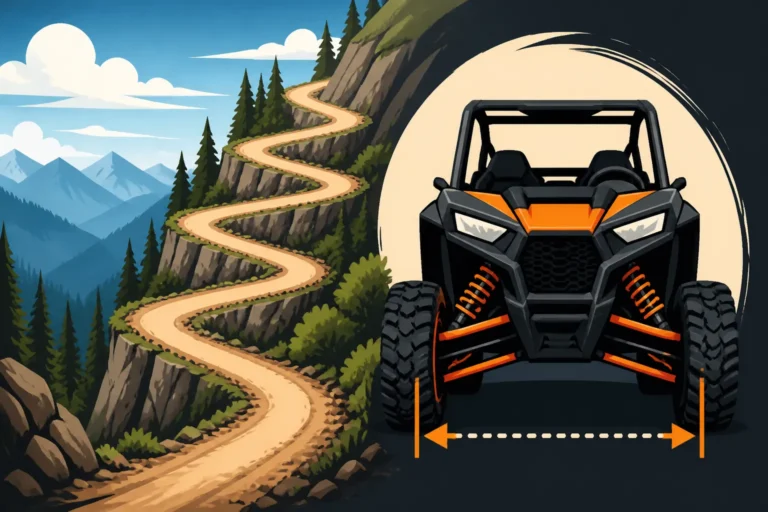
A mechanic can repair a machine only after it reaches a place where the work can be done. That is why towing and recovery belong in the same plan as shop research. Consider whether your route has narrow sections, steep grades, washouts, or limited places for a truck and trailer to turn around. Towing Off a Remote Mountain Trail is worth reviewing before a long backcountry outing, particularly if your group is riding far from a paved road.
Recovery gear should match your machine, your route, and your ability to use it safely. A winch can help in some situations, but it does not make every recovery safe; a poor anchor point, unstable slope, or damaged machine can create a dangerous pull. Review Recovery Gear for a Narrow Shelf Road and decide who in your group knows how to use the equipment. Do not count on another rider appearing at the right moment, or on a passing vehicle being able to tow your machine.
Before departure, make sure everyone knows the meeting point and the plan if the group separates. Save the trailhead location and the route back toward town, and share the plan with someone who is not riding. If your group uses onX Offroad to prepare, download the relevant maps before leaving coverage and save key locations such as the trailhead, camp, and likely road exits. The app can support navigation planning, but it should not be treated as a live guarantee of shop availability or a substitute for a recovery plan.
Prepare for common breakdowns before leaving town
Carry tools and spares for realistic trail repairs
The best kit is not necessarily the biggest one. It is the one that fits your machine and includes items you know how to use. A compact tire-repair kit, pressure gauge, inflation method, basic hand tools, zip ties, gloves, and a headlamp can help with ordinary trail problems. For a belt-driven machine, consider whether you have the correct spare belt and the tools needed to replace it. Check your owner’s manual for recommended equipment and safe procedures rather than guessing at a repair under pressure.
A spare part is only useful if it fits the machine and is accessible when needed. Check the part number before the trip, keep it protected from dirt and water, and make sure the group knows where it is stored. Practice simple repairs at home or in a driveway. It is much easier to learn how to use a tire plug kit before you are kneeling in dust on a remote road. For a more detailed packing list, see What to Carry on a Remote Ride and Flat Tires Far From a Tire Shop.
Do not turn a minor fault into a major failure by continuing to ride. If the machine is losing power, overheating, making a new grinding noise, or leaking fluid, stop somewhere safe and assess the situation. Consult the owner’s manual, let hot parts cool, and avoid opening a pressurized cooling system while it is hot. If you cannot identify the problem or the repair would compromise steering, braking, or stability, arrange recovery instead of trying to limp back over rough terrain.
Reduce the chance of a breakdown with a pre-ride check
Before the trip, inspect tires, wheels, lug nuts, brakes, lights, belts, battery connections, fluids, and visible hoses. Look for cuts, leaks, loose fasteners, or damage from the last ride. Check that the winch, if fitted, operates and that straps and recovery points are in usable condition. A few minutes of inspection can reveal a problem that would otherwise show up far from the trailhead.
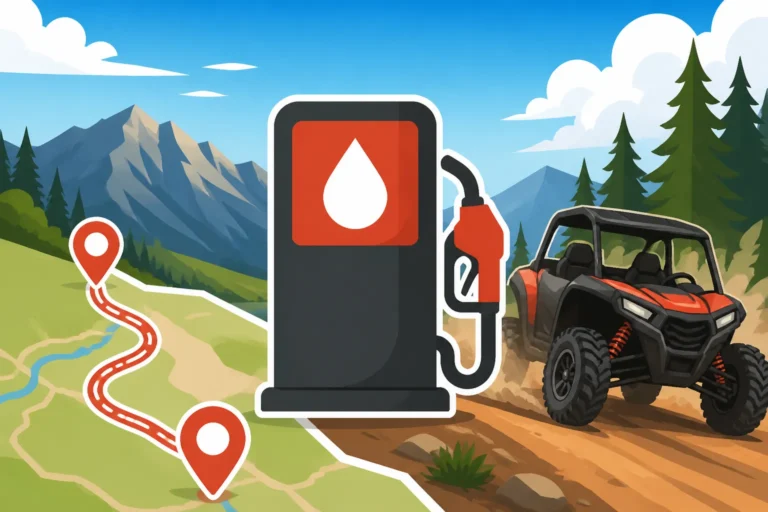
Plan fuel conservatively. Distance estimates can be misleading when the route includes slow climbs, deep sand, mud, heavy loads, or frequent stops. Start with a full tank where possible, know your machine’s practical range under demanding conditions, and carry additional fuel only in an approved container stored securely. Fuel Planning for an Idaho Trail Day offers a useful way to think about range before committing to a longer route.
Finally, check trail access and conditions before driving out. Snow, runoff, fire closures, logging activity, and seasonal restrictions can change which routes are usable. Checking Idaho Trail Status Before You Drive can help you build that step into your routine. Keep an offline navigation option as a backup, because cell service can disappear well before a breakdown does; Cell Service in the Idaho Backcountry explains why relying on a phone alone can leave riders without a dependable way to call for help. onX Offroad can help you save routes and offline map information, but also carry enough local knowledge and backup navigation to make decisions if your device fails.
What to do when your ATV or UTV breaks down
Make the scene safe and identify the problem
Move the machine off the active route if it can be done safely, and make your group visible to other riders. On a narrow road or trail, keep people clear of blind curves and unstable edges. Turn off the engine if you notice smoke, a fuel smell, a serious leak, or signs of overheating. Do not keep restarting a machine if you suspect a mechanical failure that could worsen with use.
Once the group is in a safe spot, record the machine’s location. Save coordinates or a pin, note the route number and nearby junctions, and take a photo of a sign or distinctive landmark. If you have signal, contact your chosen recovery provider or a trusted person who can help coordinate transport. If you have no service, use the group’s agreed plan; sending one person alone toward help can create a second emergency, so make that decision carefully and consider terrain, weather, daylight, and who remains with the disabled machine.
If the issue appears minor, attempt only repairs you understand and can perform safely. Keep loose tools and parts secured, and do not work beneath an unsupported vehicle. If the machine is on a slope or the ground is unstable, avoid lifting or pulling it until you can assess the risks. A quick repair is not worth a rollover or injury.
Give the mechanic useful details
When you reach a shop, describe what happened in order. Explain what the machine was doing before the problem, what changed, whether warning lights appeared, and whether the engine overheated or shut down. Mention any recent maintenance, modifications, or repairs. If the problem began after water, mud, dust, or a hard impact, say so. These details can help a mechanic narrow down the issue without unnecessary guesswork.
Bring the machine’s make, model, year, and any available service records. If it is still on a trailer, take photos of visible damage and any warning messages before unloading it. Ask what the shop can inspect, what it needs from you, and whether it recommends leaving the machine rather than attempting another start. Avoid promising yourself that a repair will be quick; parts availability and workload can affect how soon a shop can begin.
If you are planning future rides in the same region, use the experience to improve your preparation. Update your route notes, carry the part or tool that would have helped, and save the recovery contact that worked. Keep a second shop or service-town option in your plan. That preparation will not prevent every breakdown, but it can turn an exhausting day into a more manageable problem.
Disclaimer
This article is for general informational purposes only and does not constitute professional advice. Laws, prices and regulations vary by location and change over time. Consult a qualified professional for guidance on your specific situation.