Riding Idaho Trails With Kids
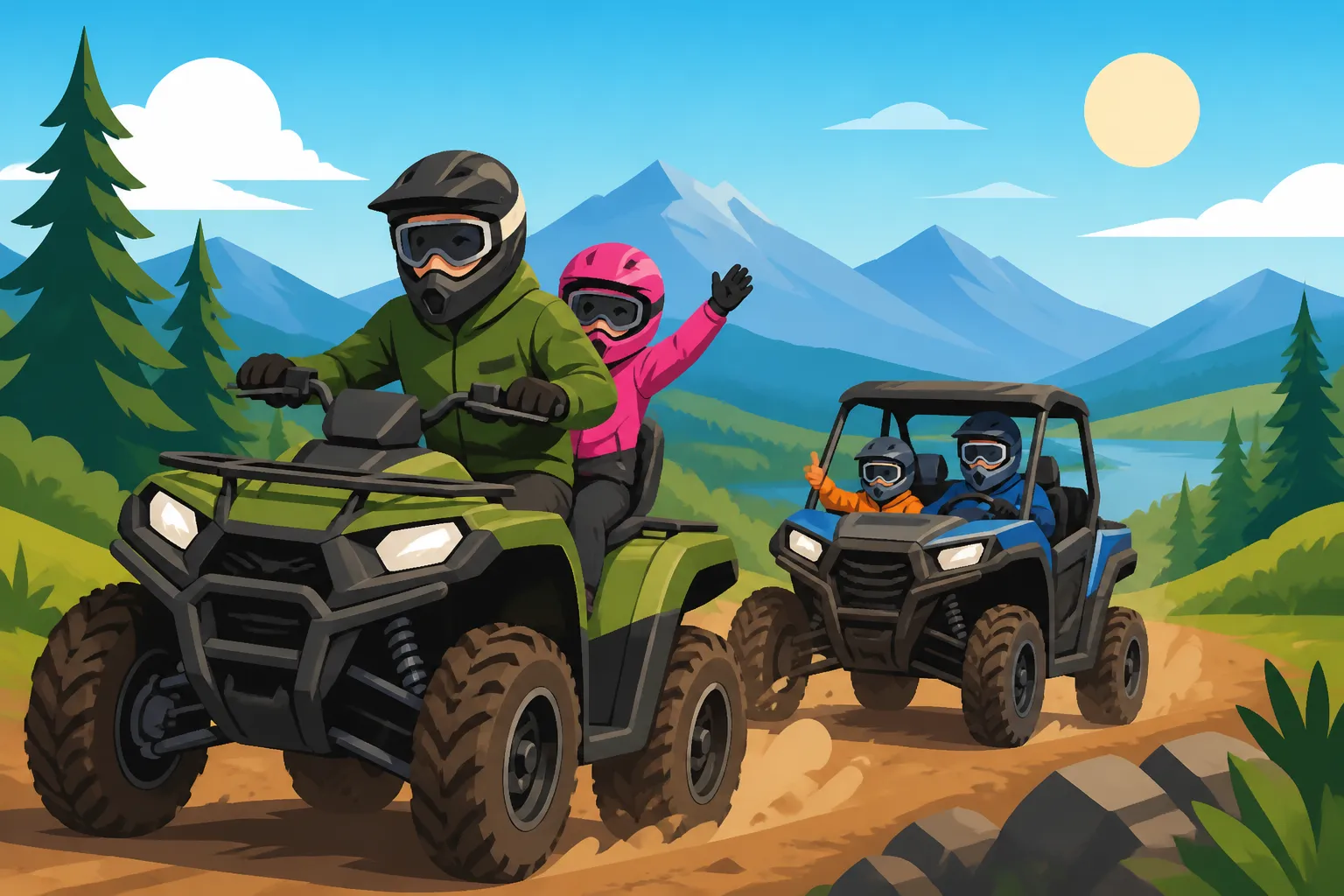
Taking kids on an Idaho ATV or UTV ride can turn into a stressful day quickly if the trail is rougher, longer, or more remote than you expected. This guide helps families choose a suitable route, check youth requirements, prepare the machine and gear, and make a ride manageable for children from the trailhead to the turnaround.
Choose a ride that matches your child
Start with the rider, not the map
A trail that looks short on a map may feel long to a child who is bouncing over rocks, breathing dust, or sitting still in a helmet for the first time. Think about your child’s age, experience, comfort with noise and motion, and ability to follow directions before choosing a destination. A familiar child who rides comfortably on private property may still find a public mountain trail overwhelming.
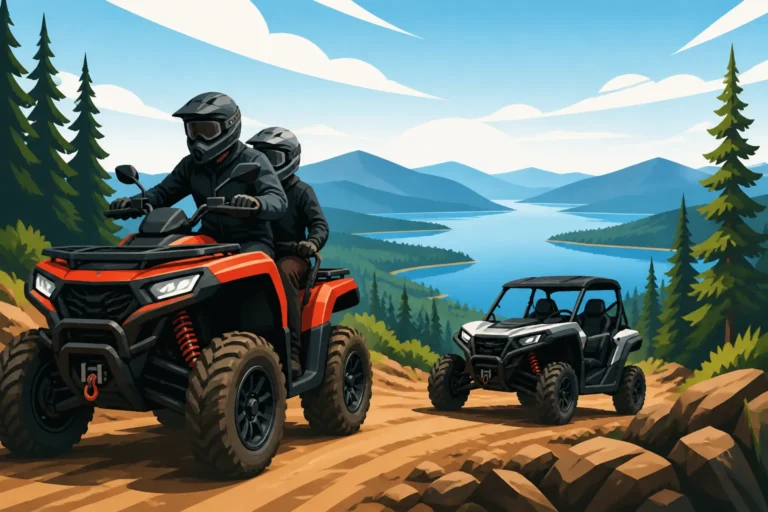
Be equally realistic about the machine. A child who is operating an ATV needs a machine that fits their size and ability, with controls they can reach and use confidently. Don’t assume a child can safely handle an adult-sized quad just because they are tall or eager. For a UTV, check the seating positions, seat belts, passenger limits, and child-restraint guidance in the manufacturer’s manual. Never put a child in a seat or position the manufacturer does not consider suitable.
Idaho has rules that can depend on the rider’s age, the type of machine, and where the ride takes place. Review [Idaho Age Rules for Riders Under 16] and Idaho Helmet Requirements Under 18 before planning. Also check whether a safety course is required for your child’s intended riding situation; Idaho OHV Safety Course Requirements is a useful place to start. If you are unsure how a rule applies to a particular road or trail, confirm it with the relevant land manager before heading out.
Pick terrain that leaves room for mistakes
For a first family outing, favor a simple route where you can turn around without drama. A wide, relatively smooth road with good sightlines is usually easier for a new rider than narrow single-track, steep switchbacks, deep sand, or a trail with frequent drop-offs. Idaho’s landscape changes quickly: a route near Boise can feel very different from a high-country ride near Stanley or a forest road in the Panhandle.
Use Idaho Trails Suited to Beginners and Family-Friendly Idaho OHV Trails as starting points, then check the details for your exact trip. Look at route width, elevation change, distance, surface, and whether the route includes difficult crossings or sections where a larger machine could struggle to turn around. Do not assume a trail is family-friendly simply because it is popular or because another family completed it. Their machine, experience, weather, and children may be different from yours.
A conservative first ride might be a short out-and-back rather than a loop. An out-and-back gives you a known route home and makes it easier to stop when a child is tired. Before leaving, choose a turnaround point based on time and conditions—not on the expectation that you must reach a particular landmark.
| Ride setting | What families may find challenging | A sensible approach |
|---|---|---|
| Wide, smooth road | Dust, traffic, long stretches without shade | Keep the first ride short and take water breaks |
| Rocky or rutted road | Bumps, slow travel, fatigue | Check comfort often and turn around early if needed |
| Narrow mountain trail | Limited passing and fewer easy turnaround spots | Save it for experienced riders and suitable machines |
| Sand or mud | Sudden changes in traction and control | Avoid it for a first ride unless you know the conditions |
| High-elevation route | Cold, changing weather, slower travel | Check the forecast and pack warm layers |
| Remote backcountry route | Limited cell service and long distance from help | Choose a closer option until your family has more experience |
Check width, access, and current conditions
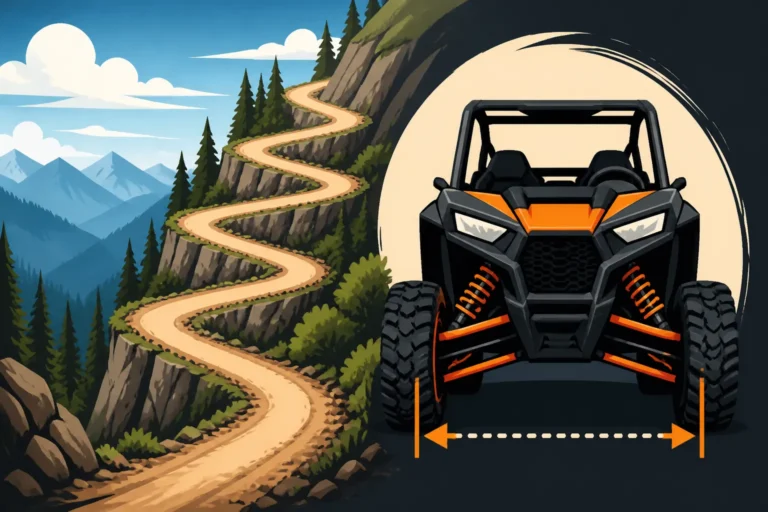
A machine that fits on one route may not fit on another. Before setting out, verify any width restrictions and make sure your UTV or ATV is allowed on the route you have chosen. Some routes may be limited by machine type or width, and road or trail access can change with seasonal restrictions, maintenance, fire activity, or local rules.
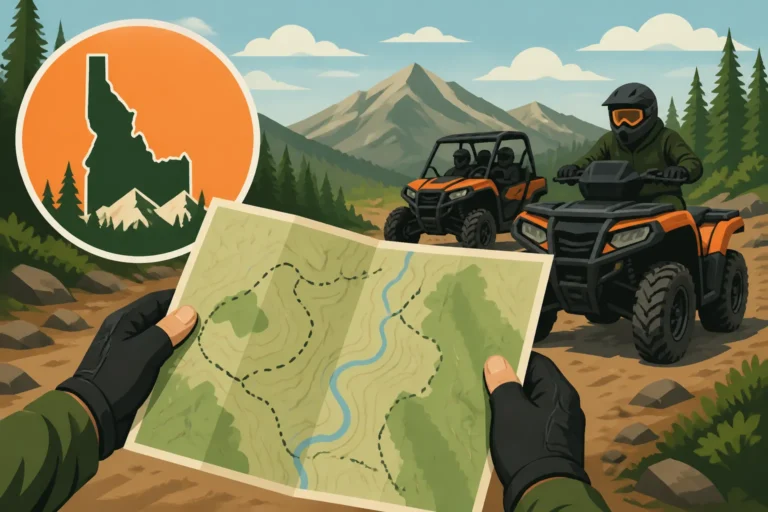
Use a current motor vehicle use map for the area and confirm that the route is open to the kind of machine you plan to bring. Reading an Idaho Motor Vehicle Use Map can help you understand what those maps communicate. An app such as onX Offroad can help you review mapped routes and plan navigation, but treat it as one planning tool rather than permission to ride. Check the land manager’s posted information and signs at the trailhead, and don’t continue if an on-the-ground closure conflicts with your plan.
Conditions matter as much as the map. Snow, runoff, washouts, dust, and fire closures can change what a route is like or whether it is accessible. Before loading the trailer, use Checking Idaho Trail Status Before You Drive to build a habit of confirming conditions. If the trail status is uncertain, choose a different outing instead of hoping it will work out once you arrive.
Make the ride safe and comfortable
Treat safety rules as part of trip planning
Do the paperwork and rule-checking before the children are suited up and waiting by the trailer. Confirm which requirements apply to the machine, the rider’s age, the route, and the land it crosses. Public roads, public trails, private property, and designated recreation areas may not have identical rules. If your ride includes a road section, check the road-use requirements separately from trail requirements.
Children should wear a properly fitting helmet and appropriate eye protection, along with clothing that covers their skin and footwear that stays secure. A helmet that slides around, blocks vision, or feels uncomfortable is likely to become a distraction. Pack spare eye protection if you have it; dust can turn a pleasant ride into an unpleasant one fast. Review age-specific expectations in Idaho Helmet Requirements Under 18, and make sure the helmet and gear are appropriate for the riding activity.
If supervision rules apply, plan how you will maintain the required supervision throughout the ride—not just at the staging area. Idaho’s rules can depend on the situation, so read The 300-Foot Supervision Distance carefully and confirm how it applies to your route and rider. An adult riding far ahead or dropping out of sight around a bend may leave a child feeling alone even when the group is technically nearby. Keep the group close enough that everyone can communicate and respond quickly.
Pack for a child’s needs, not just the machine
A family ride needs more than fuel and a basic tool kit. Bring drinking water, snacks, sun protection, warm layers, and a first-aid kit. Children can get cold or thirsty before they say anything, especially when they are concentrating on the ride or trying not to slow the group down. Pack any necessary medication and keep it accessible rather than buried beneath gear.
For a remote route, carry navigation and communication options that do not depend on a reliable phone signal. onX Offroad may help you plan and follow a route, but download or prepare what you need before leaving service and bring a backup map or navigation method. Tell someone who is not on the ride where you are going and when you expect to return. What to Carry on a Remote Ride is a helpful checklist for thinking through the less obvious items.
Use this practical pre-ride check before you leave the staging area:
- Confirm that everyone is dressed for the weather and wearing correctly fitted protective gear.
- Check the machine’s tires, controls, brakes, fuel, lights, and required safety equipment.
- Review the route, planned turnaround point, closures, and any width or access restrictions.
- Make sure children understand how to signal that they need to stop.
- Agree on who leads and who rides last, with an experienced adult positioned to keep the group together.
- Tell the group that turning around early is always an acceptable choice.
Build in breaks and an easy exit
Children may not recognize fatigue until they are already uncomfortable. Schedule short breaks before anyone is worn out. Stop in a safe place away from the travel path, check that everyone has water, and ask specific questions: Are your hands cold? Is your helmet bothering you? Are you feeling nervous on the bumps? A child may answer more honestly when the question is concrete.
Plan a ride with several natural exit points if possible. On a long out-and-back, decide in advance that the group will turn around at the first sign of repeated complaints, fading attention, or worsening weather. Don’t frame stopping as failure. Children learn good riding judgment when they see adults make a sensible call before a minor problem becomes a bigger one.
Keep the pace steady and leave space between machines so riders are not breathing constant dust. Avoid pressuring a young rider to keep up with faster adults. If the group splits, the lead rider should stop at agreed points and wait; the last rider should not be left to guess whether everyone has turned off onto another route. For a first ride, a calm hour close to the trailhead is often a better memory than an ambitious day that ends with tired children and a difficult ride back.
Plan an Idaho outing that works in real life
Match the destination to the season and drive
Idaho offers very different riding experiences, from desert and foothill terrain to forest roads and high-elevation routes. That variety is part of the appeal, but it also means conditions can differ significantly between places and elevations. A route near Danskin Mountains outside Mountain Home is not interchangeable with a ride in the Sawtooth area or near Fourth of July Pass. Check the specific route, access, and conditions rather than relying on a general impression of a region.
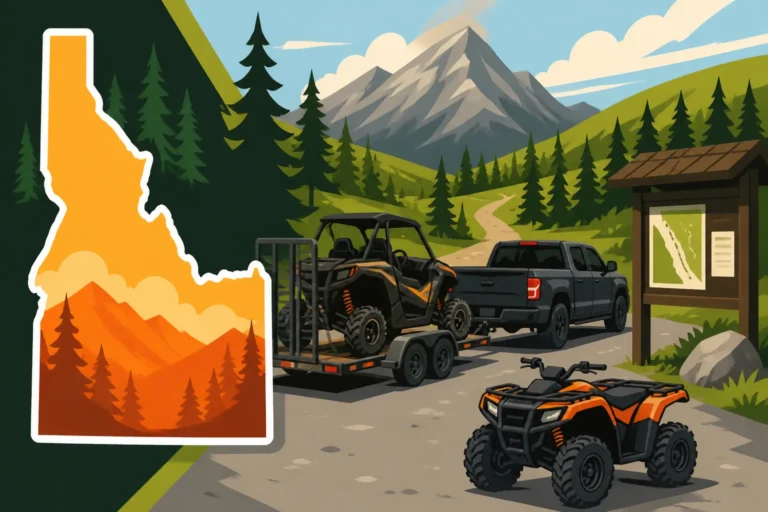
Account for the drive to the trailhead as well as the ride itself. A long trailer journey, a late start, and a full day on the trail can be a lot for a child before the machine even moves. Choose a destination with a staging area and parking setup that works for your vehicle and trailer. Idaho Trailhead Parking and Staging can help you think through that part of the outing. Arriving early may leave you more room to unload, check equipment, and give children time to get comfortable.
Use onX Offroad or another mapping tool to estimate the route and identify nearby alternatives, then confirm the details with the appropriate official map or land manager. Keep a paper or offline backup if your route crosses areas with limited service. Do not plan a family ride around a single point of interest if reaching it would require pushing through a route that is beyond your child’s current ability.
Make the first outing deliberately small
A short first trip gives everyone a chance to learn what works. You may discover that one child loves the open stretches but dislikes rocky sections, or that a passenger gets uncomfortable after an hour in the seat. That information is useful. It helps you choose a better route next time and adjust breaks, clothing, or machine setup.
Before the ride, explain the basics in plain language: stay with the group, don’t pass without permission, keep hands and feet in the right place, and tell an adult immediately if something feels wrong. For children operating their own machine, practice controls and stopping in a safe, appropriate area before attempting a longer route. Make sure they can respond to simple directions and understand that they must stop when an adult signals.
After the outing, ask what the child liked and what felt difficult. “Was the whole trail fun?” may invite a quick yes, especially if the child wants to please you. Better questions include: Which part felt too bumpy? Did you get cold? Did you feel like we stopped enough? Use those answers to make the next ride more comfortable, not to persuade the child to tolerate something they disliked.
Common family ride mistakes to avoid
Choosing a route based on adult expectations
Adults often underestimate how tiring a ride can be for a child. A route that feels like an easy warm-up to an experienced rider may involve hours of engine noise, vibration, dust, and concentration for a young passenger. Likewise, a short distance on a map may take much longer when the road is slow or the group needs frequent breaks.
Set a modest goal and treat extra distance as optional. If everyone is comfortable and conditions are good, you can continue to a planned stopping point. If not, turn back. This approach reduces pressure on children and makes it easier for adults to pay attention to changing conditions.
Assuming a familiar area is automatically open
A route you rode last season may now have a closure, restriction, or changed surface. Access can vary by route and land manager, and a navigation app can’t replace posted signs or official route information. Check before leaving and again at the trailhead. If the road is marked closed or the route doesn’t match your machine, don’t try to work around the restriction.
For family trips, leave room in the plan for a backup destination. If a route is closed, too muddy, or more difficult than expected, a nearby easier option can save the day. A flexible plan is especially helpful when traveling to places such as Idaho City, McCall, or the Coeur d’Alene area, where the exact ride may depend on local conditions and access.
Pushing past a child’s comfort level
A child who goes quiet, stops responding, or keeps asking how much farther may be tired, scared, cold, or uncomfortable. Don’t assume they are merely bored or being difficult. Stop somewhere safe, check in, and make an honest decision about continuing. If a child is frightened by a section, do not rush them through it while other riders wait impatiently.
The most successful family ride is not necessarily the longest or most scenic one. It is the outing where children feel prepared, adults stay attentive, and the group gets home without having to push beyond its limits. Start small, keep your route flexible, and let each ride teach you what your family is ready for next.
Disclaimer
This article is for general informational purposes only and does not constitute professional advice. Laws, prices and regulations vary by location and change over time. Consult a qualified professional for guidance on your specific situation.