Registering an Oregon Machine in Idaho
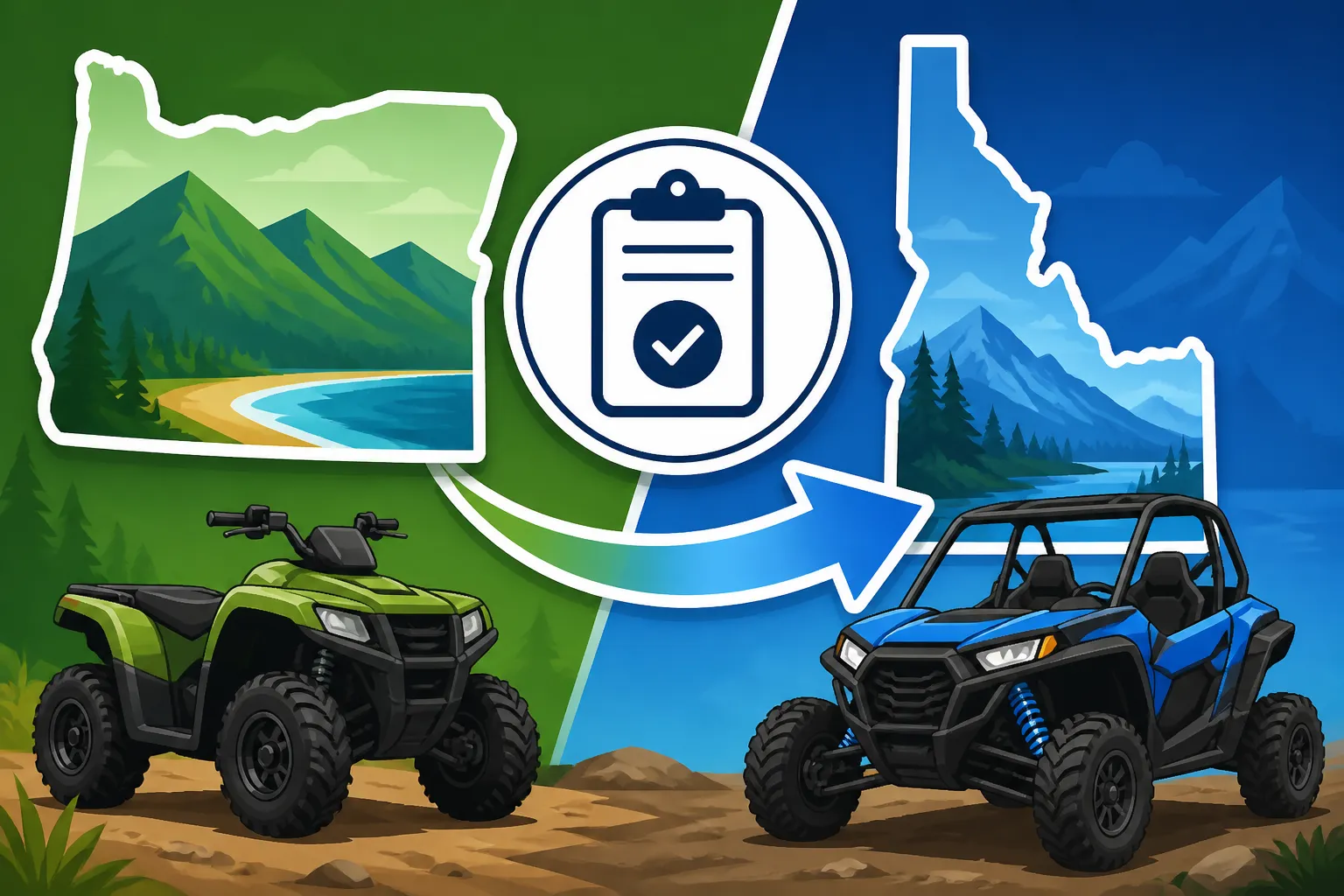
Moving to Idaho with your beloved ATV or UTV from Oregon can bring a mix of excitement for new trails and a whole lot of head-scratching over paperwork. It’s easy to assume that because your machine was perfectly legal back in Oregon, it'll seamlessly transfer to Idaho's system. Unfortunately, the rules are often quite different, and getting things sorted incorrectly can lead to delays or even fines. This comprehensive guide will walk you through every step of getting your Oregon-titled machine properly registered and ready for Idaho's incredible backcountry.
Understanding Idaho's OHV Requirements for New Residents
Bringing your off-highway vehicle (OHV) across state lines means you're stepping into a new set of regulations. Idaho has its own distinct way of handling titles, registrations, and permits for ATVs and UTVs, and while some elements might feel familiar, others will be entirely new. It’s not just about getting a sticker; it’s about establishing your machine’s legal presence in a whole new state, and that starts with understanding the basics.
The Basic Idaho OHV Essentials
First and foremost, Idaho requires most OHVs operating on public land or designated trails to have an Idaho OHV sticker. This sticker is essentially your proof that you've paid the annual fee that supports trail maintenance and other important programs. Unlike some states where a title might be optional for older machines, Idaho generally requires a title for any OHV over 50cc. This means that if your Oregon machine has an engine size above that threshold, getting an Idaho title is going to be your foundational step. The title proves ownership, which is crucial for everything else that follows. Don't underestimate the importance of understanding these core requirements before you even think about hitting those stunning Idaho trails. You’ll find more information on [Idaho Titles Every ATV Over 50cc].
The state's approach is designed to ensure that all machines using its vast network of trails contribute to their upkeep and are properly identified in case of theft or an accident. For many Oregonians, this might be a slight adjustment, as some components of their home state’s system may have been less stringent, especially for machines not used on public lands. Getting your machine legally recognized here ensures you're a responsible rider and can enjoy all the state has to offer without worry.
Why Your Oregon Registration Won't Transfer
A common misconception for new residents is that their current Oregon registration or permit will somehow translate to Idaho. Unfortunately, this isn't how it works. Idaho, like many states, does not have reciprocity agreements for OHV registrations with Oregon. This means that even if your Oregon ATV or UTV permit is perfectly valid, it won't allow you to legally ride on Idaho's public trails. The Idaho sticker system is entirely separate, and you'll need to obtain one regardless of your previous state's status. The only exception often involves machines used exclusively on private land with the owner's permission, but even then, venturing onto public access roads or trails demands that Idaho sticker.
This lack of reciprocity can sometimes catch new residents off guard, especially if they've already moved and are eager to explore. The reason for separate systems often comes down to how each state funds its OHV programs, manages its trails, and tracks its riders. Each state wants to ensure that funds generated from stickers and fees stay within its borders to directly benefit its own trail systems. For a deeper dive into this, you might want to read [Why Idaho Ended OHV Reciprocity]. Therefore, while your Oregon title is a crucial document for proving ownership, your Oregon registration number or sticker simply won't cut it in Idaho.
Establishing Idaho Residency for Your Machine
The moment you become an Idaho resident and bring your OHV with you, the clock starts ticking on getting it properly titled and registered here. Generally, you're expected to title and register your vehicle within a certain timeframe after establishing residency, although specific deadlines can vary. Establishing residency for your machine often goes hand-in-hand with establishing your own personal residency, which involves things like getting an Idaho driver's license, registering to vote, or changing your mailing address.
When you head to the County Assessor's office, they'll want to see proof that you are indeed an Idaho resident. This might include your new Idaho driver's license or other documents showing your local address. For your OHV, this process essentially re-homes it in Idaho, making it eligible for an Idaho title and subsequently, an Idaho OHV sticker. Don't try to shortcut this by simply buying an Idaho non-resident sticker if you're now a full-time resident; that's meant for visitors, not permanent residents who have moved their operations here. The full process ensures your machine is fully integrated into Idaho's system. [Registering an Out-of-State Machine in Idaho] offers more details on this transition.
The Titling Process for an Out-of-State OHV
Once you've settled into Idaho, the very first order of business for your Oregon machine is to secure an Idaho title. This is the official document that proves you are the legal owner in the state of Idaho. Without a valid Idaho title, you won't be able to get an OHV sticker, nor will you be able to legally sell or transfer the machine in the future. It might feel like a hassle, especially if you've already got a title from Oregon, but it's a non-negotiable step to becoming a legal Idaho rider.
Gathering Your Oregon Paperwork
The bedrock of titling your Oregon machine in Idaho is having all your original Oregon paperwork in order. The most critical document will be your Oregon Certificate of Title. This must be the original, not a copy, and it should be properly signed off by you as the current owner. Any liens on the Oregon title must be released before you attempt to transfer it to Idaho. If there was a loan on the machine and you've paid it off, make sure you have the official lien release document from the lender. Without this, Idaho won't issue a clean title to you.
Beyond the title, it's wise to bring any other supporting documents you have, such as a bill of sale from when you originally purchased the machine, even if it was years ago. While not always strictly required for a title transfer from yourself to yourself, it can help clarify any questions about the chain of ownership. If you happen to be missing crucial documents like a signed bill of sale or need to create one to establish a clear paper trail, reputable online services like LawDepot can provide templates for these kinds of legal documents. Having everything organized before you visit the County Assessor's office can save you immense time and frustration. For a comprehensive list of what to bring, consider [Documents to Bring to an Idaho Assessor's Office].
The VIN Inspection Requirement
One key step that often differentiates titling an out-of-state machine from an Idaho-originated one is the Vehicle Identification Number (VIN) inspection. Idaho requires a VIN inspection for all vehicles, including OHVs, that are being brought into the state from elsewhere. This inspection serves a couple of important purposes: it verifies that the VIN on your machine matches the VIN on your Oregon title, and it helps deter vehicle theft by ensuring the machine isn't stolen or cobbled together from illegal parts.
This inspection can often be performed by a county sheriff's deputy, a city police officer, or sometimes by an authorized Idaho Department of Motor Vehicles (DMV) official. You'll typically need to arrange an appointment or visit a designated inspection location. Make sure your machine is accessible for the inspection; the VIN is usually stamped on the frame in an easily visible location, often near the front suspension or on the frame rail. Once the inspection is complete, the officer will sign off on the appropriate form, which you will then take to the County Assessor's office. This step confirms the physical identity of your machine.
Visiting Your Local County Assessor
With your Oregon title, VIN inspection form, and any other supporting documents in hand, your next stop is the Motor Vehicle Department within your local Idaho County Assessor's office. This is where the magic happens – or at least, where the official paperwork is processed. You'll complete an Idaho title application form, providing all the necessary details about yourself and your OHV. Be prepared to pay the Idaho title fee. Remember that offices can get busy, especially during certain times of the month, so check if your county offers appointments or has specific hours for vehicle services.
The staff there are generally helpful and can guide you through the forms. It’s their job to make sure everything is filled out correctly to avoid future issues. If you have any questions about the process or specific forms, don't hesitate to ask them. They’ve seen it all, from missing signatures to confusing ownership chains. The goal is to surrender your Oregon title and walk out with an application for a brand new Idaho title in your name. You can learn more about the overall process at [Idaho OHV Title Application at the County Assessor].
Handling Sales Tax or Use Tax
This is a point where many new Idaho residents get tripped up. Even if you paid sales tax when you bought your ATV or UTV in Oregon, Idaho has its own sales tax (or use tax, as it's often called for items brought into the state). If you didn't pay Idaho sales tax at the time of purchase, or if the machine was purchased out of state and then brought into Idaho, you may owe use tax on its value. This is separate from the title and registration fees. The good news is that if you paid sales tax in Oregon, Idaho often provides a credit for that amount against what you owe here, preventing you from being taxed twice on the same purchase. However, the exact amount you paid in Oregon needs to be documented.
The County Assessor's office will calculate any sales or use tax due based on the purchase price you reported or the fair market value of the machine if no recent sale occurred. They will expect this to be paid at the time of titling. It’s not a pleasant surprise to have, so be prepared for this expense. If you're unsure about how to document the original purchase price or need a general bill of sale, resources like LawDepot can provide templates to formalize the original transaction details, which can be helpful for tax calculations. Detailed information is available in [Idaho Sales Tax on an ATV Purchase] and [Use Tax When a Machine Comes Into Idaho].
Getting Your Idaho OHV Sticker and Plate
Once your Oregon machine officially has an Idaho title, you're on the home stretch to hitting the trails. The final steps involve securing your annual OHV sticker and, if you plan to ride on designated county roads, a Restricted Use Plate. These are your tickets to legal operation across Idaho’s vast and varied terrain. Without these, even with a title, you won't be trail-ready.
Applying for Your Idaho OHV Sticker
The Idaho OHV sticker is your proof of annual registration. It's what allows you to ride on Idaho's public lands, state parks, and designated trails managed by agencies like the Forest Service and BLM. You can purchase this sticker at your County Assessor's office immediately after titling your machine, or from authorized vendors across the state, including some powersports dealerships and sporting goods stores. The sticker year runs from January 1st to December 31st, regardless of when you purchase it during the year.
The cost is typically a set annual fee, which directly contributes to the Idaho Parks and Recreation Department's efforts in maintaining and improving OHV trails, staging areas, and other rider services. Make sure to display the sticker prominently on your machine as required by law – usually on the front fender of a quad or a visible spot on a side-by-side, or on your restricted plate if you have one. This makes it easy for Idaho Fish and Game officers or local sheriffs to quickly verify your compliance. You'll want to check [What an Idaho OHV Sticker Costs Each Year] and [Where Idaho Sells OHV Stickers] for current information and vendor locations.
Restricted Use Plate for Road Access
If your plans include riding on specific county roads or traveling between trail systems on public roadways, you'll need to apply for an Idaho Restricted Use Plate, often referred to as an "R plate." This special plate allows your OHV to operate on roads designated as open to OHV use, which is a fantastic perk in many parts of Idaho, providing seamless access from town to trail. The R plate is available through the Idaho Transportation Department (ITD) and typically requires proof of your Idaho title and OHV sticker.
The Restricted Use Plate has its own fee and comes with additional requirements for your machine, such as proper lighting, mirrors, and a horn, to ensure it’s road-safe. While your title and sticker will be processed at the County Assessor's office, the R plate is often ordered separately and mailed to you. Remember, even with an R plate, you cannot ride on state or federal highways in Idaho, and certain cities or counties may have their own ordinances restricting OHV use on specific roads. Always check local regulations before you ride. For details on what the R plate covers, refer to [What Idaho's $3 Restricted Use Plate Covers] and [Ordering an Idaho Restricted Plate].
Displaying Your New Idaho Credentials
Once you've navigated all the paperwork and fees, you'll be issued your new Idaho title, OHV sticker, and potentially a Restricted Use Plate. Proper display of these credentials is just as important as obtaining them. The OHV sticker needs to be affixed to the machine in a clearly visible location, typically on the front-most part of the vehicle, like the front fender for an ATV or the front of the body for a UTV. The goal is easy visibility for enforcement officers.
If you opt for an R plate, the OHV sticker will usually be placed directly on the plate itself, and the plate must be securely mounted on the rear of your machine, similar to a standard license plate. Ensure it's not obscured by mud, equipment, or accessories. Keeping your title and other important documents like proof of insurance (if you have it) safe and accessible, perhaps a laminated copy or a digital photo on your phone, is also a good practice when you're out on the trails. It's critical to know [Displaying a Sticker on an Idaho R Plate] to avoid any issues during a trailside check. Double-checking that everything is correctly displayed means you can focus entirely on enjoying Idaho's incredible riding opportunities.
| Document / Item | Issued By | Key Purpose | Where to Obtain | Notes |
|---|---|---|---|---|
| Oregon Title | Oregon DMV (Previous State) | Proof of prior ownership | Your personal records | Original document needed for transfer; must be lien-free. |
| VIN Inspection Form | Idaho Law Enforcement / DMV Official | Verifies VIN matches documentation | Local Sheriff/Police Dept. or designated DMV site | Required for all out-of-state vehicles. |
| Idaho Title | Idaho County Assessor | Official Idaho proof of ownership | County Assessor's Office | Essential for all other registrations; requires fees and potentially use tax. |
| Idaho OHV Sticker | Idaho Parks and Recreation | Annual registration for trail access | County Assessor's Office, authorized vendors | Supports trail maintenance; required for public land use. |
| Restricted Use Plate | Idaho Transportation Department | Legalizes OHV for designated county roads | ITD (ordered via Assessor's office) | Requires additional machine equipment; separate fees and mailing time. |
Disclaimer
This article is for general informational purposes only and does not constitute professional advice. Laws, prices and regulations vary by location and change over time. Consult a qualified professional for guidance on your specific situation.