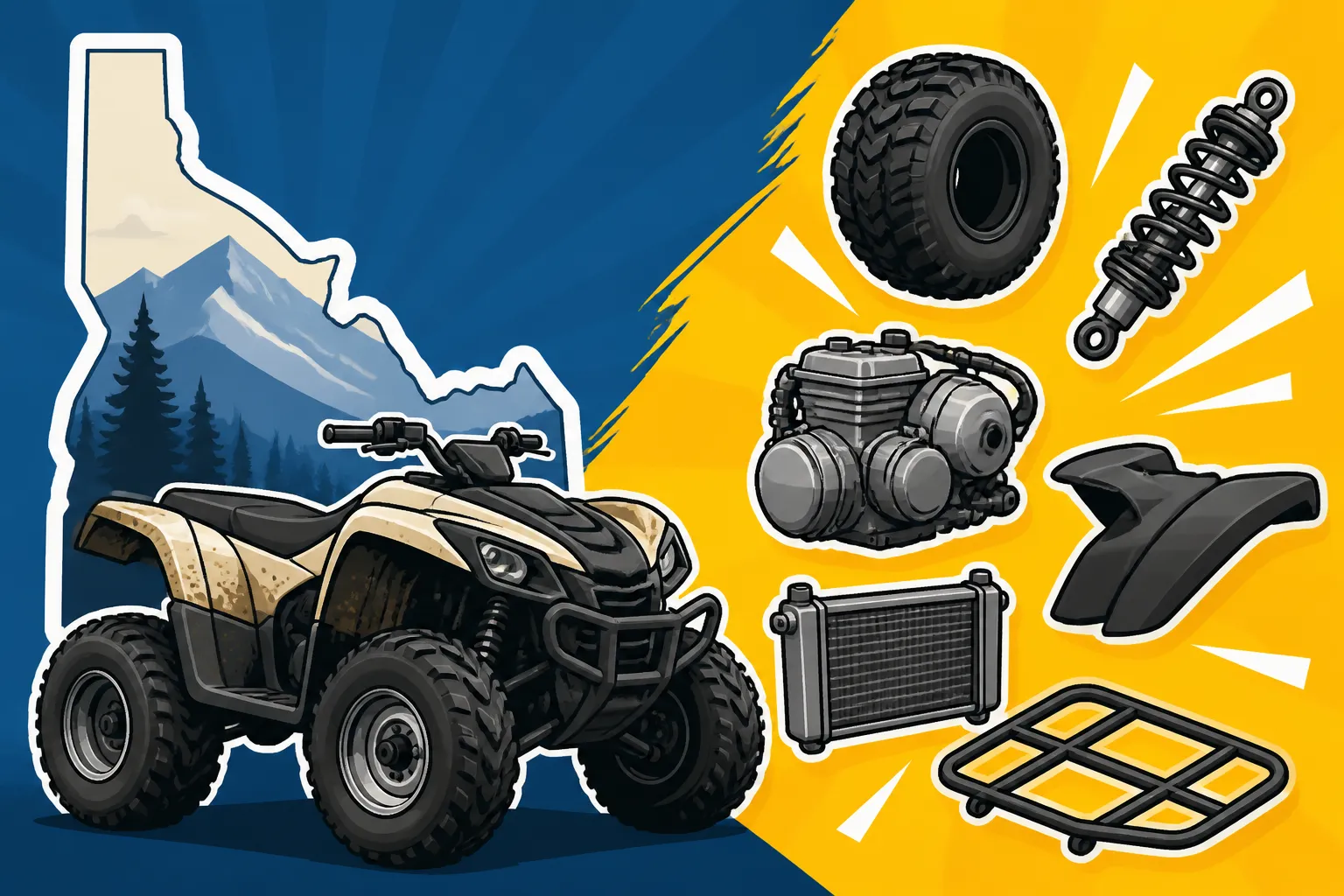
Selling a Quad for Parts
You've got an old quad or side-by-side sitting in the garage or yard, maybe it's been through a few too many Idaho trail adventures, or perhaps it met an unfortunate end with a tree or a rock out in the backcountry. Whatever the reason, it's beyond its prime, and fixing it up feels like pouring money into a bottomless pit. So, what do you do with that rusted-out frame, the seized engine, or the perfectly good tires on an otherwise junked machine? This guide is here to walk you through the ins and outs of selling your off-highway vehicle (OHV) for parts right here in Idaho, helping you recover some value and clear out that space.
When Selling for Parts Makes Sense in Idaho
Deciding to sell your ATV or UTV for parts isn't always the first thought that comes to mind when your machine is on its last legs. Often, we might consider selling it whole for a low price, or even just scrapping it. But for many Idaho riders, parting out a machine can actually be a smart, financially sound decision, especially if you're dealing with a specific set of circumstances. It's about looking past the overall damage and seeing the individual components that still hold value for other enthusiasts and mechanics.
Assessing the Machine's Condition
Before you even think about grabbing a wrench, you need to honestly assess the overall condition of your ATV or UTV. Is the frame bent beyond repair? Is the engine utterly seized, or does it just need a rebuild? A machine with a catastrophic failure in one major component (like a blown engine or a twisted frame) but many other perfectly usable parts is often a prime candidate for parting out. On the other hand, if everything is in rough shape—rust everywhere, plastics cracked, suspension shot—then you might find the effort outweighs the return, and a trip to the scrap yard might be more appropriate.
Sometimes, the cost of repairing a severely damaged machine simply exceeds its market value, even if it were fully restored. Imagine a vintage quad with a blown engine that would cost thousands to replace or rebuild, but the whole machine, if running perfectly, might only fetch a few thousand. In this scenario, selling the still-good fenders, wheels, seat, or even smaller engine components could net you a better return than trying to fix and sell the whole thing, or selling it as a non-running complete unit. Furthermore, if your machine has a salvage title due to a major incident, selling it for parts can bypass the complexities and reduced value associated with trying to sell a salvage-titled, rebuilt machine.
Understanding Market Demand for Parts
The value of individual parts is heavily influenced by market demand. What kind of ATV or UTV do you have? Is it a popular model like a Polaris RZR, a Can-Am Maverick, a Honda Foreman, or a Yamaha Grizzly? Popular models tend to have higher demand for parts because there are more of them on the trails and more owners looking for affordable replacements. Specific components, such as differentials, transmissions, good suspension components, or even functional electronics, can command decent prices.
Think about common failure points for your specific model. Certain ATV models are known for specific issues, like weak differentials or electrical problems. If your machine has a good version of a commonly failing part, it's likely to sell quickly. Tires and wheels, especially if they're still in good condition, are always in demand. Even smaller items like control arms, brake calipers, radiators, or perfectly intact plastic body panels can add up. Specialized aftermarket accessories, if present and still functional, can also be highly sought after by those looking to upgrade or replace their own gear.
The Cost-Benefit Analysis of Parting Out
Parting out an OHV is not without its costs—primarily in time and effort. You'll need to be comfortable with tools, have a safe space to work, and be prepared to spend hours disassembling, cleaning, photographing, listing, and shipping parts. Storage can also be a consideration; you'll need somewhere to keep the machine as you break it down and somewhere to store the parts until they sell. Weigh this against the potential earnings. If you can only realistically expect a few hundred dollars by selling the whole non-running machine, but you estimate individual parts could bring in a thousand or more, the labor might be worth it.
Consider the alternative: selling the entire machine as "non-running" or "for parts." This is usually quicker and requires less effort, but the selling price is often significantly lower. A savvy buyer might pick it up for a steal, part it out themselves, and make a profit. By doing the work yourself, you're essentially claiming that profit. However, if your time is limited, your mechanical skills are minimal, or you lack the space, selling it whole might still be the best choice. It’s a balance between maximizing your return and minimizing your hassle, a decision many Idaho machine owners face when looking at their broken-down rigs.
Navigating the Paperwork: Title, VIN, and Bill of Sale
Even when you're selling a machine for parts, the paperwork side of things in Idaho can't be ignored. It might seem counterintuitive to worry about a title for something you're chopping up, but understanding the legal requirements will protect you from future headaches and ensure a smooth transaction, especially for larger, more valuable components. Many riders underestimate the importance of documentation until a problem arises, but a little foresight can save a lot of grief.
Does a Parts Machine Still Need a Title?
In Idaho, all ATVs and UTVs over 50cc are generally required to have a title. This document proves ownership. While you're selling parts and not a complete, running machine, the frame itself carries the Vehicle Identification Number (VIN) and is considered the core of the vehicle. If you sell the frame, even stripped down, the title is still very much relevant. Without a proper transfer of title for the frame, you could technically still be considered the owner of that VIN, leading to potential liability or issues down the road if it's ever involved in something nefarious or reassembled into a "new" machine.
For smaller components like an engine, transmission, or suspension parts, a title isn't typically required for the individual sale. However, having the title available can still lend credibility to your sale, proving the parts came from a legally owned machine and not a stolen one. If you're selling the entire machine, even if it's non-running and intended for parts, [Idaho Titles Every ATV Over 50cc] means you should be prepared to transfer that title. If you plan to dispose of the frame as scrap metal, you'd want to ensure the title is properly retired or cancelled with the Idaho Transportation Department to remove it from your ownership records.
The Importance of a Clear Bill of Sale
A bill of sale is your best friend when selling anything, especially for parts. Even if you're just selling a set of tires, a simple written agreement protects both you and the buyer. When selling major components or even the stripped-down frame, a comprehensive bill of sale is crucial. It should clearly state that the item is being sold "as-is," "for parts only," and explicitly disclaim any warranties or guarantees about functionality. This protects you from a buyer coming back later, claiming a part didn't work as expected.
What should your bill of sale include?
- Seller and Buyer Information: Full names, addresses, and contact details.
- Machine Information: Make, model, year, and the VIN if you're selling the frame or major identifiable components.
- Description of Parts Sold: Be specific. "One used Polaris RZR 900 engine, serial number XXXX, as-is, for parts only."
- Sale Price and Payment Method.
- Date of Sale.
- Signatures of both parties.
Having a professionally drafted template can be very helpful. Resources like LawDepot offer customizable bill of sale templates that you can tailor to your specific situation, ensuring all the necessary legal protections are in place. This can make the process much smoother and give both parties peace of mind. A well-worded document covers your bases and helps prevent misunderstandings, which is especially important in the sometimes-murky world of used parts sales. You can find more details on what to include in a general sale with [ATV Bill of Sale Wording Buyers Should Insist On].
Handling a Machine with No Title
What if your old quad or UTV, the one you want to part out, doesn't have a title? This is a common predicament for older machines, hand-me-downs, or those purchased in private sales where the title was never properly transferred. Selling a machine, even for parts, without a title can be problematic in Idaho. While selling individual components (like seats, plastics, or brakes) might not raise eyebrows, attempting to sell the frame—which legally identifies the vehicle—without a title can lead to significant legal issues for both you and the buyer.
If you possess a machine without a title, you generally have a few options, depending on your situation. If the title was simply lost, you may be able to apply for a duplicate title through the Idaho Transportation Department. This process requires proof of ownership, such as a prior registration or a bill of sale. [Replacing a Lost Idaho OHV Title] can guide you through this. However, if you bought the machine without ever receiving a title and lack sufficient proof of ownership, you might be looking at more complex avenues, such as a bonded title, which is generally for complete vehicles rather than just parts.
In some cases, if you truly intend to scrap the frame and only sell the loose components, the lack of a title for the whole machine might be less of a barrier. However, always ensure any significant, identifiable part, especially anything with a serial number, is legitimately yours. Selling a machine in Idaho without proper ownership documentation, even for parts, opens the door to potential accusations of selling stolen property. It's always best to resolve any title issues before you start dismantling and selling, as detailed in [Selling a Machine in Idaho With No Title].
Strategizing Your Parts Sale in Idaho
Once you've decided to part out your machine and understand the paperwork involved, it's time to get strategic. This isn't just about unscrewing bolts; it's about maximizing your return and making the process as efficient as possible. From careful dismantling to smart pricing and effective marketing, each step plays a crucial role in turning your old rig into valuable components.
Dismantling and Inventorying
Before you start tearing things apart, take a moment to plan. A systematic approach will save you time, prevent damage to good parts, and help you keep track of everything. Start by taking plenty of "before" photos of the complete machine. This can be useful for buyers to see the original context of the parts. Then, begin the dismantling process logically. Remove large, easily accessible components first, such as seats, plastics, and wheels. Work your way inward, carefully disconnecting wiring harnesses, hoses, and cables.
As you remove each part, inspect it. Note its condition (good, fair, some wear, broken tab, etc.). Clean parts as you go; a clean part photographs better and sells faster. Label everything! Zip-top bags for small hardware, painter's tape and a marker for larger components. An organized inventory list (even a simple spreadsheet) that includes the part name, condition, and any specific notes will be invaluable when you start listing. Don't forget to carefully remove the VIN plate if you plan to sell the frame separately or discard it, making sure you know [Where the VIN Sits on a Side-by-Side Frame] so you can properly document and potentially transfer ownership of the frame itself.
Pricing Your Individual Parts
Pricing is perhaps the trickiest part of selling for parts. You want to get a fair price without scaring off potential buyers. Research is key here. Spend time browsing online marketplaces like eBay, Facebook Marketplace groups dedicated to ATV/UTV parts, and even specialty salvage websites. Look for similar parts from the same make and model. Pay attention to condition and whether the part is new, used, or rebuilt. A part that's in "like new" condition will naturally command a higher price than one with cosmetic damage or significant wear.
Consider the rarity and demand for the part. Common wear items like brake pads or air filters won't fetch much used, but unique or hard-to-find components, like a specific electronic control unit (ECU) or a rare trim piece, might be worth more. Remember to factor in your own time and effort. While you might want top dollar, sometimes a slightly lower, more competitive price means a quicker sale, especially if you're trying to clear out space. If you're selling a part that's known to be durable and rarely fails, you might get more for it if it's in good shape.
Platforms for Selling ATV/UTV Parts in Idaho
Now that your parts are inventoried and priced, where do you sell them in Idaho? You have several excellent options, both local and national, each with its own advantages.
- Local Classifieds: Websites like Craigslist or local Facebook Marketplace groups are fantastic for larger items that are costly to ship, or for buyers who prefer to inspect parts in person. You can reach riders in Boise, Coeur d'Alene, Pocatello, and other parts of Idaho directly. This is often the best route for big items like a complete engine, transmission, or full sets of tires and wheels.
- Specialty Forums and Facebook Groups: There are numerous online forums and Facebook groups specifically dedicated to ATV and UTV enthusiasts, often broken down by make/model or region. These groups are filled with people actively looking for parts for their machines. This is a great place to reach a targeted audience who already knows what they need.
- eBay: For smaller, shippable items, eBay offers a massive national and international audience. Be prepared to accurately describe the part, take clear photos from multiple angles, and research shipping costs thoroughly. Shipping can eat into your profits if not managed correctly.
- Local Salvage Yards or Repair Shops: While they won't pay retail prices, a local ATV/UTV salvage yard or repair shop might be interested in buying a bulk lot of parts, or even the entire stripped chassis. This is a quick way to offload everything at once, trading a higher potential profit for immediate cash and less hassle. Always check their reputation and pricing beforehand.
When listing, always include clear, well-lit photos. Describe any imperfections honestly. Provide as much detail as possible: part numbers, dimensions, compatibility with other models, and the condition. For high-value items, it's a good idea to also [Run a Serial Number Before You Pay] (or provide it as the seller) and ensure buyers can do their due diligence to confirm the part isn't stolen or otherwise questionable. This transparency builds trust and can lead to a quicker, smoother sale.
Legalities and Best Practices for Idaho Sellers
Selling anything, even individual parts from an old ATV or UTV, involves certain legal considerations and best practices to protect yourself and ensure fair dealings. Understanding these nuances, especially in Idaho's context, can prevent misunderstandings or even legal trouble down the line. It's not just about getting paid; it's about being a responsible seller.
Disclaimers and "As-Is" Sales
When selling used parts, especially from a machine that was no longer functional, it's absolutely critical to make it clear that the sale is "as-is" and "for parts only." This means you are not offering any warranty, guarantee, or promise about the part's functionality or longevity. Once the buyer takes possession, they assume all responsibility. Verbal disclaimers are a start, but having this explicitly stated in writing, such as in your bill of sale or even in your online listing, is paramount.
For example, your listing might say: "Used engine control unit (ECU) from a 2015 Polaris RZR 1000. Removed from a machine with a seized engine. Condition unknown, sold as-is, for parts or repair only. No returns." This clear language sets expectations and protects you if a buyer later claims the part didn't fix their problem. Legal document services like LawDepot can provide templates that incorporate strong "as-is" clauses, giving you robust legal protection against buyer's remorse or claims of latent defects. Without such disclaimers, you could potentially be held responsible if a part fails shortly after sale, leading to inconvenient disputes.
Sales Tax Implications
Here in Idaho, sales tax typically applies to most retail sales. When you sell an ATV or UTV whole, whether from a dealer or a private party, sales tax is usually a consideration, as outlined in [Idaho Sales Tax on an ATV Purchase]. However, when you're selling individual used parts from your personal property, the rules can be a bit different. Generally, if you are an individual selling personal items and not operating a business or regularly engaged in selling goods, you typically do not collect sales tax from the buyer.
This exemption usually applies to occasional private sales of personal property. However, if you were to dismantle many machines and regularly sell parts as a business, you would likely need to register as a seller and collect sales tax. For the typical individual parting out a single machine, this is usually not an issue. The buyer would generally not owe you sales tax directly. It's always a good idea to verify current Idaho tax laws or consult with a tax professional if you have concerns about the volume or nature of your sales.
Ensuring VIN and Component Traceability
Even when parting out a machine, the Vehicle Identification Number (VIN) remains incredibly important, particularly if you are selling the frame or major components that could theoretically be used to rebuild a different machine. The VIN is essentially the machine's DNA, and traceability is key to preventing the spread of stolen components. If you're selling the frame, ensuring a clear chain of title and accurate documentation is crucial for the buyer. [Transferring an Idaho OHV Title After a Sale] typically applies to a whole machine, but the principles of ownership transfer still apply to the frame itself.
For other components like engines, some have their own serial numbers. It's a good practice to record these serial numbers, especially for engines and transmissions, and include them in your bill of sale. This documentation helps verify the origin of the part and provides an extra layer of protection for both you and the buyer against questions of theft or questionable origins. Always avoid buying or selling parts where the VIN or serial numbers appear to be tampered with or removed; this is a red flag, and checking for theft is a vital step outlined in [Checking a Used Machine for Theft].
Avoiding Pitfalls and Scams
The world of online sales, even for parts, isn't immune to scams. As a seller, be vigilant.
- Meet in a Safe, Public Place: If possible, arrange to meet buyers in a well-lit public area during daylight hours, especially for in-person cash transactions. Many police departments offer "safe exchange zones" in their parking lots.
- Secure Payments: For larger sales, avoid checks that could bounce. Cash is king for local pickup. For shipped items, consider secure electronic payments like PayPal, but be wary of buyers who insist on unusual payment methods or overpay and then ask for a refund of the difference.
- Be Realistic About Offers: While you want a good price, be prepared for some negotiation and lowball offers. Understand your minimum acceptable price and stick to it. Don't be pressured into a sale you're uncomfortable with.
- Beware of "Shipping Agents": A common scam involves a buyer who claims they'll send a "shipping agent" to pick up the item and will pay you with a cashier's check that turns out to be fraudulent. Always deal directly with the buyer and verify funds before releasing any items.
By following these best practices, you can navigate the process of selling your ATV or UTV parts in Idaho more safely and efficiently, ensuring a positive experience for both you and your buyers.
Comparing Selling a Whole Machine vs. Parting Out
Deciding whether to sell your entire damaged OHV or dismantle it for parts involves weighing several factors. Here's a quick comparison to help you consider your options:
| Feature | Selling the Entire Machine (Damaged/Non-Running) | Parting Out the Machine (Individual Components) |
|---|---|---|
| Effort & Time | Low effort, quicker sale | High effort (dismantling, listing, shipping), longer |
| Potential Return | Lower overall sale price | Potentially higher overall return if parts are good |
| Buyer Pool | Limited (mechanics, salvage yards, project seekers) | Wider (specific part seekers, DIY mechanics) |
| Storage Needs | Temporary until sold | Space for dismantling, then for individual parts |
| Tools/Skills Required | Minimal | Basic to advanced mechanical skills, photo skills |
| Paperwork Focus | Clear title transfer for entire vehicle | Title for frame, bill of sale for all major parts |
| Shipping/Logistics | Buyer usually arranges pickup | You handle packing and shipping for individual parts |
| Liability/Risk | "As-is" sale, generally lower post-sale contact | "As-is" for each part, more interaction with buyers |
Ultimately, parting out a machine is a labor of love for many riders, turning what might seem like junk into useful components for others. It's a way to give your trusty rig a second life, piece by piece, and put a little cash back in your pocket. So, roll up your sleeves, grab your tools, and start making that old quad useful again, one part at a time.
Disclaimer
This article is for general informational purposes only and does not constitute professional advice. Laws, prices and regulations vary by location and change over time. Consult a qualified professional for guidance on your specific situation.