Wildflower Season on Idaho Trails
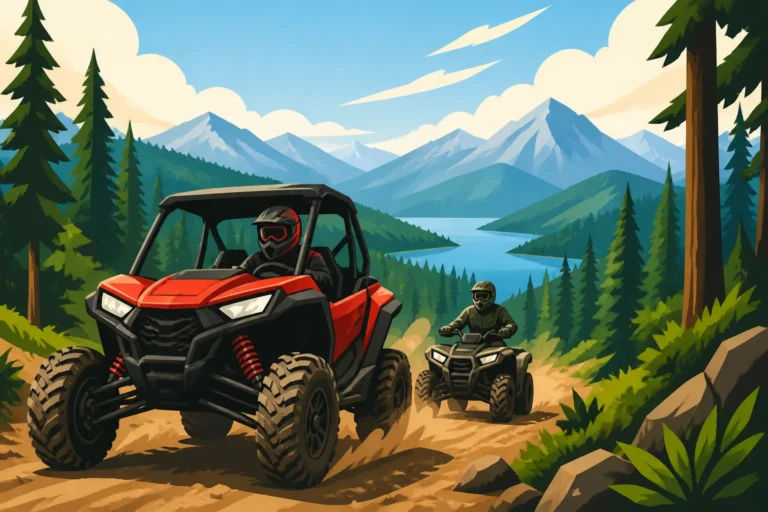
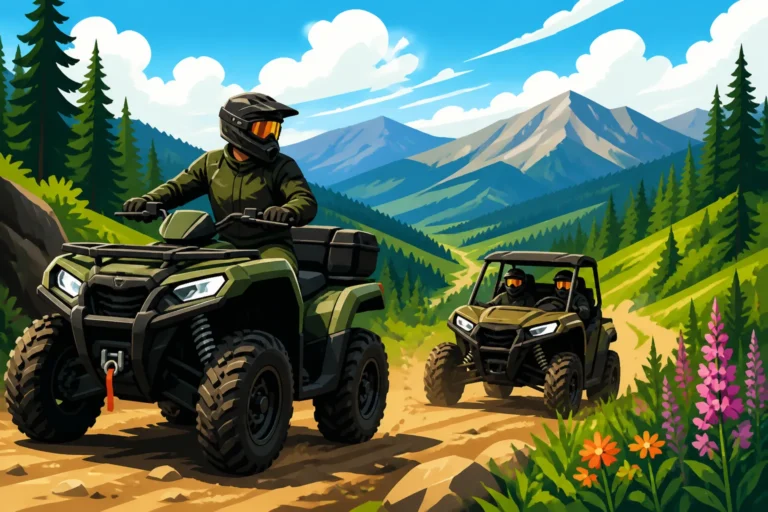
Wildflower season on Idaho trails rarely arrives all at once. A dusty lower-elevation ride may be blooming while a mountain route is still snowed in, and the best roadside flowers can be easy to miss if you’re focused on the trail. This guide explains when and where to look, how to plan an ATV or UTV ride, and how to enjoy blooms without damaging fragile ground.
When wildflowers bloom on Idaho trails
Follow the elevation, not just the calendar
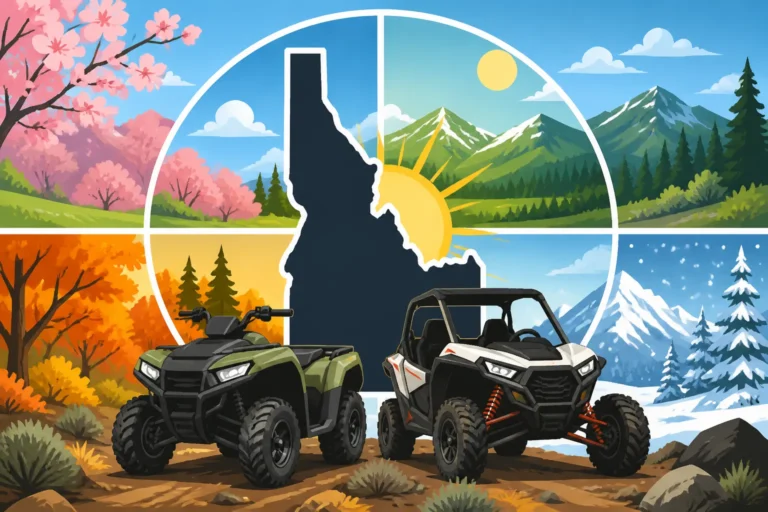
In Idaho, wildflower season moves uphill as spring turns to summer. Lower valleys and foothills may begin blooming while snow still lingers at higher elevations. Later, as those lower areas dry out, mountain meadows and forest clearings may be coming into flower. That overlap gives riders a longer viewing window, but it also means there isn’t one date that reliably marks the start of the season statewide.
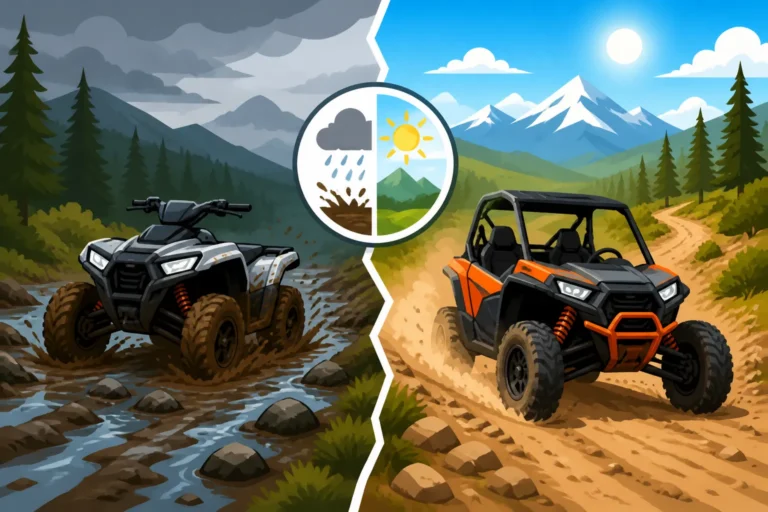
Elevation is only part of the picture. Snowpack, spring temperatures, recent rain, slope direction, and shade can all affect when a particular area blooms. A sunny south-facing slope may green up before a cooler, north-facing hillside nearby. Even within one ride, you might pass early flowers along an open road, then find the higher, shaded sections still wet or snow-covered.
Use seasonal guides such as When Idaho High-Country Trails Open and Best Month to Ride Idaho High Country as starting points, not promises of bloom conditions. For a trip with flowers as the main attraction, check trail access and recent conditions close to your departure. A route that is open to motorized travel may still be muddy, snowbound, or affected by a temporary closure.
Think in broad seasonal windows
Rather than chasing an exact “peak week,” plan around a broad seasonal window and be ready to adjust your route. In many areas, lower-elevation rides are more promising earlier in the season, while higher country tends to offer better opportunities later, once snow has melted and access has opened. The timing varies enough that a warm spring in one region can look very different from a cool, snowy spring elsewhere.
Here’s a practical way to think about the progression:
| Riding area type | General bloom pattern | Planning consideration |
|---|---|---|
| Lower foothills and open slopes | Often begin earlier in spring | Watch for muddy roads, seasonal restrictions, and dry conditions later in the season |
| Mid-elevation forests and clearings | Often follow as spring advances | Check for snow, wet ground, and road or trail closures |
| High-country routes and meadows | Usually bloom later, after snowmelt | Confirm access and avoid soft, saturated ground |
| Dry, exposed terrain | Bloom timing can be brief and weather-sensitive | Be flexible, carry water, and keep expectations realistic |
These are broad patterns, not a bloom forecast. A good trip may include fewer flowers than expected and still be worthwhile: fresh green hillsides, clear views, and the first signs of summer can make a ride memorable even when the display is patchy.
Where to look for blooms on a ride
Choose landscapes, not just famous destinations
Idaho offers a wide range of riding environments, from foothills near Boise to forest roads in the Panhandle and high-country routes around the Sawtooth region. Each area has its own weather and access conditions. A useful approach is to choose a general landscape that suits your season, then identify legal, open motorized routes within it rather than assuming a well-known flower spot is accessible by ATV or UTV.
In the Boise area, riders may look toward foothill and Boise National Forest routes for changing spring conditions. Farther north, forested country around Coeur d’Alene and the Idaho Panhandle can offer a different mix of shade, clearings, and higher-elevation access. In central Idaho, the Sawtooth area brings dramatic scenery, but snow and elevation can push the riding and blooming season later. Local conditions matter more than a destination’s reputation.
Use Where to Ride an ATV in Idaho and Idaho’s Sawtooth National Forest Trails to explore broad riding-area options. Before setting out, check that the route is open to your machine and that any access points or connecting roads are currently usable. Flower-rich meadows, stream edges, and open slopes can be sensitive places; enjoy them from established routes rather than riding across them.
Find blooms without leaving the route
Wildflowers often grow along road edges, in open forest patches, and near meadows or seasonal water. That can make a slow, attentive ride more rewarding than trying to cover a large distance. Stop only where it is safe and permitted, keep your machine on the established route, and walk to a viewing point only when the ground is firm and access is allowed.
A trail map helps you understand where you are, but it does not automatically show every current restriction or closure. Check a current motor vehicle use map and any posted signs at the trailhead. A tool such as onX Offroad can help you examine route options and keep your location in context, but pair digital mapping with official land-management information and signs on the ground. If your phone loses service, a downloaded map or paper backup can be a real comfort.
For route-planning basics, see Reading an Idaho Motor Vehicle Use Map and Checking Idaho Trail Status Before You Drive. They’re especially useful when you’re comparing routes in different elevations or trying to avoid an unnecessary drive to a closed trailhead. If a route is uncertain, choose a clearly designated alternative rather than testing an ambiguous track.
Plan a comfortable and responsible flower-season ride
Build a flexible day around conditions
A wildflower ride works best when the schedule leaves room for a change of plan. Check the forecast for both your starting point and the higher terrain you intend to visit; mountain weather can differ sharply from conditions in town. Bring layers, water, food, a first-aid kit, and the tools you normally carry for a remote ride. A sunny morning can turn into cold wind or showers at elevation, and a scenic stop can take longer than expected when everyone wants to look around.
Give yourself enough daylight to return without rushing. If the first trail is muddy or blocked, have another legal route in mind at a similar elevation. Avoid driving around a closure or cutting a new path to reach a viewpoint. Conditions that look merely damp from a vehicle can be soft enough to rut, especially in meadows and shaded areas where the ground dries slowly.
Route planning also includes practical details: fuel range, parking, machine width, and whether the road is suitable for your vehicle. A narrow route may not be a good fit for a wide side-by-side, even if it appears on a map. For more trip-planning help, Planning an Idaho Riding Trip and Fuel Planning for an Idaho Trail Day cover useful considerations beyond the flowers themselves.
Protect the places you came to enjoy
Wildflowers can be damaged by tire tracks and foot traffic, and a single rut can scar wet ground long after the flowers fade. Stay on designated roads and trails, avoid driving through meadows, and don’t park on vegetation. If you stop for photos, choose a durable surface such as an established pullout or bare ground that is already disturbed. A close-up is not worth trampling a patch of blooms or making a new route.
Keep groups small enough that everyone can stop safely and stay together. Let other trail users pass, keep dust down near homes and camps, and pack out every bit of litter. Give wildlife space, especially around water and in open meadows. If you encounter a gate, sign, or closure, respect it even if the route beyond looks inviting.
Some of the most fragile places are also the most tempting: bright patches beside a stream, soft clearings, and flower-filled slopes. Enjoy those views from the trail or a safe, permitted stopping area. Responsible riding helps preserve the landscape for hikers, campers, ranchers, wildlife, and the next riders who come looking for Idaho’s summer color.
Make the most of the season
Bring the right expectations and a backup plan
A bloom-focused trip can be rewarding even when the flowers are scattered rather than spectacular. Instead of choosing a route based on a promise of peak color, plan for a pleasant ride through varied terrain and treat the flowers as an added benefit. The best viewing may come in small moments: a bright patch beside a forest road, a hillside turning green, or a meadow seen from a legal overlook.
Before leaving, look for recent information on snow, mud, fire restrictions, and seasonal closures. You can use onX Offroad to review possible routes and prepare offline navigation, then confirm access with official maps and land-manager notices. If conditions don’t line up, shift to a lower-elevation ride or postpone the high-country plan. Flexibility is better than forcing a machine through wet ground.
It also helps to set a turnaround point before the ride. If the route becomes rougher than expected, the weather changes, or the group is running behind schedule, turn back while everyone still has daylight and energy. A good day is not measured by how far you go.
Make stops part of the ride
Plan a few safe places to pause rather than stopping wherever a flower catches your eye. Use established pullouts when available, watch for traffic and dust, and make sure the whole group is out of the riding line before taking photos. If someone wants to walk closer, confirm that access is allowed and that the ground can support foot traffic without leaving damage.
For a family ride, choose a route suited to the youngest or least experienced rider and build in breaks. Kids may enjoy spotting colors and shapes more than covering miles, while adults may appreciate a slower pace that leaves time to notice the landscape. A shorter loop with a relaxed stop can be a better wildflower outing than an ambitious route that leaves everyone tired and hurried.
Before you go, review Idaho Trail Conditions After Runoff and Idaho Trails Open in July when those topics fit your timing. Conditions can shift quickly between regions, so confirm the route close to the trip and follow posted directions. With sensible preparation, an open route, and care for the ground beneath your tires, you can enjoy Idaho’s wildflower season without asking the landscape to pay for the visit.
Disclaimer
This article is for general informational purposes only and does not constitute professional advice. Laws, prices and regulations vary by location and change over time. Consult a qualified professional for guidance on your specific situation.