Where the VIN Sits on a Side-by-Side Frame
Hunting down that elusive Vehicle Identification Number (VIN) on your side-by-side can feel like a scavenger hunt, especially when you're under pressure to get your machine titled or registered, or when you're trying to verify a used purchase. It's not always neatly stamped in an obvious place, and a lot of folks get understandably frustrated trying to find it. This comprehensive guide is here to walk you through exactly where to look for your VIN on an Idaho side-by-side frame, why it's so critical, and what to do if you're having trouble locating or reading it.
Why Your Side-by-Side's VIN is Absolutely Essential
The VIN isn't just a random string of characters; it's the unique fingerprint of your side-by-side, a 17-character code that tells its entire life story. Without it, you really don't have a legally recognized machine, and that can lead to all sorts of headaches down the road, from registration issues to theft recovery nightmares.
Think about it: every vehicle on the road or trail has one for a reason. This number identifies the manufacturer, the year of manufacture, the model, and a sequential production number, among other things. It's what the Idaho Department of Parks and Recreation (IDPR) and your county assessor's office rely on for all official records. Without a clear VIN, you simply cannot complete essential tasks like getting your machine legally registered or titled here in Idaho. For more on the initial steps, you might find [Titling and Registering an ATV in Idaho] helpful.
Beyond government paperwork, the VIN is your primary tool for consumer protection. When you're buying a used side-by-side, running the VIN is like looking up its credit history. It can tell you if the machine has been reported stolen, if it has a salvage title from a previous wreck, or if there are any liens against it. Skipping this step is a gamble that no rider should take. A quick VIN check is often the difference between a great deal and a costly, regrettable purchase.
Common Locations for a VIN on Side-by-Side Frames
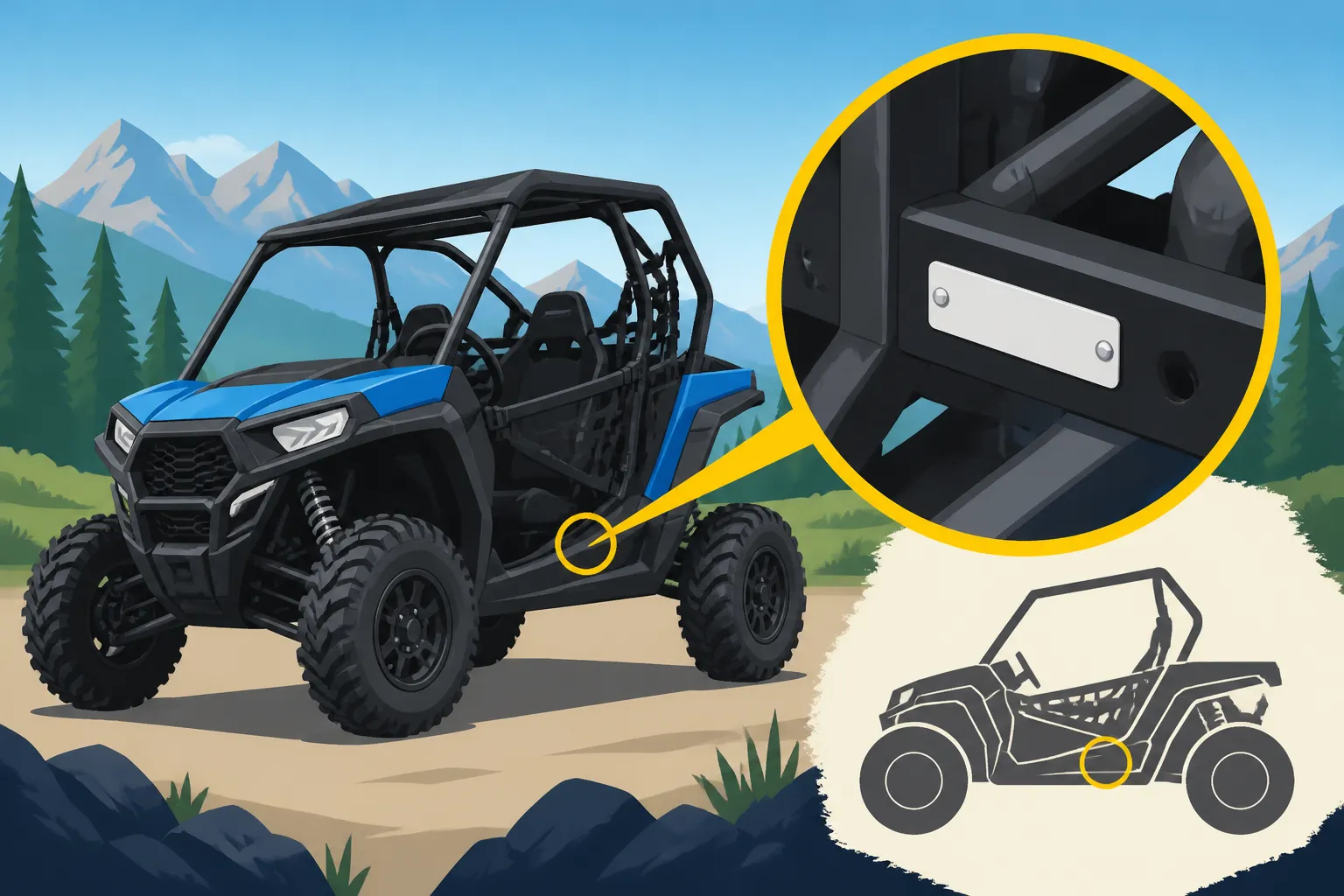
Manufacturers try to place the VIN in a standardized, easily accessible, and durable location, but "easily accessible" can sometimes feel subjective when you're crawling around in the dirt! Generally, you're looking for a small, rectangular metal plate or a directly stamped series of characters on the frame itself. The challenge is that side-by-sides have a lot of frame components, and the exact spot can vary.
One of the most common places to start your search is on the main frame rail, typically on the driver's side. Follow the front wheel back towards the footwell area. Many manufacturers will stamp the VIN here, often on a vertical or horizontal section of the frame where it's less likely to be damaged in a minor collision. You might need to clear away some mud, dust, or even a build-up of grime to see it clearly, so come prepared with a rag and perhaps a small brush.
Another frequently used spot is around the front suspension. Sometimes the VIN plate is riveted or stamped on a cross-member or a substantial part of the frame that connects to the A-arms or shock mounts. Look underneath the front fender wells, on the inside of the frame rails, or even on the steering column support. It's often placed in a spot that's relatively protected but still visible if you know where to squint. Don't forget to check both sides, even if the driver's side is more common.
Front Driver's Side Frame Rail
This is often the first place to check on most side-by-side models. Imagine sitting in the driver's seat and looking down towards your feet. Now, picture that main frame beam that runs along the bottom of the door opening, or just ahead of it. Manufacturers tend to stamp the VIN into this section, usually facing outward or upward, making it visible with a flashlight once any debris is wiped away. It's a stout part of the frame, offering good protection for the stamped numbers.
Sometimes, the VIN isn't directly on the horizontal frame rail but on a vertical strut that connects to it, perhaps where the seat base or floorboard meets the frame. You might need to open the driver's side door or even lift up a floor mat to get a better angle. Be patient and systematic in your search; move from front to back along that main frame piece.
Under the Hood or Dash Area
Many side-by-sides have a small "hood" or front compartment that lifts open, often revealing the radiator or a small storage space. Sometimes, the VIN is located on a cross-member just inside this compartment, or on the firewall panel that separates the engine bay from the cabin. It’s a good spot because it’s generally protected from trail debris and impacts.
This location can be particularly common on models that emphasize easy access for maintenance or those with more enclosed cabins. You might find a riveted VIN plate here rather than a direct stamp. It’s always worth checking, especially if your initial search on the exterior frame rails yields no results.
Rear Frame Sections
While less common than the front, some manufacturers might place the VIN on a rear frame section. This could be near the rear suspension components, under the cargo bed, or even on the frame member supporting the hitch receiver. These spots are often more exposed to mud and grime, so they might require a bit more elbow grease to clean.
If you've exhausted the front and middle sections, taking a look at the rear can sometimes surprise you. Especially on utility-focused side-by-sides, where the front might be more complex, a simpler, more robust stamping on a rear cross-member can be the chosen location. Always remember to bring a strong flashlight to illuminate those tucked-away spots.
Manufacturer-Specific Quirks and Common Trends
While we can't give exact models or years (since those change faster than the Idaho weather), there are some general trends you'll find with different side-by-side brands. Knowing these can help narrow your search when you're looking for that all-important VIN. It's not a hard and fast rule, but these observations come from years of seeing different machines come through the trails and shops.
For example, some of the more performance-oriented machines might tuck the VIN into a slightly less obvious spot to maintain clean lines, whereas utility models might have it in a very robust, easy-to-read location. The design philosophy of the manufacturer often plays a role in where they choose to stamp this critical number.
Polaris and Can-Am
Polaris, a giant in the side-by-side world, often places its VINs on the front driver's side frame rail, usually just behind the front wheel, or sometimes beneath the driver's seat on a cross-member. You might need to lift the seat or push aside some plastic trim to expose it. Their utility models, like the Ranger series, often have very accessible VINs on stout frame sections. For sportier RZR models, it can sometimes be a bit more hidden, perhaps further back on the frame where the A-arms attach. You might have to bend down and peer into the wheel well area. Knowing [Where the VIN Sits on a Polaris RZR Frame] can be a huge time-saver.
Can-Am, another popular brand, has its own tendencies. Many Can-Am side-by-sides, including their Maverick and Defender lines, commonly feature the VIN on the main frame spar, often near the driver's front wheel or even integrated into a plate on the firewall, behind the front suspension. Sometimes it's a riveted plate rather than a direct stamp. It’s always worth checking the frame tubes that run along the bottom of the driver's side door opening. They tend to prioritize robust, clear placement, but sometimes the mud guard can obscure it.
Honda and Yamaha
Honda's Pioneer and Talon side-by-sides are known for their strong build quality, and their VIN placement often reflects that. You'll frequently find the VIN stamped directly into the main frame tube on the driver's side, often in the footwell area or just slightly forward of it. Sometimes, it's located on a plate attached to the frame near the front suspension mounting points. Honda tends to use clear, deep stamps, but over years of mud and grime, even these can become hard to read.
Yamaha, with models like the Wolverine and RMAX, also often utilizes the main frame rail on the driver's side. Look closely around the lower door sill area, or follow the frame rail forward towards the front suspension. Sometimes it's on a vertical support member just inside the driver's footwell. Yamaha also uses a combination of stamped VINs and riveted plates. The key with all these brands is to systematically check the most common areas before expanding your search.
Practical Tips for Finding a Difficult or Faded VIN
Sometimes, the VIN isn't just playing hard to get; it might be covered in years of trail grime, rust, or even obscured by aftermarket accessories. Don't throw in the towel! There are several practical steps you can take to coax that vital number into plain sight. A little preparation and patience can save you a lot of frustration.
Remember, the goal is not just to find a number, but to find the correct VIN and be able to read all 17 characters clearly. This is especially important if you're buying a used machine and need to cross-reference it with the title or a vehicle history report. If you're dealing with a private seller, you want to be sure you have all your ducks in a row for [Buying a Used Side-by-Side in Idaho: The Paperwork].
Cleaning the Area Thoroughly
The most common reason for not being able to read a VIN is simply dirt, mud, or rust. Start with a stiff brush and some degreaser or a good all-purpose cleaner. Spray the suspected area liberally and let it soak for a few minutes to break down any caked-on grime. Then, use the brush to scrub the area clean, followed by a good rinse with water. A pressure washer can be helpful, but be careful not to blast off any important stickers or damage wiring.
Once clean, dry the area completely with a rag. Sometimes, the numbers are so faint that even a thin film of moisture can make them invisible. If you're dealing with surface rust, a little WD-40 or a mild rust penetrant might help, followed by a gentle scrub with a brass brush (avoid steel brushes, which can further scratch the metal and obscure the numbers). The goal is to reveal the original stamping without damaging it further.
Using Proper Lighting and Angles
A good flashlight is your best friend when searching for a VIN. Don't rely solely on ambient light. Hold the flashlight at different angles – shining directly on the surface, then obliquely across it. Oblique lighting often creates shadows in the depressions of the stamped numbers, making them much more visible, especially if the VIN is faint or the metal is pitted. A headlamp can also be useful, as it keeps your hands free to clean or manipulate components.
Sometimes, holding your phone camera over the area and zooming in can help, as the phone's flash or screen light might catch the numbers at a better angle than your naked eye. You can also try taking a picture and then enhancing the contrast or brightness on your phone to see if the characters pop out. This technique can be surprisingly effective for deeply etched but dirt-filled stamps.
Tracing and Rubbing Techniques
If cleaning and lighting still aren't doing the trick, you can try a tracing technique. Take a piece of thin, light-colored paper (like tracing paper or even a white napkin) and place it directly over the suspected VIN area. Then, gently rub the side of a pencil or a crayon across the paper. The raised areas around the stamped numbers will leave an impression on the paper, often making the VIN visible. Think of it like making a rubbing of a tombstone or a coin.
This method works particularly well for deeply stamped VINs that might be filled with dirt or paint, which makes them hard to see directly. Just be sure not to press too hard or use anything that could scratch the frame or the VIN itself. It's a low-tech but often very effective way to get a clear record of the number. When drafting critical documents like a bill of sale, ensuring the VIN is correct is paramount, and tools from sites like LawDepot can guide you through the process of creating legally sound paperwork.
What to Do If You Cannot Find or Read the VIN
It’s a rare but frustrating situation: you’ve searched everywhere, cleaned everything, tried every angle, and still, that 17-character code remains a mystery. Or worse, you find it, but it's so damaged or corroded that it’s illegible. This isn't just an inconvenience; it's a significant problem, as a machine without a verifiable VIN is almost impossible to legally register, title, or sell in Idaho.
Don't despair, but do understand that this situation requires official intervention. You can't just make up a VIN or try to force through a title application without one. The Idaho authorities take vehicle identification very seriously to prevent theft and ensure proper ownership. For details on [Proof of Ownership for an Idaho OHV Title], a valid VIN is always the first step.
Contacting the Manufacturer
Your first official step should be to contact the manufacturer of your side-by-side. Many manufacturers have a customer service department that can assist with VIN location, especially if you can provide them with the model year and any other identifying numbers you might find (like engine serial numbers or part numbers). They might have specific diagrams or knowledge about unusual VIN placements for your particular model.
If the VIN is missing or illegible, the manufacturer might have a procedure for verifying the machine's identity through other means (like a factory build record linked to the engine serial number) and potentially issuing a replacement VIN plate or guiding you on how to obtain a state-assigned VIN. This process can be lengthy, so start early.
Involving Local Law Enforcement
If you suspect the VIN has been tampered with, removed, or is simply impossible to read despite your best efforts, you absolutely must contact your local law enforcement agency. This is critical for two reasons: First, a tampered VIN is a red flag for a stolen vehicle, and you don't want to be implicated. Second, law enforcement can often conduct a more thorough inspection and officially document the issue.
They may have specialized tools or knowledge to uncover hidden VINs or verify a machine's identity through other means. In some cases, if they determine the VIN is legitimately unreadable or missing and the machine is not stolen, they can provide you with documentation that you'll need for the next step, which involves the DMV or county assessor. This also applies if you're trying to figure out [Checking a Used Machine for Theft].
Obtaining a State-Assigned VIN
In Idaho, if your side-by-side legitimately lacks a VIN (e.g., it’s a homemade machine, or the original VIN is unrecoverable and deemed not tampered with by law enforcement), you may be able to apply for a state-assigned VIN. This process typically involves an application to the Idaho Division of Motor Vehicles (DMV) or your county assessor's office. They will require proof of ownership (however you can demonstrate it, such as a bill of sale even if it lacks a VIN, or other sworn affidavits) and an inspection of the machine.
An authorized agent will inspect your side-by-side, verify that it doesn't have a recognizable VIN, and then, if approved, issue a new VIN that will be permanently affixed to the machine. This assigned VIN then becomes its legal identifier for all future registration and titling purposes. The application will detail the exact requirements, and it’s important to follow them precisely. When preparing any legal documents related to ownership, resources like LawDepot can be invaluable for ensuring you have all the correct forms and information for your situation. You might also want to look into [Bonded Title for an ATV in Idaho] if your ownership documentation is less than perfect.
Summary of VIN Search Tips and Potential Actions
Here's a quick reference table to help guide your VIN search and subsequent actions:
| Situation | Recommended Action Steps | Important Considerations |
|---|---|---|
| VIN Obscured by Dirt/Grime | 1. Use stiff brush, degreaser, and water to clean. 2. Dry thoroughly. 3. Use strong flashlight at various angles. |
Patience is key. Avoid abrasive tools that could scratch. Oblique lighting makes stamped numbers visible. |
| VIN Faint or Corroded | 1. Clean area gently. 2. Apply rust penetrant if needed. 3. Use pencil/crayon rubbing technique with paper. |
Be gentle to avoid further damage. Rubbing can highlight faint impressions. Document with photos before and after cleaning. |
| Cannot Locate VIN After Thorough Search | 1. Consult owner's manual for specific location. 2. Contact manufacturer for guidance. 3. Check all likely frame sections. |
Some VINs are truly hidden by design or accessories. Manufacturer support might pinpoint an exact, model-specific location. |
| Suspect VIN Tampering/Removal | 1. Do NOT attempt to alter or repair. 2. Immediately contact local law enforcement. 3. Do not proceed with sale/purchase. |
This is a legal issue and could indicate a stolen vehicle. Law enforcement can advise on proper next steps and conduct forensic checks. |
| VIN Unrecoverable (e.g., homemade, accident) | 1. Gather all existing ownership documents (e.g., [ATV Bill of Sale Wording Buyers Should Insist On]). 2. Contact local law enforcement for a vehicle inspection and documentation. 3. Apply for a state-assigned VIN through the Idaho DMV/county assessor. |
This process requires official verification and documentation. Be prepared for inspections and potentially lengthy administrative procedures. Resources like LawDepot can help create other necessary ownership documents to support your application. |
Finding your side-by-side’s VIN might sometimes feel like a chore, but it's a critical step for legal ownership, registration, and peace of mind here in Idaho. Taking the time to locate and verify it now can save you a world of trouble later.
Disclaimer
This article is for general informational purposes only and does not constitute professional advice. Laws, prices and regulations vary by location and change over time. Consult a qualified professional for guidance on your specific situation.