Salvage and Rebuilt Machines
There's nothing quite like the excitement of finding an ATV or UTV that seems like a fantastic deal. You scour online marketplaces, perhaps you're talking to a friend-of-a-friend, and then you see it: a machine priced significantly lower than others in its class. But then you notice two words that can make any potential buyer's heart sink a little: "salvage" or "rebuilt" title. These terms often bring a wave of confusion and apprehension. Is it a good deal, or a ticking time bomb? This guide is here to cut through the jargon, demystify what these titles mean in Idaho, and equip you with the knowledge to make informed decisions, whether you're looking to buy, sell, or repair such a machine.
Understanding Salvage Titles in Idaho
When you see "salvage" stamped on an ATV or UTV's title in Idaho, it's an immediate red flag for some, but for others, it represents an opportunity. The key is understanding what that designation truly signifies and what it means for the machine's history and future. It's not just a label; it's a legal declaration about the vehicle's past.
What Triggers a Salvage Designation for an OHV?
A salvage title isn't issued lightly; it's typically the result of significant damage or a specific event. For ATVs and UTVs in Idaho, just like full-size vehicles, an insurance company often plays a central role in this determination. When an OHV is involved in a major incident—think a severe collision where the frame is bent, extensive fire damage, significant flood submersion, or it's been stolen and then recovered in a significantly altered state—the insurance company will assess the cost of repairs versus the machine's actual cash value (ACV).
If the estimated cost to fix the damage meets or exceeds a certain percentage of the machine's ACV, the insurance company will declare it a "total loss." While the exact percentage can vary slightly, it often hovers around 70-75% in many states, and Idaho follows similar principles. This doesn't necessarily mean the machine is utterly destroyed, but rather that repairing it to its pre-damage condition, both structurally and cosmetically, would be economically impractical for the insurer. For instance, a side-by-side that rolled down a hill might have extensive bodywork damage, a bent frame, and engine issues. Even if the engine could be rebuilt, the combined cost of parts and labor for all necessary repairs could quickly exceed the vehicle's market value. The insurance company would then pay out the ACV to the owner and take possession of the damaged machine, subsequently applying for a salvage title through the state.
The Immediate Impact of an Idaho Salvage Title
Once an ATV or UTV is issued an Idaho salvage title, its legal status and operational possibilities fundamentally change. The most crucial point for any owner or prospective buyer is this: a machine with a salvage title cannot be legally operated on any public lands or roads in Idaho. It is, for all intents and purposes, deemed un-roadworthy and unsafe for general use until it undergoes a rigorous repair and inspection process to earn a "rebuilt" designation. This restriction is in place to protect riders and the public from potentially unsafe vehicles that have sustained significant, undisclosed damage. You can ride it on your own private property, of course, but that's about it.
Beyond the operational restrictions, a salvage title also drastically impacts the machine's market value. Its worth plummets, often to a fraction of what a comparable, clear-title OHV would fetch. This is largely due to the inherent risk and uncertainty associated with undisclosed damage, the cost and effort required for repairs, and the subsequent "rebuilt" branding that will follow it. If you're looking to sell a salvage-titled machine, expect to market it to mechanics, project enthusiasts, or those looking for parts donors, not to someone looking for a ready-to-ride machine. The state's intention with a salvage title is to provide transparency, ensuring that future owners are fully aware of the machine's history of significant damage.
Obtaining a Salvage Title for Your Damaged Machine
The process of obtaining a salvage title in Idaho typically begins when an insurance company declares an ATV or UTV a total loss. After settling with the owner, the insurance company will surrender the original, clear title to the Idaho Transportation Department (ITD) or the County Assessor's office and request a salvage title in its place. This new title will explicitly brand the machine as "salvage," a permanent mark on its record. If you, as the owner, choose to retain the machine after an insurance payout (which sometimes happens if the payout is still less than you believe the machine is worth to you, or if you plan to repair it yourself), you would then be responsible for getting the salvage title issued in your name.
This typically involves completing specific forms provided by the state, providing proof of ownership (even if it's just the old title and the insurance settlement paperwork), and submitting the necessary fees to your [Idaho OHV Title Application at the County Assessor]. It's a critical step that ensures the machine's status is officially recorded, preventing anyone from trying to sell it later with a clean title and obscuring its history. The state wants a clear paper trail, especially for vehicles that have been heavily damaged, to deter fraud and ensure safety. Carefully documenting every step from the point of damage to the salvage title issuance is essential, as this paperwork will be vital if you ever decide to pursue a rebuilt title down the line.
The Path to a Rebuilt Title: Restoring an Idaho OHV
For many enthusiasts, a salvage-titled ATV or UTV isn't the end of its life, but rather the beginning of a rewarding project. The journey from a salvage designation to a rebuilt title is a testament to skill, patience, and meticulous attention to detail. It's a structured process designed to ensure that once repaired, the machine is safe and reliable for public use.
The Repair Process for a Salvage Machine
Repairing an ATV or UTV with a salvage title isn't just about making it look good; it's about restoring its structural integrity and operational safety. This is where meticulous record-keeping becomes your absolute best friend. Every single repair, every part purchased, and every hour of labor should be documented with extreme care. Think of it as building a case file for your machine's rehabilitation. You'll need original receipts for all new parts, and if you're using salvaged or used parts, you'll need proof of their legitimate acquisition, such as a bill of sale or receipt from a reputable salvage yard, including the VIN or serial number of the donor machine if available. This is crucial to demonstrate that no stolen components were used in the repair process.
The repairs themselves must be comprehensive, addressing all damage that led to the salvage declaration. This means focusing on core structural elements like the frame, suspension, steering components, brakes, and engine. Cutting corners here isn't just risky for your safety; it will likely lead to failure at the mandatory state inspection. For example, if your UTV had a bent frame from a rollover, simply straightening it may not be enough; sometimes, frame sections need to be professionally replaced, welded, and aligned to factory specifications. This isn't a task for guesswork; it often requires specialized tools and expertise. Remember, the goal is to make the machine as safe and functional as it was before the incident.
The Critical Idaho Safety Inspection
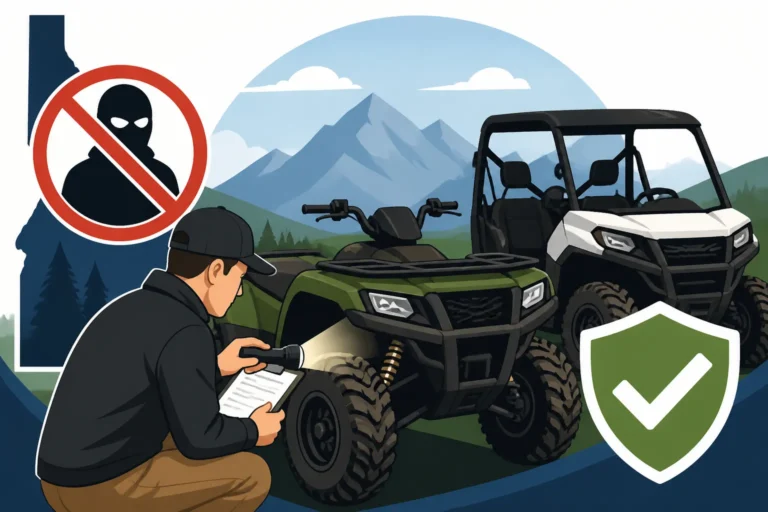
Once you've completed all the necessary repairs, the next monumental step in Idaho is the critical safety inspection. This isn't just a casual glance-over; it's a thorough examination conducted by authorized personnel, typically from the Idaho State Police (ISP), or another designated inspection station. Their primary mission is two-fold: first, to verify that all reported damage has been repaired correctly and safely, and second, to ensure that no stolen parts have been incorporated into the machine. This is a common hurdle for DIY repairers, as any component without a clear origin or proper documentation can cause significant delays or even outright rejection.
During the inspection, the officer will meticulously check various aspects of your ATV or UTV. They'll confirm the Vehicle Identification Number (VIN) matches the salvage title paperwork and will likely perform a [Running a Serial Number Before You Pay] to ensure the machine itself isn't stolen. They'll also scrutinize the quality of your repairs, looking for proper welds, secure fastenings, correct component installation, and overall structural integrity. Functionality of critical safety features like brakes, lights, steering, and suspension will be tested. This is where your detailed repair records and receipts for parts become indispensable. The inspector needs to see a clear audit trail for every significant component and repair. Passing this inspection is the green light that your machine is finally deemed safe to return to the trails and roads, opening the door to a rebuilt title.
Applying for a Rebuilt Title in Idaho
Successfully passing the Idaho State Police inspection is a huge milestone, but it's not the final step. With your inspection certificate in hand, you'll then proceed to the County Assessor's office—the same place you'd go for any [Titling and Registering an ATV in Idaho]. This is where you formally apply for your rebuilt title. The application process requires a stack of paperwork, and organization is key. You'll need to present:
- The original Idaho salvage title.
- The completed and signed Idaho State Police inspection certificate.
- All your meticulously kept repair receipts and documentation for parts and labor.
- A completed application form for a new title.
- Proof of identity.
- Payment for the applicable titling fees and any [Idaho Sales Tax on an ATV Purchase] that might be due if you acquired the machine as salvage without paying tax upfront.
The County Assessor's office will review all your documents to ensure everything is in order. This often involves cross-referencing VINs and verifying that all required steps have been met. Once approved, the state will issue a new title for your ATV or UTV, clearly stamped with "REBUILT." This designation permanently marks the machine's history, indicating that it was once deemed a total loss but has since been repaired and inspected to meet Idaho's safety standards. While the machine is now legally road and trail-worthy, the rebuilt brand will forever be part of its official record, influencing its market value and potential insurance considerations. Be prepared for some processing time, as these applications often require more scrutiny than a standard title transfer.
Navigating the Market: Buying and Selling Salvage or Rebuilt OHVs
The market for ATVs and UTVs with salvage or rebuilt titles is a unique one, filled with both potential bargains and hidden risks. Whether you're considering buying one yourself or selling a machine you've repaired, understanding the nuances of these titles is essential for a smooth and transparent transaction in Idaho.
The Pros and Cons of Buying a Salvage Machine
Purchasing an ATV or UTV with a salvage title can be incredibly tempting due to the significantly lower asking price. This is undeniably the biggest "pro" – you can often acquire a machine for a fraction of what a clear-titled equivalent would cost. For those who are mechanically inclined, enjoy a project, or have access to affordable parts and repair expertise, a salvage machine presents an opportunity to restore a valuable asset and potentially end up with a high-quality OHV for much less than market value. It can be a fantastic learning experience, allowing you to intimately understand every nut and bolt of your machine as you bring it back to life.
However, the "cons" are substantial and demand careful consideration. The most significant drawback is the unknown extent of the damage. While the insurance company deemed it a total loss, the full scope of internal or hidden issues may not be immediately apparent. You're buying a machine that isn't immediately rideable on public land, and the repair costs can quickly spiral out of control, especially if you uncover unexpected problems or if parts are difficult to source. What initially seems like a bargain can quickly become a money pit. The lack of an immediate clear title means you'll spend considerable time and effort navigating the repair, inspection, and titling process. Furthermore, when it eventually comes time to sell, the "rebuilt" designation, even after all your hard work, will often result in a lower resale value compared to a machine with a completely clean history. A pre-purchase inspection by a trusted mechanic, even of a salvage machine, can sometimes uncover critical issues, though it's often hard to do given the condition.
What a Rebuilt Title Tells a Buyer
When an ATV or UTV comes with a rebuilt title, it's a story printed right on the document. This title tells a future buyer that the machine, at some point in its history, suffered significant damage, was declared a total loss by an insurer, and subsequently underwent repairs and a state-mandated inspection to verify its safety and roadworthiness. It's a testament that someone put in the effort to bring the machine back from the brink. Unlike a salvage title, which prohibits public operation, a rebuilt title signifies that the OHV is now legal for use on Idaho's trails and roads (assuming all other registration and sticker requirements are met).
However, the rebuilt status carries a lingering stigma that can affect resale value. While the repairs have been certified, some buyers remain wary, questioning the quality of the repairs or fearing hidden long-term issues that might not have been caught during the inspection. It's not a mark of shame, but rather a mark of disclosure. For a buyer, seeing a rebuilt title should prompt a deeper investigation than for a clear-title machine. This means insisting on seeing all repair records, the inspection certificate, and performing a thorough [Checking a Used Machine for Theft] via the VIN. A rebuilt title is a signal to ask more questions and exercise greater due diligence, often including a professional pre-purchase inspection, to fully understand the machine's history and current condition.
Legal Considerations When Selling a Rebuilt OHV
Selling an ATV or UTV with a rebuilt title in Idaho requires a high degree of transparency and honesty to avoid potential legal headaches. The absolute necessity here is full disclosure to any potential buyer. You cannot, under any circumstances, attempt to misrepresent the machine as having a clear title or downplay the extent of its previous damage. The "rebuilt" brand on the title itself is a legal declaration, and intentionally misleading a buyer about this fact can lead to serious repercussions, including accusations of fraud.
To protect yourself as a seller, it's critical to provide all documentation related to the machine's history: the original salvage title (if you have it), all repair receipts, and most importantly, the Idaho State Police inspection certificate that allowed the rebuilt title to be issued. Furthermore, when drafting the bill of sale—a crucial document for any private sale—it's imperative that you explicitly state the machine's rebuilt title status. Using a comprehensive template, perhaps one from LawDepot, can ensure you include all necessary legal protections and disclosures. A detailed [ATV Bill of Sale Wording Buyers Should Insist On] that clearly outlines the machine's history and condition, and is signed by both parties, provides a strong layer of protection. Any buyer who proceeds with the purchase after reviewing such documentation and signing an agreement that acknowledges the rebuilt status has little legal ground to claim they were misled later on.
Common Pitfalls and Best Practices with Salvage and Rebuilt Titles
Navigating the world of salvage and rebuilt ATVs and UTVs can be tricky. Whether you're the one doing the repairs or looking to buy one, there are specific mistakes that commonly trip people up and best practices that can save you a lot of grief and money in Idaho. Forewarned is forearmed, as they say, especially when dealing with a machine that has a complicated past.
Avoiding Common Mistakes in the Repair Process
For those undertaking the monumental task of repairing a salvage ATV or UTV, the repair process itself is a minefield of potential pitfalls. One of the most common and costly mistakes is not keeping good records. It sounds simple, but many DIY mechanics get caught up in the work and neglect to log every part purchase, every hour spent, and every repair performed. Remember, the Idaho State Police inspection requires proof of legitimate parts and labor. Without receipts and a clear repair log, you'll struggle to prove to the inspector that your machine was rebuilt properly and ethically, potentially delaying or even preventing the issuance of a rebuilt title.
Another significant error is using questionable parts, particularly those without a clear provenance. This is often where stolen parts enter the equation, and using them will not only halt your rebuilt title application but could also land you in legal trouble. Always buy parts from reputable sources with verifiable receipts. Furthermore, cutting corners on safety-critical repairs is a grave mistake. Rushing or skimping on fixes to the frame, suspension, brakes, or steering components isn't just about failing an inspection; it's about putting yourself and others at severe risk. The temptation to "make it work" or save a few bucks on a crucial component can have devastating consequences. Finally, underestimating repair costs and time is a classic trap. Salvage machines often have hidden damage that only surfaces once you start tearing them down. Always budget significantly more time and money than you initially estimate, as those unexpected challenges can quickly blow past your initial projections.
Protecting Yourself as a Buyer of a Rebuilt Machine
If you're eyeing an ATV or UTV with a rebuilt title in Idaho, congratulations on being smart enough to dig deeper! You're already ahead of the game. To truly protect your investment and avoid buyer's remorse, there are several best practices you absolutely must follow. First and foremost, always verify the rebuilt title with the Idaho DMV or County Assessor's office. Don't just take the seller's word for it; a quick call or visit can confirm the machine's official status and ensure the title presented is legitimate. You want to be sure you're not dealing with a fraudulent title or a vehicle whose status has been misrepresented.
Next, insist on seeing all repair records and the inspection certificate. A reputable seller who genuinely performed quality repairs will be proud to show you these documents. If they can't produce them or are hesitant, that's a massive red flag. These records are your window into the machine's past and the quality of its restoration. Perhaps the most critical step is to get a professional pre-purchase inspection from an independent mechanic who specializes in OHVs. This isn't just a suggestion; it's practically a requirement for a rebuilt machine. This mechanic can spot hidden damage, shoddy repairs, or underlying issues that might have been missed or weren't part of the original rebuild process. Finally, use a detailed [ATV Bill of Sale Wording Buyers Should Insist On], perhaps a template from LawDepot, that explicitly states the rebuilt title status, details any known history, and lists any warranties or "as-is" clauses. This document is your legal safeguard, so make sure it's thorough and clearly understood by both parties.
Understanding the Value and Insurance Implications
When it comes to ATVs and UTVs with rebuilt titles, their market value will almost invariably be lower than comparable machines with clear titles. Even with stellar repairs and a clean inspection, the "rebuilt" brand carries a certain stigma in the marketplace, and buyers generally expect a discount. This is simply a reality of the market, and it's something both sellers and buyers need to factor into their financial calculations. Don't expect to recoup 100% of your repair costs in the resale price if you fixed up a salvage machine.
The insurance implications can also be a little more complex. While you can insure a rebuilt machine, some insurance companies may be hesitant to offer full coverage, or they might charge higher premiums due to the machine's history of significant damage. They might also have specific clauses in your policy regarding future claims, potentially capping payouts at a lower percentage of the vehicle's market value, or requiring additional appraisals. It is absolutely vital that you disclose the rebuilt status to your insurer when obtaining a policy. Failing to do so could result in a denied claim down the road if the insurer discovers the machine's history. Shop around and be upfront about the title status to find a policy that adequately covers your rebuilt ATV or UTV in Idaho.
Specific Scenarios and Idaho's Unique Considerations
The world of salvage and rebuilt titles isn't always black and white. There are specific scenarios that can add layers of complexity, and understanding Idaho's approach to these unique situations is key to navigating them successfully. From machines recovered after theft to those custom-built from various parts, the rules can get intricate.
Salvage Titles for Theft Recovery Machines
It might seem counterintuitive, but an ATV or UTV that has been stolen and then recovered can also end up with a salvage title, even if it appears to be in relatively good condition. This usually happens for a few reasons. Often, when a machine is stolen, the insurance company will pay out the owner for the total loss before the vehicle is recovered. Once it's found, the insurance company, having already paid a claim, will then apply for a salvage title to prevent the original, clear title from being used fraudulently. Sometimes, thieves might strip valuable parts, damage the ignition, or deface the VIN, necessitating extensive repairs and a thorough inspection before it can be deemed roadworthy again.
If you purchase a theft-recovery machine with a salvage title, the process to obtain a rebuilt title is similar to one damaged in an accident. You'll need to demonstrate that any damage (even minor electrical issues from hot-wiring) has been professionally repaired, that all parts are legitimate, and you'll certainly need to provide documentation like the original police report and insurance claim details to the Idaho State Police during their inspection. The focus here is on ensuring the machine is complete, safe, and that no components from other stolen machines have been integrated. The state wants a clean, verified machine re-entering the public sphere.
Titling a Machine Built From Two Wrecks or Parts
Ah, the "franken-machine" – a truly unique beast born from the parts of multiple donors! If you're building an ATV or UTV from two wrecked machines or a collection of parts, Idaho has a specific, and understandably rigorous, process for titling what essentially becomes a "homemade" or "assembled" vehicle. This isn't just about getting a rebuilt title; it's about proving ownership of every major component that makes up your creation. The state wants to ensure that no stolen frames, engines, or other significant parts are being used to create a "new" machine.
You'll need detailed proof of ownership (bill of sale, previous titles, receipts) for the frame, the engine, and any other major components that carry identifying numbers. If you're combining the frame of one machine with the engine of another, you'll likely face a process that involves a thorough inspection by the Idaho State Police, similar to the rebuilt title inspection but potentially even more detailed. They will verify all VINs and serial numbers and might even assign a new VIN if the original frame VIN is deemed unusable or if the machine is truly a custom assembly. This can be a complex and time-consuming endeavor, requiring meticulous record-keeping from day one. You might find it useful to refer to guidance on [Titling a Machine Built From Two Wrecks] for a more in-depth look at this specific challenge.
Out-of-State Salvage Titles Brought into Idaho
Moving to Idaho or buying an ATV or UTV from a neighboring state that has a salvage or rebuilt title can add another layer of complexity. Idaho generally recognizes salvage and rebuilt titles issued by other states, but you can't simply transfer an out-of-state "rebuilt" title directly to an Idaho "rebuilt" title without further scrutiny. Idaho has its own specific requirements for a machine to be granted rebuilt status within its borders.
This means that even if a machine was deemed "rebuilt" in Oregon or Utah, it will still need to undergo a full Idaho State Police inspection to ensure it meets Idaho's specific safety and anti-theft standards. The inspector will review all your out-of-state documentation, including the previous state's salvage and rebuilt titles, repair receipts, and inspection certificates. Be aware that different states might have varying definitions for what constitutes "salvage" or different thresholds for total loss. Idaho will apply its own criteria. The goal is to ensure that any OHV operating on Idaho's public lands, regardless of its origin, has met Idaho's safety and legal benchmarks after suffering significant damage. It's best to contact your local County Assessor or the Idaho State Police for specific guidance before bringing an out-of-state salvage or rebuilt machine into Idaho.
Key Documents for an Idaho Rebuilt Title Application
Successfully obtaining an Idaho rebuilt title hinges on presenting a complete and accurate set of documents. Missing even one piece of information can lead to significant delays. Here’s a quick overview of what you’ll likely need:
| Document Type | Purpose | Notes |
|---|---|---|
| Idaho Salvage Title | Proof of original designation | This is the foundational document showing the machine's "total loss" status. |
| Idaho State Police Inspection Certificate | Verification of successful repairs and legitimacy | Crucial document, signed by an authorized ISP officer, confirming safety, proper repairs, and verification against stolen parts. |
| Detailed Repair Receipts | Proof of parts purchased and labor performed | Must include itemized lists, dates, and vendor information. For used parts, include donor VINs/serial numbers and source. |
| Photos of Damage & Repairs | Visual record of the restoration process | While not always strictly required, good before-and-after photos can strengthen your application and prove the extent of work. |
| Application for Title | Formal request for the new "rebuilt" title | Standard form from the County Assessor's office. Ensure all sections are completed accurately. |
| Proof of Identity | Verifies applicant's identity | Valid driver's license or state-issued ID. |
| Power of Attorney (if applicable) | Authorizes an agent to act on owner's behalf | Required if someone other than the owner is submitting the application. Obtain a proper form from LawDepot for clarity. |
| Bill of Sale (if recently purchased as salvage) | Proof of ownership of the salvage machine | Essential if you bought the machine as salvage from an individual or auction. Ensure it clearly states the "salvage" condition. |
| Odometer Disclosure Statement | Required for most titled vehicles (if applicable to OHV type) | Even if the OHV has limited mileage recording, this form typically needs to be completed. |
This article is for general informational purposes only and does not constitute professional advice. Laws, prices and regulations vary by location and change over time. Consult a qualified professional for guidance on your specific situation.