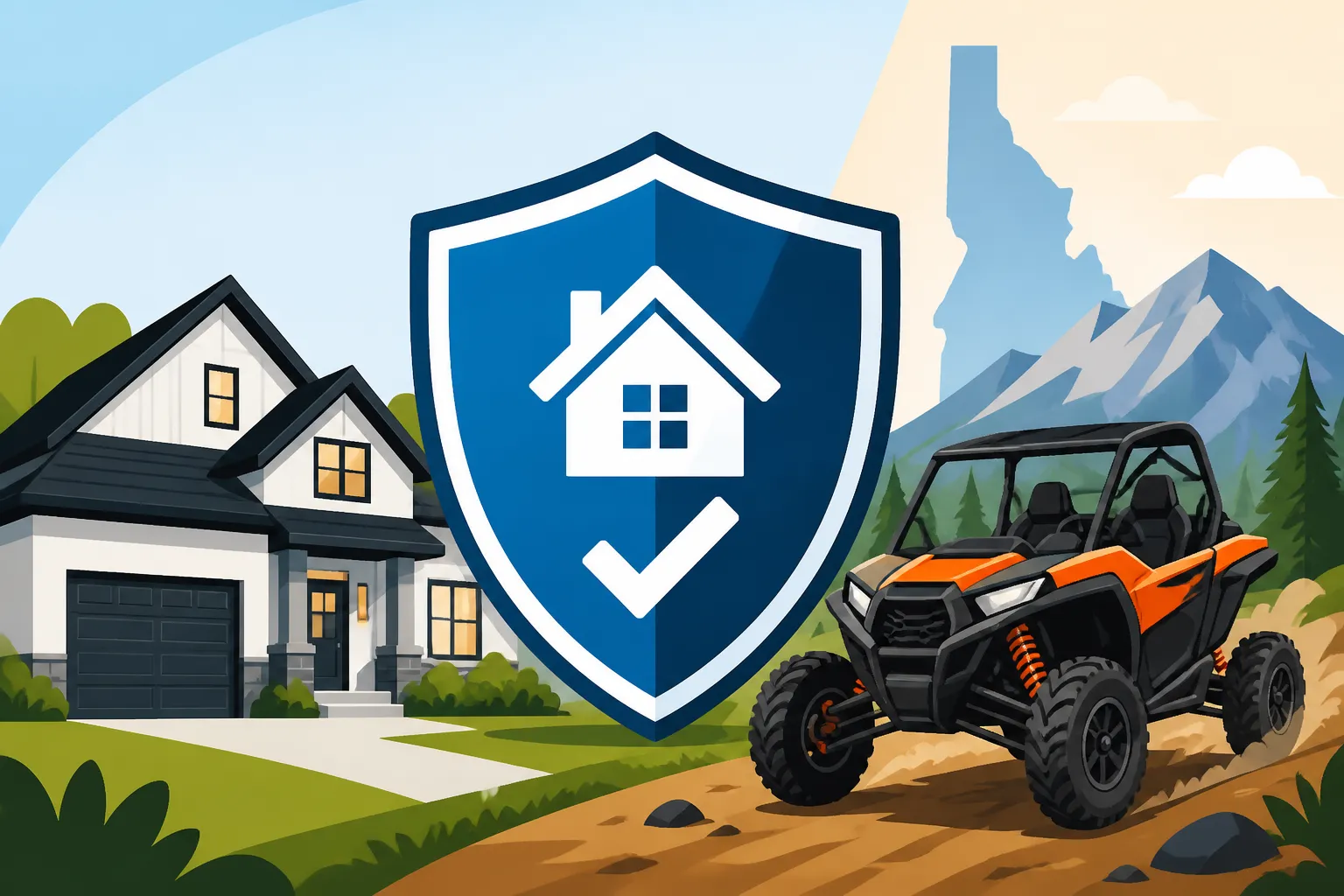
Does Homeowners Insurance Cover an Idaho ATV?
It’s a really common assumption for many Idaho ATV and UTV owners: you've got your machine parked safely in the garage, you pay your homeowners insurance every month, so surely your off-road pride and joy is covered, right? Unfortunately, for the vast majority of us, that's simply not the case. This guide is here to cut through the confusion, clarify why your homeowners policy likely falls short, and point you toward the real protection your Idaho ATV or UTV truly needs.
The Common Misconception: Why Homeowners Insurance Falls Short for Your Idaho ATV
It's completely understandable to think your homeowners insurance policy extends to just about everything you own that's stored on your property. After all, it covers your furniture, electronics, and even your shed out back. But when it comes to off-highway vehicles (OHVs) like ATVs and UTVs, most standard homeowners policies have some pretty significant, and often frustrating, blind spots. It's a hard lesson many riders only learn after an incident.
Personal Property Coverage: What It Usually Includes (and Excludes)
Your homeowners insurance typically provides what's known as "personal property coverage," designed to protect your belongings from perils like fire, theft, or vandalism while they are on your insured property. This is great for your mountain bike, your tools, or even your gardening tractor. However, most motorized vehicles are explicitly excluded or have severely limited coverage under this section.
Think about it: your car isn't covered by your homeowners insurance; it has its own separate auto policy. Insurance companies generally view ATVs and UTVs in the same vein. They're built for different purposes, carry different risks, and therefore require different types of coverage. You might be able to find a policy that offers a very small sub-limit for recreational vehicles – perhaps a few thousand dollars – but if you own a modern side-by-side that costs tens of thousands, that limited coverage is barely a drop in the bucket. It's a frustrating realization when you discover your prized machine is barely protected, if at all, by the policy you thought covered everything.
Liability: When the Trail Bites Back (and Your Policy Doesn't)
One of the biggest, and most dangerous, gaps in relying on homeowners insurance for your ATV is the lack of liability coverage. Your homeowners policy is designed to cover accidents and injuries that occur on your insured property. If a guest slips on your icy porch, or your dog bites someone in your yard, that’s where your homeowners liability steps in.
But what happens when you're out on the trails? Picture this: you're enjoying a beautiful day riding in the Danskin Mountains or up near the Lolo Motorway, and you accidentally collide with another rider, or you swerve and damage someone else's property off a [Which Idaho Roads Are Open to OHVs] county road. Suddenly, you're facing potential medical bills for an injured party, repair costs for their machine, or property damage claims for a fence you ran into. These incidents occur off your insured property, and therefore, your homeowners liability is almost certainly not going to cover you. This means you’re personally on the hook for potentially devastating expenses, which is a risk no rider should ever take.
Understanding the Gaps: What Your Homeowners Policy Might Actually Cover (If Anything)
While it's generally true that homeowners insurance provides inadequate coverage for ATVs and UTVs, there are very specific, and often highly limited, circumstances where a tiny bit of protection might exist. It’s crucial to understand these nuances, not to rely on them, but to fully grasp just how much exposure you might have.
Theft and Fire on Your Property: A Glimmer of Hope?
In some rare cases, your homeowners policy might offer some coverage for your ATV or UTV if it is stolen or damaged by fire while it is stored on your insured property. This could mean if your garage burns down with your side-by-side inside, or if it's stolen from your driveway. However, there’s a massive caveat here: this coverage often comes with extremely low sub-limits.
We're talking about amounts that are a fraction of what a new machine costs. If your policy has a $2,500 sub-limit for recreational vehicles and your UTV is worth $15,000, you're still looking at a huge personal loss. Furthermore, you'll still have to pay your policy's deductible, which might be $1,000 or more. When you weigh the potential payout against your deductible and the actual value of your machine, it often becomes clear that even this limited coverage is hardly adequate for replacing your investment. It’s a small consolation that often feels more like a tease than true protection.
Accessories and Modifications: Often Left Out in the Cold
For many Idaho riders, customizing their ATV or UTV is half the fun. We add winches for recovery, upgraded tires for better traction, light bars for those early morning hunts, and comfortable seats for long days on the trail. We invest thousands of dollars into making our machines perfect for the rugged Idaho backcountry. This is where homeowners insurance typically fails even harder.
Even if your policy somehow manages to offer a sliver of coverage for the base vehicle, it is highly unlikely to extend to aftermarket parts, accessories, or modifications. These are almost always explicitly excluded or require a special rider to be added to the policy – which often turns out to be more expensive and complicated than simply getting a dedicated OHV policy in the first place. Imagine your machine is stolen, and your homeowners policy might cover the base quad, but all those expensive upgrades you put on, from the GPS unit to the custom roll cage, are completely uninsured. It’s a hard pill to swallow and leaves a massive financial hole.
Liability Exclusions for Motorized Vehicles
As we touched on earlier, liability is where homeowners insurance truly drops the ball for motorized vehicles. Most standard homeowners policies contain explicit exclusions for liability arising from the ownership, maintenance, use, or entrustment of motorized land vehicles, with only very narrow exceptions. These exceptions typically apply only if the vehicle is not subject to motor vehicle registration and is used solely to service the insured premises (like a riding lawnmower or snowblower), or if it's stored on the premises and not operated.
This means the moment your ATV or UTV leaves your property, even just to cross the street to your neighbor's field (if permitted), any liability coverage from your homeowners policy usually evaporates. This exclusion is a fundamental part of how homeowners insurance is structured because the risks associated with operating an OHV are distinctly different from typical home-related hazards. It’s not just a small loophole; it’s a foundational aspect of your policy that makes it completely inadequate for the adventurous spirit of Idaho OHV riding.
The Better Solution: Dedicated ATV/UTV Insurance for Idaho Riders
Given the significant limitations and outright exclusions of homeowners insurance, the only truly responsible and comprehensive way to protect your off-road machine in Idaho is with a dedicated ATV/UTV insurance policy. These policies are specifically designed for the unique risks associated with riding and owning OHVs, providing peace of mind whether your machine is parked in the garage or tackling a remote mountain trail.
Comprehensive Coverage: Protection On and Off the Trail
Dedicated OHV policies offer "comprehensive" coverage, which is far more robust than anything you'd find under homeowners. This type of coverage protects your ATV or UTV from damages not involving a collision with another vehicle. Think about all the things that can happen to your machine when it's not being ridden: theft from a trailhead parking lot, fire while it's stored at a hunting camp, vandalism, falling objects (like a tree branch during a wind storm), or even animal strikes.
Unlike homeowners, which might only cover theft or fire on your property with a low limit, a comprehensive OHV policy covers these perils whether your machine is at home, at a staging area, or parked overnight at a remote campsite. This means if you leave your side-by-side at a trailhead while you hike into a fishing spot and it's stolen, or if a rogue tree falls on it during a windy camping trip, you have protection. It’s the difference between hoping for the best and being genuinely prepared for the unexpected. For many, the cost of [Idaho ATV Insurance Cost] is a small price for this level of security.
Collision and Liability: Riding with Peace of Mind
Beyond comprehensive, dedicated OHV insurance offers the critical components of collision and liability coverage. Collision coverage steps in to repair or replace your machine if it's damaged in an accident involving another vehicle or object. This means if you misjudge a corner and hit a tree, or if you collide with another rider on the trail, your policy helps cover the damage to your own machine, after your deductible.
Even more importantly, dedicated policies provide vital liability coverage. This is the protection that covers you if you cause an accident that results in injury to another person or damage to their property. Considering you're often sharing trails with other riders, hikers, and even vehicles on designated [What Idaho Requires Before You Ride a County Road] county roads, accidents can happen in a flash. Without this, you could be facing substantial medical bills or property repair costs out of your own pocket. When [Liability Insurance Idaho Road Riding Requires] is mandated for road use, it highlights just how crucial this protection is, and a dedicated policy meets those requirements seamlessly, giving you true peace of mind.
Uninsured/Underinsured Motorist and Other Add-Ons
Many dedicated ATV/UTV insurance policies also offer valuable add-ons that provide even greater protection and convenience. Uninsured/Underinsured Motorist (UIM) coverage is a smart choice for Idaho riders. It protects you if you're involved in an accident with another off-road operator who doesn't have insurance or doesn't have enough to cover your damages and injuries. Unfortunately, not every rider is as prepared as you, and UIM coverage acts as a vital safety net.
Beyond UIM, you can often add coverage for custom parts and accessories, ensuring that all those expensive upgrades you've installed are protected. Some policies even offer roadside assistance, which can be a lifesaver if your machine breaks down miles from the nearest paved road. Other useful additions might include rental reimbursement if your machine is being repaired, or even coverage for your helmet and riding gear. These specialized options are simply not available through a standard homeowners policy, underscoring why dedicated OHV insurance is the superior choice for any serious Idaho rider.
Steps to Take: Securing Proper Protection for Your Off-Road Machine
Now that you understand the critical differences between homeowners and dedicated OHV insurance, it's time to take proactive steps to ensure your Idaho ATV or UTV is properly protected. Don't wait for an accident or theft to discover you're largely uninsured.
Review Your Current Homeowners Policy
Your first step should be to pull out your current homeowners insurance policy and read it thoroughly. Pay close attention to the "Exclusions" section, specifically looking for language related to motorized vehicles, recreational vehicles, or ATVs/UTVs. You’ll likely find explicit exclusions for liability and often severe limitations on personal property coverage for these types of machines.
If the language is unclear, don't guess. Call your insurance agent and ask direct questions: "Does my homeowners policy cover my ATV if it's stolen from my garage?", "Does it cover liability if I'm riding on a public trail and cause an accident?", "What are the limits for recreational vehicles?" Get specific answers. It's much better to have an honest conversation now than to make assumptions that could lead to financial devastation later. Understanding the precise wording of your current coverage is the foundation for securing better protection.
Get Quotes for Dedicated OHV Insurance
Once you understand the gaps in your homeowners policy, the next crucial step is to seek out dedicated ATV/UTV insurance quotes. This is where you'll find the comprehensive protection you need. Don't just settle for the first quote; shop around with several reputable insurance providers. Many companies that offer auto or home insurance also provide specialized OHV policies, so start by checking with your current provider. However, it's always a good idea to get quotes from other companies as well, as pricing and coverage options can vary significantly.
When getting quotes, be prepared to provide details about your machine (make, model, year, VIN), how you use it (recreational, farm, racing), and where you primarily ride. Be honest about any modifications you've made, as this can affect coverage and premiums. Remember, a thorough policy covers everything from potential theft to liability on the trail, so compare not just prices but the breadth of coverage offered. If you're buying a machine, ensuring you have clear legal documentation like a bill of sale can be important for the insurance process. Services like LawDepot can provide templates for these kinds of essential documents, helping you establish clear ownership which is vital for both purchase and any potential insurance claims. This proactive approach will help you find the best value for robust protection.
Document Your Machine and Its Value
Regardless of the insurance policy you choose, having thorough documentation of your ATV or UTV and its value is absolutely critical. This becomes invaluable if you ever need to file a claim. Start by taking detailed photographs and videos of your machine from all angles, inside and out. Make sure to capture the VIN (Vehicle Identification Number) clearly. This is also important if you are trying to confirm the history of a machine by [Running a Serial Number Before You Pay].
Keep meticulous records of all purchase receipts, especially for any aftermarket accessories or modifications you've added. If you bought your machine used, ensure you have a clear [ATV Bill of Sale Wording Buyers Should Insist On] that outlines the purchase price and includes the VIN. For those who are [Titling and Registering an ATV in Idaho], keep copies of your title application and any registration documents. This paper trail helps establish the true value of your machine and its components, which can prevent disputes with your insurer and expedite the claims process. Without solid documentation, proving the full extent of your loss can become a significant headache, costing you time and money.
Homeowners vs. Dedicated OHV Insurance for Idaho ATVs/UTVs
To clarify the critical differences, here's a quick comparison of what you can generally expect from homeowners insurance versus a dedicated OHV policy for your Idaho ATV or UTV.
| Feature | Homeowners Insurance (Typical) | Dedicated OHV Insurance (Typical) |
|---|---|---|
| Personal Property (Theft/Fire) | Very limited, low sub-limits, only on insured property | Comprehensive coverage, higher limits, on/off property |
| Liability Coverage | Generally excluded for motorized vehicles, only on insured property | Covers bodily injury and property damage, on/off trails/roads |
| Collision Coverage | Almost never included | Covers damage to your machine from accidents |
| Accessories/Mods | Rarely covered, requires special rider, low limits | Often included, or available as an add-on with higher limits |
| Uninsured Motorist | Not applicable | Covers your damages if hit by an uninsured/underinsured rider |
| Roadside Assistance | Not applicable | Often available as an add-on |
| Medical Payments | Not applicable | Covers medical expenses for injuries regardless of fault |
| Off-Property Use | Minimal to no coverage | Full coverage for riding on trails, designated roads, etc. |
| Compliance with Law | Does not meet [What Idaho Requires Before You Ride a County Road] | Meets [Liability Insurance Idaho Road Riding Requires] requirements |
Disclaimer
This article is for general informational purposes only and does not constitute professional advice. Laws, prices and regulations vary by location and change over time. Consult a qualified professional for guidance on your specific situation.