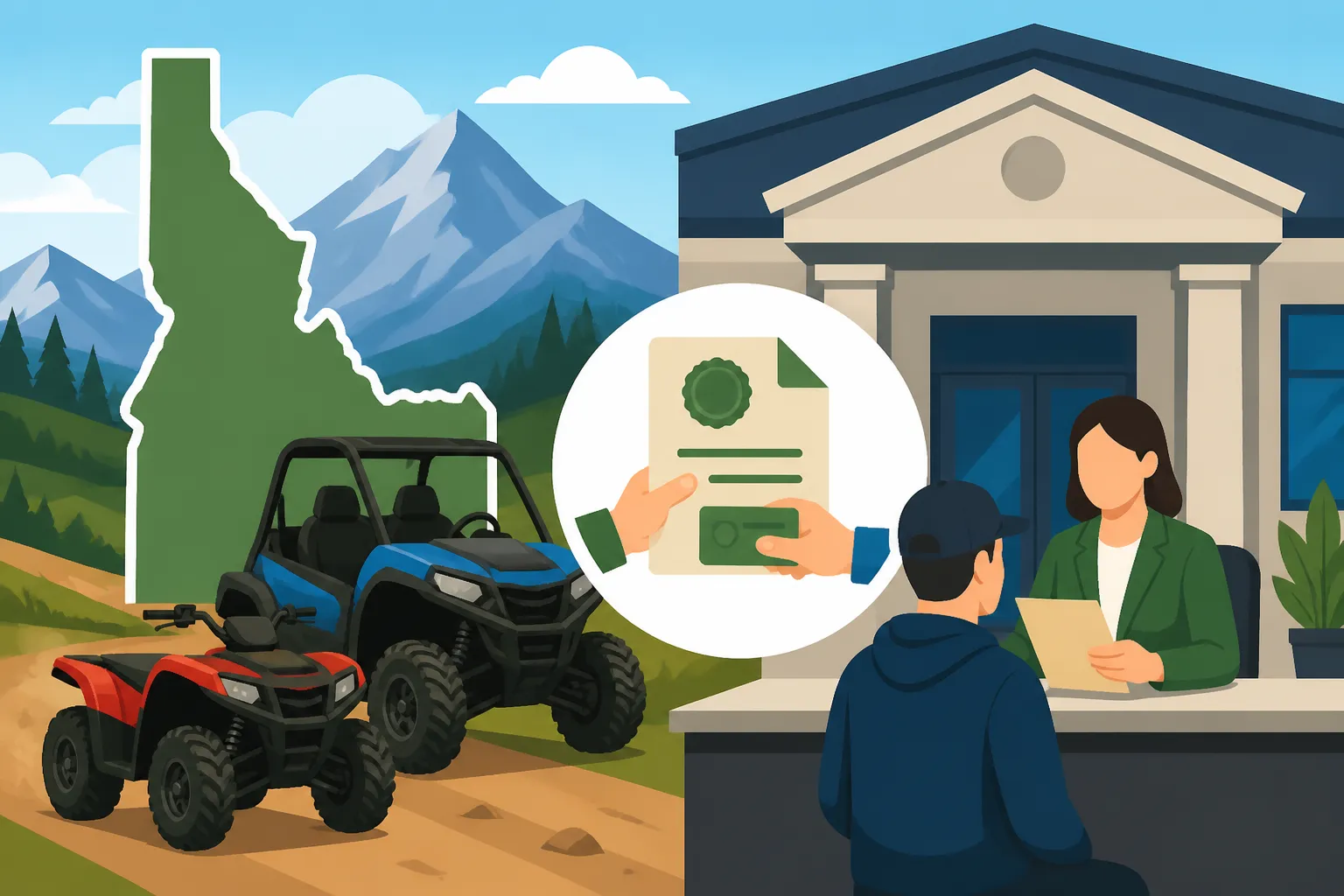
Idaho Title Fee at the County Assessor
Navigating the paperwork for your off-highway vehicle (OHV) in Idaho can feel like trying to find a hidden trail marker in a dense forest. One of the first major hurdles you'll face, especially after buying a new machine or moving to the Gem State, is figuring out the title process. This guide will walk you through the specifics of the Idaho title fee you'll encounter at your local County Assessor's office, ensuring you're prepared for this crucial step in legally owning your ATV or UTV.
Understanding the Base Title Fee in Idaho
When you bring your new-to-you ATV or UTV to the County Assessor's office in Idaho, one of the primary fees you'll pay is for the official title itself. This isn't just a trivial charge; it's a fundamental part of establishing legal ownership and traceability for your machine, much like the deed to a house or the title to your daily driver. Without a proper title, proving you actually own that gleaming new side-by-side or trusty quad can become a real headache down the road.
The Standard Charge for a New Title
The title fee in Idaho is a set charge, mandated by the state, but collected right there at your local County Assessor's office. This means whether you're titling a machine in Ada County, Kootenai County, or a more rural area, the base title fee itself remains consistent across the state. It's not a variable cost that changes from one county to the next based on local ordinances or property values. This standardization is actually a helpful feature, as it removes one layer of guesswork from the process, allowing you to budget for it upfront.
This specific fee applies to nearly every title transaction. If you've just purchased a brand new ATV from a dealer, you'll pay this fee when you go to get the title in your name. Similarly, if you've bought a used UTV from a private seller, transferring that existing title into your name will also incur this same standard charge. It's essentially the cost of the administrative work involved in creating and issuing that official document that declares you the rightful owner of your off-road machine.
The reason this fee exists is fairly straightforward: it helps cover the administrative costs associated with processing the title document. Think of all the steps involved, from verifying the previous owner's signature to printing the new title certificate and recording the ownership change in the state's system. These are all essential tasks that require resources, and the title fee helps fund those operations, ensuring an organized and reliable system for tracking OHV ownership. For example, the County Assessor's office needs to confirm details such as the VIN and ensure all previous owner information is correct before issuing a new title.
What the Title Fee Covers
The title fee might seem like just another charge, but it's crucial for several reasons, covering a range of administrative and legal services. When you pay this fee, you're essentially paying for the state to officially recognize and record your ownership of the ATV or UTV. This involves verifying your documentation, such as a [ATV Bill of Sale Wording Buyers Should Insist On] or the previously issued title, and often includes a physical verification of the machine's VIN. This due diligence helps prevent fraud and ensures that the machine you're titling is legitimate.
It's really important to distinguish the title from other OHV-related necessities. While the title is all about legal ownership, the annual OHV sticker is what grants you permission to ride on designated public lands and trails. They are two entirely separate requirements, each with its own fee structure and purpose. You could have a perfectly titled ATV but still not be legal to ride on public trails without a current sticker, and vice versa.
Beyond the initial processing, the title fee also helps maintain the state's database of OHV ownership. This database is vital for various reasons, including tracking machines in case of theft, assisting law enforcement, and ensuring a clear chain of ownership for future sales. This fee also contributes to the overhead of the County Assessor's office, which handles a myriad of other titling and registration tasks, from cars and trucks to mobile homes. Understanding that this fee is a one-time charge per title transaction, rather than an annual renewal, can help clarify your long-term budgeting for your OHV. Getting your [How Long an Idaho OHV Title Takes] can depend on how quickly all documentation is processed, reinforcing the importance of this initial fee.
Beyond the Basic Fee: Other Potential Costs at the Assessor's Office
While the title fee is a core expense, don't walk into the County Assessor's office expecting that to be your only payment. There are several other charges that might come into play, depending on how and where you acquired your ATV or UTV. Being aware of these can save you from a nasty surprise at the counter. These additional costs are often far more significant than the title fee itself, so it's essential to understand them completely before you arrive.
Sales Tax and Use Tax Implications
This is often where the biggest financial hit comes, beyond the title fee itself. When you title your OHV, the County Assessor's office will often act as the collection point for sales tax or use tax on behalf of the State of Idaho. This isn't just an optional add-on; it's a mandatory state tax based on the purchase price of your machine. Whether you bought a brand-new machine from a dealer or a used one from a private party, you'll generally be responsible for this tax, unless a specific exemption applies. For a deeper dive into what you might owe, you'll want to review [Idaho Sales Tax on an ATV Purchase].
The distinction between sales tax and use tax is important here. If you buy your ATV or UTV from a licensed Idaho dealer, they are typically required to collect sales tax at the time of purchase. However, if you purchase a machine from a private seller, or if you bring an OHV into Idaho from another state where you didn't pay sales tax (perhaps because that state doesn't have one, or you simply didn't pay it there), you'll likely be assessed a use tax when you go to title it in Idaho. This use tax ensures fairness, meaning everyone pays their share regardless of where the purchase occurred. The Assessor's office verifies the purchase price, often from your bill of sale, to calculate this amount. Knowing this upfront, especially if you're [Idaho Use Tax When a Machine Comes Into Idaho] can prevent a significant financial shock.
Imagine moving to Idaho from Oregon with a UTV you bought years ago, never having paid sales tax on it in Oregon. When you go to title it in Idaho, the County Assessor will assess use tax based on the machine's current value (or the price you paid, if recent). Or perhaps you bought a used quad from a private party in Idaho, and they didn't collect sales tax from you. In that scenario, when you present your [Documents to Bring to an Idaho Assessor's Office] for titling, the Assessor will collect the sales tax then. This is why having a clear, accurate bill of sale, perhaps generated using a service like LawDepot, is so critical; it establishes the purchase price upon which these taxes are calculated, providing a verifiable record for both you and the state.
Processing Fees and Additional Charges
While the core title fee is state-mandated, you might encounter other minor fees depending on the specific circumstances of your titling process. These are typically small administrative charges, but they can add up. For instance, if you're trying to obtain a duplicate title because your original was lost or damaged, there will be a specific fee for that service. This is a common scenario, especially if you move or simply misplace important documents. The process for [Replacing a Lost Idaho OHV Title] involves its own steps and associated costs.
Another situation where additional processing might be involved is if there was a lien on the machine's previous title. While the title fee itself doesn't change, the process to ensure that the lien is properly released and removed from the new title can involve extra paperwork and scrutiny. It's crucial that any outstanding liens are satisfied before you attempt to title the machine in your name, otherwise, you might run into significant delays and complications. Understanding [Liens on an OHV Title] is key to a smooth title transfer.
Sometimes, the County Assessor's office might also charge a small convenience fee if you choose to pay with a credit or debit card, rather than cash or check. This isn't unique to OHV titling; many government agencies pass on these processing costs. While it's usually just a small percentage, it's something to factor into your budget if plastic is your preferred method of payment. These seemingly minor charges can collectively increase the overall cost of getting your OHV properly titled and registered.
How to Prepare for Your Visit
Preparation is absolutely key to a smooth visit to the County Assessor's office. The last thing you want is to arrive, wait in line, and then realize you're missing a critical document, forcing you to make another trip. Before you even head out the door, gather all your paperwork. This typically includes your bill of sale, the previous owner's signed-over title (if you bought a used machine), and your personal identification, such as a driver's license. If you're unsure about specific forms or what exactly constitutes [Proof of Ownership for an Idaho OHV Title], a quick phone call to your local office can clarify.
It's highly advisable to call your specific County Assessor's office ahead of time. Fees can be subject to change, and they can confirm the exact amount you'll need for the title, as well as any applicable sales or use taxes. This call is also a great opportunity to inquire about accepted payment methods. While most offices accept cash and checks, not all are equipped to handle credit or debit cards, or they might have specific requirements for their use. Knowing this in advance can save you a headache and ensure you have the correct funds ready.
By being prepared with all the correct documents and knowing the exact fees, you can significantly streamline your titling process. This also includes understanding the process for [Titling an ATV in Ada County] or any other county, as while the fees are standard, the local office procedures might have minor variations. A well-prepared visit ensures that you can get your title processed efficiently, allowing you to move on to the next step of getting your machine ready for the trails.
Comparing Title Fees to Other OHV-Related Costs
It's easy to get all the various fees and requirements for OHVs mixed up, especially when you're new to the world of Idaho off-roading. The title fee, while essential, is just one piece of the puzzle. Understanding how it differs from other costs, like your annual OHV sticker or a restricted use plate, will give you a clearer picture of your overall investment in your machine and its legal operation. Each fee serves a distinct purpose, and confusing them can lead to unexpected fines or delays.
Title Fee vs. OHV Sticker/Registration
Let's clear up a common point of confusion: the title fee and the OHV sticker (often referred to as registration) are two completely separate requirements with distinct purposes and costs. The title fee, as we've discussed, is a one-time charge associated with establishing and recording legal ownership of your ATV or UTV. It's the paper proof that you are the rightful owner, much like a car title. This document is typically kept in a safe place, not carried on the machine itself.
In contrast, the Idaho OHV sticker is what grants you the legal right to ride your machine on designated public lands and trails within the state. This sticker must be renewed annually, and its fee is entirely separate from the title fee. You could have a perfectly titled machine but be unable to ride legally on most public trails if you haven't purchased and affixed a current OHV sticker. Conversely, someone could ride a borrowed or rented machine with a valid sticker, even if they aren't the title holder. The purpose of the sticker is to fund trail maintenance, signage, and enforcement, which is why it's a recurring expense. You can learn more about this by checking out [What an Idaho OHV Sticker Costs Each Year].
To help clarify, here's a quick comparison:
| Feature | OHV Title | OHV Sticker (Registration) |
|---|---|---|
| Purpose | Establishes legal ownership | Grants permission to ride on public lands |
| Frequency | One-time fee per ownership transfer | Annual renewal |
| Cost Type | Administrative fee, sometimes tax related | User fee for trail system maintenance |
| Collected By | County Assessor's Office | IDPR or authorized vendors |
| Document Type | Paper certificate (kept safe) | Physical decal (affixed to machine/plate) |
Restricted Use Plates and Their Fees
Another specific item you might consider for your OHV is an Idaho Restricted Use Plate, often simply called an "R Plate." This plate allows you to legally operate your ATV or UTV on certain designated county roads and city streets, usually to connect trails or access services within trail-friendly communities. While extremely useful for expanding your riding opportunities, the fee for this plate is yet another separate cost, distinct from both the title fee and the annual OHV sticker.
The Restricted Use Plate has its own application process and associated fee, which you'll typically pay through Idaho Parks and Recreation (IDPR) or one of their vendors. However, it's crucial to understand that you cannot get an R Plate for a machine that isn't properly titled in Idaho first. The title is the foundational document that proves ownership, and without it, you won't be able to secure the R Plate. Think of it as a logical progression: first, you prove you own the machine (title), then you get permission to use it on trails (sticker), and then you can apply for special permission to ride it on certain roads (R Plate). For more details on this, see [Idaho's Restricted Vehicle Plate Explained].
For example, a rider might purchase a new UTV, pay the title fee at the County Assessor's office, and then later decide they want to ride from their cabin directly to a nearby trailhead using a county road. At that point, they would apply for an OHV sticker and a Restricted Use Plate, each with their own separate fees. Each of these components plays a role in making your off-highway vehicle legally compliant for different types of use, and while they all pertain to your machine, their costs are itemized and handled independently.
Disclaimer
This article is for general informational purposes only and does not constitute professional advice. Laws, prices and regulations vary by location and change over time. Consult a qualified professional for guidance on your specific situation.