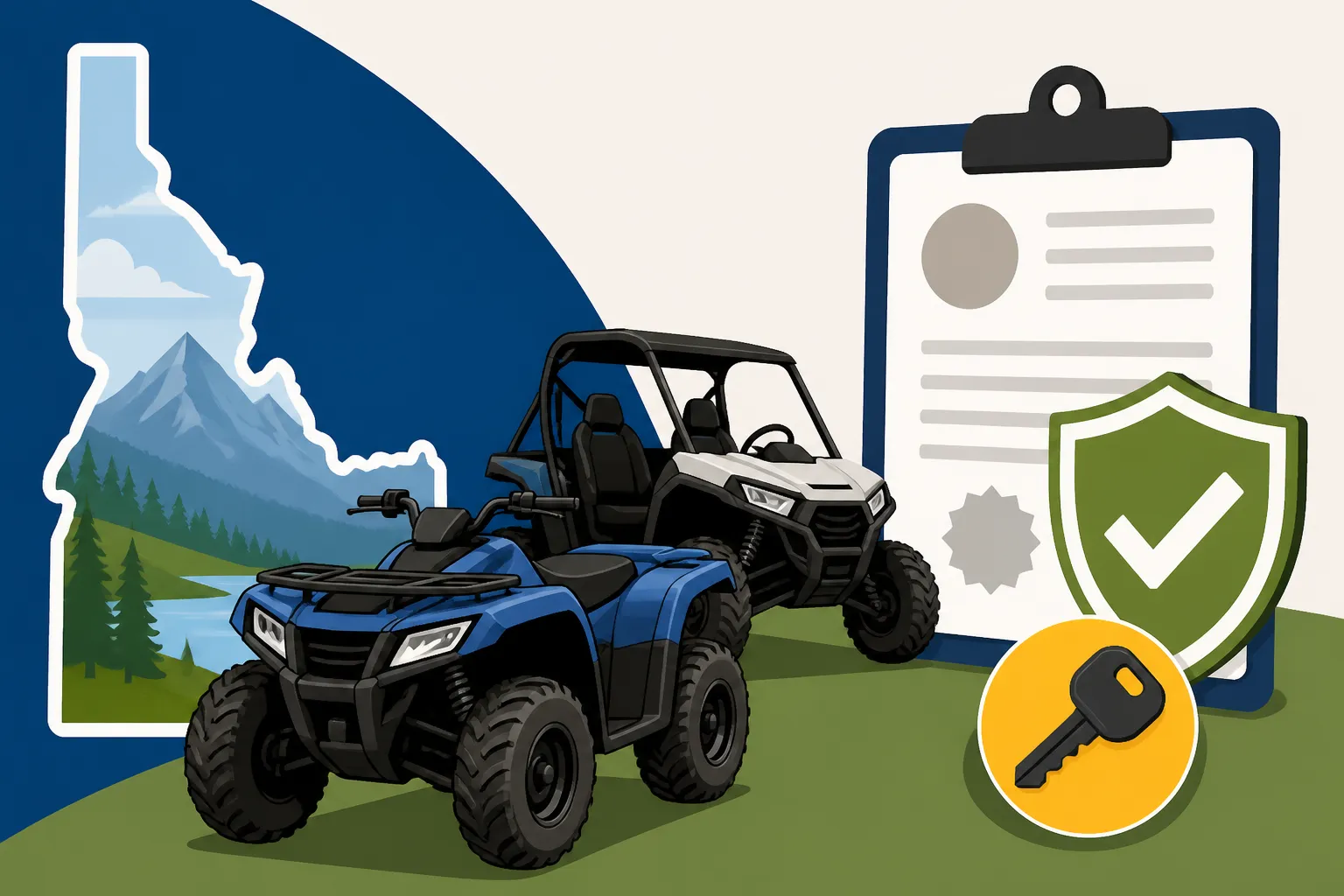
Titling and Registering an ATV in Idaho
Navigating the world of ATV and UTV ownership in Idaho can sometimes feel like trying to untangle a particularly stubborn fishing line – you know there's a fish to be caught, but all the rules and regulations can make it feel more complicated than it needs to be. Many folks get confused about the critical differences between titling their machine and registering it, often thinking they're one and the same. This comprehensive guide is here to cut through that confusion, walking you step-by-step through the process for both, ensuring your off-highway vehicle (OHV) is fully compliant for all your Idaho adventures.
Understanding the Difference: Titling vs. Registration
When you first bring home that shiny new (or new-to-you) ATV or UTV, the excitement is palpable. You're already picturing those incredible rides through the high desert or deep into the national forests. But before you hit the trail, it's absolutely crucial to understand the two distinct administrative processes your machine needs to go through: titling and registration. They serve different purposes, are handled by different agencies, and failing to understand either can lead to headaches, fines, and wasted time.
What is an Idaho Title for an ATV/UTV?
Think of an Idaho title for your ATV or UTV much like the deed to your house or the title to your car. It's the official document that establishes legal ownership of your machine. This piece of paper, issued by the Idaho Transportation Department (ITD) through your county assessor's office, proves that you are the rightful owner. Without a title, proving ownership can be incredibly difficult, making it challenging to sell the machine, insure it, or even retrieve it if it's stolen. The title includes vital information about your OHV, such as the Vehicle Identification Number (VIN), make, model, and year, along with the names of the legal owners. It's a fundamental document for any motor vehicle, and your off-highway machine is no exception. It’s what allows the state to track who legally owns what, protecting both buyers and sellers in transactions.
What is an Idaho OHV Sticker/Registration?
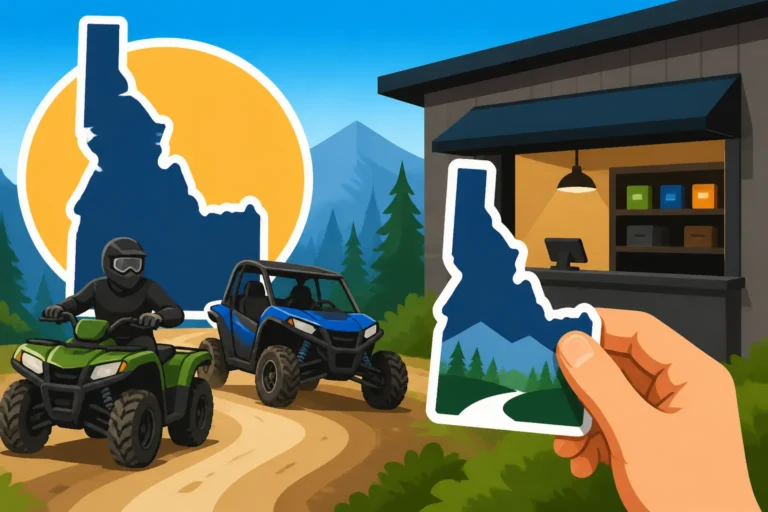
Now, if the title is about ownership, the OHV sticker – often referred to as registration – is about permission to operate. This annual sticker, issued by Idaho Parks and Recreation (IDPR), is your permit to ride on public lands and designated OHV trails throughout Idaho. Unlike the title, which is generally a one-time process when you acquire the machine (unless it's transferred), the OHV sticker needs to be renewed annually. It’s a use permit, and the fees collected from these stickers directly support the very trails you ride, contributing to maintenance, signage, and the development of new riding opportunities. Think of it as your trail pass. Displaying this current sticker on your machine, usually visible on the rear fender or the restricted vehicle plate, tells law enforcement and park rangers that you've paid your dues and are authorized to be on those trails. This is a critical distinction, as having a title doesn't automatically grant you permission to ride on public land without a current sticker.
Why Both Matter: Legal Operation
In Idaho, truly legal operation of your ATV or UTV on public lands, or even some private lands with specific access rules, requires both a proper title and current registration (the OHV sticker). The title proves you own the machine, preventing issues of theft or disputed ownership. The registration sticker proves you have paid the necessary fees to use the public trail system and contributes to its upkeep. Without a title, you might struggle to even get the machine registered in the first place, as proof of ownership is often required. Without registration, you could face fines, be cited by law enforcement, and even have your riding privileges suspended. The two documents work hand-in-hand to ensure that not only is your machine legally yours, but that you are also a responsible and compliant participant in Idaho's vast OHV recreation system. Don't let one lapse while you maintain the other; both are equally important for peace of mind and hassle-free riding.
Machines That Require an Idaho Title
One of the most frequent questions I hear from new OHV owners or folks thinking about buying a used machine is, "Does my ATV or UTV even need a title in Idaho?" It's a fair question, as the rules can seem a little murky, especially with different types of machines out there. The short answer is usually yes, but there are some specific criteria to be aware of. Understanding these details upfront can save you a lot of grief down the road and ensure you're on the right side of the law from day one.
Engine Size and Exemptions
Idaho law is pretty clear on the primary determinant for titling: engine size. Generally speaking, if your off-highway vehicle has an engine displacement of over 50cc, it needs an Idaho title. This rule applies across the board, whether you're talking about a quad, a side-by-side (SxS or UTV), or even a dirt bike. The state wants to track ownership of these larger, more powerful machines for reasons like theft prevention, legal ownership transfer, and to ensure proper sales tax collection.
What about those smaller machines? If your ATV or UTV has an engine size of 50cc or less, it is typically exempt from the titling requirement. These are often youth-sized machines, smaller pit bikes, or very basic utility vehicles. While they don't need a title, remember that operating them on public lands still often requires an OHV sticker, and there are specific rules regarding age and supervision for young riders. So, while you might skip the title process for a 50cc machine, you're not entirely off the hook for all legal requirements. It's always a good idea to double-check the latest regulations, as laws can evolve. For machines over 50cc, you'll definitely be looking at getting a title processed. [Idaho Titles Every ATV Over 50cc] can give you more details on this specific requirement.
New vs. Used Machines: Titling Basics
The process for titling generally remains the same whether you're buying a brand-new machine from a dealership or picking up a used one from a private seller, though the paperwork you receive at the point of sale will differ.
-
New Machines: When you purchase a new ATV or UTV from an Idaho dealership, they typically handle a significant portion of the titling paperwork for you. They will collect the necessary sales tax, often submit your application to the county assessor, and you'll eventually receive the title in the mail. The dealer provides you with temporary documentation that allows you to operate the machine legally while the title is being processed. It's a smoother process because the dealership is a regulated entity familiar with all the requirements. They'll ensure the Manufacturer's Statement of Origin (MSO) or Manufacturer's Certificate of Origin (MCO) is properly completed, which is the foundational document for a new vehicle title.
-
Used Machines (Private Sale): This is where many people encounter challenges. When buying a used machine from a private seller, you are responsible for ensuring the title is properly transferred into your name. The seller should provide you with their signed-off title. If the machine was previously titled in Idaho, they'll sign the "seller" portion of the title certificate, often needing a notary public to witness the signature, depending on the age of the title or specific county requirements. If the title is from out-of-state, the process might involve a VIN inspection. A clean, properly transferred title is paramount in a private sale. Without it, you could face significant hurdles trying to title the machine yourself later. Always insist on a clear, signed title from the seller. If they claim they don't have one, proceed with extreme caution, as you might be buying a machine that's difficult or impossible to title legally. [Buying a Used Side-by-Side in Idaho: The Paperwork] offers more insights into this specific scenario.
Exceptions for Farm and Ranch Use
Idaho recognizes the practicalities of rural life and sometimes makes allowances for machines used primarily for agricultural purposes. There can be specific exemptions for ATVs and UTVs used exclusively for farm or ranch work on private land, or for travel between parcels of land as part of a legitimate agricultural operation. These machines might not require an OHV sticker (registration) if their use is strictly limited to agricultural purposes and private property.
However, it's crucial to understand that these exemptions typically pertain to registration (the OHV sticker), not necessarily titling. Most farm and ranch machines over 50cc will still require a title to establish legal ownership, even if they never see a public trail. The titling process remains a legal documentation of who owns the machine. If you plan to use a farm-exempt machine on any public roads or trails, even for very short distances, those registration exemptions generally no longer apply, and you'll need both a title and a current OHV sticker, potentially even a restricted use plate if crossing county roads. It's vital to check with your county assessor's office and Idaho Parks and Recreation directly to confirm the exact requirements for your specific use case, as misinterpreting these exemptions can lead to unexpected fines.
The Idaho Titling Process: Step-by-Step
Alright, so you've got your ATV or UTV, and you know it needs a title. Now what? The titling process in Idaho isn't overly complicated, but it does require attention to detail and a trip to the right place. Doing your homework beforehand and gathering all the necessary documents can make your visit to the county assessor's office a breeze, ensuring you leave with peace of mind knowing your machine's ownership is properly recorded.
Gathering Your Essential Documents
Before you even think about heading out, take the time to collect everything you'll need. This preparation step is perhaps the most crucial for a smooth titling experience.
-
Proof of Ownership:
- New Machines: You'll need the Manufacturer's Statement of Origin (MSO) or Manufacturer's Certificate of Origin (MCO). This is the original document from the manufacturer, typically provided by the dealer, proving the machine's origin and that it's never been titled before.
- Used Machines: You'll need the previous owner's properly signed-off title. Ensure all seller sections are filled out, including odometer readings (if applicable to the machine type) and the seller's signature. In some counties or for older titles, a notarized signature might be required, so it's always best to check with your specific county assessor's office if unsure. If the machine is coming from out-of-state, you'll need the original out-of-state title. If the previous owner never titled it but provides a bill of sale, you might face additional hurdles and need to provide extra proof of ownership, potentially even a bonded title, so buyer beware in these situations. [Proof of Ownership for an Idaho OHV Title] provides more in-depth advice here.
-
Bill of Sale: While not always strictly required if you have a perfectly executed MSO or signed title, a detailed bill of sale is highly recommended for all private transactions. It protects both the buyer and seller by clearly stating the purchase price, date of sale, machine description (including VIN), and buyer/seller information. This is especially important for calculating sales tax. Make sure the VIN on the bill of sale matches the VIN on the machine and the MSO/title. You can find templates online, like those offered by LawDepot, to ensure all the necessary information is included. For specifics on what to include, check out [ATV Bill of Sale Wording Buyers Should Insist On].
-
Photo ID: Bring a valid government-issued photo identification, such as your driver's license. This is necessary for verifying your identity as the new owner.
-
Proof of Idaho Residency: If your ID doesn't clearly establish your Idaho residency, you might need an additional document like a utility bill or lease agreement.
-
Payment for Fees and Taxes: Be prepared to pay the titling fee and any applicable sales tax. Sales tax in Idaho is typically collected at the time of titling, unless already collected by a dealer. The exact fees can vary slightly by county and year, so it's a good idea to call ahead and confirm the current rates. [Idaho Sales Tax on an ATV Purchase] delves into the sales tax aspect.
Visiting Your County Assessor's Office
Once your documents are in order, your next stop is your local county assessor's motor vehicle office. This is the government body responsible for processing vehicle titles in Idaho. It's not the Idaho Parks and Recreation office; those handle the stickers.
- Locate Your Office: Find the motor vehicle department within your county assessor's office. A quick search online for "[Your County Name] Idaho motor vehicle registration" should point you to the correct address and office hours.
- Be Prepared for a Wait: Depending on the time of day or season, there might be a wait. Bring something to read or do, and try to go during off-peak hours if possible.
- VIN Inspection: For certain circumstances, especially if you're titling an out-of-state machine, a machine with a questionable past, or one that was never titled, a VIN inspection might be required. This usually involves a sheriff's deputy or authorized agent physically verifying the VIN on your machine matches your paperwork. Sometimes this can be done on-site at the assessor's office (if they have an inspector available), or you might need to arrange a separate inspection. Call your assessor's office beforehand to ask about VIN inspection requirements for your specific situation.
- Submit Paperwork and Pay Fees: Present all your gathered documents to the clerk. They will review everything, collect the titling fee (often a modest amount) and the sales tax. They will process your application and give you a temporary registration or receipt.
- [Idaho OHV Title Application at the County Assessor]: This link provides more detail on what to expect during your visit.
Understanding the Title Fees and Timeline
The financial aspect and the waiting game are often on people's minds.
- Titling Fee: The fee for an Idaho OHV title is a set amount, generally quite reasonable, separate from the sales tax. This fee covers the administrative cost of processing and issuing your new title.
- Sales Tax: Unless you purchased your machine from a licensed Idaho dealer who already collected it, you will owe Idaho sales tax on the purchase price of the ATV/UTV. This is based on the purchase price listed on your bill of sale. If no bill of sale is presented, the assessor's office may use a fair market value guide to determine the tax owed.
- Use Tax: If you purchased your machine out of state and bring it into Idaho, you may owe Idaho use tax, which is essentially the sales tax for out-of-state purchases. This ensures fairness and prevents people from avoiding sales tax by buying across state lines.
- Timeline: Once your application is submitted and approved, you typically won't walk out with the physical title in hand. Instead, the Idaho Transportation Department will mail the official title certificate to the address you provided. The mailing process can take a few weeks, sometimes longer during peak seasons. The clerk should give you an estimate of how long to expect. During this waiting period, your receipt from the assessor's office serves as temporary proof of application. Always keep copies of all your submitted documents for your records. Don't worry if it doesn't arrive immediately; patience is key.
Navigating Common Titling Challenges
Even with the best intentions and all your ducks in a row, the titling process can sometimes throw a curveball. Private sales, older machines, or unusual circumstances can introduce complexities that leave new owners scratching their heads. It’s important to anticipate these potential issues and know how to address them head-on. Don’t let a hurdle deter you from getting your machine legally titled; there are often solutions available, even if they require a bit more effort.
Buying a Machine Without a Title
This is perhaps one of the biggest red flags in a private ATV/UTV sale. If a seller claims they've lost the title, never received one, or simply doesn't have it, proceed with extreme caution. While it's not always a deal-breaker, it significantly complicates your ability to legally title the machine in your name.
- Lost Title: If the seller genuinely lost the title, they should be the one to apply for a duplicate title in their name before selling it to you. This is the cleanest way to handle it. You should not be the one to deal with a lost title from a previous owner, as you have no legal standing to request a duplicate.
- Never Titled: This is less common for machines over 50cc but can happen, especially with older models or if the original owner simply never bothered. If the seller has the original MSO/MCO but never titled it, they can often still title it in their name and then transfer it to you. If they don't have an MSO/MCO and it's never been titled, you're entering murky waters. You'd likely need a comprehensive bill of sale, potentially an affidavit of ownership, and possibly a VIN inspection. Some counties might even require a "bonded title" process, which involves purchasing an indemnity bond to protect the state and future owners against claims of prior ownership. This can be an expensive and time-consuming process, and it's usually best avoided unless the deal is exceptionally good and you understand the risks.
- Salvage or Parts Machine: Sometimes, machines are sold explicitly for parts or as salvage, and titles might be deemed unnecessary by the seller. However, if your intent is to get the machine running and use it, you will still need a title. If it’s a true salvage machine, it will likely be issued a salvage title, which flags it as having been declared a total loss by an insurance company. This has implications for value and potential re-titling as "rebuilt" once repaired. Always assume that if you intend to operate it, you need a title. [Selling a Machine in Idaho With No Title] offers a deeper dive into this tricky situation.
Dealing with Missing or Incorrect VINs
The Vehicle Identification Number (VIN) is your machine's unique fingerprint. It's crucial for titling, registration, insurance, and tracking stolen machines. Issues with the VIN can bring your titling process to a screeching halt.
- Missing VIN Plate: If the VIN plate is missing or has been removed, this is a major red flag. It could indicate a stolen machine or an attempt to obscure its history. The assessor's office will likely refuse to title it without a clear VIN. In such cases, contact local law enforcement to investigate.
- Illegible or Damaged VIN: If the VIN is simply worn, rusted, or damaged to the point of being unreadable, you'll likely need a VIN inspection by law enforcement. A deputy will attempt to locate any secondary VINs (often stamped on the frame in multiple places) or other identifying marks to verify the machine's identity. If they can confirm it, they can issue a verification document that the assessor's office will accept.
- Incorrect VIN on Paperwork: Sometimes, clerical errors happen, and the VIN on the title or MSO might not exactly match the one on the machine. This is usually easier to fix. If it's a new machine, the dealer should correct the MSO. If it's a used machine, you might need an affidavit from the seller or a VIN inspection to confirm the correct number, and then work with the assessor's office to amend the title application. Always double-check the VIN on all documents against the machine itself before completing any purchase. [Fixing a Wrong VIN on an Idaho Title] can guide you further.
Special Cases: Salvage and Homemade Machines
Not every ATV or UTV starts its life on a showroom floor or with a pristine title history. Idaho has provisions for some less common scenarios.
- Salvage and Rebuilt Machines: A salvage title is issued when an insurance company declares a vehicle a total loss due to damage, theft, or other reasons. These machines cannot be legally operated on public roads or trails until they are repaired and re-titled as "rebuilt." The process for a rebuilt title involves extensive inspection to ensure the machine is safe and meets all requirements. You'll need proof of repairs (receipts for parts, etc.) and a thorough inspection by an authorized agent. This ensures that a machine previously deemed unsafe isn't just patched up and put back on the trail without proper oversight.
- Homemade Buggies/Machines: If you're a true DIY enthusiast and have built your own custom off-road buggy or machine from scratch, titling it is a unique process. You'll need to provide proof of ownership for all major components (engine, frame, etc.) through receipts or affidavits, and you'll typically be assigned a state-issued VIN after a thorough inspection. This inspection confirms that the machine is structurally sound and meets basic safety standards. It’s a rewarding process for custom builders, but it involves significant documentation and adherence to specific guidelines to ensure your one-of-a-kind creation is legally recognized.
The Idaho OHV Sticker (Registration) Process
Once your ATV or UTV is properly titled in your name, you're halfway there! The next crucial step for enjoying Idaho's incredible trail system is getting your annual OHV sticker. This is the registration that grants you permission to ride on public lands. It's a straightforward process, but understanding who needs one, where to get it, and how to display it will save you any last-minute scrambling.
Who Needs an OHV Sticker?
The rule of thumb for needing an Idaho OHV sticker is pretty simple: if you plan to operate your ATV, UTV, dirt bike, or any other off-highway vehicle on public lands or designated OHV trails in Idaho, you need a current sticker. This includes national forests, BLM lands, state parks, and any county roads designated open to OHVs.
There are very few exemptions, but they are important to note:
- Private Land: If you operate your OHV exclusively on your own private property or land you have permission to ride on, and never venture onto public trails or roads, you generally do not need an OHV sticker. However, as soon as one tire touches public land or a designated route, the sticker is required. [Do You Need a Sticker on Private Land in Idaho?] can help clarify this.
- Farm/Ranch Use: As mentioned earlier, machines used solely for agricultural purposes on private land or traveling directly between adjacent private parcels for farming activities may be exempt from the sticker requirement. Again, any deviation to public recreation means you need a sticker.
- Under 50cc: While machines under 50cc don't usually require a title, they often do require an OHV sticker if they are used on public lands. Don't confuse the titling exemption with a registration exemption. [Youth Machine Size Rules Idaho Parents Ask About] might be useful here.
Essentially, if you're hitting the trails, assume you need that sticker. This applies to both Idaho residents and non-residents. Idaho ended OHV reciprocity with other states a few years ago, meaning even if your machine is registered in another state, you'll still need an Idaho non-resident OHV sticker to ride legally here.
Where and How to Purchase Your Sticker
Getting your OHV sticker is thankfully quite convenient, with several options available.
- Online: The easiest way for many is to purchase your sticker directly through the Idaho Parks and Recreation (IDPR) website. This allows you to apply and pay from the comfort of your home. The sticker is then mailed to you, which typically takes a week or two. This is a great option if you plan ahead for your riding season. [Renewing an Idaho OHV Sticker Online] will guide you through this process.
- Vendor Locations: IDPR partners with numerous authorized vendors across the state, including many powersports dealerships, sporting goods stores, and even some county DMV offices or county assessors (though remember, the assessor's main role is titling, not sticker sales in all cases). These vendors can issue the sticker directly to you on the spot. This is ideal if you need a sticker immediately for a spur-of-the-moment ride or if you're visiting from out-of-state and need one upon arrival. Always call ahead to confirm a vendor’s current hours and that they process OHV stickers. [Where Idaho Sells OHV Stickers] provides more information on vendor options.
- IDPR Offices: While less common for direct purchase, some Idaho Parks and Recreation regional offices or service centers may also process OHV stickers. These are typically staffed by knowledgeable personnel who can answer specific questions.
When purchasing, you'll need basic information about your machine (make, model, VIN) and proof of ownership (your title or prior registration).
Understanding Sticker Validity and Placement
Once you have your sticker, understanding its validity and proper placement is key to avoiding issues with law enforcement or park rangers.
- Validity: An Idaho OHV sticker is valid for a calendar year, from January 1st to December 31st. Regardless of when you purchase it during the year, it will expire on December 31st. So, if you buy a sticker in July, it's still good until December 31st of that same year. Plan accordingly, especially if buying late in the year. Many riders purchase their stickers in late December or early January to ensure continuous coverage for the new riding season. [Idaho OHV Registration Runs January to December] explains this calendar year system.
- Cost: The cost of an Idaho OHV sticker is a set fee. This fee is collected by IDPR and dedicated to the OHV program, funding trail maintenance, signage, education, and enforcement efforts. Some vendors may charge a small processing fee on top of the state fee. [What an Idaho OHV Sticker Costs Each Year] provides details on the current fees.
- Placement: Proper placement of the sticker is mandatory.
- Quads (ATVs): The sticker should be affixed to the rear fender of the machine, typically on the left side, clearly visible to an officer approaching from the rear. It needs to be securely attached and not obstructed by mud, gear, or anything else.
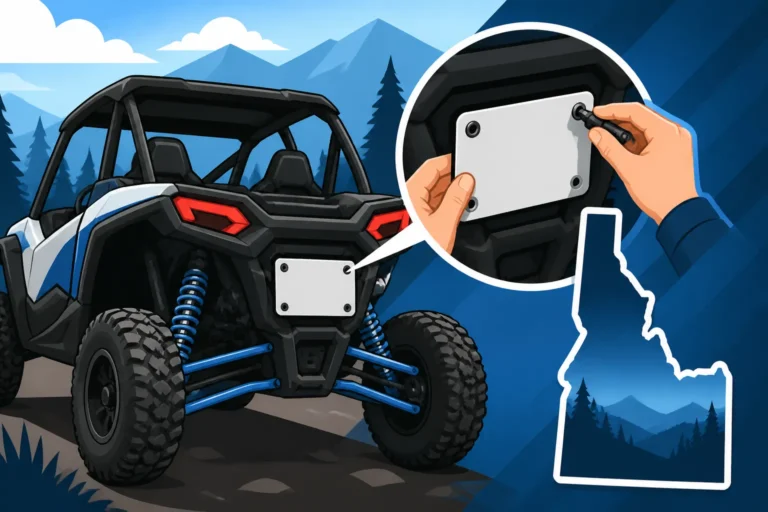
- Side-by-Sides (UTVs) & Dirt Bikes: If your UTV or dirt bike has an Idaho Restricted Use (R) Plate (more on this below), the OHV sticker is usually placed in the designated corner of that plate. If you do not have an R Plate, the sticker should be affixed to a visible, non-removable part of the machine, often on the rear fender or frame, ensuring it's easy to spot. The goal is clear visibility. If the sticker peels or is damaged, you may need to [Replacing a Peeled Idaho OHV Sticker] to get a new one.
Failure to display a current and visible sticker can result in a citation and fines, even if you technically purchased one but it's not properly affixed.
Keeping Your ATV/UTV Legal on Idaho Roads and Trails
Riding off-highway vehicles in Idaho is an exhilarating experience, but it comes with significant responsibilities, especially when you consider venturing onto public roads or specific trail systems. It’s not just about having a title and an OHV sticker; there are additional requirements to consider for full legal compliance and safety. Ignoring these details can quickly turn a fun day into a frustrating encounter with law enforcement.
Restricted Vehicle Plates Explained
Idaho has a unique system for allowing OHVs on certain public roads: the Restricted Use (R) Plate. This plate is not a standard vehicle license plate, but rather a specialized plate that, when combined with a current OHV sticker, permits your machine to operate on designated county and Forest Service roads where OHVs are allowed. It's a game-changer for connecting trails, accessing trailheads, or simply cruising through small towns that have embraced OHV tourism.
- Purpose: The R Plate specifically allows ATVs, UTVs, and dirt bikes to traverse county roads and Forest Service roads where posted signs indicate OHV use is permitted. It bridges the gap between purely off-road use and limited on-road travel. It does not allow you to ride on state highways or interstates, except to cross them at designated intersections.
- Getting One: You can apply for an Idaho Restricted Vehicle Plate through your county assessor's motor vehicle department, the same place where you title your machine. You'll need proof of ownership (your title) and pay a specific fee for the plate itself. This is a one-time purchase for the plate, but it needs to be combined with your annual OHV sticker to be valid. The sticker is affixed to the plate. [Idaho's Restricted Vehicle Plate Explained] gives a comprehensive look at this critical document.
- Requirements for Road Use: Just having an R Plate isn't enough. When riding on county roads, your OHV must also be equipped with certain safety features, mirroring many standard road vehicles. This includes things like working headlights, taillights, brake lights, a horn, a mirror, and potentially turn signals. You must also have a valid driver's license and liability insurance. Furthermore, local ordinances dictate which county roads are open. You cannot assume all county roads are open just because you have an R Plate. Always check local signage and maps. [What Idaho Requires Before You Ride a County Road] is a must-read for anyone considering road riding.
Insurance Requirements for Road Use
Just like with your car, if you intend to operate your ATV or UTV on any public road in Idaho (even those designated open to OHVs), you are legally required to carry liability insurance. This isn't just a good idea; it's the law.
- Minimum Coverage: Idaho mandates minimum liability coverage for any motor vehicle operating on its roads. This insurance protects others in the event you cause an accident. It's crucial to understand that your homeowner's insurance typically does not cover your OHV when it's being operated off your property, and your auto insurance policy almost certainly won't either. You need a dedicated OHV insurance policy.
- Finding a Policy: Many major insurance providers offer specific ATV/UTV insurance policies. Shop around to find coverage that meets Idaho's minimum requirements and also provides adequate protection for your specific machine and riding habits. Consider adding comprehensive and collision coverage if you want to protect your investment from theft, damage, or other incidents.
- Proof of Insurance: Always carry proof of insurance with you when riding. A physical card or digital copy on your phone is usually acceptable. Law enforcement can ask for this if you are stopped on a public road, and failure to provide it can result in a citation. [Insuring an ATV in Idaho] covers everything you need to know about protecting your machine and yourself.
Penalties for Non-Compliance
Idaho takes its OHV laws seriously, and for good reason – it's about safety, trail preservation, and ensuring a fair system for everyone. Ignoring the titling, registration, or road-use rules can lead to a range of penalties, none of which you want to experience during your Idaho adventure.
- Fines for Unstickered Machines: The most common violation is operating an OHV on public land without a current OHV sticker. You can be cited and face fines. These fines vary but can quickly add up, easily exceeding the cost of the annual sticker. In some cases, repeated offenses or particularly egregious violations could lead to your machine being impounded. [Penalties for an Unstickered OHV in Idaho] details these consequences.
- Penalties for Missing Restricted Plate/Road Requirements: If you're caught riding on a designated county road without a valid R Plate, without a current OHV sticker affixed to it, without insurance, or without a driver's license, you're looking at multiple citations. These fines can be substantial and, in the case of no driver's license or insurance, carry more serious implications than just an OHV violation.
- Titling Issues: Operating a machine that isn't properly titled in your name can create legal headaches, especially if the machine is found to be stolen or if there's a dispute over ownership. While there might not be a direct "no title" fine for simply riding, the lack of proper documentation makes you vulnerable in many other legal scenarios.
- Safety Violations: Beyond registration, other safety-related violations, such as underage riding without supervision, helmet law infractions for youth, or reckless operation, also carry fines and can even lead to suspension of riding privileges.
The bottom line is that the small investment of time and money to properly title, register, and insure your ATV or UTV is well worth it to avoid these potential fines and ensure a safe, legal, and enjoyable riding experience in Idaho.
Special Circumstances for Idaho ATV/UTV Owners
Life isn't always a straight line, and neither is OHV ownership. There are many scenarios that can pop up, from moving to Idaho with an out-of-state machine to selling your beloved quad or even registering it under a business name. These situations require a bit of extra attention to detail to ensure you remain fully compliant with Idaho law. Don't let these "special circumstances" become a headache; a little preparation goes a long way.
Out-of-State Machines Moving to Idaho
Welcome to Idaho! We're thrilled to have you and your OHV. But before you hit our incredible trails, there are specific steps you need to take if you're bringing an out-of-state titled and registered machine with you.
- Titling: This is the most crucial step. When you move to Idaho, you generally have a limited timeframe (often 30-90 days, depending on the type of vehicle) to convert your out-of-state title to an Idaho title. You'll take your existing out-of-state title to your county assessor's office. They will surrender your old title and issue a new Idaho title in your name. This process often requires a VIN inspection, where a sheriff's deputy or authorized official verifies that the VIN on your machine matches the one on your title. This step is a critical anti-theft measure and ensures the machine is what the paperwork claims it to be. Don't forget that you'll also likely owe Idaho use tax if you haven't paid sales tax at a rate equivalent to Idaho's when you originally purchased the machine. [Registering an Out-of-State Machine in Idaho] provides detailed guidance for new residents.
- OHV Sticker: Once you have an Idaho title (or if you are a seasonal resident not permanently titling your machine here), you will need to purchase an Idaho OHV sticker. As mentioned, Idaho does not have reciprocity with other states, meaning your out-of-state registration sticker is not valid on Idaho's public trails. You'll need to purchase an Idaho resident or non-resident sticker, depending on your residency status. This can be done online through IDPR or at an authorized vendor.
- Restricted Plate: If you intend to ride on designated county roads, you'll also need to apply for an Idaho Restricted Use (R) Plate through your county assessor's office. Your out-of-state license plate (if you had one) will not function as an R Plate in Idaho.
Transferring Ownership After a Sale or Gift
Whether you're selling your ATV to upgrade, or gifting a UTV to a family member, properly transferring ownership is paramount to protect both the giver/seller and the recipient/buyer.
- Selling Your Machine:
- The Title: The seller is responsible for signing off on the current title certificate, transferring it to the new owner. This usually involves signing the "seller" portion of the title and entering the sale date and purchase price. As a seller, ensure the buyer's name and address are correctly entered, and complete a detailed bill of sale. Some counties or older titles may require a notarized signature from the seller, so check with your local assessor's office. You don't want to remain the legal owner of record if the new owner gets into an accident or commits a violation.
- Bill of Sale: Always create a comprehensive bill of sale, even for private sales. This document should include the date, full names and addresses of both parties, the machine's make, model, year, and VIN, and the agreed-upon purchase price. It provides proof of the transaction and is crucial for the buyer to title the machine. You can use resources like LawDepot for reliable bill of sale templates.
- Gifting a Machine: When you gift an ATV or UTV, the process is similar to a sale, but with a few key differences regarding sales tax.
- Title Transfer: You still need to sign over the title to the recipient.
- Bill of Sale/Affidavit of Gift: Instead of a bill of sale stating a purchase price, you'll typically use an "Affidavit of Gift" or a bill of sale indicating the purchase price as $0. This document serves as proof of the transfer and will be used by the recipient at the county assessor's office. While a true gift usually means no sales tax is owed, the assessor’s office may require clear documentation of the gift to waive the tax. Be prepared to explain the relationship and intent. [Transferring an Idaho OHV Title After a Sale] offers more advice for these situations.
Business and LLC Registrations
If you use your ATV or UTV for a business, or if you prefer to hold assets under a limited liability company (LLC) for liability protection, you can absolutely title and register your OHV under a business or LLC name in Idaho.
- Titling Under a Business/LLC: When titling, the legal name of the business or LLC will be listed as the owner on the title certificate, rather than an individual's name. You'll need to provide documentation proving the existence of the business/LLC (e.g., Articles of Organization, business EIN) and that the person signing the title application is an authorized representative of the entity. All future transfers or sales would then be made from the business/LLC.
- OHV Sticker and Plates: The OHV sticker and any Restricted Use (R) Plate would also be issued to the business or LLC. The machine still needs to meet all general OHV requirements, including having a current sticker for public land use and appropriate safety equipment if riding on designated roads.
- Tax Implications: Registering a machine under a business or LLC can have tax implications, both for sales tax and for business deductions, so it's always wise to consult with a tax professional or accountant to understand the full financial picture. [Registering an OHV Under an Idaho Business] touches on this further.
These special circumstances often require careful documentation and communication with the county assessor's office. Don't hesitate to call them with questions specific to your situation before you visit, as getting it right the first time will save you considerable time and effort.
Comparing Titling and Registration in Idaho
To help clarify the differences we've discussed, here's a table summarizing the key aspects of titling and registering your ATV/UTV in Idaho.
| Feature | Idaho OHV Title (Ownership) | Idaho OHV Sticker (Registration) |
|---|---|---|
| Purpose | Establishes legal ownership of the machine. | Grants permission to operate on public lands/trails. |
| Issued By | Idaho Transportation Department (via County Assessor's Office) | Idaho Department of Parks and Recreation (IDPR) |
| Frequency | One-time (or upon transfer of ownership) | Annually |
| Machines Covered | Over 50cc engine displacement | All OHVs (over/under 50cc) on public land; some exceptions |
| Required For | Selling machine, proving ownership, insurance claims, obtaining registration | Riding on public trails, designated county roads |
| Where to Get | County Assessor's Motor Vehicle Office | IDPR Website, authorized vendors, some county offices |
| Key Documents | MSO/MCO, prior title, bill of sale, photo ID, payment | Proof of ownership (title), VIN, payment |
| Cost | Titling fee + Sales Tax (or Use Tax) | Annual sticker fee (plus vendor fee if applicable) |
| Validity | Permanent (until ownership transfer) | January 1st to December 31st of the calendar year |
| Display | Physical paper document, kept safe | Affixed to rear fender or Restricted Use (R) Plate |
| Penalties | Issues with sale, theft recovery, or future registration | Fines for operating on public land without one |
This article is for general informational purposes only and does not constitute professional advice. Laws, prices and regulations vary by location and change over time. Consult a qualified professional for guidance on your specific situation.