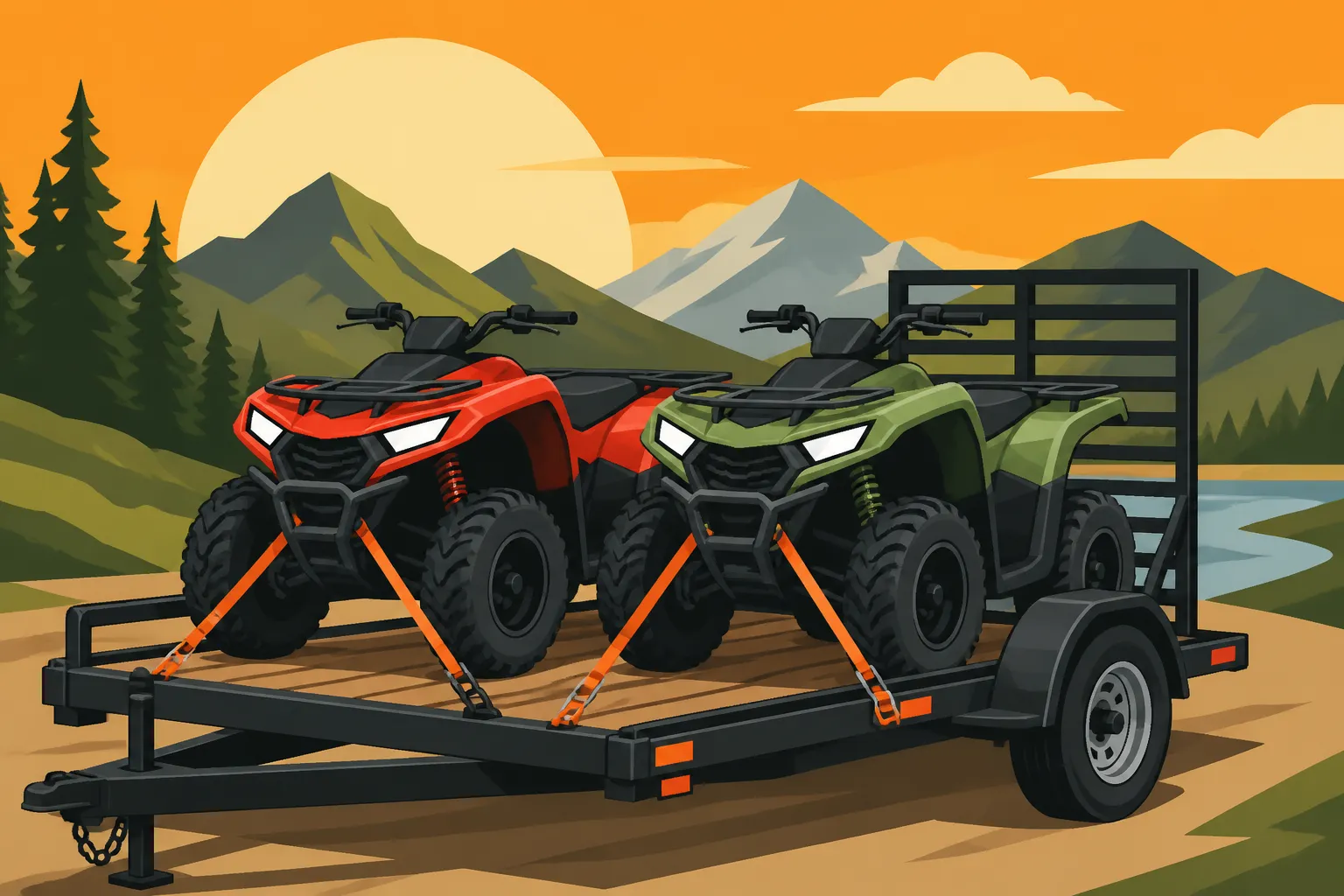
Fitting Two Quads on One Trailer
Trying to haul two ATVs or UTVs to those incredible Idaho trails can quickly turn into a frustrating game of Tetris, leaving you wondering if it's even possible to get everything to fit safely. Many riders find themselves staring at a single trailer and two machines, scratching their heads about how to make it work without breaking any rules or risking damage. This guide is here to walk you through the practical steps, considerations, and smart strategies for loading two quads onto one trailer, ensuring you arrive at your destination ready to ride, not stressed about your setup.
Understanding Your Trailer and Machine Dimensions
Before you even think about backing a machine onto the trailer, it's crucial to get a real handle on the dimensions and weight capacities of both your trailer and your off-highway vehicles (OHVs). Too often, riders assume their trailer is "big enough" or that their quads are "light enough," only to discover a precarious situation or worse, a dangerous overload on the highway. Taking the time to measure and calculate now can save you a world of trouble and potential fines down the road.
Trailer Types and Their Limitations
Not all trailers are created equal, especially when it comes to hauling multiple machines. You'll primarily encounter open utility trailers, enclosed trailers, and dedicated ATV/UTV trailers. Each has its pros and cons for this specific task. An open utility trailer, for instance, might offer a flat deck but could lack robust tie-down points or have a shorter tongue, affecting weight distribution. Enclosed trailers provide security and weather protection but often have less flexible loading options due to internal walls and ramps. Dedicated ATV/UTV trailers are designed with these machines in mind, often featuring multiple ramps or angled decks, but they can be specialized and might not suit other hauling needs.
Consider the width and length of your trailer's usable deck space. Many standard utility trailers are 6 or 7 feet wide, which can be a squeeze for two larger side-by-sides. You might have to get creative with angles or overlapping. Also, pay attention to the trailer's Gross Vehicle Weight Rating (GVWR) and its payload capacity. This information is usually found on a sticker or plate on the trailer's frame. Don't just factor in the weight of your machines; remember to include any gear, spare fuel, coolers, and even the weight of your ramps. Exceeding the GVWR isn't just illegal; it compromises braking, handling, and tire integrity, making your rig unsafe, especially on Idaho's winding mountain roads.
Measuring Your Quads and Their Weights
This step is often overlooked, but it's essential. Grab a tape measure and physically measure the length, width, and height of both of your quads. Remember that handlebars, racks, and brush guards can add to the overall dimensions. Don't forget to account for any accessories like winches, spare tires, or toolboxes you typically keep on the machines, as these add bulk and weight.
Next, find the dry weight of each machine, usually listed in the owner's manual or on the manufacturer's website. Then, estimate the weight of fuel, fluids, and any accessories. For instance, a full tank of gas adds a significant amount. Once you have these individual weights, add them up. This total weight must be well within your trailer's payload capacity. It's always a good idea to leave a buffer, as your estimated weights might be slightly off. Remember, the combined weight of two large side-by-sides can quickly push even a robust utility trailer to its limits, potentially requiring you to consider [Trailer Registration for Hauling ATVs in Idaho] or specialized endorsements for your tow vehicle if you're nearing commercial weights.
Strategic Loading Techniques for Two Quads
Once you understand your dimensions and weights, it's time to tackle the actual loading. This isn't just about getting both machines on the deck; it's about doing so in a way that is safe, balanced, and secure for the journey ahead, especially when navigating Idaho's diverse terrain from valley roads to mountain passes.
Angled and Overlapping Placement
For many riders, simply parking two quads side-by-side isn't an option due to width constraints. This is where strategic angling and careful overlapping come into play. A common technique involves loading one quad straight on, then loading the second quad at an angle, tucking its front wheel or corner into the open space next to the first machine's rear. This often works best with smaller ATVs or if your trailer is wider than average. For larger machines or narrower trailers, you might need to angle both quads. Picture them forming a "V" or a "Z" shape on the trailer deck.
When angling, ensure that tires are fully on the deck and not hanging precariously over the edge. You might find that removing a spare tire or a cooler from one of the racks before loading gives you those crucial inches you need. The goal is to maximize the usable space while maintaining sufficient clearance between the machines to prevent rubbing and damage during transit. It's a delicate dance of geometry, and sometimes you'll have to try a few different configurations to find what truly works for your specific machines and trailer.
Tongue Weight and Axle Balance
Beyond simply fitting two quads, proper weight distribution is paramount for safe towing. An improperly balanced load can lead to dangerous trailer sway, reduced braking performance, and excessive wear on your tow vehicle. You want approximately 10-15% of the total loaded trailer weight to be on the hitch or "tongue weight." Too much tongue weight can overload your tow vehicle's rear axle, while too little can make the trailer unstable and prone to swaying.
When loading two machines, try to distribute their weight evenly over the trailer axles. If one machine is heavier, consider placing it slightly forward or backward to compensate. Often, placing the heaviest part of the machines (typically the engine area) just forward of the trailer's axle center line helps achieve good tongue weight. If you're using a single ramp, load the first machine and secure it, then move the ramp to load the second. Never load both machines simultaneously, as it significantly increases risk. After loading, stand back and visually assess the trailer. Does it look level? Is your tow vehicle sagging excessively? These are visual cues that your weight distribution might need adjustment. Before hitting the highway, it's wise to double-check that your machine's [Idaho OHV Sticker Placement on a Quad's Fender] is correct and visible, along with all necessary paperwork.
Safety First: Securing Your Load for Idaho Roads
You've managed to fit both machines on the trailer, a feat in itself! But the job isn't done until they are absolutely, unequivocally secured. Idaho's roads can be bumpy, winding, and prone to sudden stops or swerves. Loose machines pose a serious hazard to yourself and other drivers. Don't skimp on tie-downs or rush this critical step.
Choosing the Right Tie-Downs
Forget those flimsy ratchet straps from the bargain bin. For securing expensive and heavy OHVs, you need heavy-duty, properly rated ratchet straps. Look for straps with a working load limit (WLL) that significantly exceeds the weight they'll be holding. A good rule of thumb is to have a combined WLL of all your straps that is at least twice the weight of your machine. For two quads, this means you'll need at least eight high-quality straps – four per machine – to secure them properly.
The width of the strap matters too; wider straps distribute pressure better and are generally stronger. Ensure the hooks or attachment points are robust and designed for heavy loads. Always inspect your straps before each trip for any fraying, cuts, or damaged ratchets. A compromised strap is a dangerous one. While you're at it, confirm your [Idaho OHV Registration Runs January to December] to avoid any roadside delays or penalties.
Optimal Tie-Down Points and Techniques
The goal is to prevent both forward/backward movement and side-to-side movement, as well as vertical bounce. For each machine, aim for four tie-down points: two at the front and two at the rear. Ideally, these points should pull the machine down and slightly outward or inward, creating tension in multiple directions.
- Front: Attach straps to the sturdy parts of the frame, A-arms, or bumper, pulling forward and slightly outward to anchor the machine.
- Rear: Attach straps to the frame, hitch receiver, or a solid rear bumper, pulling backward and slightly outward.
Avoid attaching straps to plastic fenders, handlebars, or anything that isn't a solid part of the frame. These can flex, break, or come loose. Cinch the straps down tightly, compressing the suspension slightly. This prevents the machine from bouncing and loosening the straps. Once everything feels secure, give each machine a good shake. If it moves, you need to tighten or adjust your straps. On longer trips, especially over rough sections of [The Magruder Corridor and Idaho Backcountry] or [The Lolo Motorway's 92 Miles], pull over occasionally to recheck and retighten all your straps. Vibrations and bumps can cause them to loosen more than you'd expect.
Securing Loose Items and Preventing Damage
It's not just the quads themselves that need securing. Any loose items on or in the machines, such as coolers, fuel cans, spare helmets, or toolboxes, can become projectiles or cause damage. Use smaller bungee cords or straps to secure these items within the machines or remove them and store them in your tow vehicle.
Consider placing old towels, blankets, or foam padding between the two quads where they might touch or rub. This is especially important for fenders, headlights, or painted surfaces. Even slight contact over hundreds of miles can lead to unsightly scuffs or scratches. If one machine's exhaust pipe is close to another's plastic, consider a heat-resistant barrier. Paying attention to these small details can prevent big headaches and repair bills. When using a service like LawDepot to draft documents like a bill of sale, these details are often taken into account in thorough descriptions, ensuring proper accountability for the condition of the machines.
Troubleshooting Common Challenges
Even with careful planning, sometimes you just run into problems. Maybe the machines are wider than you thought, or the trailer simply feels too small. Don't despair! There are often creative solutions to common multi-quad trailering dilemmas, especially if you're prepared to make some minor adjustments.
When Quads Are Too Wide or Long
The most common issue is width. If your two side-by-sides are just too wide to fit side-by-side on a standard trailer, even with angling, you have a few options:
- Staggering: Load one quad fully forward and the second quad fully backward, with one end of the second machine tucked into the open space near the first's wheels. This works well for longer trailers.
- Front-to-back Overlap: If your trailer has a solid front rail, you can sometimes carefully position one quad with its front tires against the rail, and the second quad angled behind it, possibly with its front tires just behind the first machine's rear tires. This configuration demands extreme care with tie-downs to prevent rubbing.
- Vertical Extension/Rack: For smaller ATVs, some riders build or buy a removable rack that allows one ATV to be loaded directly over the other, effectively stacking them. This significantly raises your center of gravity and requires heavy-duty construction and tie-downs. This is generally not advisable for larger UTVs due to weight and height concerns.
- Wheel Spacers/Offset Wheels: If you have exceptionally wide aftermarket tires or wheels, consider if you can temporarily remove wheel spacers or even swap to a narrower set for trailering, though this is a more extreme measure.
If length is the issue, and your quads overhang the rear of the trailer significantly, you might need to reconsider. Excessive rear overhang can negatively impact handling and is illegal in many places if it obstructs lights or exceeds specific limits. Consider a longer trailer or if a third machine is truly necessary, perhaps a second, smaller trailer or a truck bed extender for one of the machines. Always check local laws regarding overhang and flags. For any modifications to your machines or trailer that might affect legal requirements, consulting specific documentation like those found via LawDepot for custom agreements can be beneficial.
Addressing Overweight Concerns
If, after measuring and estimating, you realize your combined machines exceed your trailer's GVWR, you absolutely cannot ignore this. It's a safety hazard and a legal liability. Here are the realistic options:
- Lighten the Load: Can you remove anything from the machines? Extra fuel cans, toolboxes, spare tires, or heavy accessories? Sometimes even draining fuel tanks (if safe and practical) can shave off some pounds.
- Distribute Differently: Can some gear be moved to the tow vehicle? Spreading the weight between your truck/SUV and the trailer can help.
- Upgrade Your Trailer: This is often the most straightforward, albeit most expensive, solution. Investing in a heavier-duty trailer with a higher GVWR is safer in the long run if you frequently haul multiple large machines.
- Leave a Machine Behind: Sometimes, the safest and most realistic option is to only bring one machine, or to arrange for a second tow vehicle/trailer. Pushing the limits of your equipment is never worth the risk. Always ensure that the machine being left behind has its current [What an Idaho OHV Sticker Costs Each Year].
Remember, your trailer tires also have a weight rating. Ensure they are properly inflated to handle the load and are not past their service life. Overweight trailers are prone to tire blowouts, especially on hot asphalt, which can cause catastrophic accidents.
Practicing and Getting Comfortable
The first time you load two quads will likely be a bit awkward and time-consuming. Don't rush it. Practice in your driveway or a large, empty parking lot before heading out on a major trip. Try different loading configurations. Get a feel for how the rig handles with the added weight and length. Practice backing up.
A spotter is invaluable during the loading process, especially when trying to angle machines or navigate tight spaces. They can guide you and ensure clearances are maintained. Over time, you'll develop a system that works for you and your specific setup. Being confident in your loading and towing abilities makes the journey to Idaho's incredible trail systems much more enjoyable and less stressful. Having a comprehensive understanding of what [Idaho Requires Before You Ride a County Road] or [Idaho Helmet Rules for Riders Under 18] is also essential for safe and legal riding once you arrive.
Disclaimer
This article is for general informational purposes only and does not constitute professional advice. Laws, prices and regulations vary by location and change over time. Consult a qualified professional for guidance on your specific situation.