Titling a Machine Built From Two Wrecks
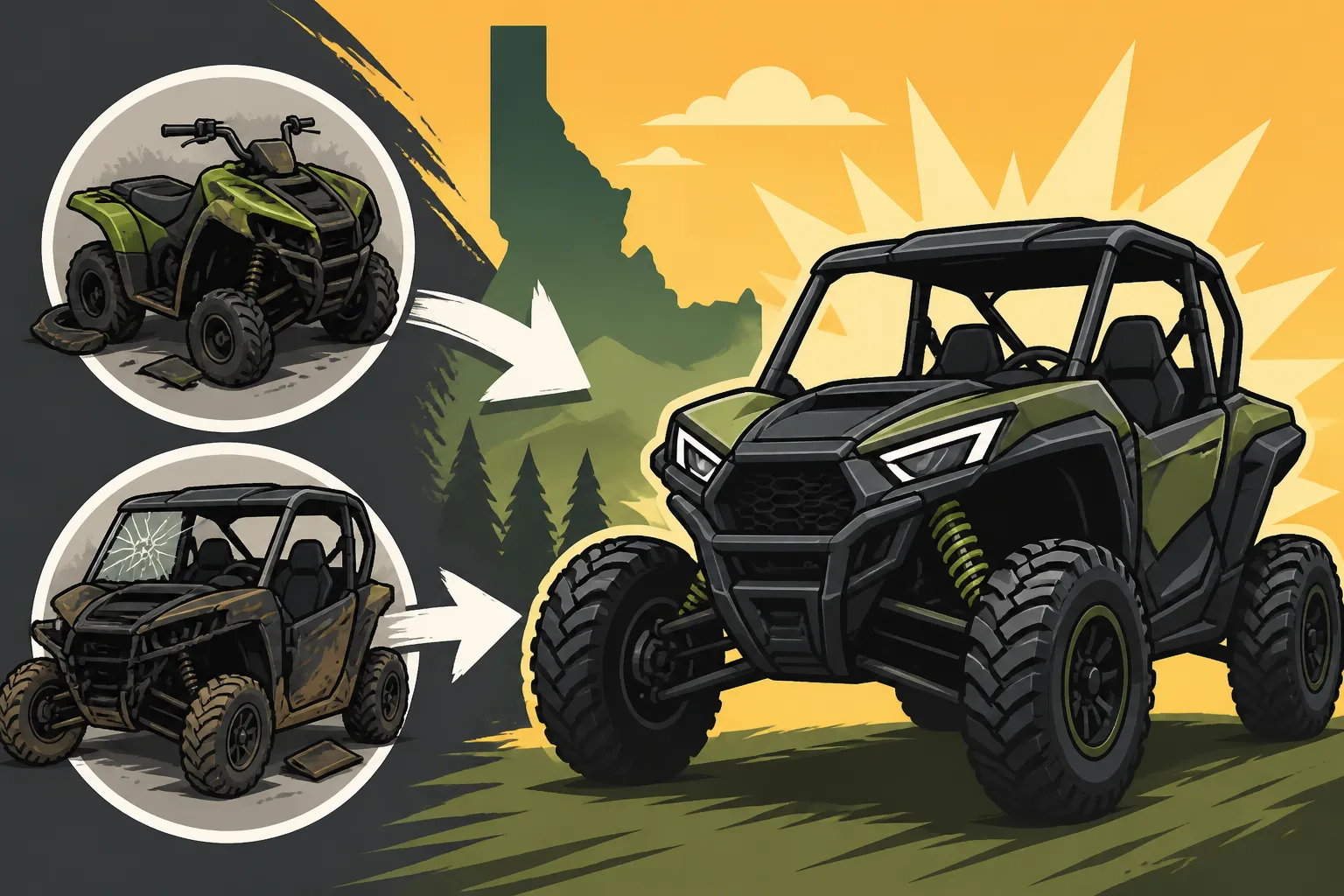
It's incredibly frustrating when you're passionate about building something unique, maybe from a couple of machines that met an unfortunate end, only to realize the paperwork side of things is a whole different beast. You've poured hours, sweat, and maybe a few choice words into creating a new off-road marvel, and now you're faced with the daunting task of getting it legally titled so you can actually hit those Idaho trails. This guide is here to walk you through the specific steps and considerations for titling an ATV or UTV that you've constructed from the parts of two (or more) wrecked machines, making sure your custom build can be enjoyed legally.
Understanding Idaho's Stance on "Reconstructed" or "Special Construction" Vehicles
Idaho, like all states, has a system in place to track off-highway vehicles (OHVs) for ownership, sales tax, and sometimes, even for road use. When you're building a machine from the ground up, or combining major components from multiple damaged vehicles, you're not just doing a simple title transfer. Instead, you're generally looking at what Idaho might classify as a "reconstructed" or "special construction" vehicle. This isn't always as straightforward as titling a brand-new machine or a used one with a clean title.
The Idaho Department of Parks and Recreation (IDPR) and your local County Assessor's office are the key players here, but they need to see a clear chain of ownership for every major component that makes up your new machine. This means you can't just slap parts together and hope for the best. Every frame, engine, and significant component that carries a Vehicle Identification Number (VIN) or serial number needs to be accounted for. The state wants to ensure that no stolen parts are being used and that the machine you've built is safe and accurately described for registration and taxation purposes. This process can feel like a lot of hoops, but it's designed to protect both you as the owner and the integrity of the system.
Why This Process Differs From a Standard Title Transfer
When you buy a used ATV or UTV with a clean title, the process is usually as simple as the seller signing over the title to you, and you taking it to the County Assessor's office to apply for a new one in your name. [Transferring an Idaho OHV Title After a Sale] covers that process in detail. However, when you've got a machine built from two wrecks, there isn't a single title to transfer. You're essentially creating a "new" vehicle in the eyes of the law, even if it's made from old parts.
This distinction is crucial because the state isn't just verifying a change of ownership; they're creating a new record for a unique machine. This new record will require specific documentation to prove the legitimacy of your build and its components. Without this special process, your custom creation would essentially be invisible to the state, making it impossible to get an OHV sticker, insure it, or ride it legally on public lands or designated roads. It's a common stumbling block for enthusiasts who are great at wrenching but less familiar with the specific paperwork involved in bringing their creations to life legally.
The Challenge of Proving Ownership for Parts
One of the biggest hurdles in titling a machine built from two wrecks is proving legitimate ownership for all the major components. Imagine you bought a rolled-over UTV for its engine and transmission, and a rear-ended ATV for its frame and suspension. You likely received a salvage title or a bill of sale for each of these wrecked machines. These documents are your lifeline.
You'll need to keep meticulous records of every purchase, including the VIN or serial number of the donor machine, the seller's information, and the date of sale. A detailed bill of sale for each donor vehicle is absolutely paramount. [ATV Bill of Sale Wording Buyers Should Insist On] can give you an idea of what information to include, even for parts machines. Without clear proof that you lawfully acquired the "donor" vehicles or their parts, you could run into serious trouble, as the state needs to confirm that your build isn't incorporating stolen components. It's not enough to say you "got them from a friend"; you need signed, dated documents that trace the ownership of each major piece back to its original titled owner.
Gathering Your Essential Documentation Before You Head to the Assessor
Before you even think about heading to your County Assessor's office, you need to compile a comprehensive packet of documentation. This is where attention to detail pays off immensely. The more organized and thorough you are, the smoother this potentially complex process will be. Think of yourself as building a legal case for your machine, proving its lineage and your right to title it.
This documentation will serve several purposes: it proves legitimate ownership of the parts, helps establish the machine's identity, and provides the necessary information for the state to assign a new title or record. Missing even one piece of critical information can send you home to gather more, prolonging the time until you can ride.
Salvage Titles and Bills of Sale for Donor Machines
If you purchased the wrecked machines whole, you should have received a salvage title for each, or at least a detailed bill of sale. A salvage title indicates that the vehicle has been declared a total loss by an insurance company. These are important because they show the original VIN and your acquisition of the entire machine, even in its damaged state.
If the donor machines were so severely damaged they were never titled in your name as salvage, or you just bought major components like a frame or engine from another private party, a detailed bill of sale is critical. This bill of sale should clearly identify the component (e.g., "Frame from 2015 Polaris RZR 900, VIN: [full VIN here]"), the purchase price, the date of sale, and the full names, addresses, and signatures of both the buyer (you) and the seller. If you used an online template, make sure it covers all these bases. Services like LawDepot can provide templates for bills of sale that include these essential details, which can be incredibly helpful for private transactions.
Receipts for New Parts and Fabrication
Beyond the major donor components, you likely purchased new parts – suspension components, tires, seats, lights, or even raw steel for fabrication. Keep all of these receipts! While they don't prove ownership of the core components, they do help establish the value of your build and contribute to the overall legitimacy of the project. In some cases, if the state needs to determine a fair market value for sales tax purposes, these receipts can be valuable.
More importantly, if you're fabricating a new frame or significant structural elements, document this process. Photographs of the build in progress, especially if you're using a custom-built frame, can be beneficial during the inspection process. The more evidence you have that this machine is a legitimate, well-documented project, the better.
Photographs of the Build Process and Finished Machine
While not always explicitly required by the Assessor's office, photographs can be incredibly helpful, especially for a complex build. Take pictures of the donor machines as you received them, photos of the parts being disassembled, and step-by-step photos of your reconstruction process. Document the VIN locations on donor frames and engines.
Finally, take clear, well-lit photographs of your completed machine from all angles. These photos can serve as additional proof of the vehicle's existence and condition, and they can be invaluable if there are any questions about the nature of your "special construction." Think of it as a visual diary of your creation, providing context to all the paperwork you're presenting.
The VIN Inspection: A Critical Step for Your Reconstructed OHV
Once you have all your documentation in order, the next crucial step is getting a VIN inspection. Since you're dealing with a machine built from multiple sources, or potentially a new frame you've fabricated, the state needs to verify its identity and ensure it's not a piecemeal collection of stolen parts. This inspection is mandatory for reconstructed or specially constructed vehicles in Idaho.
The VIN inspection will confirm that the VIN you intend to use (or the one assigned by the state) is properly affixed, legible, and matches your documentation. It also provides an opportunity for a trained professional to verify the general safety and structure of your build, although it's not a full mechanical inspection for roadworthiness. Think of it as the state's way of putting eyes on your unique project and giving it the official stamp of approval before it can enter the titling system.
Who Conducts a VIN Inspection in Idaho?
In Idaho, VIN inspections for OHVs are typically conducted by law enforcement officers, such as the Sheriff's Department or Idaho State Police. It’s not something you can just do yourself. You'll need to contact your local Sheriff's office or State Police district office to inquire about scheduling an inspection. Some smaller county Sheriff's offices might be able to do it on site, while larger departments might have specific times or locations for these inspections.
Be prepared to trailer your machine to the inspection location, as it won't be legally stickered or titled yet, making it illegal to ride on public roads to get there. Make sure the machine is easily accessible for inspection, and have all your documentation – salvage titles, bills of sale, and receipts – ready to present to the officer. They will want to see everything you've gathered.
What the Inspector Looks For
During the VIN inspection, the officer will primarily focus on:
- VIN Verification: They will locate and verify the VIN on the frame you are designating as the "primary" VIN for your new machine. They will ensure it's not altered, defaced, or inconsistent with your documentation. If you used a previously titled frame, they'll want to see that original VIN.
- Part Traceability: The officer will review your bills of sale and salvage titles for the major components (frames, engines) to ensure they match the VINs present on the parts, and that you have legitimate ownership.
- Overall Build Legitimacy: They'll assess the general construction to ensure it appears to be a legitimate, well-assembled machine, rather than something suspicious. They're not performing a deep mechanical safety inspection, but they are looking for obvious red flags.
- Assignment of New VIN (if applicable): In some cases, especially if you've fabricated a brand-new frame without an existing VIN, the inspector might facilitate the assignment of a new Idaho-issued VIN. This is common for [Titling a Homemade Buggy in Idaho]. The specifics can vary, so be prepared for this possibility.
The officer will fill out an inspection form, which you'll need to take with you to the County Assessor's office. This completed form is proof that your machine has passed the necessary identity verification.
The Application Process at Your County Assessor's Office
With your completed VIN inspection form and all your meticulously organized documentation in hand, it's time to visit your local County Assessor's office. This is where you'll officially apply for your new title. This step consolidates all the information and verifies that your reconstructed OHV can be legally recognized by the state of Idaho.
Expect this to take a little longer than a standard title transfer, as the clerks will need to review all your unique paperwork. Be patient, friendly, and have all your questions ready, but also be prepared for them to have a few questions for you.
What to Bring to the Assessor's Office
When you go to the Assessor's office, make sure you have:
- Completed VIN Inspection Form: This is non-negotiable.
- All Salvage Titles and/or Bills of Sale: For every major component (frame, engine, etc.) that contributes to the VIN you're using.
- Receipts for New Parts: While not always strictly required for titling, they can be helpful for valuation.
- Proof of Identity: Your driver's license or state ID.
- Payment for Fees: Be prepared to pay a title fee and potentially sales tax.
For sales tax, Idaho levies sales tax on the purchase price of the original donor machines and any new parts you've added. If you didn't pay sales tax at the time of purchase (e.g., a private sale outside of Idaho), you might owe use tax. [Idaho Sales Tax on an ATV Purchase] and [Use Tax When a Machine Comes Into Idaho] provide more details on these tax obligations. The Assessor's office will help calculate what you owe based on your documentation.
Filling Out the Title Application for a Reconstructed OHV
You'll complete an Idaho Certificate of Title Application (Form ITD 3337) or a similar form provided by the Assessor's office. On this form, you'll need to clearly indicate that this is for a "reconstructed" or "special construction" vehicle, if that option is available. You'll provide the VIN you've chosen for your new machine (usually the VIN from the frame you've used as the primary component), along with the make, model (which might be "Special Construction" or "Homemade"), and year.
The Assessor's clerk will review all your submitted documents to ensure everything aligns. They'll verify the VIN on the inspection form against your primary bill of sale or salvage title. They'll also ensure all previous ownership is accounted for to prevent any legal issues down the line. It's a thorough check because they are essentially creating a new vehicle record.
What Happens After Application and How Long It Takes
Once your application is submitted and fees are paid, the Assessor's office will process your request. They may issue you a temporary registration or a receipt that serves as proof of application. The actual physical title certificate will typically be mailed to you from the Idaho Transportation Department (ITD) in Boise, which can take a few weeks to arrive. [How Long an Idaho OHV Title Takes] provides a general timeframe.
During this waiting period, you still won't be able to ride legally on public lands until you receive your title and then purchase an [What an Idaho OHV Sticker Costs Each Year]. However, having the application submitted and fees paid means you're well on your way. You've cleared the biggest hurdles of proving legitimate ownership and getting your unique machine officially recognized by the state.
Potential Roadblocks and How to Navigate Them
Even with meticulous preparation, titling a reconstructed OHV can present a few unique challenges. It's not always a perfectly smooth road, but understanding common roadblocks can help you prepare and navigate them effectively.
The key is to remain patient, keep detailed records, and be prepared to provide more information if requested. Remember, the goal of the Assessor's office is to ensure everything is legitimate and accurate.
| Potential Roadblock | Description | How to Navigate |
|---|---|---|
| Missing/Incomplete Docs | Forgetting a bill of sale, or having one with missing VINs, signatures, or dates for a crucial donor part. | Go back to the seller and get the missing information. If impossible, you might need to prove acquisition through other means (e.g., affidavits, although this is more complex). Emphasize using clear, comprehensive templates from sources like LawDepot from the start. |
| VIN Issues | The primary VIN you've chosen is defaced, unreadable, or doesn't match the documentation. | If the VIN is truly unreadable or damaged, the Assessor might require a new, state-issued VIN. This adds a step and requires careful coordination with the VIN inspector and Assessor. Ensure the VIN plate is securely attached and readable before inspection. |
| "Homemade" Classification | If you've built a significant portion of the frame yourself, the machine might be classified as "Homemade" rather than "Reconstructed." | This is generally fine, but the process might involve applying for a completely new VIN from the state. Be clear with the VIN inspector and Assessor about the extent of your fabrication. [Titling a Homemade Buggy in Idaho] gives more insight into this specific classification. |
| Sales/Use Tax Questions | Discrepancies in declared values, or questions about whether sales tax was paid on donor parts or new components. | Have all receipts and bills of sale itemized. Be ready to explain how you arrived at your declared value. The Assessor's office staff can guide you on specific tax calculations and obligations. |
| Previous Liens | Discovering a lien on one of the donor machines' titles that was not properly released. | This is why checking titles before purchase is crucial. If a lien exists, you'll need the lienholder's release. If you acquired a salvage machine with an unreleased lien, it creates a significant headache, and you may need legal advice to resolve it. Always check for [Liens on an OHV Title] before buying a donor machine. |
What if You Can't Get the Right Paperwork for a Donor Machine?
This is a tough spot. Maybe you picked up a wrecked ATV years ago without thinking about the title, or the seller vanished. Idaho requires a clear chain of ownership. Without a bill of sale or salvage title for a key component (especially the frame where the VIN usually resides), you might struggle to get a standard title.
In some rare cases, for older machines or those where title history is genuinely impossible to trace, Idaho offers a "bonded title" process. [Bonded Title for an ATV in Idaho] explains this in detail. A bonded title basically requires you to purchase a surety bond that protects the state and any potential previous owners if a legitimate claim arises later. It's a more involved and costly process, typically reserved as a last resort. Your County Assessor's office is the best place to discuss if this option applies to your specific situation, but they will want to see that you've exhausted all other avenues first.
When to Seek Professional Guidance
For particularly complex builds, or if you're hitting constant roadblocks, it might be worth consulting with a legal professional who specializes in vehicle titling or a knowledgeable IDPR representative. Sometimes, a quick phone call to the [Idaho Parks and Recreation Registration Phone Line] can clarify specific nuances for your situation. They deal with all sorts of unique scenarios and can often offer guidance that is tailored to your exact county and circumstances. Don't be afraid to ask for help; it can save you a lot of time and frustration in the long run.
Ultimately, titling a machine built from two wrecks in Idaho is a detailed process that demands careful documentation and patience. But with the right approach, your custom-built OHV will be legally ready for whatever adventure you throw its way.
Disclaimer
This article is for general informational purposes only and does not constitute professional advice. Laws, prices and regulations vary by location and change over time. Consult a qualified professional for guidance on your specific situation.